Last updated on July 29th, 2026 at 10:31 am
Best Trees for Fall Color in the Southwest
Fall color is usually associated with forests in New England or mountain communities where cooler temperatures arrive early. However, homeowners in New Mexico, Arizona, West Texas, and other parts of the desert Southwest can also enjoy beautiful autumn foliage.
You may not see the vast forests of red, orange, and gold found in cooler regions, but the right trees and shrubs can add impressive seasonal color to a Southwest landscape. Chinese pistache, red oak, Raywood ash, crape myrtle, and several smaller shrubs are among the best choices.
The key is selecting plants that tolerate our intense sunlight, alkaline soil, low humidity, temperature fluctuations, and limited rainfall.
Why Fall Color Is Different in the Southwest
Fall foliage begins to change when shorter days and cooler nighttime temperatures slow the production of chlorophyll. As the green color disappears, yellow, orange, red, and burgundy pigments become visible.
In the Southwest, fall color can vary considerably from one year to another. A gradual change from warm days to cool nights usually produces the best display. However, an early hard freeze can cause leaves to turn brown and fall before their full color develops.
Watering also makes a difference. A severely drought-stressed tree may drop its leaves early, while an overwatered tree can develop weak growth or root problems. Healthy trees that receive proper care during spring and summer generally produce the best autumn foliage.
Quick Guide to Southwest Trees with Fall Color
| Tree or shrub | Typical fall color | Approximate mature size |
|---|---|---|
| Chinese pistache | Yellow, orange and red | 30–40 feet tall |
| Texas red oak | Red, russet and burgundy | 30–50 feet tall |
| Raywood ash | Burgundy and purple-red | 30–50 feet tall |
| Bonita ash | Golden yellow | 30–40 feet tall |
| Crape myrtle | Yellow, orange and red | 5–25 feet tall |
| Nandina | Red, bronze and burgundy | 2–6 feet tall |
Mature sizes vary according to the variety, soil, watering, pruning, and local growing conditions.
Chinese Pistache
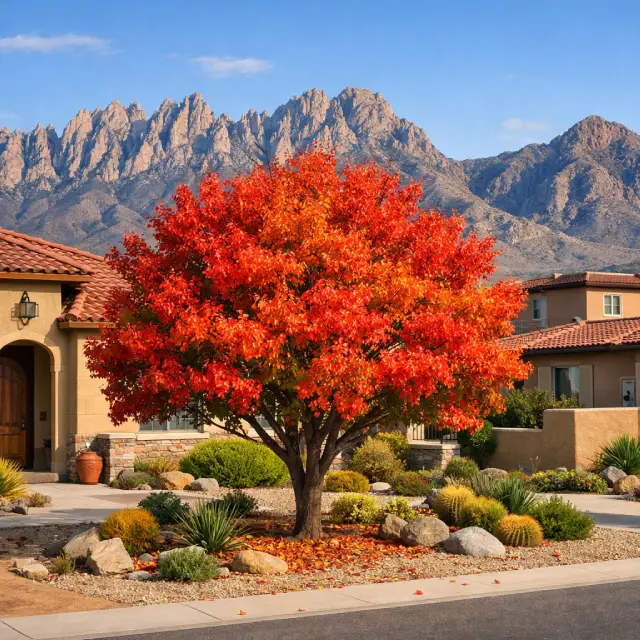
The Chinese pistache (Pistacia chinensis) is one of the best trees for fall color in the Southwest. Its leaves may turn yellow, orange, red, coral, or a mixture of several colors on the same tree.
Individual trees can vary in color. If you want a particular shade, choose your tree at the nursery during autumn when you can see its actual foliage.
Young Chinese pistache trees sometimes look thin, irregular, or awkward. This is normal. As the tree matures and receives proper structural pruning, it develops a broad, rounded canopy.
A mature Chinese pistache commonly reaches approximately 30 to 40 feet tall with a spread of 25 to 35 feet. It prefers full sun and well-drained soil. Once established, it has good drought tolerance, although occasional deep watering will help it remain healthy during prolonged dry weather.
The University of Arizona describes Chinese pistache as a heat- and drought-tolerant shade tree with spectacular red-orange fall color.
Utah State University Extension describes the Chinese pistache as a tough, drought-resistant tree with attractive yellow, orange, and red fall foliage. Learn more about growing Chinese pistache trees.
Texas Red Oak
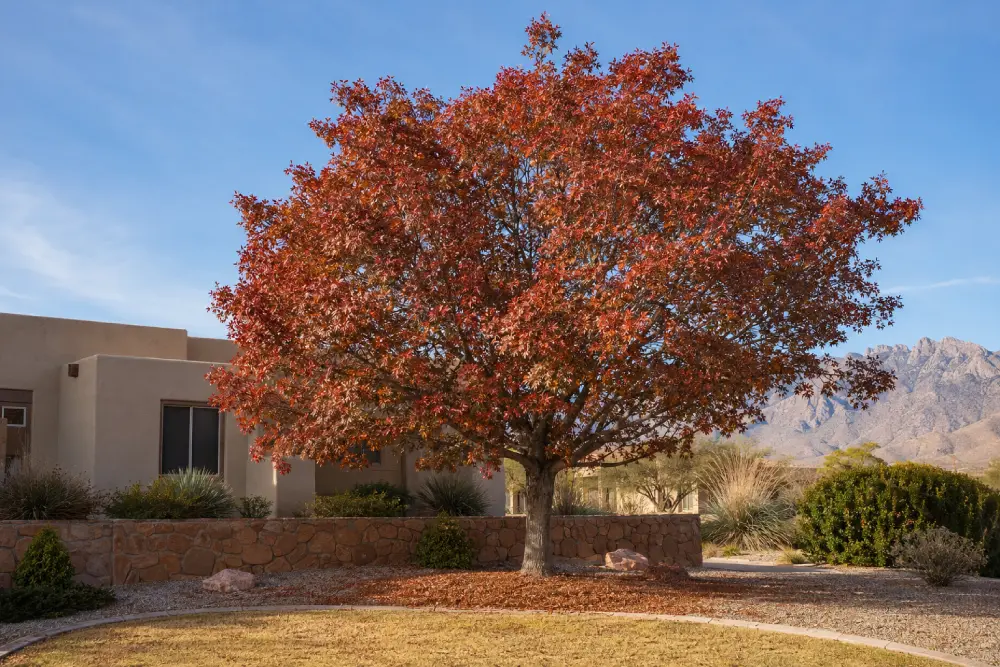
Texas red oak is another excellent shade tree for Southwest landscapes. Depending on the variety and weather conditions, its foliage may turn bright red, deep burgundy, rust, or reddish-brown in late fall.
Red oaks are increasingly common in newer Las Cruces neighborhoods, including the East Mesa. They can perform well in our climate, but they need adequate room for their mature canopy and root system.
Most red oaks grow approximately 30 to 50 feet tall and may eventually become just as wide. Plant them well away from foundations, walls, septic systems, and overhead utility lines.
Red oaks need regular deep watering while becoming established. A drip emitter placed next to the trunk at planting will eventually be too close as the root system expands. Move or add emitters farther from the trunk as the tree grows.
Pale leaves with darker green veins may indicate iron chlorosis, which is common in alkaline Southwest soil. However, do not automatically add fertilizer or soil acidifier whenever leaves look pale. Poor drainage, damaged roots, overwatering, and clogged emitters can produce similar symptoms. Identify the problem before treating the tree.
Raywood Ash

The Raywood ash (Fraxinus angustifolia ‘Raywood’) is known for its attractive dark-green summer foliage. During autumn, the leaves can develop deep burgundy, wine-red, or purple coloring.
Raywood ash is a fast-growing shade tree that commonly reaches 30 to 50 feet tall and 25 to 35 feet wide. It performs best in full sun and well-drained soil.
Although an established Raywood ash can tolerate dry conditions, it is not a no-water tree. Deep watering during extended hot and dry periods helps protect the canopy and root system. Avoid frequent, shallow watering because it encourages roots to remain close to the surface.
Its rich burgundy fall foliage makes Raywood ash an attractive option for homeowners who want a darker autumn color rather than yellow or orange.
Bonita and Other Ash Trees
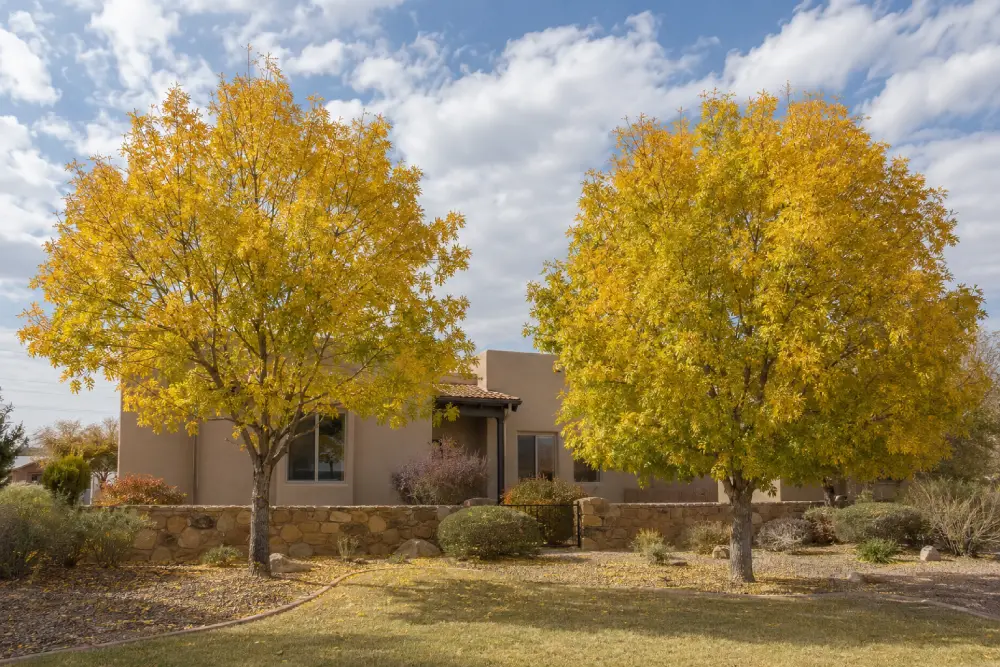
Bonita ash and several other ash varieties provide bright golden-yellow fall color. These trees have been widely planted in parks, commercial landscapes, and residential yards throughout Las Cruces.
Bonita ash typically develops a more uniform and rounded canopy than some older Arizona ash varieties. It commonly grows 30 to 40 feet tall and nearly as wide when mature.
Modesto and Berrinda ash may also produce yellow or golden foliage. However, the final color and timing depend on the variety, tree health, watering practices, and autumn temperatures.
Ash trees grow relatively quickly and provide substantial summer shade. Give them enough room to mature, and begin structural pruning while the trees are young.
Crape Myrtle
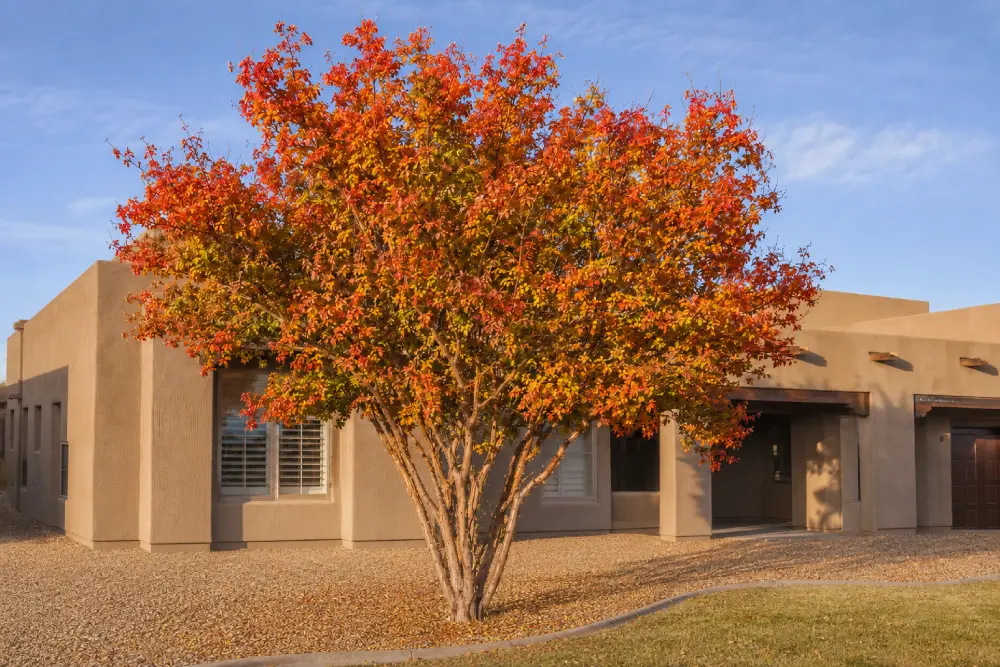
Crape myrtles are best known for their summer flowers, but many varieties also produce excellent fall foliage. Their leaves may turn yellow, orange, red, or reddish-purple as nighttime temperatures drop.
These plants are available as compact shrubs, multi-trunk specimens, and small ornamental trees. Depending on the variety, mature height can range from about 3 feet to more than 20 feet.
Popular varieties such as Tuscarora, Tonto, and Muskogee offer different flower colors, mature sizes, and growth habits. Choose the variety according to the available space rather than relying on heavy annual pruning to control an oversized plant.
Crape myrtles perform best in full sun, where they produce more flowers and stronger fall color. They need regular watering during establishment but should be planted in soil that drains well.
Avoid cutting all the upper branches back to large stubs. This practice, sometimes called “crape murder,” produces weak shoots and ruins the plant’s natural form. Instead, remove dead, damaged, crossing, or unwanted branches while preserving the main structure.
You can learn more in our guide to crape myrtles for Southwest landscapes.
Nandina for Red Winter Foliage
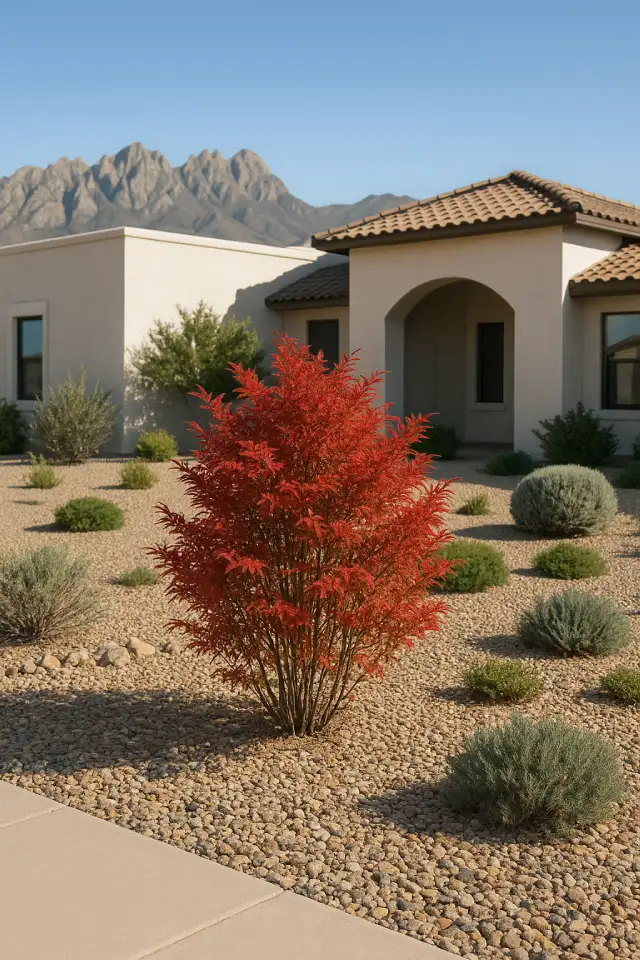
Nandina, commonly called heavenly bamboo, is not a true bamboo nor a tree, but It is an evergreen or semi-evergreen shrub that can develop bronze, red, burgundy, or purple foliage during late fall and winter.
Compact varieties such as Firepower, Gulf Stream, and Sienna Sunrise work well around foundations, walkways, rock landscapes, and mixed planting beds. Depending on the variety, nandina may grow from approximately 2 to 6 feet tall.
Nandina tolerates some drought after becoming established, but it looks better with occasional deep watering. In the hottest Southwest locations, some afternoon shade can reduce leaf scorch.
Be aware that nandina foliage and berries can be toxic when consumed in quantity. Consider low-fruiting or sterile varieties, especially where pets, livestock, or berry-eating birds may be at risk.
Evergreen Shrubs with Cool-Weather Color
Some evergreen shrubs do not produce traditional fall foliage, but they still add seasonal interest.
Variegated euonymus varieties such as Emerald Gaiety and Emerald ’n Gold retain green-and-white or green-and-gold foliage throughout much of the year. Cool weather may add pink, red, or purple tones to portions of the leaves.
These shrubs can be used along foundations, in mixed borders, or near taller deciduous trees. The evergreen foliage helps prevent the landscape from looking empty after shade trees lose their leaves.
Euonymus generally performs best with morning sun and some protection from intense afternoon sunlight in very hot locations. Watch for euonymus scale, especially on crowded or stressed plants.
How to Improve Fall Color
You cannot completely control fall foliage, but good care improves the chances of a colorful display.
Water deeply
Water established trees deeply and less frequently instead of applying small amounts every day. The correct schedule depends on the tree, soil, weather, emitter output, and size of the root zone.
Newly planted trees require more frequent attention until their roots become established. A tree should not be considered fully drought-tolerant immediately after planting.
Check the drip system
Inspect emitters regularly for clogging, breaks, or uneven water distribution. As a tree grows, expand the watering area toward and beyond the edge of the canopy.
Avoid late-season overfertilizing
Heavy applications of high-nitrogen fertilizer late in the season may stimulate tender new growth that can be damaged by cold weather. Fertilize only when the plant shows a need, and follow the product label.
Plant in the proper location
Full-sun trees generally develop stronger autumn color when they receive adequate sunlight. However, the site must also provide enough room for the tree’s mature height and width.
Protect the root zone
Apply a 2- to 4-inch layer of organic mulch over the root zone, but keep it several inches away from the trunk. Mulch helps moderate soil temperature and reduce moisture loss.
What Happens When an Early Freeze Arrives?
Southwest weather can change quickly. Temperatures may remain unusually warm into autumn and then drop below freezing within a few days.
A sudden freeze can damage leaf tissue before normal fall color develops. Leaves may turn dull brown, remain temporarily attached, and then drop. This does not necessarily mean the tree is dying.
If the branches remain flexible and healthy, wait until spring before deciding whether freeze-damaged growth should be removed.
Adding Fall Color to a Southwest Landscape
The best Southwest landscapes combine several types of seasonal interest. A Chinese pistache or red oak can provide the main canopy, while crape myrtles add summer flowers and autumn foliage. Nandina, euonymus, ornamental grasses, and late-blooming perennials can supply color closer to the ground.
Before purchasing any tree, consider its mature size, water requirements, root space, and distance from buildings and utility lines. Choosing the right plant for the location will provide better fall color and fewer maintenance problems in the future.
With thoughtful planning, you can enjoy shades of yellow, orange, red, burgundy, and purple without leaving the desert Southwest.
New to Southwest Gardening?
Stop wasting money on plants that will not survive our heat and drought.
My Southwest Gardening Made Simple eBook shows you which trees, shrubs, flowers, and vegetables actually thrive in New Mexico, Arizona, and West Texas.
The best plants for hot, dry climates
Common mistakes that kill Southwest plants
Easy-to-follow advice for beginners

Gary Guzman Owner of Color Your World and Guzman’s Greenhouse in Las Cruces.