Last updated on June 26th, 2026 at 03:25 pm
Growing Grape Vines at Home. Here is a list of Grape Vines you can grow in your backyard. Grapes love the American Southwest but there are some things to know before starting your Grape Vines. Most grapevines tolerate poor soil but will do better with good loamy well-drained soils. It is important to note that Caliche or hard types of soils are not ideal for the growing of grapevines.
How to Grow Grapes at Home
Most varieties of grapevines will grow almost anywhere in the U.S. When is the best time to plant them? Early spring is best. However, you can plant them at any time of the year.
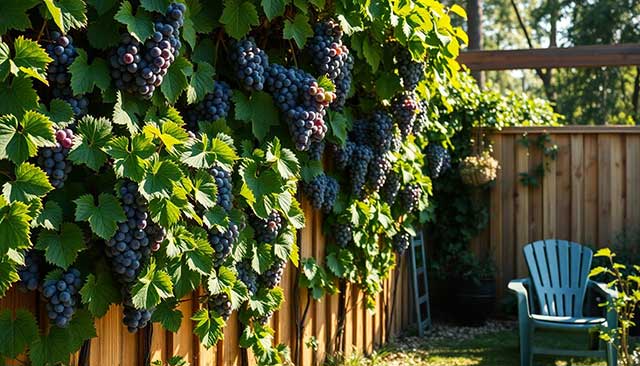
A list of Wine Grapes (Vinifera)
- Zinfandel Grape
- Vitis vinifera ‘Zinfandel’
- Merlot Grape
- Vitis vinifera ‘Merlot’
- Compact Oregon Grape Holly
- Mahonia aquifolium ‘Compacta’
- Chardonnay Grape
- Vitis vinifera ‘Chardonnay’
- Vitis vinifera ‘Flame Seedless’
- Chambourcin Blue-Purple Wine Grape
A list of wine grapes suitable for eating (Vitis Vinifera)
- ‘Ruby Seedless’
- Oregon Grape Holly
- Mahonia aquifolium
- Pinot Noir Grape (eating or making wine)
- Vitis vinifera ‘Pinot Noir’ Eating or Wine Grape
- Flame Seedless Grape
- Thompson Seedless Grape
- Niagara Grape
- Vitis labrusca ‘Niagara’ Excellent Fruit for Juicing
Common Problems with Grape Vines
The grape leafhopper is a problem throughout the U.S. These insects are very small, about 1/8th of an inch long, and they feed on the lower surface of the foliage. Spraying with a good systemic insecticide will help, but you should also spray your grapevines with horticultural oil in late winter to prevent the insect larvae’s eggs from hatching. Keeping your vines clear of grass, rocks, and weeds will also help keep insects from invading your plants. A viable alternative to harsh chemicals is to use insecticidal soaps.
Powdery Mildew is a fungus that attacks vines. It’s usually caused by too much water, overspray from sprinklers, and the overcrowding of plants. Prune out early in the season and heavily during the non-growing seasons. Remember to clean your pruning tools with soapy water and or alcohol to prevent the spreading of any type of fungus or disease.
Learn more about insects and diseases on plants.
The best way to prevent birds from eating your grapes is to use good tree/vine netting. You can get netting at your local nursery store. Read this article on “How to keep birds away from your fruit trees“.
Faux Owls and other ornamental birds of prey will work to a certain degree. Moving them around at least once per week will work better.
Use good soil for your Grape Vines
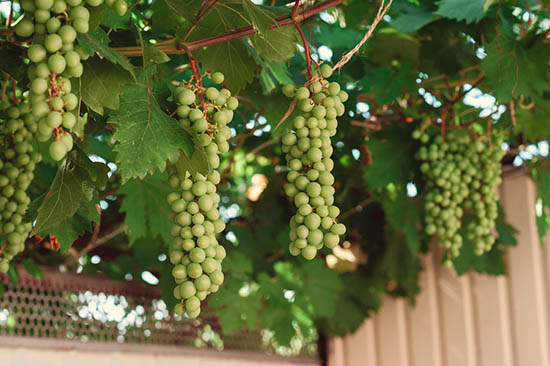
Soil Preparation, Spacing, Watering, and Fertilizing Grape Vines
As mentioned earlier, avoid planting grape vines directly into hard caliche soil. Caliche is extremely dense and can restrict root growth, making it difficult for vines to establish themselves and absorb water and nutrients. Grapes grow best in well-drained, loose, loamy soil that is rich in organic matter.
Before planting, dig a hole approximately 2 feet deep and twice as wide as the root ball. Backfill the hole with a mixture of high-quality composted soil and your native soil. If your native soil is mostly caliche, replace part of it with good topsoil and mix it with compost at about a 50/50 ratio. This helps improve drainage, encourages healthy root development, and gives your grape vine the best possible start.
To promote vigorous growth and abundant fruit production, fertilize your vines with a quality fruit tree fertilizer. Grow More All-Purpose Fertilizer is an excellent choice and provides the nutrients grape vines need throughout the growing season. Always follow the manufacturer’s application rates, as over-fertilizing can produce excessive leafy growth at the expense of fruit.
Proper Spacing
When growing grape vines at home, proper spacing is important for healthy growth and good air circulation. Plant vines 5 to 6 feet apart, allowing each plant plenty of room to spread. Adequate spacing also makes pruning, harvesting, and maintaining your vines much easier while helping reduce disease problems caused by poor air movement.
Watering and Fertilizing
Newly planted grape vines require regular deep watering while they establish their root systems. Water deeply immediately after planting and continue watering consistently during the first growing season, allowing the soil to dry slightly between waterings. Once established, grape vines become fairly drought tolerant but will produce better-quality fruit when watered deeply during prolonged dry periods.
Apply fertilizer in early spring as new growth begins and again in late spring if needed. Avoid heavy fertilization later in the summer, as this can encourage tender new growth that may be damaged by early cold weather. A layer of organic mulch around the base of the vine will help conserve moisture, suppress weeds, and keep the soil cooler during the hot Southwest summer months. Keep the mulch a few inches away from the trunk to prevent moisture-related diseases.
Water is essential for good growth and lots of grapes. Watering should be done every day for about 3 weeks after initial planting. Once that period is over It is best to water every other day on a good drip system for about 20 minutes each time. Always wait at least 3 weeks before fertilizing your vines.
Where to place your Grapevines?
Plant your vines in full sun; however, if you live in hotter climates, they can be planted in the early morning sun and afternoon shade. But they will need at least 6 hours of full sun during the growing season. Again, good, well-composted soil will work well. Grapevines do not like alkaline soil so it would be best to test your soil to ensure it is not alkaline.
My recommendation is to call your local extension agency and ask if they can test your soil. Soil testers found in local nurseries do work; however, most folks only test one small section of land. You should test anywhere from 5 ft. to 10 ft of spread. Or test the soil at the same spot where you will plant your grapevines. Did you know grapevines like tomatoes will do better in slightly acidic soil?
Your grapevine test should register about 5.5 through 7, or anything higher, and it’s too alkaline. The best way to remedy highly alkaline soil is to use good organic composted soil. Do NOT overthink it…good soil will always register a seven or slightly lower, which is neutral.
If your foliage is yellow or chlorotic, you will need iron; if it does not produce blooms, it needs phosphorus; to produce stems or growth, it needs potash. Nitrogen can also green up your plants, but too much of it, and the root system might get burned. Straight nitrogen should only be used after your plant is well established.
Set up a good Vine Support
For a row of vines, you will need support. It’s best to build a trellis or purchase one at your local nursery. You can also build a good wire fence support.
Best Eating Grapes
The Flame Seedless Grapes are one of the best-eating grapes to purchase. They produce a medium-sized cluster of grapes. It does well in the Southwest and will ripen early in the season, somewhere about mid-summer.
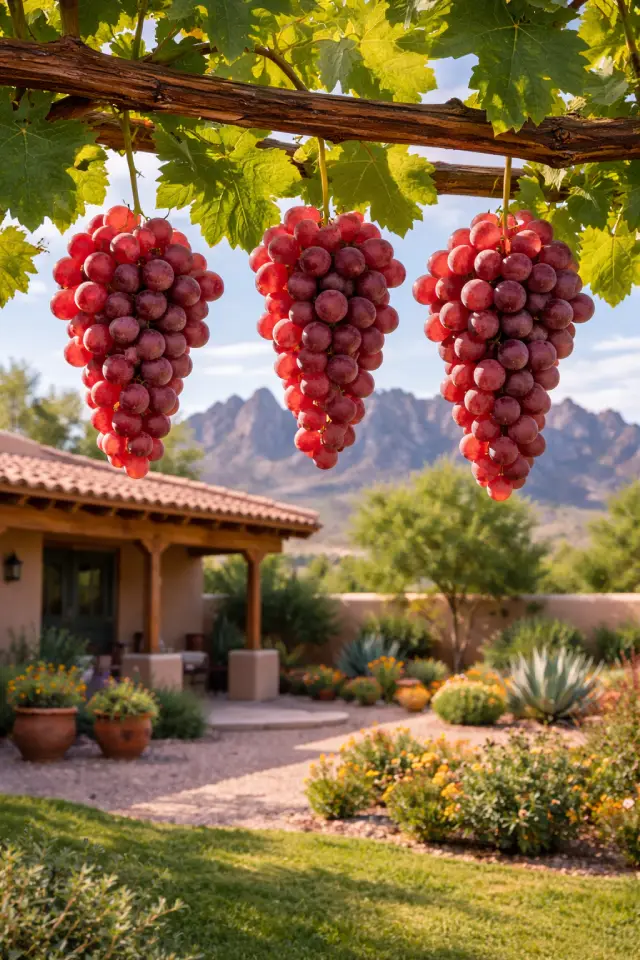
The Thompson Seedless Grape Vine. It is another all-time favorite grapevine and a good eating grape. Pick them right off the stem, rinse, and enjoy.
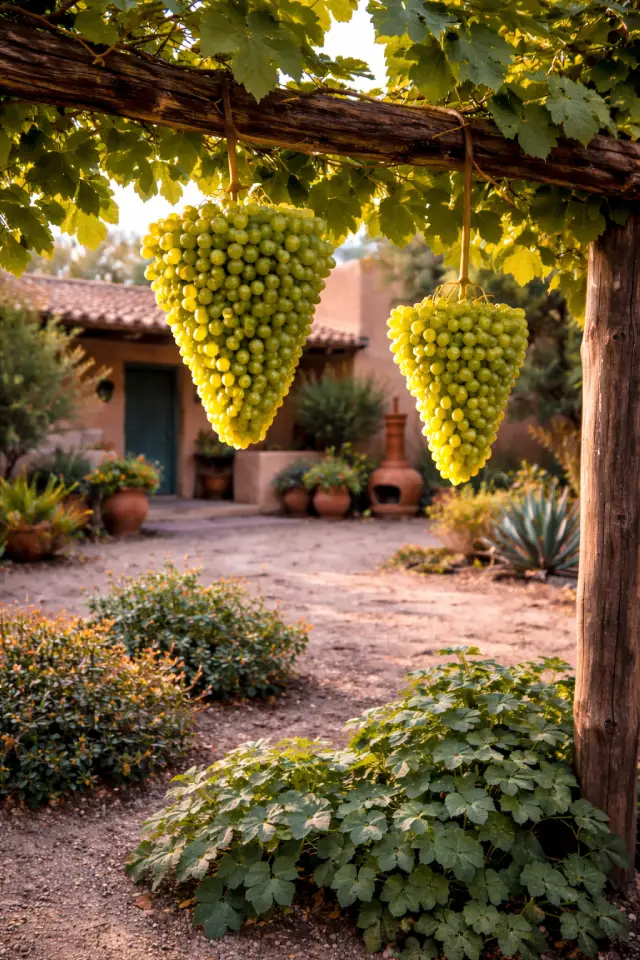

 Growing Grape Vines at Home
 Growing Grape Vines at Home
Fast-growing vines for fences.

New to Southwest Gardening?
Stop wasting money on plants that will not survive our heat and drought.
My Southwest Gardening Made Simple eBook shows you which trees, shrubs, flowers, and vegetables actually thrive in New Mexico, Arizona, and West Texas.
The best plants for hot, dry climates
Common mistakes that kill Southwest plants
Easy-to-follow advice for beginners

Paul Guzman is a lifelong Southwest gardener and gardening writer with decades of experience helping homeowners grow beautiful landscapes in the desert Southwest. He writes for Guzman’s Garden Centers in Las Cruces, New Mexico, with contributing expertise from Gary Guzman, owner of Guzman’s Garden Centers. If you have any questions or enjoyed this post, feel free to share your thoughts in the comments below.
I have bought a grape vine the grapes will be black I have a wooden half barrel I have filled it wth compost put plenty of stones in the bottom it does not get much sun where it is but I have nowhere else to put it I soaked it for 3 hrs it is about 2 foot tall with green growth and leaves for the top half will it do any good in the conditions I have givern it does it need feeding if so with what ?
Grapevines need at least 6 hrs. of sunlight. Anything less than that and it will have a hard time producing fruit. Good filtered sunlight is ok. Soaking it for 3 hrs. is too much water. In a container, you should water almost daily about 4-6 gallons is good. It is important that your wooden half-barrel drain well if not the plant could develop root rot.
The plant will look good and green but again probably not much of harvest until it gets more sunlight. It is best to use a trellis or some type of fencing for grapevines to hang-over so that you can harvest grapes more easily. Two stake poles with wire or rope across the barrel will work.