Last updated on November 1st, 2026 at 08:58 am
How to Care For Christmas Cacti. Keep reading this article to find out how to care for Christmas cacti.
5 Key Factors That Guarantee the Best Flowering Ever. The Christmas cactus is one of the most popular houseplants around the world. Honestly, there’s a perfectly valid reason for that. Namely, this beauty blooms and produces unique, colorful, tubular flowers in pink or lilac. What people especially appreciate is that these wonderful flowers have a long bloom time, and the plant itself is easy to care for. We would bet almost every second household has at least one specimen.
Stay with us and learn how to care for Christmas cacti.
A Few Details About Christmas Cacti
Christmas Cactus – How to Grow and Care for This Beautiful Holiday Plant
The Christmas Cactus is a beautiful and unique houseplant that produces colorful flowers during the cooler months of the year. It is especially popular during the Christmas holiday season, which is how it earned its name. With proper care, this attractive plant can brighten your home year after year.
Unlike most traditional cacti, the Christmas Cactus (Schlumbergera × buckleyi) does not prefer hot, dry desert conditions. In fact, you might be surprised to learn that this tropical cactus originated in the humid rainforests of southeastern Brazil!
In its natural habitat, the Christmas Cactus grows on trees and occasionally rocks, where it receives filtered sunlight, moisture, and good air circulation. These plants are known as epiphytic cacti, meaning they can grow on other plants without taking nutrients from them.
Because of its tropical origins, the Christmas Cactus requires different care than the desert cacti commonly found throughout Las Cruces and the Southwest. It prefers bright, indirect light, well-draining soil, and more consistent moisture. However, avoid keeping the soil constantly wet, as excessive watering can lead to root rot.
Beautiful Christmas Cactus Flower Colors
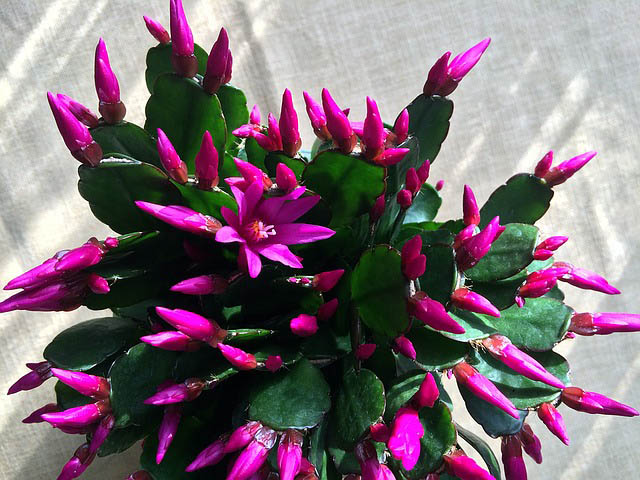
One of the most attractive features of the Christmas Cactus is its colorful, tubular flowers that appear along the ends of its segmented green stems.
Traditional Christmas Cactus varieties often produce beautiful pink or reddish-pink flowers. However, holiday cacti are available in several other stunning colors, including red, white, magenta, purple, salmon, peach, and orange.
Many of these colorful varieties are actually Thanksgiving cacti (Schlumbergera truncata) or related hybrids that are frequently sold under the Christmas Cactus name.
For a fuller plant with more flowering tips, encourage healthy branching by gently pruning the stems after the blooming season. Since flowers develop at the ends of mature stem segments, additional branches can eventually provide more places for flower buds to form.
We recommend you grow your Christmas Cactus in a hanging basket or decorative container where its graceful, arching stems have plenty of room to drape naturally.
 Can You Grow a Christmas Cactus Outdoors in Las Cruces?
Yes! Although the Christmas Cactus makes an excellent indoor houseplant throughout the year, you can move it outdoors during the warmer months.
Here in Las Cruces and throughout southern New Mexico, it is important to protect this tropical plant from our intense afternoon sunshine. A shaded patio, covered porch, or location with bright, indirect light is ideal.
Avoid placing your Christmas Cactus directly in the hot desert sun, especially during June, July, and August. Too much direct sunlight can cause the green stems to become pale, yellowish, or reddish and may result in sun damage.
You should also protect the plant from freezing temperatures. Christmas Cacti are not frost-tolerant, so bring your plant indoors before nighttime temperatures drop below approximately 50°F.
Moving your plant outdoors for the summer is optional. If your Christmas Cactus is already growing well indoors, there is no need to disturb it or transplant it into the ground.
How to Keep Your Christmas Cactus Blooming Every Year
A healthy Christmas Cactus can live for decades and produce flowers year after year. Some plants even become treasured family houseplants passed down from one generation to the next.
To encourage holiday blooms, provide several weeks of longer, uninterrupted nighttime darkness and cooler temperatures during the fall. Temperatures around 55–65°F can help promote flower bud development, although the exact conditions and blooming times vary by variety.
Once flower buds begin forming, avoid sudden changes in temperature, excessive watering, or frequently moving the plant to a different location. These changes can sometimes cause developing buds to drop before they open.
The good news is that Christmas Cacti are relatively easy to maintain once you understand their growing requirements. With the right balance of light, moisture, and seasonal care, you can enjoy their spectacular flowers for many holiday seasons.
Continue reading below to learn more about watering, lighting, fertilizing, repotting, and caring for your Christmas Cactus throughout the year.
Light
Christmas cacti prefer partial shade or diffused light; too much exposure can cause the plant to turn pale and yellow. If you decide to give them some time to sunbathe, let it be during the winter months.

Soil
Unlike traditional desert cacti, the Christmas Cactus prefers a loose, well-draining potting mix that retains some moisture without becoming soggy. A combination of regular potting soil, perlite, and fine orchid bark works well for this tropical plant.
You can also use a commercial cactus mix, but consider adding peat moss or coco coir to help retain moisture. Visit our guide on soil amendments for gardening to learn more about improving soil drainage and growing conditions.
Christmas Cacti prefer slightly acidic soil, ideally with a pH between 5.5 and 6.5. Make sure your container has drainage holes to prevent excess water from collecting around the roots.
Water
Although it might seem unusual for a cactus, the Christmas Cactus needs more frequent watering than most desert cacti. This is because it naturally grows in the humid tropical forests of Brazil.
Water your Christmas Cactus thoroughly when the top inch of soil feels dry to the touch. Allow excess water to drain completely from the bottom of the container.
Avoid letting the potting mix become completely dry for extended periods, especially when the plant is actively growing or producing flower buds. However, never allow the roots to sit in standing water, as this can lead to root rot.
Here in Las Cruces, our dry desert climate can cause indoor potting soil to dry out more quickly, especially when heaters are running during winter. Check the soil regularly rather than following a strict watering schedule.
Fertilizer
To encourage healthy green growth and beautiful holiday flowers, feed your Christmas Cactus with a balanced, water-soluble houseplant fertilizer.
Apply fertilizer at half the recommended strength approximately once a month during the active growing season, usually spring through late summer.
As fall approaches and flower buds begin developing, reduce or stop fertilizing. You can resume feeding in the spring when the plant begins producing new growth.
Avoid overfertilizing your Christmas Cactus. Too much fertilizer can cause salt buildup in the potting soil, potentially damaging the roots and reducing plant health.
A balanced houseplant fertilizer is generally a better choice than products formulated specifically for drought-tolerant desert plants.
Temperature & Humidity
Christmas Cacti prefer moderate temperatures and higher humidity than most traditional desert cacti.
During active growth, daytime temperatures between 65°F and 75°F are ideal, although these plants can tolerate somewhat warmer conditions.
For better holiday flowering, cooler nighttime temperatures around 55°F to 65°F during early fall can help encourage flower bud formation. Keep your plant away from freezing temperatures, cold drafts, fireplaces, and heating vents.
Humidity is another important consideration, especially in Las Cruces and other parts of the desert Southwest, where indoor air can become extremely dry.
To increase humidity, place your Christmas Cactus on a shallow tray filled with pebbles and water. Make sure the bottom of the pot remains above the waterline so the roots do not stay wet.
A small room humidifier can also help maintain comfortable humidity levels. Occasional misting is acceptable, but it does not provide lasting humidity and is usually unnecessary.
With the right temperature, moisture, and indirect sunlight, your Christmas Cactus can remain healthy and produce colorful blooms for many years.
That would be it, now you know how to care for Christmas cacti.

The Bottom Line: How to Care for Christmas Cacti?
One thing you must keep in mind is that you shouldn’t treat the Christmas cacti as if they were regular cacti or succulents. This beauty just can’t handle the same kind of sunny, dry conditions and needs regular water to stay healthy.
Do you have a specimen of this species at home, and what are your best care tips? Let us know below!
According to the University of Minnesota Extension, Christmas Cacti grow best in well-draining soil and benefit from proper watering, filtered sunlight, and cooler nighttime temperatures to encourage flowering.
The Penn State Extension guide to holiday cactus care explains that shorter days, cooler nighttime temperatures, and consistent growing conditions help Christmas Cacti develop healthy flower buds and bloom during the holiday season.
Read more about Prickly pear cactus
New to Southwest Gardening?
Stop wasting money on plants that will not survive our heat and drought.
My Southwest Gardening Made Simple eBook shows you which trees, shrubs, flowers, and vegetables actually thrive in New Mexico, Arizona, and West Texas.
The best plants for hot, dry climates
Common mistakes that kill Southwest plants
Easy-to-follow advice for beginners