Last updated on July 12th, 2026 at 07:24 am
What Is Lily Turf?
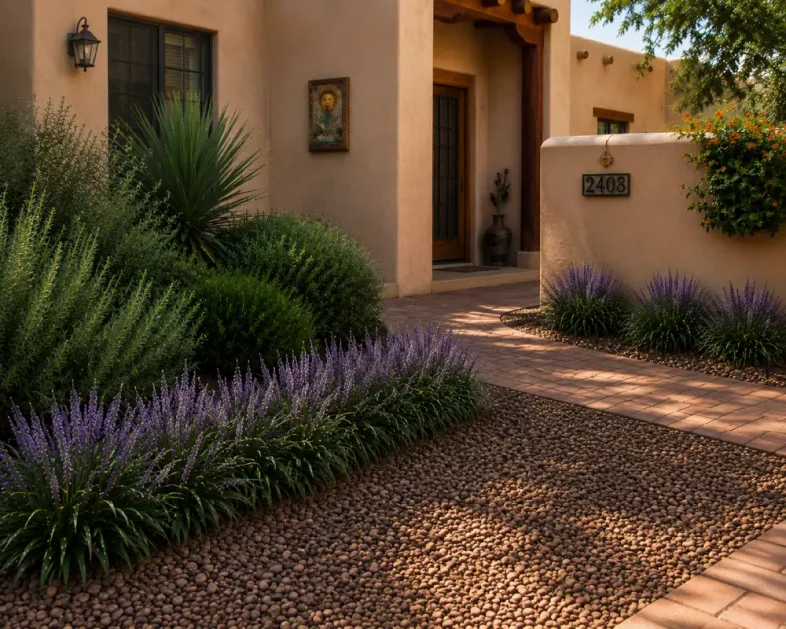
Lily turf (Liriope muscari) is a tough, dependable evergreen perennial that is widely used as a ground cover and border plant throughout the Southwest and many other parts of the United States. Although it resembles an ornamental grass, it is actually a flowering perennial and not a true grass.
You may hear it called by several common names, including Liriope, lilyturf, monkey grass, border grass, and lily turf. Regardless of the name, they all refer to the same popular landscape plant.
Lily turf is prized for its attractive, arching, dark green foliage that remains attractive throughout most of the year. In late summer and early fall, it produces spikes of small purple, lavender, or sometimes white flowers that rise above the foliage, adding another season of interest. These flowers are often followed by small black berries.
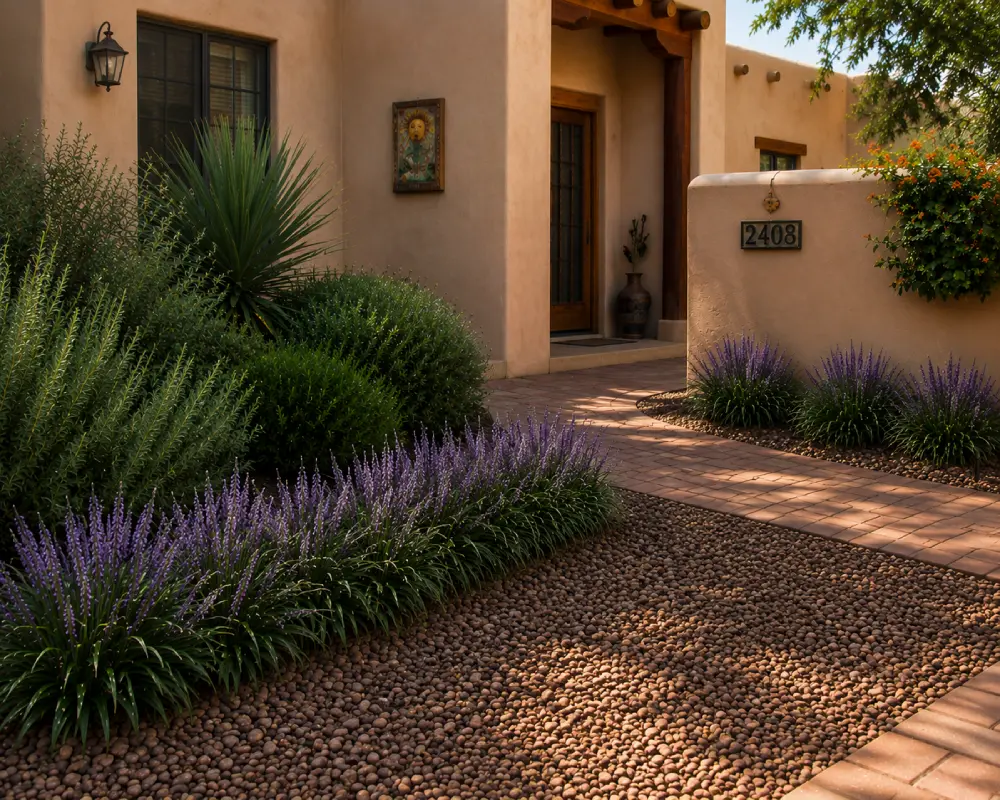
Because of its durability and low maintenance requirements, lily turf is commonly planted along sidewalks, driveways, walkways, foundations, garden beds, and around trees and shrubs. It creates a neat, finished appearance and is often used to separate lawns from landscape beds. It also works well as a ground cover on slopes where erosion is a concern.
Once established, lily turf is remarkably hardy. It tolerates heat, drought, partial shade, and a wide range of soil conditions, making it an excellent choice for many Southwest landscapes when given occasional supplemental watering during extended dry periods.
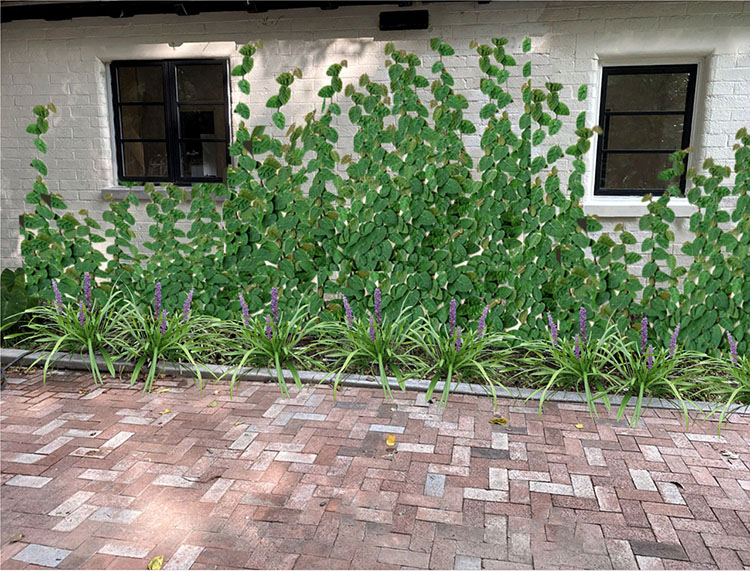
Lilyturf is a compact, evergreen perennial that typically grows to about 18 inches tall and spreads to approximately 2 feet wide at maturity. Beginning in mid-summer and continuing into late fall, it produces attractive spikes of soft purple to lilac-colored flowers that rise above the foliage, adding color to shady and partially shaded areas of the landscape.
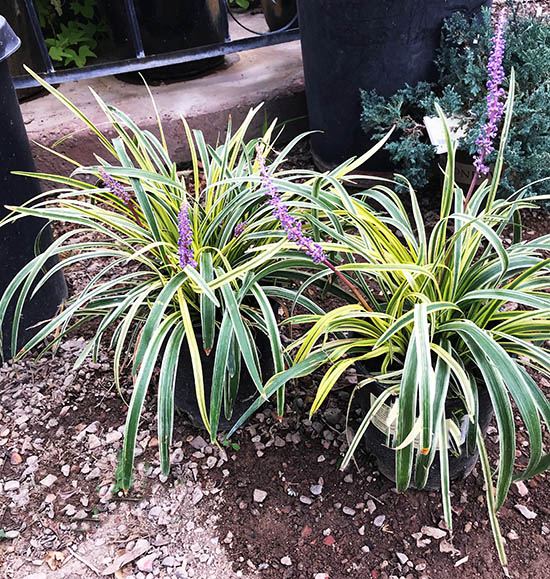
There are several varieties of lilyturf available, but the one pictured below is the variegated Silvery Sunproof Lilyturf. Its striking green leaves edged in creamy white provide year-round interest, while the delicate lilac flower spikes create an attractive contrast against the foliage. According to Monrovia, this variety is known for its improved tolerance to heat and sun compared to many traditional lilyturf selections.
Liliyturf Plants for Southwest Landscape
For Southwest gardeners, Silvery Sunproof Lilyturf is often a better choice than common lilyturf because it handles hot summer conditions more effectively while still maintaining its attractive appearance. It works well as a ground cover, border plant, or accent in courtyards, shaded patios, and landscape beds where a low-maintenance evergreen perennial is desired.
How to Care for the Lily Turf Plant
They like plenty of water when first planted, every day during the mid-summer heat. After the 3rd year of growth, you can cut down considerably. About every other day on a good drip system. It is important to plant them in good loamy, well-drained soil. If water remains too long in the ground, there is a good chance of root rot.
Where to place this plant?
You can place them in full sun or partial shade. They will thrive in both conditions, but water more often if in full sun. A good plant to use as edging in pathways or to place in pots. Yes, they will do well in a nice decorative container. These plants will work in USDA zones 6-11; check your zone here.
Place them in a nice decorative container. Remember, you will have to water more often when this plant is in a pot. Fertilize about 2-3 times per year during the spring, summer, and fall seasons.

Problems with Lilyturf plants
The most common problems with these plants are mealybugs and snail damage. Snails will shred the plant’s long, slender foliage. It’s best to use “Sluggo” to kill snails and slugs. Sluggo is an organic product, making it safe to use around pets. Mealybugs can be a tough insect to remove; use a good spray insecticide at the first signs of mealybugs.

Learn more about insects and diseases on plants.
New to Southwest Gardening?
Stop wasting money on plants that will not survive our heat and drought.
My Southwest Gardening Made Simple eBook shows you which trees, shrubs, flowers, and vegetables actually thrive in New Mexico, Arizona, and West Texas.
The best plants for hot, dry climates
Common mistakes that kill Southwest plants
Easy-to-follow advice for beginners

Paul Guzman is a lifelong Southwest gardener and gardening writer with decades of experience helping homeowners grow beautiful landscapes in the desert Southwest. He writes for Guzman’s Garden Centers in Las Cruces, New Mexico, with contributing expertise from Gary Guzman, owner of Guzman’s Garden Centers. If you have any questions or enjoyed this post, feel free to share your thoughts in the comments below.