New Mexico Southwest Trees
New Mexico Southwest Trees. These trees will do well in the lower elevations of New Mexico. They require moderate to little watering. Click on the New Mexico tree photo for a larger image. These Photos were taken in and around the southern part of New Mexico, mostly around Las Cruces.
New to Southwest gardening?
Get my complete Southwest Gardening Made Simple eBook and learn which plants thrive in New Mexico, Arizona, and West Texas, plus watering schedules, desert gardening tips, and common mistakes to avoid.

New to Southwest Gardening?
Gardening in New Mexico, Arizona, and West Texas can be challenging if you’re not sure which plants can handle the heat, dry soil, and intense sun.
Get my complete Southwest Gardening Made Simple eBook and learn which plants thrive in the Desert Southwest, plus watering schedules, desert gardening tips, and common mistakes to avoid.
Need to know your USDA plant hardiness zone? Click here and scroll down to the bottom. If you have any questions about the southwest plants below, please contact us here or call us at (575) 521-0496. We will be happy to help you.
Tree photos were taken in and around the Southwest area
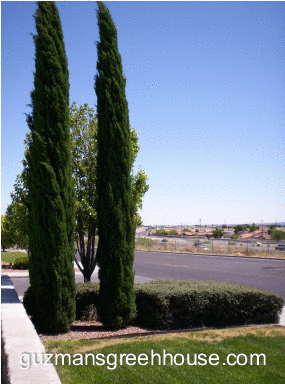 Scientific Name: Cupressus sempervirens. Full or partial shade – USDA Zone: 6 – 10. Italian Cypress can grow up to 60- 80 ft in the Southwest and only 3- 4 ft wide. Excellent tree for a dense border screen. Very drought-tolerant once established. Year-round Evergreen tree. Little maintenance or cleanup. More information on the Italian Cypress trees.
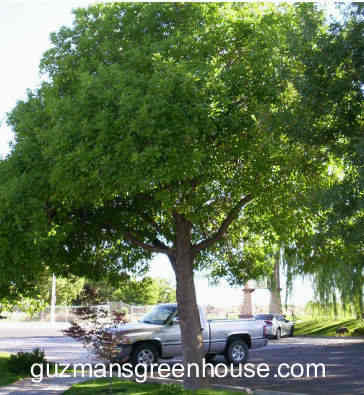 Scientific Name: Fraxinus velutina ‘Modesto.’ They Love Full Sun – USDA Zone 8 – 9. They can grow up to 40ft tall and 30ft wide. An excellent shade tree and a moderate grower. Does very well in the southwest, moderate watering, check for parasite growth (Mistletoe), deciduous. All varieties of Ash trees will do well in the southwest. Fall cleanup is moderate. Looking for the Raywood Ash tree?
 The fall color of a Raywood Ash Tree.
 Bald Cypress Scientific Name: Taxodium distichum – Full Sun – USDA – Zone: 7 – 10. The Bald Cypress needs moderate to regular watering, even after establishing. Average height 70 ft, 30 ft wide; will drop leaves about late October in the southwest. Deciduous; easy fall cleanup.
New Mexico Southwest Trees
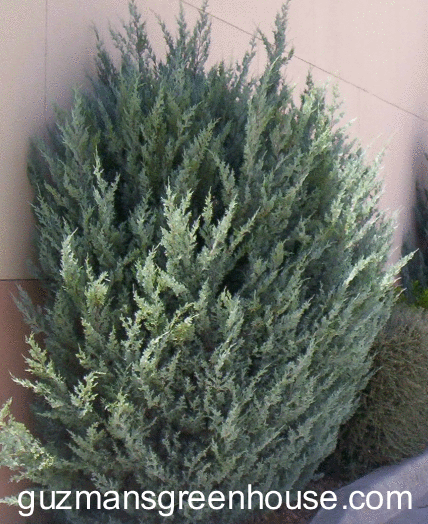
Wichita Blue Juniper – Scientific Name: Juniperus scopulorum. Full Sun – USDA – Zones: 5 through 7. More of an ornamental tree. This tree can be used to block neighbors’ views of your yard. Drought-tolerant, easy-care tree. Extremely hardy; tolerates poor soils; deer-resistant. Excellent for a close wall bordering. About 15-20 ft high and 8 ft wide. Almost zero maintenance.
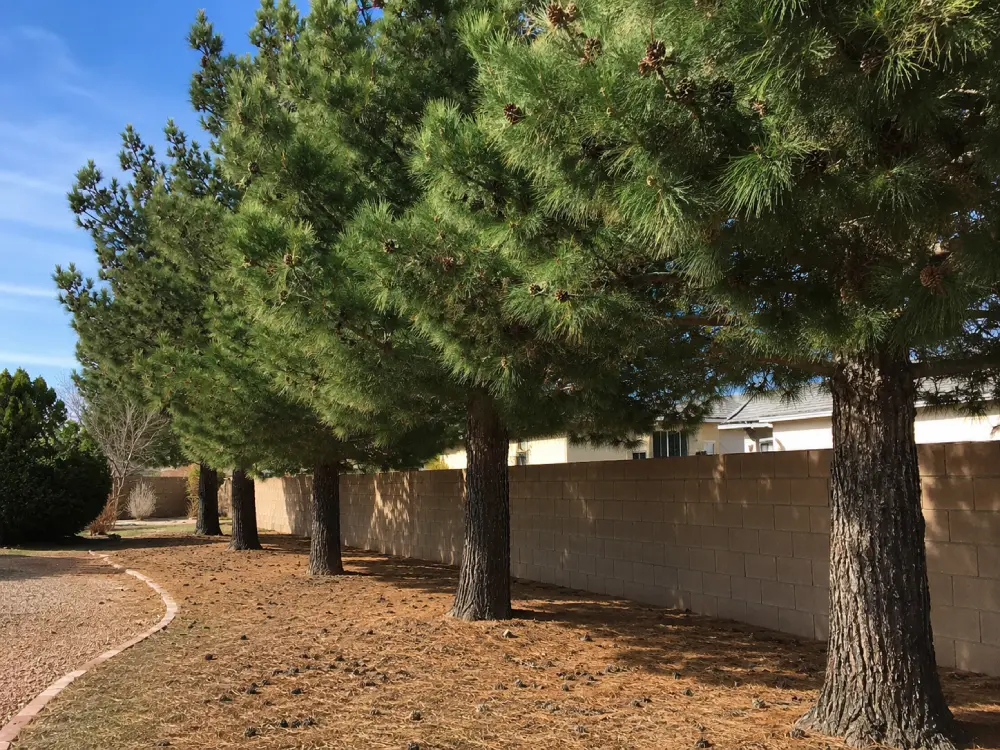
Pine Trees in the Southwest – Many pine tree varieties grow surprisingly well in the lower elevations of the Desert Southwest. Be sure to check the photo for specific details, including recommended USDA hardiness zones.
With proper care, deep watering, and the right planting location, pine trees can thrive for decades. Their dense evergreen foliage provides year-round color, cooling shade, privacy, and wildlife habitat. In fact, a well-planned landscape with pines can create the look and feel of a beautiful mountain ponderosa forest right in your own backyard.
 Chinese Pistache Tree Scientific Name: Pistacia chinensis Loves Full Sun – USDA Zones: 4-10 This tree in New Mexico is an ornamental tree with an attractive, umbrella-like crown. Bright, lustrous green leaves turn brilliant orange and crimson in fall. Very drought-tolerant, deciduous, and extremely handsome tree. About 30-40 ft. tall and wide. Does well in the desert heat. Learn more about Chinese Pistache Trees.
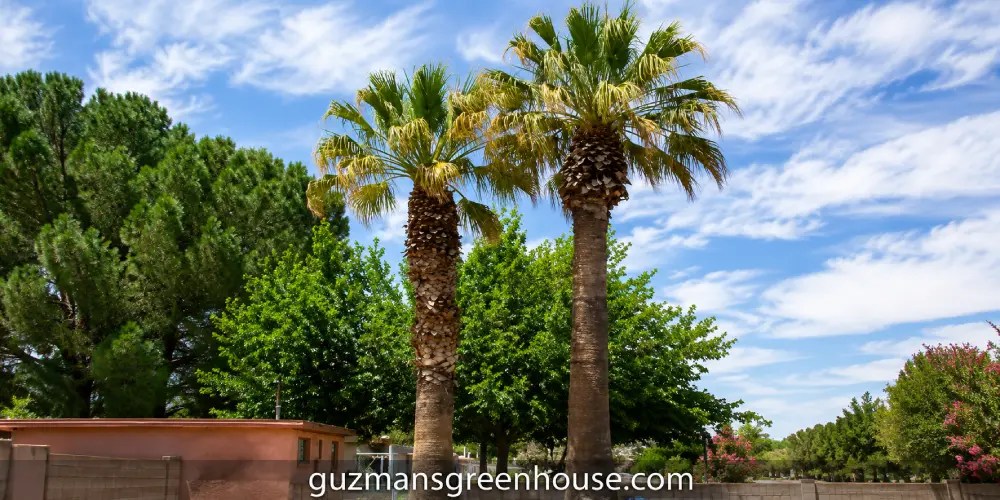 Scientific Name: Washingtonia robusta. The Mexican fan palm 80ft tall. Fronds must be cut back from winter frost damage in the southwest. Low water once established. Always plant in full sun.
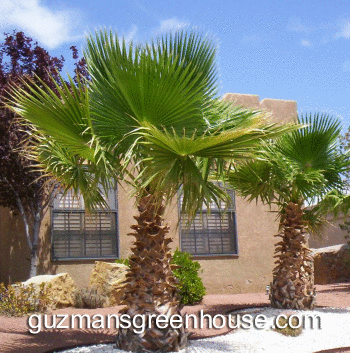
Scientific Name: Washingtonia filifera. California Fan Palm plant in Full Sun – USDA Zone 7-10. Grows up to 50- 60 ft tall. Hardier than the Mexican palm in the southwest. Fronds need trimming in spring after frost damage. Once established, a low-water palm tree; plant it in full sun. Care of Palm Trees.
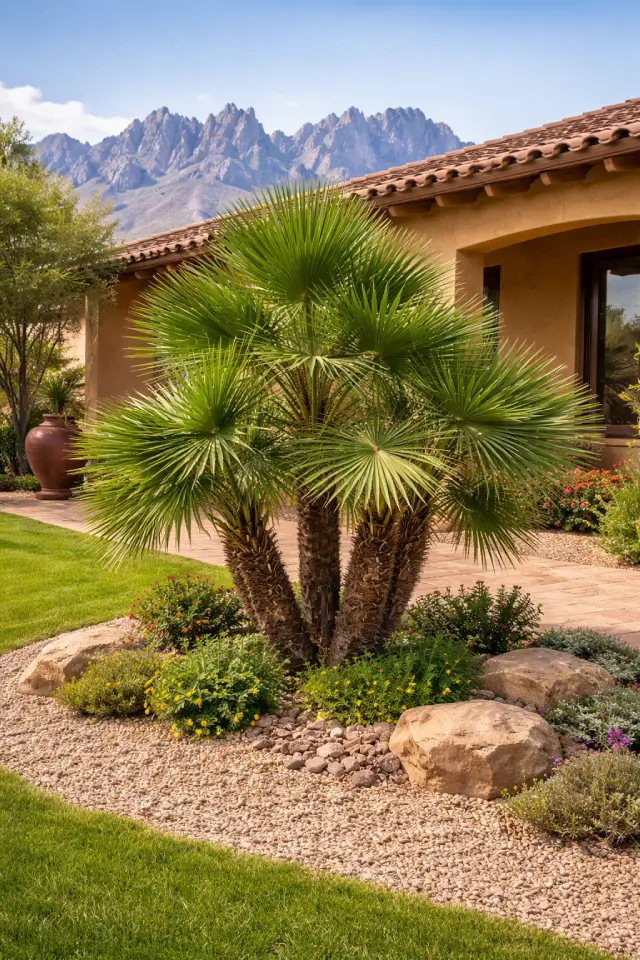
Scientific Name: Chamaerops humilis. Full Sun – USDA Zone 7-10. Grows up to 10- 15 ft tall. Very hardy palm tree. Does a lot better than the California and Mexican palm trees in the southwest. More information about the Mediterranean Palm Tree

Magnolia Tree Scientific Name: Magnolia grandiflora ‘Monlia’ Full Sun – USDA zone 8b – 10. The general public will argue about these trees doing well in the desert southwest. But they will thrive here, provided they have ample water and normal gardening care. This tree will grow up to 60ft tall and about 40- 50 ft wide. An Evergreen tree that will shed leaves in spring. Slow grower; needs regular watering in the Southwest. Fun in sun to partial shade. Loves the southwest part of New Mexico
New Mexico Southwest Trees.


The Pinon Tree is also spelled Pinyon. The two-needle piñon (Pinus edulis) is a very drought-tolerant tree and is native to New Mexico. It is a pine tree that retains its pine needles year-round. Read what Wikipedia says about Pinon Trees – Interesting facts about this tree.
The name comes from the Spanish Pino piñonero, a name used for both the American varieties and the Stone Pine common in Spain, which also produces edible piñon nuts typical of Mediterranean cuisine. Harvesting techniques of the prehistoric Indians are still being used to today to collect the pinyon seeds for personal use or for commercialization. The pinyon nut or seed is high in fats and calories.

 The Mesquite Tree – Is it a shrub or is it a Tree? Find out right here. The Mesquite Tree.
The Leslie Roy Mesquite Plant Patent #23,360 from Monrovia.com.

A Mesquite tree from Monrovia.com. Drought-tolerant tree and thornless perfect for the backyard. Small fern-like leaves that resemble the typical Honey Mesquite tree. It also produces small creamy white flowers in mid-spring. An almost perfect tree for the desert Southwest.
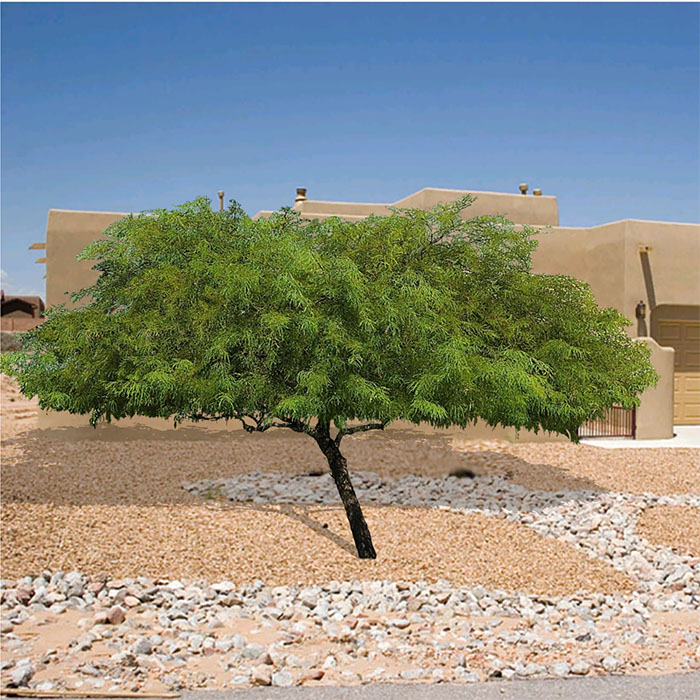
Is the Chilean Mesquite really thornless? Find out more right here. Chilean Mesquite.
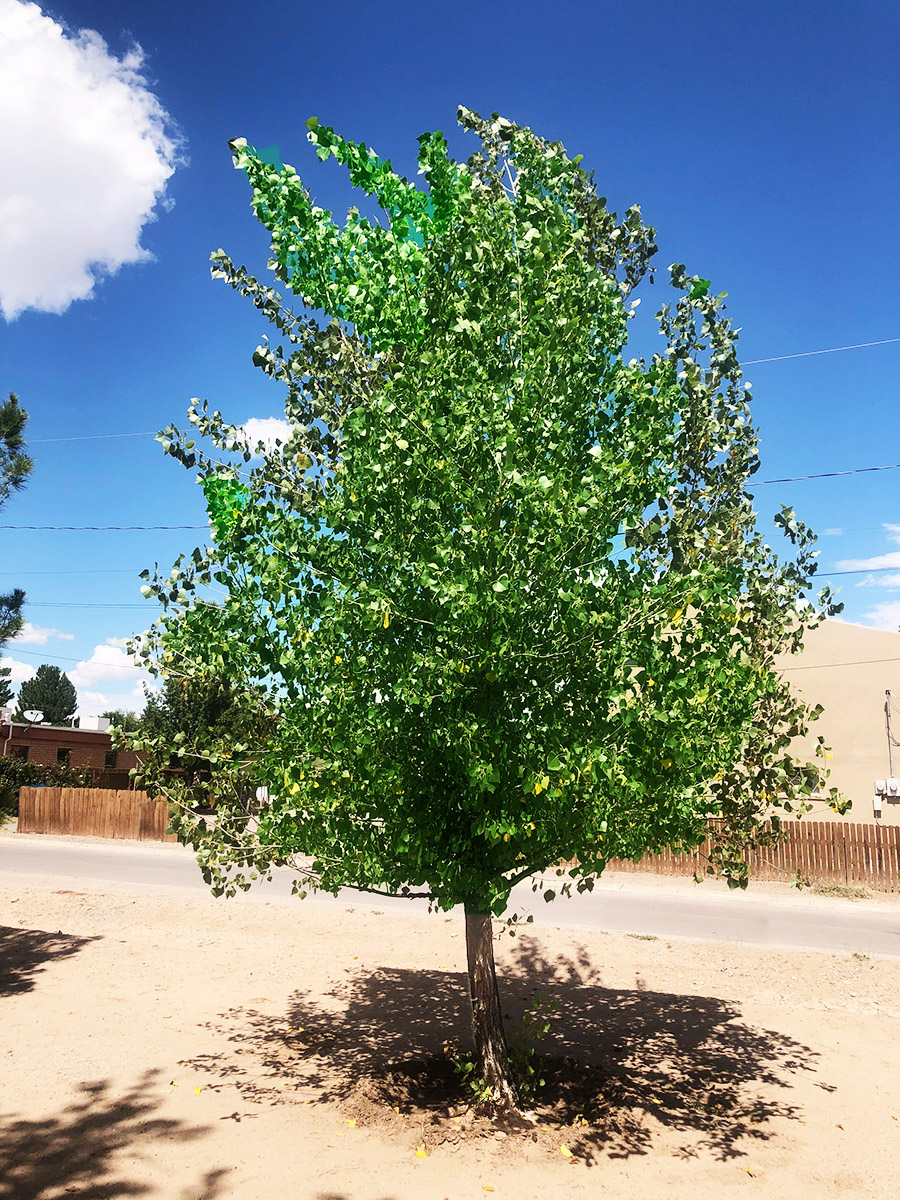
The Western Cottonwood tree (Poplar Family) goes by many names, including the following. Rio Grande Cottonwood is also called the Western Cottonwood and Alamo Cottonwood.