Last updated on November 1st, 2026 at 02:58 pm
Poinsettia plant care is easier than you might think. These beautiful holiday plants bring bright red, pink, white, and other festive colors into homes during the Christmas season. With proper watering, good lighting, and the right temperatures, you can keep your poinsettias looking beautiful for weeks and sometimes months.
Here in Las Cruces and throughout the Desert Southwest, poinsettias are popular indoor plants during November and December. However, our cold winter nights and dry indoor air can make caring for them a little challenging.
The good news? You don’t need to be an expert gardener to keep them healthy.
What Are Poinsettia Plants?
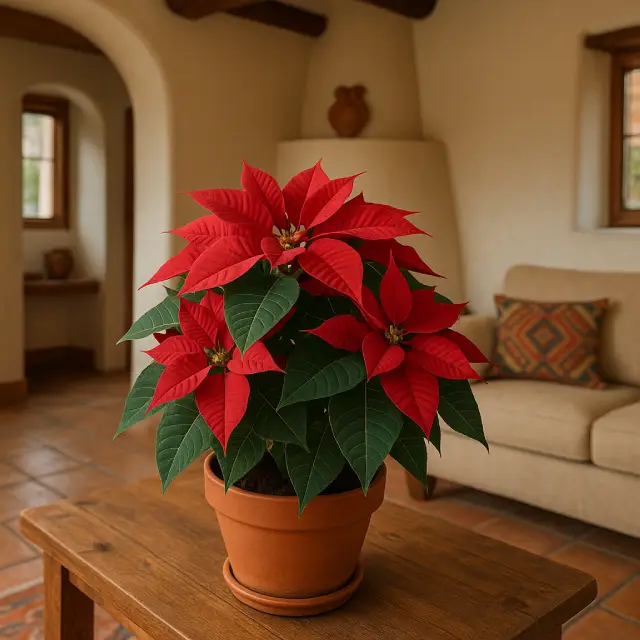
Poinsettias (Euphorbia pulcherrima) are native to Mexico and parts of Central America. In Mexico, the plant is commonly known as Flor de Nochebuena, or Flower of Christmas Eve.
Although we usually see poinsettias growing in small containers, they can become large shrubs in warm, frost-free climates.
One interesting fact about poinsettias is that the colorful red, pink, or white parts are not actually flowers. They are modified leaves called bracts. The real flowers are the tiny yellow structures in the center of the plant.
Poinsettias belong to the Euphorbia family, and their stems contain a milky white sap that can cause irritation.
How Often Should You Water Poinsettias?
One of the biggest mistakes people make with poinsettia plant care is giving them too much water.
Poinsettias like slightly moist soil, but they do not like sitting in soggy conditions.
Here is what I recommend:
- Check the soil with your finger before watering.
- Water when the top inch of soil feels dry.
- Water thoroughly until moisture drains through the bottom.
- Empty any standing water from the saucer.
- Never allow the pot to sit in water for long periods.
During the winter, many poinsettias may need watering about once a week. However, this depends on the size of the container, indoor temperatures, and how quickly the soil dries.
My advice: Don’t water your poinsettia just because it’s Saturday or because a week has passed. Check the soil first.
If your poinsettia is wrapped in decorative foil, remove the foil before watering or make sure water can drain freely.
How Much Sunlight Do Poinsettias Need?
Poinsettias grow best in bright, indirect sunlight.
Place your plant near a window where it receives plenty of natural light throughout the day.
An east-facing window is often a good choice because it provides gentle morning sunlight.
Here in southern New Mexico, strong afternoon sunlight coming through a west-facing window may be too intense, especially when the plant is close to the glass.
Avoid placing poinsettias in dark corners for long periods. They may look beautiful on a holiday table, but they will stay healthier if returned to a bright location afterward.

Best Indoor Temperatures for Poinsettias
Poinsettias prefer comfortable indoor temperatures between 65°F and 75°F.
Sudden changes in temperature can cause leaf drop and stress.
Avoid placing your poinsettia:
- Next to heating vents or fireplaces.
- Near frequently opened exterior doors.
- Against cold window glass.
- In rooms with cold drafts.
- Outdoors during freezing weather.
Winter temperatures in Las Cruces can drop below freezing, so poinsettias should be protected from the cold.
Even a short period of exposure to very cold weather can damage the leaves and bracts.
If you purchase a poinsettia on a cold day, protect it during the trip home and avoid leaving it in your vehicle.

Why Are My Poinsettia Leaves Falling Off?
This is one of the most common questions gardeners ask during the holidays.
A poinsettia can begin losing leaves for several reasons.
Overwatering: Wet soil prevents the roots from getting enough oxygen. Eventually, leaves may turn yellow and fall off.
Underwatering: Allowing the soil to dry out completely can cause wilting and leaf loss.
Cold temperatures: Poinsettias are tropical plants, and cold drafts can cause sudden leaf drop.
Not enough light: Plants kept in dark rooms may begin losing their lower leaves.
Sudden changes in location: Moving a poinsettia from a warm greenhouse to a cold vehicle and then into a heated home can stress the plant.
The best solution is to keep the plant in a bright location, maintain steady temperatures, and check the soil before watering.
Different Poinsettia Colors for Christmas
Poinsettias are no longer available in just traditional Christmas red. Plant breeders have developed many beautiful varieties with different colors and patterns.
Red Poinsettias
The bright red poinsettia continues to be the most popular Christmas variety.
These plants look beautiful near a fireplace, on an entryway table, or next to a decorated Christmas tree.
Just remember to keep them away from excessive heat and cold drafts.

Pink Poinsettias
Pink poinsettias offer a softer holiday color.
They are excellent choices for indoor arrangements and decorative containers. Some varieties have light pink bracts, while others have deeper rose-colored shades.
White Poinsettias

White and creamy-white poinsettias work well with almost any holiday decorating style.
They also make attractive gifts during the Christmas season.
Marbled and Multicolored Poinsettias

Marbled poinsettias have beautiful combinations of red, pink, cream, and white.
Some have speckled or variegated bracts that make them stand out from traditional varieties.
All these poinsettias require essentially the same basic care.
Should You Fertilize Poinsettias During Christmas?
Most poinsettias purchased during the holiday season do not need additional fertilizer while they are displaying their colorful bracts.
They have already received nutrients during greenhouse production.
If you decide to keep your plant after Christmas, you can begin fertilizing when new growth appears in spring.
Use a balanced, water-soluble houseplant fertilizer according to the product instructions.
Avoid adding too much fertilizer, as excessive salts can damage the roots.
Can Poinsettias Grow Outdoors in Las Cruces?
Yes, you can move a poinsettia outdoors during the warmer months, but it needs protection from freezing temperatures and intense summer sun.
Wait until the danger of frost has passed and nighttime temperatures are consistently above 55°F.
Begin by placing your plant in a sheltered location with bright shade. Gradually introduce gentle morning sunlight.
During our hot Southwest summers, afternoon shade is important. Direct afternoon sunlight and high temperatures can stress or scorch the leaves.
Check outdoor containers frequently because they may dry out faster in our dry climate.
Before cool fall nights return, bring the plant back inside.
Remember: Poinsettias are not cold-hardy landscape plants in Las Cruces. They are best treated as seasonal outdoor container plants or indoor houseplants.
How to Keep a Poinsettia Alive After Christmas
You don’t have to throw away your poinsettia when the holiday season ends.
With a little patience, you can keep it growing as a houseplant.
Here is a simple care schedule:
January through March: Continue providing bright light and water when the soil begins to dry. Some older leaves and colorful bracts may fall off.
April through May: When the colorful display has faded, prune back leggy stems to encourage new growth. Wear gloves if the sap irritates your skin. Repot the plant if necessary.
June through August: Move the plant outdoors when temperatures are suitable. Provide morning sun, afternoon shade, regular watering, and occasional fertilizer. Pinch back growing tips to encourage a bushier plant.
September: Bring your poinsettia inside before nighttime temperatures become too cool.
October through November: If you want colorful bracts for Christmas, begin providing long, uninterrupted periods of darkness each night.
Growing a poinsettia for another year can be a fun gardening project, although getting it to turn red again requires additional care.
How Do You Get a Poinsettia to Turn Red Again?
Poinsettias are short-day plants. This means their colorful bracts develop when the plants receive long periods of uninterrupted darkness.
Beginning around late September or early October, provide approximately 14 hours of complete darkness each night.
You can place the plant in a dark closet or cover it with a lightproof box.
During the daytime, return it to a bright location.
Continue this routine daily until the bracts develop good color, generally over several weeks.
Even a small amount of artificial light during the darkness period can interfere with the process.
This is probably the most challenging part of poinsettia plant care, but it can be rewarding when your plant develops beautiful holiday colors again.
Are Poinsettias Poisonous to Dogs and Cats?
Poinsettias have a reputation for being highly poisonous, but this is exaggerated.
They are considered mildly toxic to pets. Chewing the leaves or stems may cause drooling, mouth irritation, vomiting, or mild stomach upset.
The milky sap can also irritate sensitive skin.
It’s best to keep poinsettias away from curious pets and young children.
If your pet eats part of a plant and develops symptoms, contact your veterinarian.
Common Poinsettia Plant Care Mistakes
Most poinsettia problems can be avoided by remembering these simple tips:
- Don’t water when the soil is already wet.
- Don’t leave water standing inside decorative foil.
- Don’t place the plant next to a heating vent.
- Don’t expose it to freezing temperatures.
- Don’t keep it in a dark corner for weeks.
- Don’t place it directly against cold window glass.
- Don’t overfertilize during the holiday season.
A little attention goes a long way toward keeping your poinsettia healthy.
Frequently Asked Questions About Poinsettia Plant Care
1. How long do poinsettia plants last indoors?
The colorful bracts can remain attractive for several weeks or even months with proper lighting, watering, and temperatures.
2. Should I water my poinsettia every day?
No. Check the soil first and water when the upper inch feels dry. Daily watering is usually excessive for indoor poinsettias.
3. Do poinsettias need direct sunlight?
They prefer bright, indirect light indoors. Gentle morning sunlight is usually fine, but avoid intense afternoon sunlight.
4. Why are my poinsettia leaves turning yellow?
Yellow leaves are often caused by overwatering, poor drainage, cold stress, or changes in growing conditions.
5. Can poinsettias survive outside during winter?
Not in freezing conditions. In Las Cruces, keep poinsettias indoors during cold weather.
6. Do poinsettias come back every year?
Yes. Poinsettias are perennial plants in suitable warm climates and can survive for several years indoors with proper care.
7. Why is my poinsettia wilting even though the soil is wet?
Soggy soil can damage roots and prevent the plant from absorbing water properly. Check drainage and avoid watering again until the soil begins to dry.
8. Can I repot a poinsettia?
Yes. Spring is generally a good time to repot after the holiday display has faded. Use a well-draining potting mix and a container with drainage holes.
9. How do I make my poinsettia bushier?
Prune leggy stems in spring and pinch back new growth during summer. Stop pinching by late summer so the plant can prepare for its holiday display.
10. Are poinsettias difficult to grow?
Not usually. Poinsettias are fairly easy to maintain during the holiday season. Getting them to develop colorful bracts again the following Christmas takes more patience.
Final Thoughts on Poinsettia Plant Care
Poinsettias are among the most beautiful plants you can bring into your home during the Christmas season.
Whether you choose traditional red, soft pink, creamy white, or a colorful marbled variety, the basic care is the same.
Give your plant bright light, avoid overwatering, and keep it away from cold drafts and excessive heat.
Here in Las Cruces, poinsettias add welcome color during the colder months when many outdoor plants are resting.
And if you enjoy growing holiday plants, take a look at our How to Care for Christmas Cacti article for another beautiful indoor plant.
Have a question about your poinsettia? Leave a comment below. We enjoy helping Southwest gardeners keep their plants healthy and looking their best.
For more gardening tips throughout the year, sign up for our free Guzman’s Garden Centers newsletter.
The White Poinsettia
The Red-White Marbled Poinsettia
The Magenta Colored Poinsettia – Not available at Guzman’s Garden Centers.

Poinsettia plant care
The Christmas Cactus is another great indoor Holiday plant. It requires less water, about twice per month. It should bloom in mid-December and again in late March, if cared for properly.

Poinsettia plant care
Kansas State University – Caring for Poinsettias. Add under How Often Should You Water Poinsettias? It reinforces proper watering, drainage, and indoor temperatures.
For the pet-safety paragraph, the ASPCA poinsettia reference also supports the statement about mild toxicity.
New to Southwest Gardening?
Stop wasting money on plants that will not survive our heat and drought.
My Southwest Gardening Made Simple eBook shows you which trees, shrubs, flowers, and vegetables actually thrive in New Mexico, Arizona, and West Texas.
The best plants for hot, dry climates
Common mistakes that kill Southwest plants
Easy-to-follow advice for beginners

Paul Guzman is a lifelong Southwest gardener and gardening writer with decades of experience helping homeowners grow beautiful landscapes in the desert Southwest. He writes for Guzman’s Garden Centers in Las Cruces, New Mexico, with contributing expertise from Gary Guzman, owner of Guzman’s Garden Centers. If you have any questions or enjoyed this post, feel free to share your thoughts in the comments below.