Last updated on August 2nd, 2026 at 09:07 am
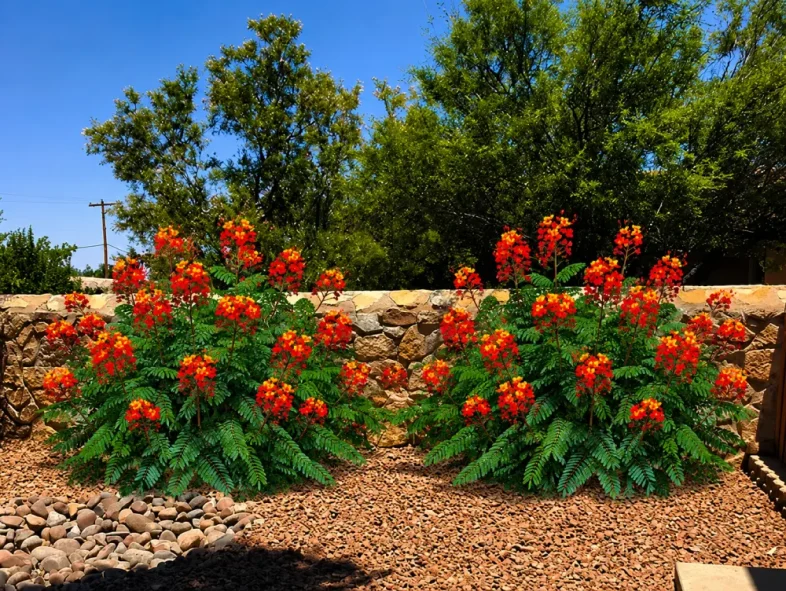
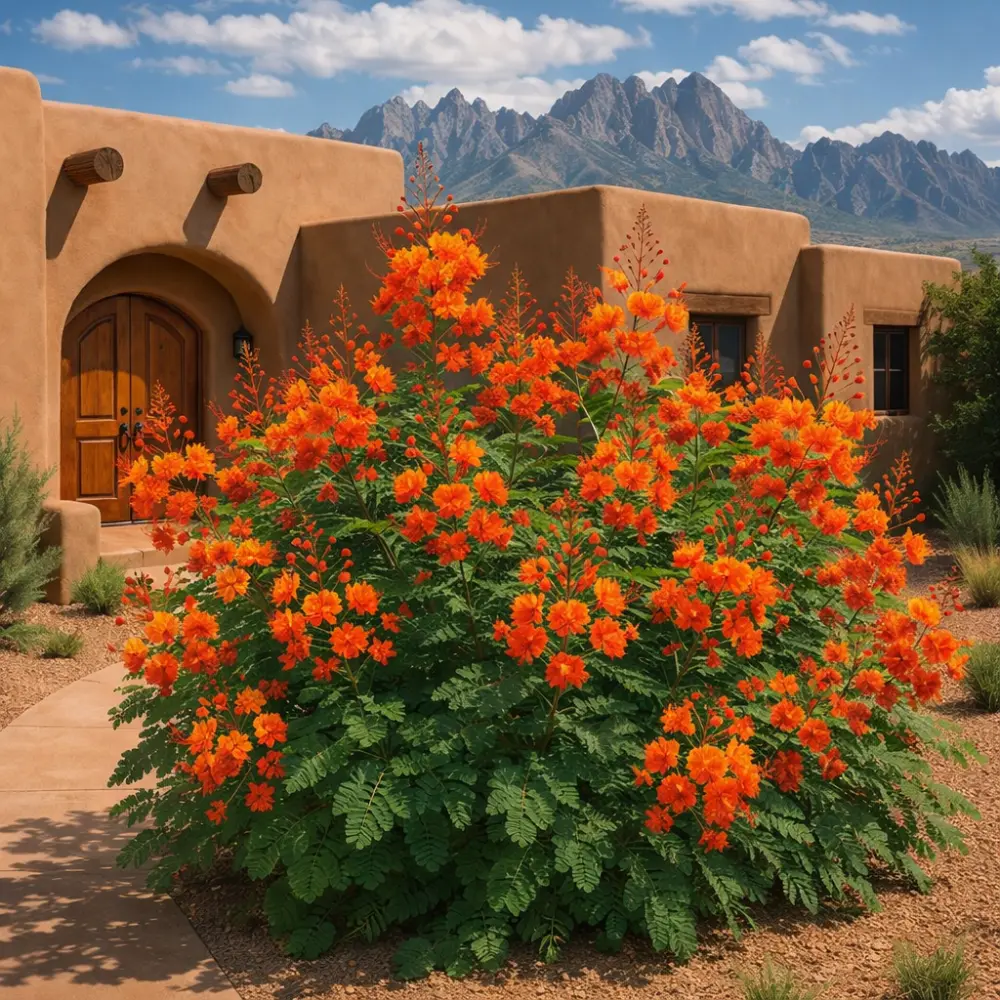
The Red Bird of Paradise plant care (Caesalpinia pulcherrima) is also called the Mexican red bird of paradise and the pride of Barbados. The flowers produce beautiful, bright red/orange blooms and thrive in hot, warm climates. The fern-like, small-sized foliage resembles a Mesquite bush or a fern shrub. If you are looking for that tropical landscape look… This is it.
In tropical zones, it will last throughout the year-long season. In the Southwest, where temperatures get below 32 degrees Fahrenheit, it will go dormant. This means you will have to prune it back during the winter season.
Where to plant or place it?
Put it somewhere that gets full sun, like near a sidewalk or in a rock garden where the soil drains fast. This plant works really well in gardens that don’t need much water, so it fits perfectly in any xeriscape setup. It also mixes well with other plants that do well in dry weather, like agave or prickly pear, which can give your yard a desert vibe without much work. Even if you usually like plants that need more water, you’ll find this one’s easy care makes it a smart pick. Desert Plants Names and Pictures.
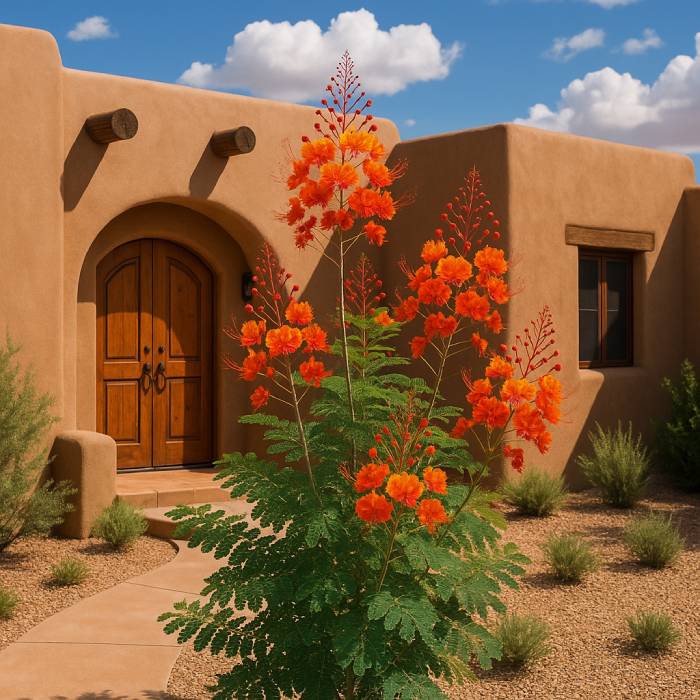
The Red Bird of Paradise Plant
The Red Bird of Paradise thrives in full sun and actually prefers hot locations, including areas that receive reflected heat from walls, driveways, and sidewalks. During its first two years after planting, water it regularly to help establish a deep, healthy root system. Once established, it becomes very drought tolerant and requires much less supplemental watering.
In areas that experience freezing temperatures, the plant will go dormant during the winter months and lose its top growth. New shoots will emerge from the roots when warm spring weather returns. In frost-free or tropical climates, however, the Red Bird of Paradise may remain evergreen and continue blooming for much of the year.
Be sure to give this plant plenty of room to grow. In the Desert Southwest, it typically reaches 5 to 6 feet tall and about 5 feet wide. In tropical or subtropical climates with longer growing seasons, it can become considerably larger.
.

How to care for the Red Bird of Paradise
Once established, the Red Bird of Paradise is one of the easiest flowering shrubs to care for in the Desert Southwest. It naturally develops a rounded, mounding shape, so very little pruning is needed during the growing season.
During the first two to three years, cut the plant back to within a few inches of the ground after the first hard frost each winter. This encourages a stronger root system and fuller growth the following spring. After the plant has matured, you can simply prune it back by about two-thirds to three-fourths each winter, removing any dead or damaged branches. It will quickly produce vigorous new growth when warm weather returns.
Red Bird of Paradise is not a heavy feeder and grows well in the poor, well-drained soils common throughout the Southwest. During the first growing season, applying a balanced fertilizer such as a 20-20-20 formula once or twice can help establish a healthy root system. To avoid overfertilizing, mix the fertilizer at half the label’s recommended strength. Once established, the plant rarely needs supplemental fertilizer unless growth or flowering begins to decline.
Another advantage of this plant is its excellent resistance to insects and diseases. Most gardeners will rarely experience pest problems, making it a dependable, low-maintenance addition to Southwest landscapes.
Red Bird of Paradise Plant
Keep an eye out for powdery mildew and aphids during the initial stages of growth. Many times, people confuse the Yellow Bird of Paradise tree or shrub (C. Mexicana) with the Red Bird of Paradise. Here is information on the Yellow Bird of Paradise.
What to do in colder regions?
Red Bird of Paradise Gardening Tip: If you live in an area that experiences long periods of freezing temperatures, you’ll need to give your Red Bird of Paradise some extra protection, especially during its first year after planting.
After the first hard frost, cut the stems back to within a few inches of the ground. Then cover the root zone with a 3- to 6-inch layer of mulch, or place several medium-sized rocks over the base to help insulate the roots from freezing temperatures. In colder climates, this extra protection greatly improves the chances that the plant will survive the winter and return with vigorous new growth in spring.
Why Gardeners Love the Red Bird of Paradise
The Red Bird of Paradise is famous for its brilliant orange and red flowers that create a spectacular display from late spring through fall. If you’re looking for a plant that adds bold, tropical-looking color while thriving in the intense heat of the Desert Southwest, this is one of the best choices available. It blends beautifully into Southwest-style landscapes and requires very little maintenance once established.
Interesting Facts
The seeds of the Red Bird of Paradise have been used in some cultures, and various parts of the plant have a history of use in traditional medicine. However, the seeds and other parts of the plant can be toxic if eaten, so they should never be consumed without guidance from a qualified medical professional. If you’d like to learn more about the plant’s history and botanical background, you can read additional information on Wikipedia.
Where to Buy
Most garden centers and nurseries throughout the Desert Southwest begin carrying Red Bird of Paradise plants in late spring and continue through early summer. Planting during this time allows the root system to become well established before cooler weather arrives.
Furthermore, the plant produces edible seeds, and the flowers can be used as traditional medicine. Read more over at Wikipedia.
The Red Bird of Paradise is normally available at most Southwest Nurseries in late spring or early summer.

The Mexican bird of paradise is another plant that is similar in looks. For more information on the Mexican variety, please follow this link—Mexican Bird of Paradise.
The USDA gardening zone for this plant is 8 – 11
Do you know the difference between the bird of paradise plants? Find out here.
New to Southwest Gardening?
Stop wasting money on plants that will not survive our heat and drought.
My Southwest Gardening Made Simple eBook shows you which trees, shrubs, flowers, and vegetables actually thrive in New Mexico, Arizona, and West Texas.
The best plants for hot, dry climates
Common mistakes that kill Southwest plants
Easy-to-follow advice for beginners

Paul Guzman is a lifelong Southwest gardener and gardening writer with decades of experience helping homeowners grow beautiful landscapes in the desert Southwest. He writes for Guzman’s Garden Centers in Las Cruces, New Mexico, with contributing expertise from Gary Guzman, owner of Guzman’s Garden Centers. If you have any questions or enjoyed this post, feel free to share your thoughts in the comments below.
What is the best time of year to find and plant this?
Hello, Mary. The Red Bird of paradise loves full hot sun. Thus, planting it during July or August is the best time to plant. Just, make sure it gets plenty of water. Thanks for your comment.
Paul
Thanks! Any tips on working with a seed pod taken from a plant?
Hello, Mary. Thanks for commenting. I’ve never tried growing a Red bird of Paradise from seed. However, it is basically the same procedure as most seeds. It is important to note these plants are not native to this area so….you will have to provide your Red Bird of Paradise seed a greenhouse to keep the soil moist and warm throughout the season. Here is a link that might also help http://www.wikihow.com/Grow-Plants-from-Seed
Where can I get a bird of paradise
We have Red Bird of Paradise plants at both locations.
How much r your red bird of paradise
I live in N. California can I purchase red bird of paradise on ur website if u have one
Sorry, Antonio, we do not ship out of City. However, you can go to Monrovia.com and search for the Red Bird of Paradise plant. They will add your purchase and send it to your local independent nursery. If your local nursery does not do business with Monrovia.com then this will not be possible.
yes it is possible to start from seed wait till the pods fall off from the plant .wait till fall when the red bird of paradise drys up by this time the seeds are dry and ready for planting some times you will find little seedlings by the plant if you know some one dig them up and plant them protect from the full sun till they mature I started mine 2 years ago and they and have started to flower its a hit and miss throw 4 or 5 seeds in a hole about 3 inches keep soil moist.but not to wet, put a couple of bricks or something to show where your seeds are once they sprout in spring you will need to protect them from the heat the bricks will provide the shade be patient and the wait will be worth it.do not cut the plant to the ground until 3 years to allow it to mature and branch out good luck.
Hello, Pete thanks for this information. I do have a few questions? Will we have to use a greenhouse or indoor conditions in order for the seeds to germinate? In our neck of the woods it does get down to 15 degrees during the cold winter months. So planting them outdoors will not work for here.
I live here in El Paso and found this to work after trial and errow. the reason for planting in the ground is based on time for seeds to germinate since we have on occasion mild winters and early springs the seeds will get an early start and by April or may, you will see little stems with burgundy color I have been able to transplant them and put some in pots and give away keep the strong one and go from there as for green house I suppose it would work I hope this helps thanks .
It depends on the size. One gallon around 9 USD and up to $89.00 for a large 15 ga.
Hello, I hope you can answer these questions for me. How far apart do you plant them, how many do you bunch together for a full effect, when do you plant them and do you have any pictures if the red and yellow birds of paradise growing together. Thank you.
Hello, Lani. Here are the pictures below. The Red Bird of Paradise and the Yellow bird of Paradise image below.

What is the best fertilizer for The Red Bird of Paradise of the American Southwest? In our area (Tucson, Az.) we have lots of caliche and alkali in the soil, which is hard as a rock. We purchased a house and yard which has about twenty which are planted about three feet apart, are mature, and very tall and not spread out. Their height is about 15 feet. Blossoms are few and far between.
Hello, Jim, a good fertilizer for the Red Bird of Paradise is anything with an analysis of 20-20-20. This is a well balanced all-purpose fertilizer. Too much shade can also prevent the Red Bird of Paradise from not blooming. It’s also important to note that anything with a high content of phosphorus will help any plant that with new blooms or flowers.
If you want to go organic Bat Guano and Steamed bone meal are good high phosphorus fertilizers. Fox Farm products have good organic fertilizers…ask for them at your local nursery.
Please see above! What is meant by “moderation”. Please be specific! Thank you!!!
“Moderation” means someone one on our staff has to approve your comment before it gets posted. We get a lot of spam and fake comments on the comment sections of our posts. Just post your comment and we will approve all legitimate questions or comments. Thanks for giving us a chance to explain what “moderation” means.
Do you have the Red Bird of Paradise in stock? If not, do you anticipate getting any this year?
Hello, Gail. We do however, they are just now coming out of dormancy. Might have larger ones in early June.
https://guzmansgreenhouse.com/red-bird-of-paradise-plant/