Shade trees for the Desert Southwest
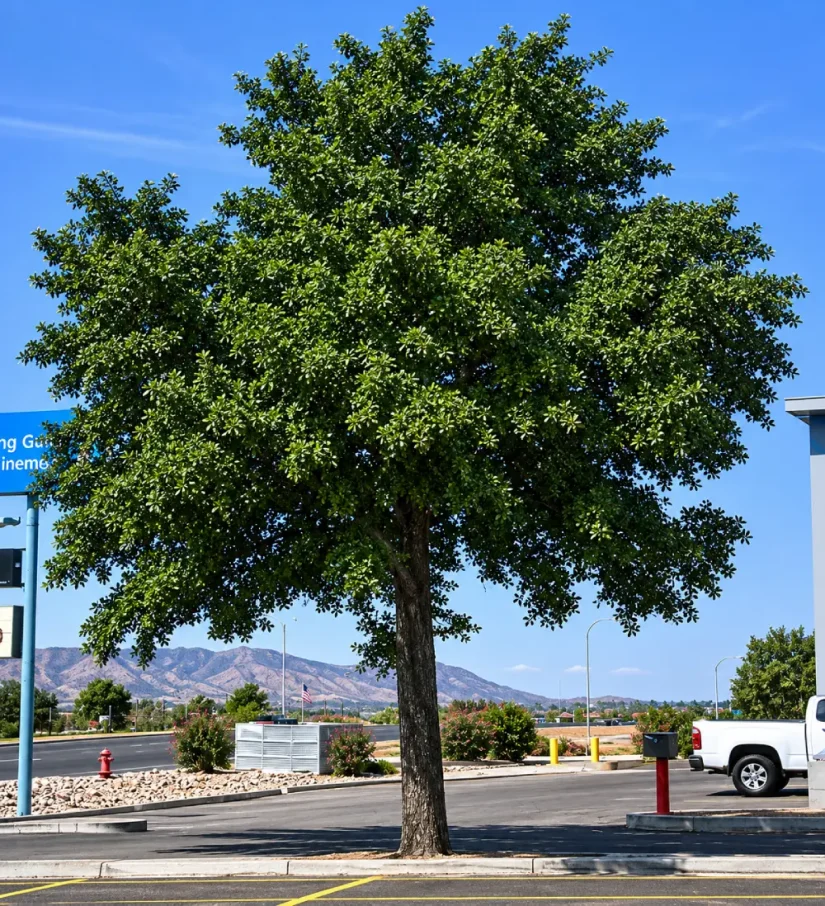
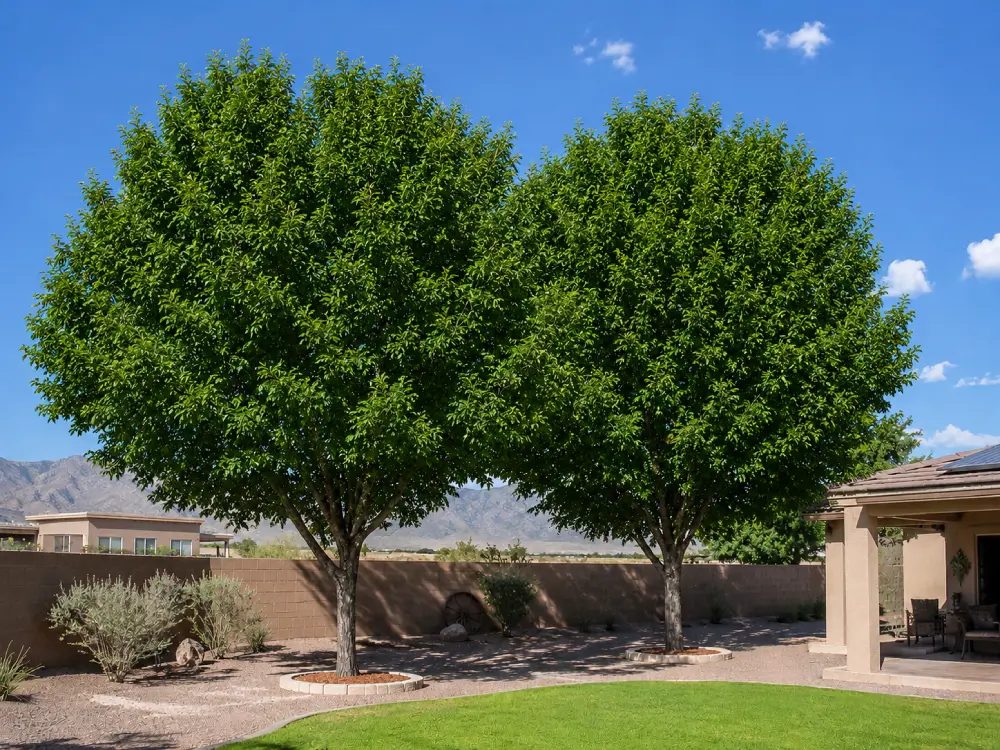
Shade trees for the Desert Southwest. The Chinese Pistache (Pistacia Chinensis) Does very well in the southwest it is usually pest and disease-free. Low watering and easy to maintain. This shade tree is a great choice for many southwestern landscapes. It turns a rich red color during the fall and provides great shade. It has an umbrella-like canopy and can grow up to 50ft tall.
Chinese Pistache Tree for Shade
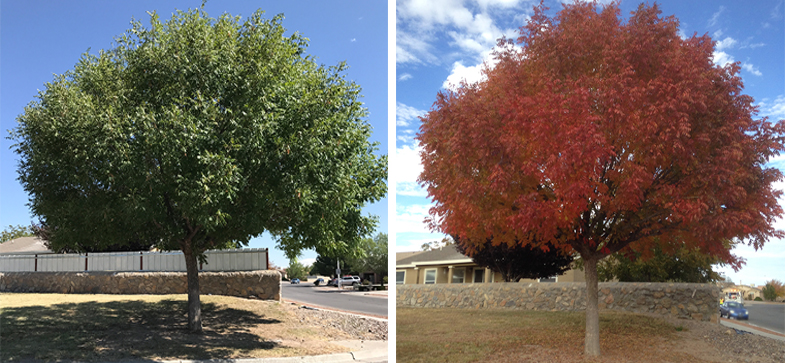
The young Chinese Pistache looks somewhat gangly and out of place, but when it reaches maturity, it is a beautiful shade tree. Fertilize your shade tree in spring when foliage sprouts. This tree is drought tolerant but requires regular watering when first planted. Pictured below is a 15-year-old Chinese Pistache during its fall color. USDA zone 6-9

The Western Cottonwood
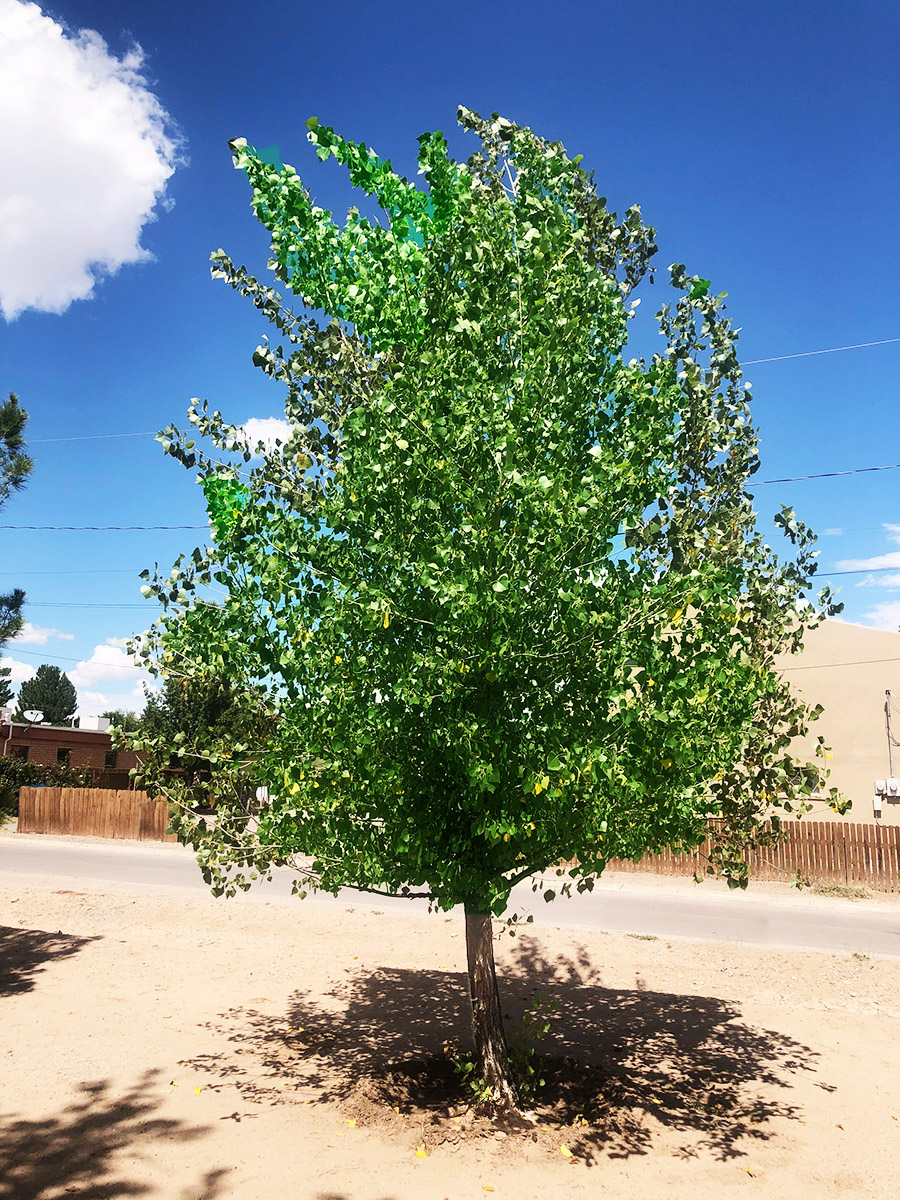
The Western Cottonwood likes water and will grow close to riverbanks and places where there is water nearby. It is a relative of the Poplar family trees. Their root system is extensive so planting one near water pipes or water features is not a promising idea. Read more about this tree here. The Western Cottonwood Tree. USDA zones 2-9.
Live Oak Trees for Shade
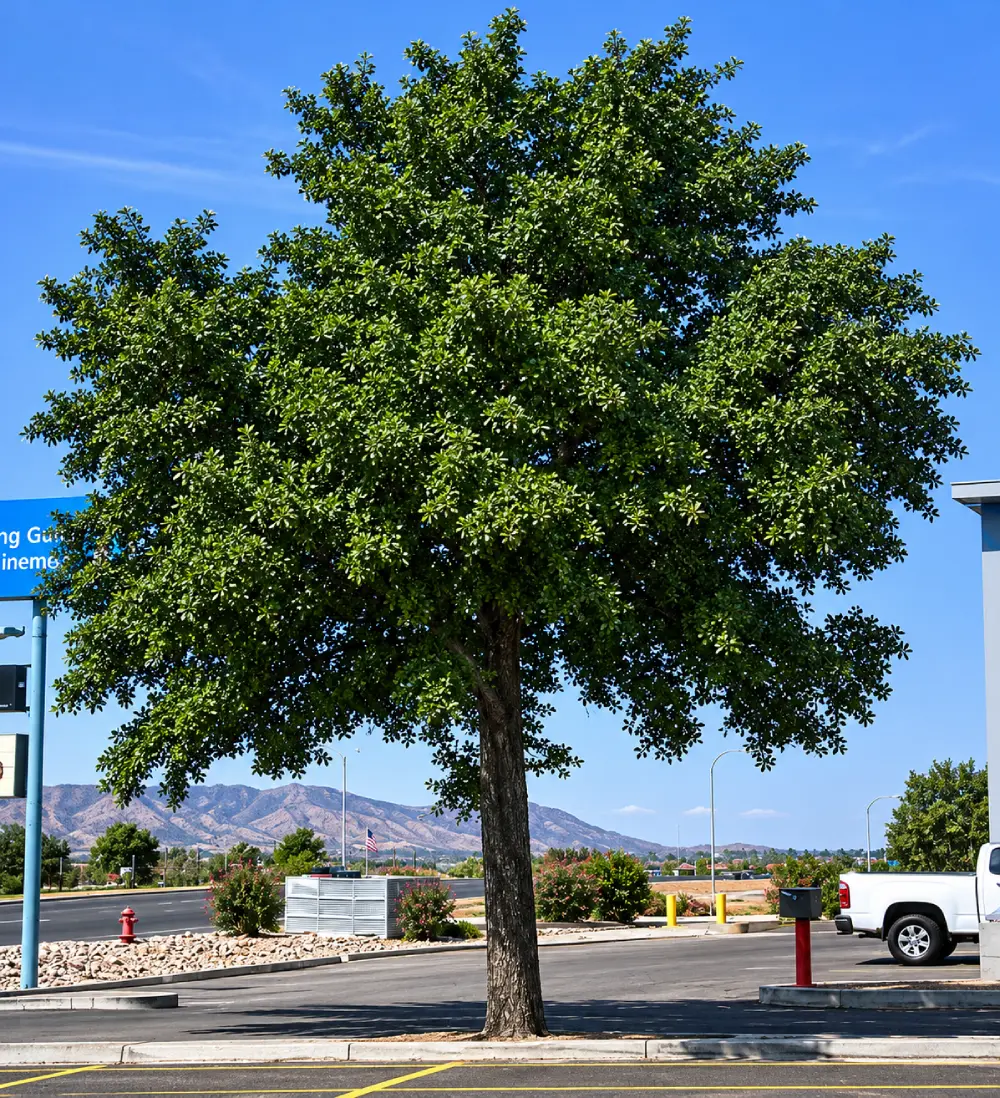
Live Oak (Quercus virginiana). This tree does extremely well in the Southwest it provides plenty of shade and can be trimmed into almost any shape. An excellent choice for many southwestern landscapes. It is an evergreen tree; however, it will shed old foliage during the fall season and provides great shade. it has an umbrella-like canopy and is one of the fastest-growing oak trees in the world.
It will produce acorns that will drop during the spring season, so there is some maintenance involved.
The Live Oak tree is a moderate to fast-growing evergreen shade tree. It can grow up to 60ft tall and about 100ft wide when mature. When it reaches maturity, it becomes a beautiful shade tree. Fertilize your live oak tree shade tree in spring when foliage sprouts. This tree is moderately watered but requires regular watering when first planted.
USDA zone 8-11.
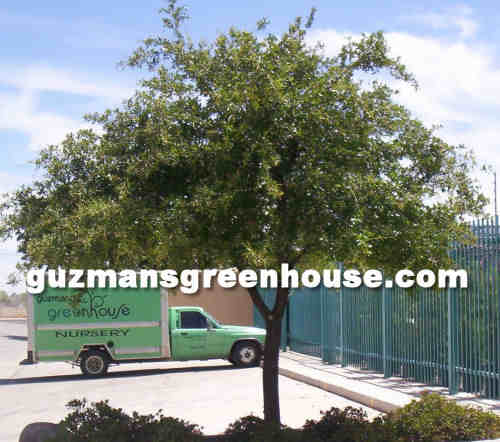
A Live Oak Tree is good for Shade.
Shade trees for the Desert Southwest
The Weeping Willow Tree (Salix babylonica) is an extremely fast-growing tree. This is the tree to purchase if you need a fast-growing tree. Long, narrow type leaves droop down, which gives it that “weeping effect”.
It is deciduous and will turn a golden yellow in the fall. It is also one of the first trees to leaf out during early spring. The root system is invasive, and they are prone to insects. This shade tree is an excellent choice for many southwestern landscapes. Learn more here.


Ash Trees for Shade
Modesto Ash Tree (Fraxinus velutina) is a moderate to fast-growing tree. It is deciduous, and the leaves turn a bright golden yellow in the fall. They can grow about 50ft tall and 50- 60 ft wide. Excellent shade tree for a medium-sized backyard. This tree is drought-tolerant and can tolerate poor soil, which makes it an excellent choice for southwestern landscapes. Arizona Ash is another good all-time favorite. It is remarkably similar to the Modesto ash but slightly taller and has narrow leaves. It is very drought-tolerant once it gets established. The more water you provide it during its first 2-3 years after planting, the faster it will grow. Learn about caring for Ash Trees.
USDA Zone 6a – 10b

The Arizona Ash is another good all-time favorite. It is very similar to the Modesto ash but is slightly taller and has narrower leaves. It is very drought-tolerant once it gets established. The more water you provide it during its first 2-3 years after planting, the faster it will grow.
The Bonita Ash is like the Arizona ash tree. The main difference is the foliage. Bonita Ash will produce larger leaves than the Arizona Ash Tree. It is a better-looking shade tree. All Ash trees are susceptible to borers and Anthracnose. This disease is not as pervasive as in other parts of the country. Anthracnose thrives in areas where there is high humidity and moisture. Ash trees are drought-tolerant once they become well-established. Typically, around the 3rd or 4th year after planting.

Raywood Ash Tree for Shade
The Raywood Ash Tree is one of my favorite shade trees. It has a moderate to fast growth rate and provides an abundance of cooling shade during the warmer months. As a bonus, its attractive green foliage transforms into a rich, dark reddish-purple color in the fall, creating a stunning seasonal display that adds beauty and curb appeal to any landscape.
The care and watering requirements for this tree are similar to those of most Ash trees. It makes an excellent choice for planting in front of your home, creating a beautiful and eye-catching landscape scene. Not only will it provide plenty of cooling shade during the warmer months, but it will also add outstanding curb appeal and enhance the overall appearance of your landscape. Once established, this tree can become a true focal point in your yard. Don’t be surprised if your neighbors stop to ask, “Where did you get that tree?”
Mimosa Tree for Shade
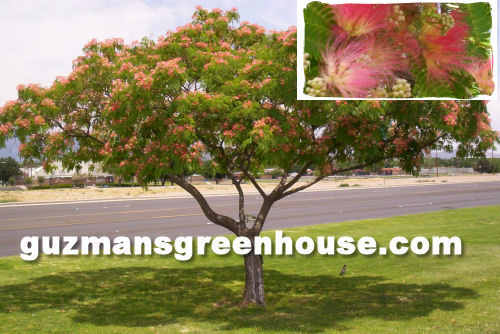
Mimosa(Albizia julibrissin) Moderate to a fast-growing tree. It is deciduous, and the leaves turn a bright golden yellow in the fall. They can grow to 40ft. tall and 50- 60 ft. wide. Excellent shade tree for a medium-sized backyard. This tree is drought-tolerant and can tolerate poor soil, which makes it an excellent choice for southwestern landscapes.
AUTUMN GOLD MAIDENHAIR TREE
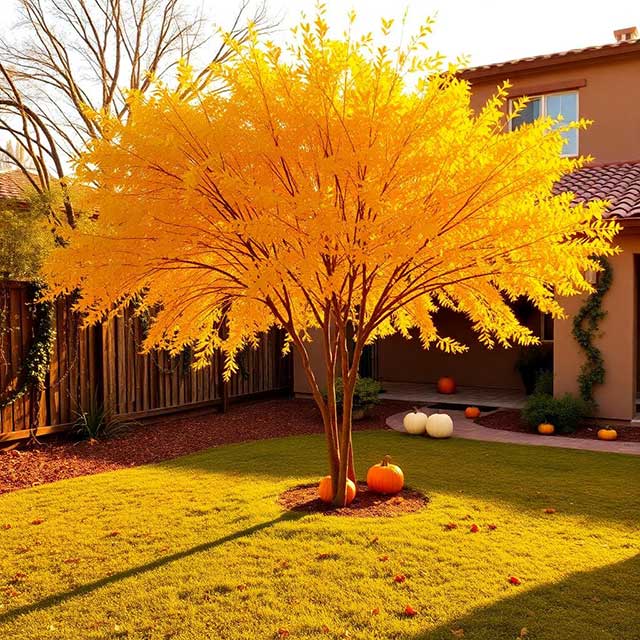
This shade tree is a non-fruiting male specimen. It will turn a golden yellow in the fall. Its symmetrical upright branching form becomes broad with age. Deciduous. Full sun. Slow-growing to 35 to 50 feet high, equal width. It is also called the Ginkgo biloba ‘Autumn Gold’ tree. It has fan-shaped green leaf that turns a brilliant golden yellow in the fall season. The symmetrical branching creates an ideal upright landscape accent, eventually becoming a handsome shade tree with age. Learn more about this tree here. Ginko Biloba tree.
Idaho Locust Tree
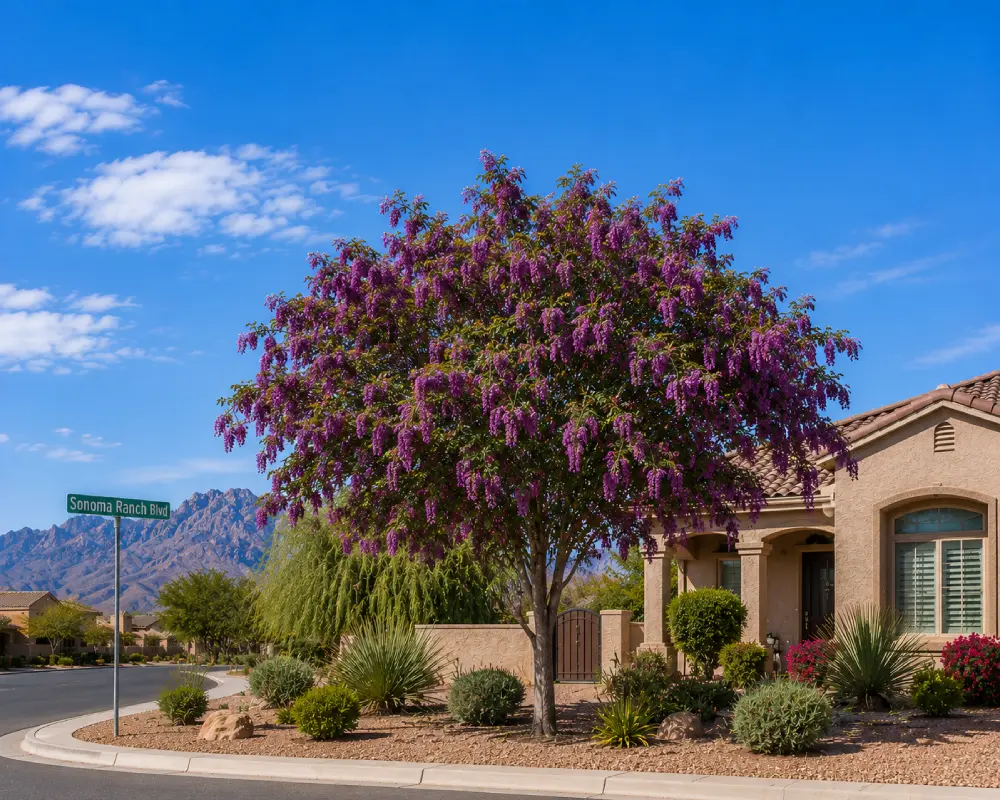
Scientific Name: Robinia × ambigua ‘Purple Robe’
It loves full Sun – USDA zones 4- 8. Idaho Locust tolerates summer heat and dryness as well as winter cold. It does very well in the desert southwest. Also called the purple Robe Locust.
The tree has beautiful fragrant pink flowers and grows to about 35ft. tall and 25ft. wide. It is a shade and ornamental tree. Color Your World Nurseries Guzman’s Garden Centers usually have these shade trees year-round.
Pecan trees for shade
Pecan trees are also a great tree for shade; they have a nice large canopy and can grow up to about 70ft. tall and about 40- 50 ft. wide, and if taken care of properly, can live up to 50 or more years.
You should plant pecan trees about 2″ deeper than normal to allow for the settling of the soil. Water every day for the first 2 weeks when planting any tree and use a good root stimulator to stimulate root growth. Learn more about pecan trees right here. Types of Pecan Trees.
Most pecan trees can be grown in USDA Zones 5-9

Mesquite Trees for Shade
The Honey Mesquite does well in the Southwest. It is a perfect tree for those who want shade and a low-watering tree. Find out more about the Honey Mesquite here.
The Honey Mesquite tree can be grown in USDA zones 6-11
Desert Willow Tree for Shade
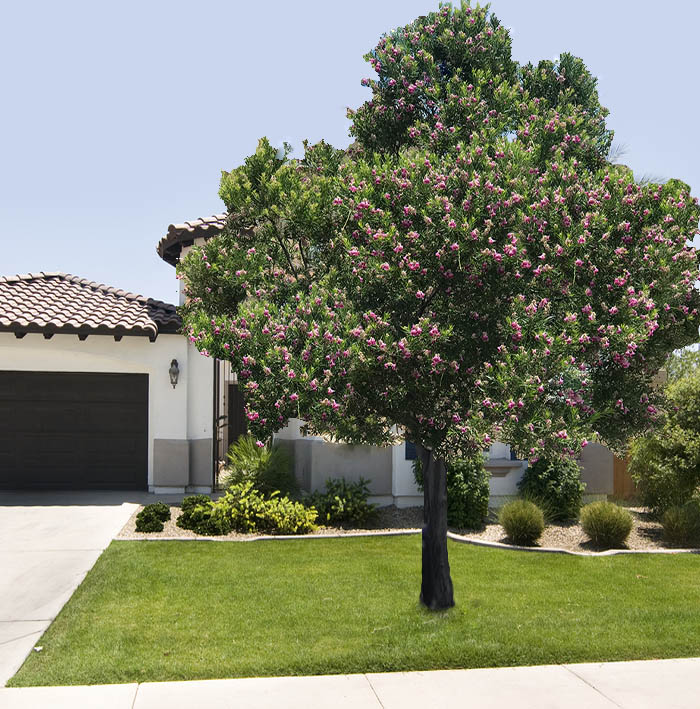
The Desert Willow is a drought-tolerant tree that will provide shade. It will grow up to 30 ft. tall and 20 ft. wide. It is deciduous (loses its leaves in winter). Find out more about the Desert Willow trees here. USDA Zones 7b through 11.
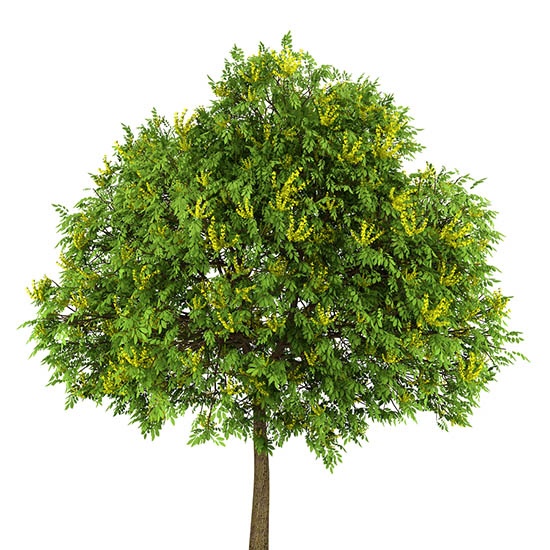
The Golden Rain Tree (Koelreuteria paniculata) is a good shade tree for the Southwest. It will grow at about 30-40 ft. tall and wide. It will get taller after about 30 years. Learn more about the Golden Rain Tree.
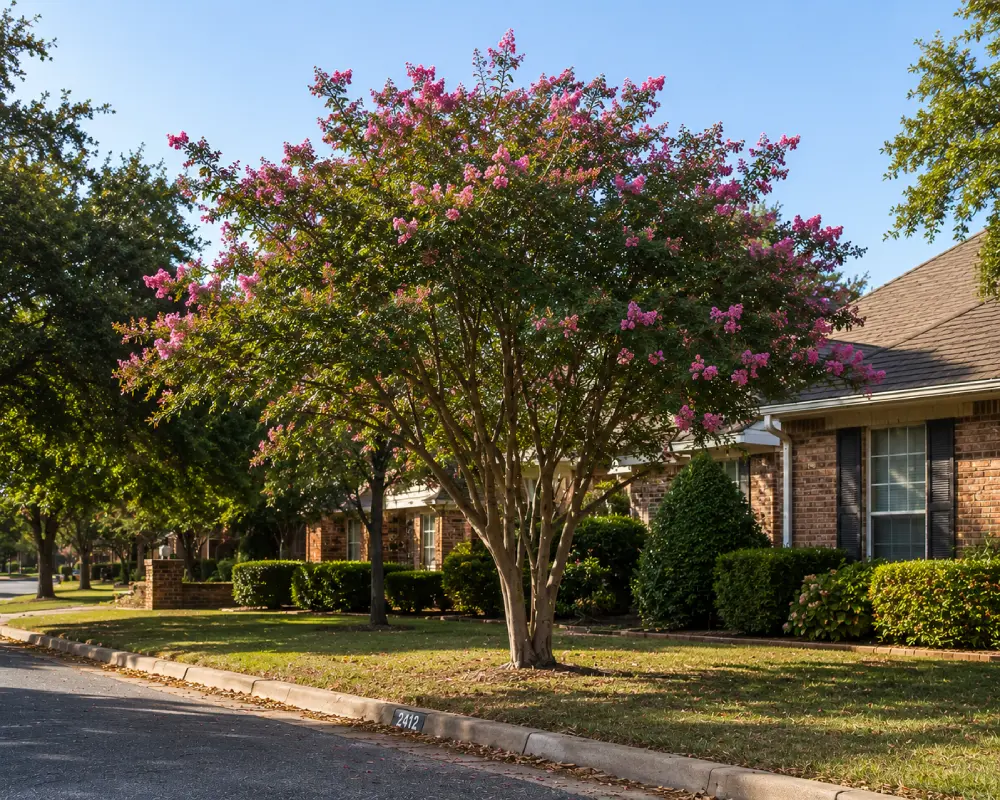
The Muskogee Crape Myrtle.
The Muskogee Crape Myrtle is one of the largest and most popular crape myrtle varieties for the Southwest, prized for its long-lasting lavender blooms and attractive smooth bark. This fast-growing ornamental tree typically reaches about 20 to 30 feet tall and 15 to 20 feet wide at maturity, forming a broad, rounded canopy that provides filtered shade and excellent curb appeal. Once established, Muskogee Crape Myrtles are considered moderately drought-tolerant, but they perform best with deep watering during the hottest summer months, especially in desert climates like Las Cruces. Water young trees regularly during establishment, then reduce frequency while still providing occasional deep soakings to encourage healthy blooming and vigorous growth.
If correctly trimmed, Crape Myrtles can also be used as shade trees. Read more at Landscaping with Crape Myrtles.
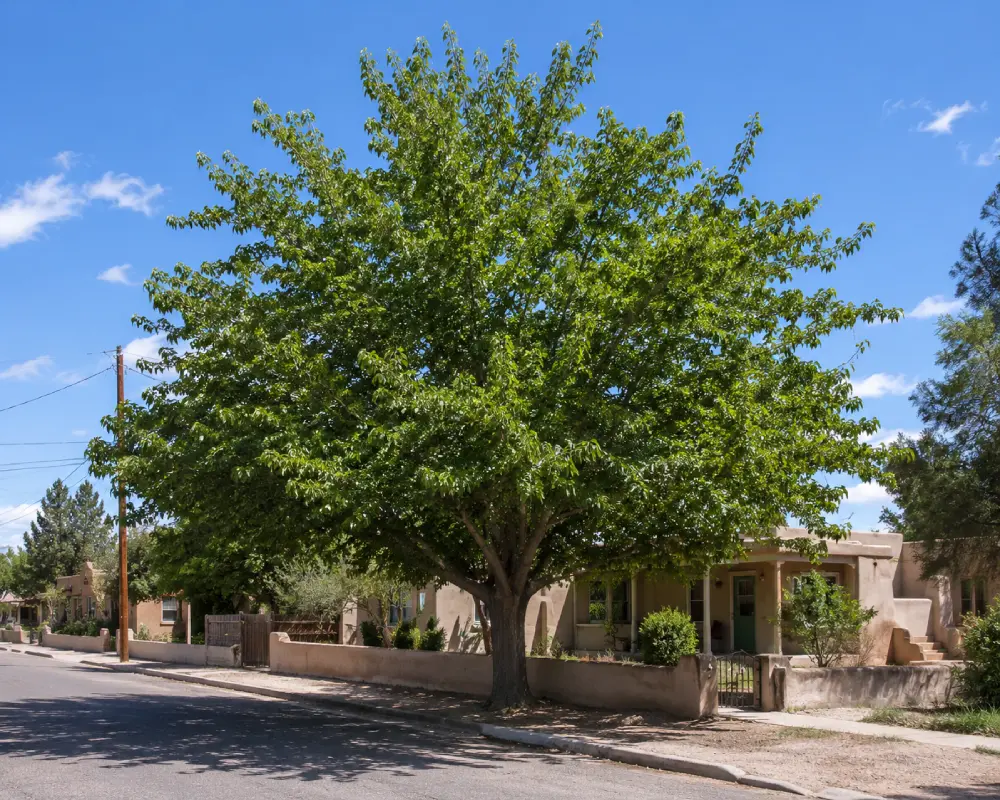
The Non-Bearing Mulberry Tree
The non-bearing mulberry tree is a fast-growing shade tree that has been a popular choice in older Las Cruces neighborhoods for decades. Unlike fruiting mulberries, this variety produces little to no messy berries, making it much cleaner for residential landscapes, patios, and sidewalks. Its dense canopy provides excellent shade during the intense Southwest summer heat, helping cool homes and outdoor living areas. The foliage is bright green, lush, and attractive, creating a large cooling umbrella effect that works especially well in traditional New Mexico landscapes. Once established, the tree is fairly drought-tolerant, although it benefits from deep watering during long hot periods.
A mature non-bearing mulberry can reach approximately 35 to 50 feet tall with a spread of 35 to 50 feet wide, depending on soil conditions and watering. It grows relatively quickly compared to many other shade trees and develops a broad, rounded canopy over time. This tree typically performs best in USDA Hardiness Zones 5 through 9, making it well-suited for much of the Southwest, including southern New Mexico. It adapts to a variety of soil types but prefers well-drained soil and full sun exposure for the healthiest growth. Because of its size and aggressive root system, it is best planted away from sidewalks, foundations, and septic systems.
Best Shade Trees for the Desert Southwest
This webpage is for informational purposes. Not all trees are available at our Nurseries.
If you have questions, you can CONTACT US here via email.