Last updated on July 19th, 2026 at 05:30 am
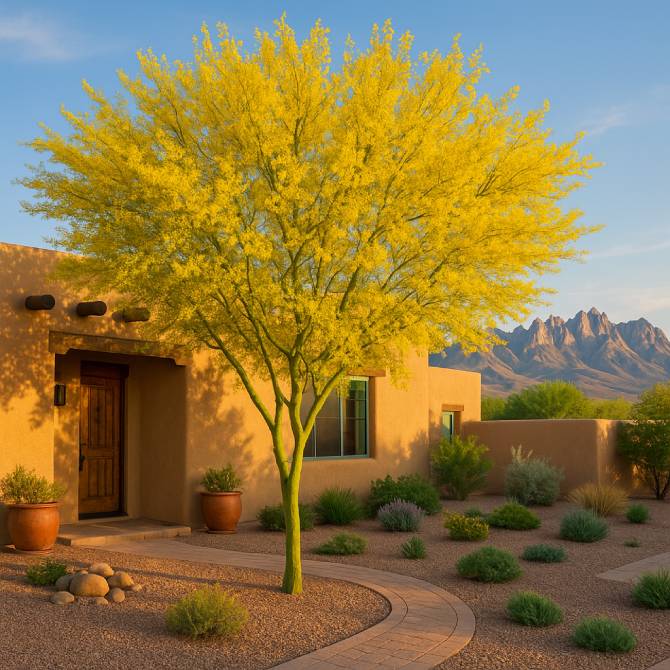
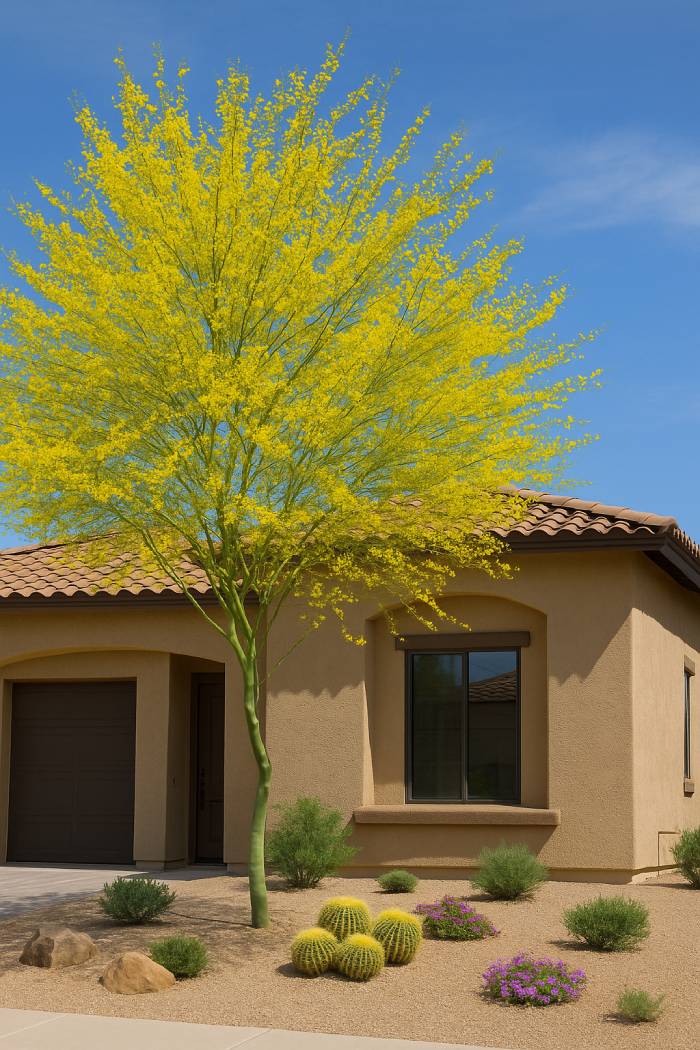
The Palo Verde tree (Cercidium-Parkinsonia) is also known as the Desert Museum Palo Verde. It is an exceptional tree for the Southwest. It is a Hybrid of the common Palo Verde tree that is native to the Sonoran and Southwest deserts. Palo Verde Means Green Stick in Spanish.
Flowering Palo Verde
It produces a mass of beautiful small yellow flowers in late spring. They are native to the Sonoran Desert and thrive all around the southwest from southern California to southern Texas.
The Flowers

Once established, it will grow to about 30-40 ft. tall and 50 ft. wide. A drought-tolerant tree that is durable and, in fact, can live up to 400 years.
I love how this tree gives us a lot of shade when it gets really hot in the summer. If you live somewhere dry like me, you know shade is hard to find. That’s why I think this tree works so well for desert yards or places where it rarely rains.
It doesn’t need much watering, but it still grows big enough to let you sit under it and cool off. When I look around at neighbors’ yards, the ones with this tree always look cooler and more comfortable. If you want some relief from the sun without spending a lot of time or money, picking a tree like this just makes sense.
It gets its name from the year-round green bark on the tree. In Spanish, Palo Verde means “Green Stick”.

Pictures of the Desert Museum Palo Verde Tree


A magnificent Palo Verde at full colorful bloom.
The True Native Palo Verde
The Foothills Palo Verde (Parkinsonia microphylla) is native to the Desert Southwest. You will often see it growing naturally along dry arroyos, rocky slopes, desert foothills, and undeveloped areas surrounding Southwest neighborhoods. It is well adapted to intense sunlight, poor rocky soil, extreme summer heat, and long periods with very little rainfall.
This species is smaller and slower-growing than many other palo verde trees. At maturity, it typically reaches about 15 to 20 feet tall with a similar spread. Its naturally irregular branching pattern and green bark give it an attractive desert appearance. The green bark also helps the tree produce energy through photosynthesis, even when it has few or no leaves.
The Foothills Palo Verde produces very small yellow-green leaves that help reduce moisture loss. When temperatures fall below approximately 32°F, the leaves may turn yellow and drop. The tree can also shed its leaves during extended drought or extreme heat. This is a natural survival response and does not necessarily mean the tree is dying.
Small yellow flowers usually appear in spring, although flowering can vary depending on winter rainfall and local growing conditions. Once established, the Foothills Palo Verde requires very little supplemental water. Occasional deep watering during prolonged dry periods can help a landscape tree, but frequent irrigation may cause weak growth and root problems. Plant it in full sun and well-draining soil where its natural desert shape has enough room to develop.
Problems with the Palo Verde Tree
More Southwest trees for landscaping – Southwest Trees.
Do you have questions or want to comment on this article? We would love to hear from you.
New to Southwest Gardening?
Stop wasting money on plants that will not survive our heat and drought.
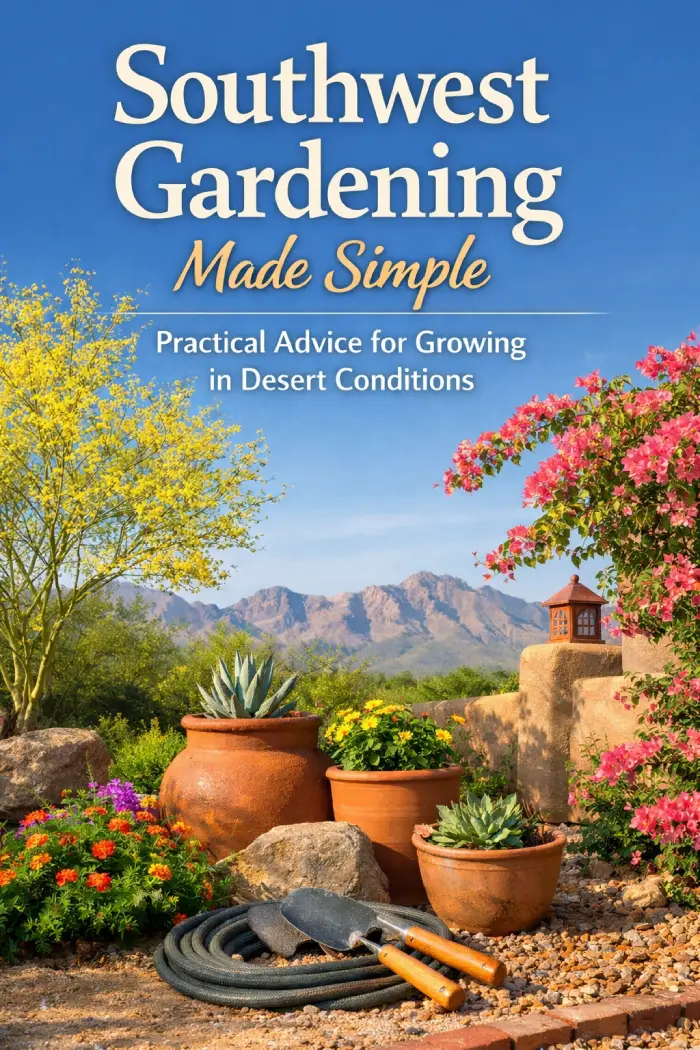
My Southwest Gardening Made Simple eBook shows you which trees, shrubs, flowers, and vegetables actually thrive in New Mexico, Arizona, and West Texas.
The best plants for hot, dry climates
Common mistakes that kill Southwest plants
Easy-to-follow advice for beginners

Paul Guzman is a lifelong Southwest gardener and gardening writer with decades of experience helping homeowners grow beautiful landscapes in the desert Southwest. He writes for Guzman’s Garden Centers in Las Cruces, New Mexico, with contributing expertise from Gary Guzman, owner of Guzman’s Garden Centers. If you have any questions or enjoyed this post, feel free to share your thoughts in the comments below.

Do you have Trumpet vines?
We do have Trumpet vines. We have the “Madam Galen Trumpet vine” trumpet vine and others.