Last updated on April 12th, 2026 at 08:02 am
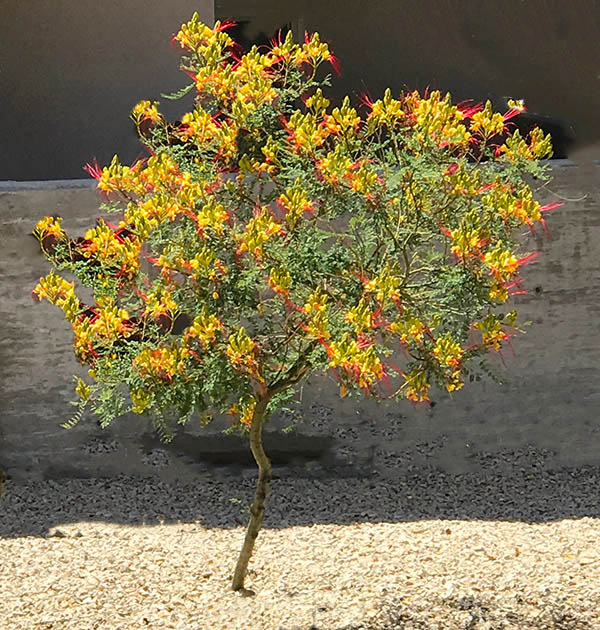
The Yellow Bird of Paradise (Caesalpinia gilliesii) is one of the most dependable and visually striking flowering shrubs for the desert Southwest. Native to arid regions, this plant thrives in hot, dry climates with minimal water once established.
It produces bright yellow blooms accented by long, elegant red stamens that extend outward, giving the plant a tropical look despite its desert toughness. These flowers typically appear from late spring through fall, attracting pollinators like bees and butterflies and adding long-lasting color to xeriscape landscapes.
This plant is toxic to humans and animals. Do not ingest any part of the plant.
USDA zones 8-10.
The Yellow Bird of Paradise Plant
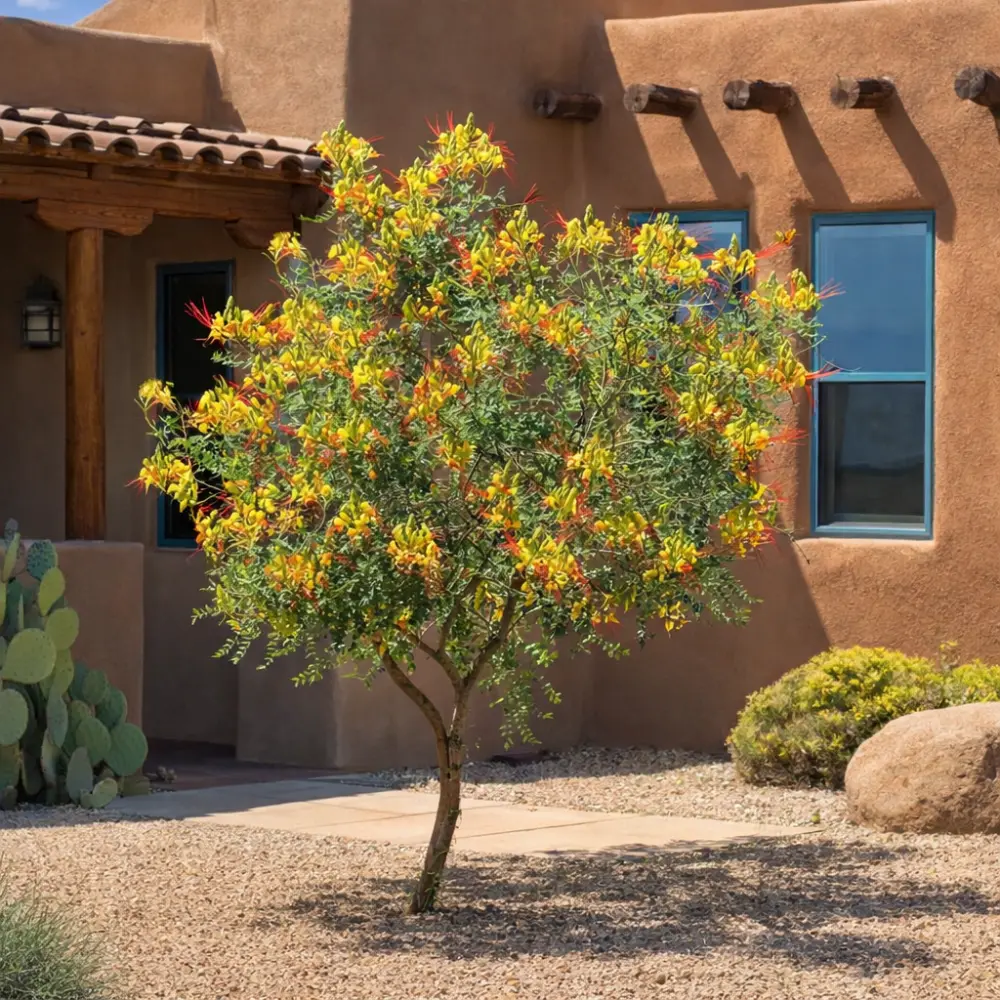
This plant is an excellent choice for rock gardens, low-water landscapes, and full-sun planting areas. It performs best in well-draining soil and does not tolerate overly wet conditions, making it ideal for desert soils common in areas like southern New Mexico. Once established, it requires very little supplemental irrigation, making it a smart option for water-wise gardening.
In terms of size, the Yellow Bird of Paradise typically grows between 6 and 10 feet tall and just as wide, forming a loose, airy shrub. Because of its height and spread, it works well as a light screen, informal hedge, or background plant in landscape designs. It’s not dense like a traditional hedge, but it provides enough structure and height to create separation while still maintaining an open, natural look.
Another major advantage is its cold hardiness. This plant can tolerate temperatures down to approximately -10°F, although it may die back to the ground during extreme cold events. In most cases, it will regrow vigorously in the spring, especially in regions like Las Cruces where winters are relatively mild. Occasional pruning can help maintain shape and encourage fuller growth, but overall, it is a very low-maintenance plant.
Overall, the Yellow Bird of Paradise is a standout choice for homeowners looking to combine beauty, durability, and water efficiency in their Southwest landscape.
The Yellow Bird of Paradise plant is a good xeriscaping plant for rock gardens. Add shorter drought-tolerant plants like lantanas and purple verbena plants in front for a spectacular spring color garden.
There is nothing to prune unless you want it shorter. It loves the long southwestern hot sun. Plant it in full sun and keep it away from too much shade.
It only needs an occasional fertilizer and can tolerate almost any type of soil. However, it will grow faster and have more blooms with well-composted soil.

Looking for the Redbird of paradise? It right here: Red Bird of Paradise
The Mexican bird paradise is another caespalpinia plant that looks very similar. Click for more information.
Learn more about this plant over at Missouri Botanical Gardens.
Additionally, there are several types of “Bird of Paradise plants. Check out the following post. The Difference between Bird of Paradise Plants
The Yellow Bird of Paradise (Caesalpinia gilliesii) is considered toxic to both dogs and cats, but the level of toxicity is generally mild to moderate.
What parts are toxic?
- The seeds and seed pods are the most toxic parts
- Leaves and flowers may cause mild irritation if eaten, but are less of a concern
Got questions and or comments? Be sure to let us know below; we would love to hear your questions or comments.
New to Southwest Gardening?
Stop wasting money on plants that will not survive our heat and drought.
My Southwest Gardening Made Simple eBook shows you which trees, shrubs, flowers, and vegetables actually thrive in New Mexico, Arizona, and West Texas.
The best plants for hot, dry climates
Common mistakes that kill Southwest plants
Easy-to-follow advice for beginners

Paul Guzman is a lifelong Southwest gardener and gardening writer with decades of experience helping homeowners grow beautiful landscapes in the desert Southwest. He writes for Guzman’s Garden Centers in Las Cruces, New Mexico, with contributing expertise from Gary Guzman, owner of Guzman’s Garden Centers. If you have any questions or enjoyed this post, feel free to share your thoughts in the comments below.