Last updated on July 12th, 2025 at 01:54 pm
What is the Baja fairy duster plant? It is a plant that is native to southwest California and the northern part of Mexico. It goes by many names: the chuparosa, tabardillo, zapotillo, and its botanical name, the Calliandra californica. It will grow about 4, maybe 5 ft. tall and wide.
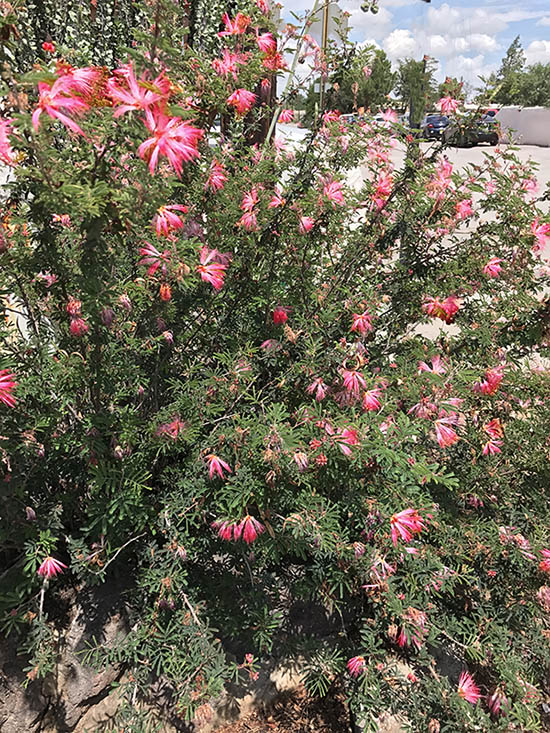
There are not too many plants that are drought-tolerant, evergreen, and produce red/pink flowers. Plants with qualifications I just mentioned are rare indeed. It can tolerate temperatures down to 5° f. and stay green all winter long. They come in a bright pink and a dark red flower, and both are hardy for the Southwest.
Baja Fairy Duster Flowers
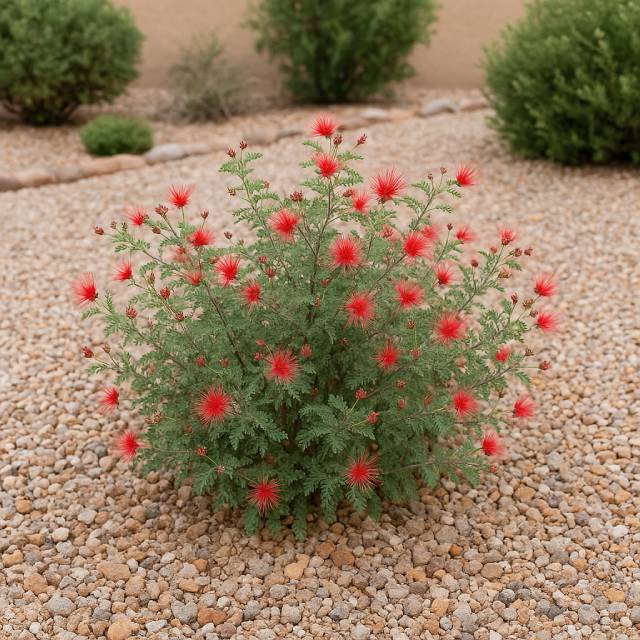
One of the most striking features of the Baja fairy duster plant is its flowers. Resembling small, fluffy pom-poms, they are a deep shade of red that is sure to catch the eye. These flowers bloom throughout the year, providing a burst of color even during the hottest summer months. Not only are they visually appealing, but they also attract hummingbirds and butterflies, adding even more life to your garden.
One of the biggest challenges for many landscapers is tracking down this stunning plant at your local garden center. It’s not always easy to find, and availability can vary widely depending on the region or time of year. This can make it frustrating for those trying to create the perfect landscape design. If you are a true low-watering landscaper, you should purchase this plant when you find it.
The Flower of the Baja Fairy Duster
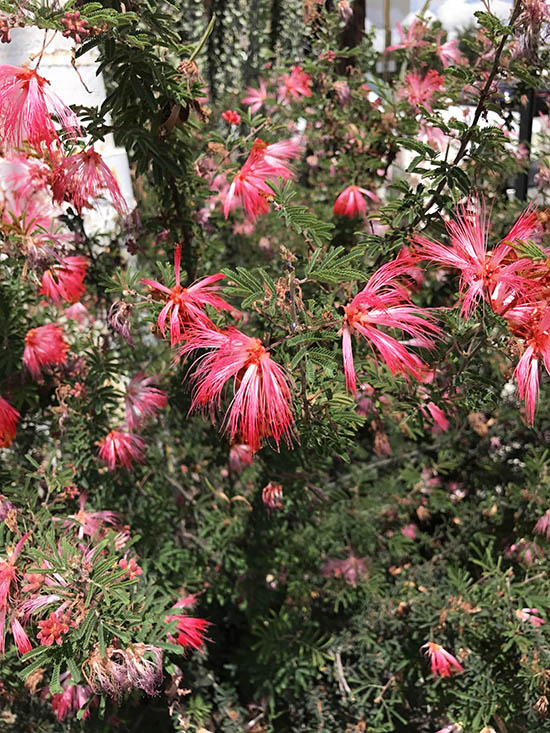
The foliage resembles a fern-like leaf and will stay green throughout the winter season. The odd thing about the flower is that it will bloom in late winter and early spring. A good plant for late winter color. It will also bloom again in mid-fall. The flower is pink or red, fluffy, spiky bloom resembling a hand duster, thus its name. It does produce seed pods that will burst when they are ripe.
Problems with the Calliandra californica
It is almost a low-maintenance plant that is drought-tolerant. It is not susceptible to insects or diseases. It can develop root rot if it receives too much water. I would water by hand the first year after initial planting. Good deep watering about once per week during mid-summer is good. Fertilize with an all-purpose fertilizer a 20-20-20 analysis will work, but only once or twice during the spring season.
If you’ve got a Baja Fairy duster in your yard, you might notice it looks pretty rough after a cold winter. Freezing temps can mess up its leaves and flowers. Don’t worry, though; you just need to grab some shears and give it a light trim in early spring. This helps the plant let go of any dead bits and get ready to grow new leaves and bright blooms. If you keep up with this quick trim each spring, your shrub bounces back fast and looks great by summer. Give it some water, watch it pop out new green growth, and you’ll see those red flowers again before you know it.
The Baja Fairy Duster is not toxic to cats and dogs. However, it is always best check if they have eaten any plant. They may experience gastrointestinal upset.
Baja fairy duster plant
More desert plants names and pictures.
Information on the Baja Fairy duster here.
USDA zones 8b-10b.

Greenhouse Manager, Master Gardener, and Webmaster.
If you have any questions or enjoyed this post, feel free to share your thoughts in the comments below.