Last updated on November 21st, 2025 at 07:06 am
The Dusty Miller Plant Care (Jacobaea Maritima). People also call it the Silver Ragwort plant. The first time I spotted it, I honestly thought it was just another stubborn weed popping up in the yard. Its pale, silvery leaves looked so different from everything else around, it really didn’t seem like a plant you’d want on purpose. I know I’m not the only one who’s thought that, but once you learn more about it, you see why some people actually like having it around. But once I saw it grow larger and blend in with the other garden plants, I quickly learned to love them. They are drought-tolerant and don’t mind the hot weather.
I’ve seen many customers at our retail greenhouse overlook this plant for the same reason. However, I try my best to educate them on the use and how it can enhance their garden if planted in the right place.
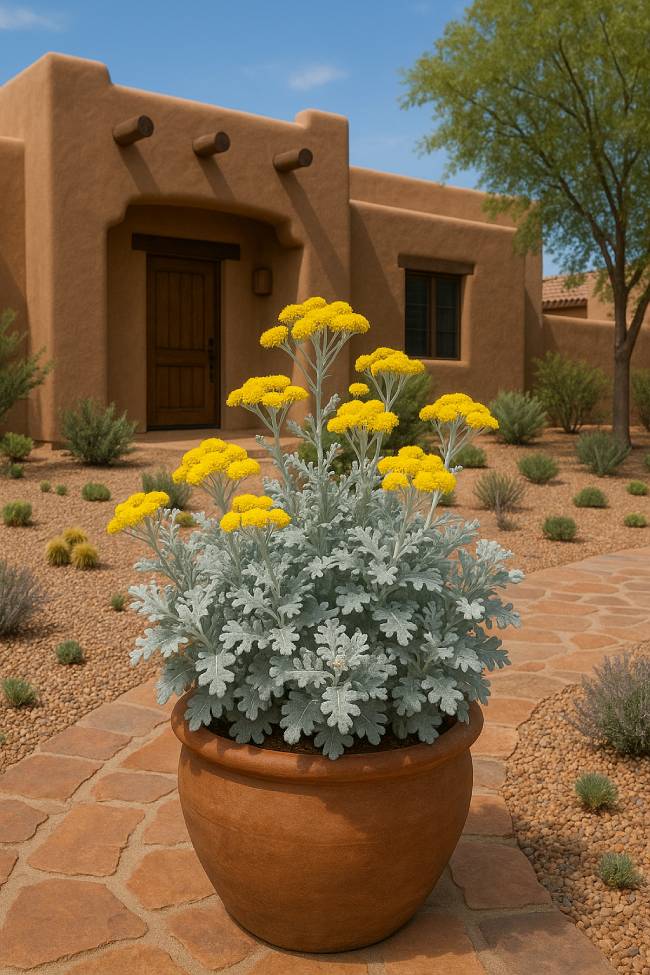
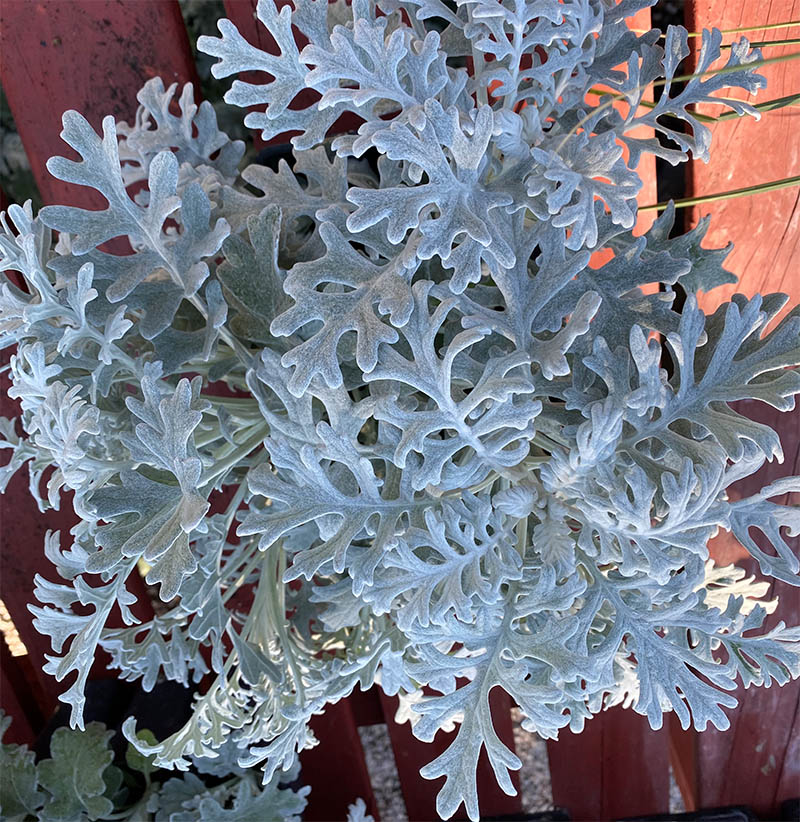
The first thing to know is that it is an annual plant, but it will sometimes come back depending on your garden zone. It looks good in a xeriscape garden or in your flowering garden. Its silver-grey feathery foliage looks good in containers with other plants or by itself in a garden.
It is drought-tolerant and will develop root rot if over-watered.
Where to place this plant?
It loves full sun and will have a hard time looking good in the shade. Too much shade and they will get leggy and out of place. It looks good in a xeriscape garden or your flowering garden. Its silver-grey feathery foliage looks good in containers with other plants. The Dusty Miller plant is considered an annual in colder regions of the U.S., but will usually survive the colder months in the lower regions of the southwest.

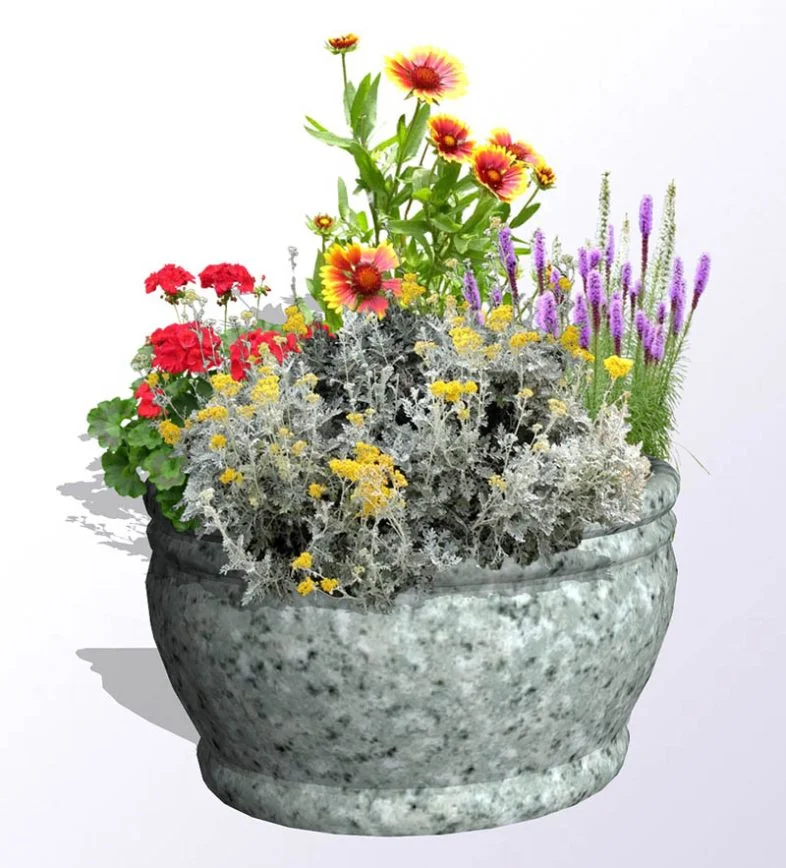
You can also place it in a decorative container for a fabulous look. Flowering dusty miller in the foreground, pink zonal geranium on the left, the blanket flower top middle, and the purple flowering gayfeather plant on the right.

It does produce a nice mustard yellow flower, not showy but a flower nonetheless, in mid-summer.
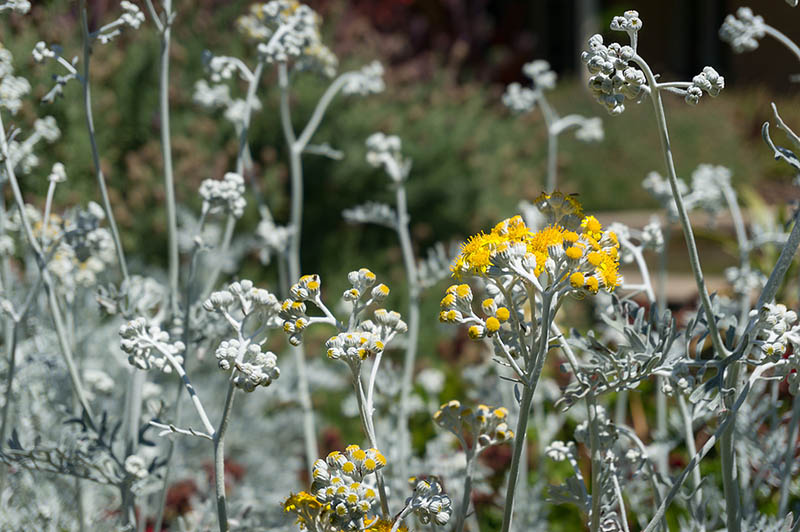
The Dusty Miller plant can return year after year in colder regions, especially if you cut it back to the ground at the end of the season and protect it with a layer of mulch or burlap. This simple winter prep helps insulate the crown and keeps the plant safe during freezing temperatures.
In the Southwest, Dusty Miller is even easier to grow. It’s considered a hardy, low-maintenance plant that rarely develops problems. Its silvery foliage isn’t very attractive to most pests, and the plant is generally disease-free, making it a great choice for xeriscapes, borders, or accent plantings.
On rare occasions, you may notice aphids feeding on new growth—usually during the cooler, wetter parts of the year. If that happens, a strong blast of water, insecticidal soap, or neem oil will take care of them quickly.
Water occasionally throughout the winter season to help keep the roots alive. They rarely need fertilizer but an occasional 20-20-20 all-purpose fertilizer at about early spring does help with growth.
USDA zone 8-10 is a perennial. I can work in zone 7, but it needs to be protected during the winter seasons. Learn where your garden zone is.
There are about seven types of Dusty Miller Plants for garden use. The Silver dust, Silver lace, Silver cascade, and a few others.
Dusty Miller Plant Care

Greenhouse Manager, Master Gardener, and Webmaster.
If you have any questions or enjoyed this post, feel free to share your thoughts in the comments below.