How to Make Snake Plants Bloom Indoors
Did you know snake plants will bloom? It was surprising to me when I first saw one bloom.
The snake plant (Sansevieria trifasciata)—also known as mother-in-law’s tongue—is one of the most popular and forgiving houseplants you can grow. It thrives on neglect, tolerates low light, and cleans the air, making it a favorite in homes and offices across the Southwest. While snake plants are mostly admired for their upright, sword-like leaves, few gardeners realize that these hardy plants can also produce beautiful, fragrant blooms.
If your snake plant has never bloomed, don’t worry—you’re not alone. Flowering is relatively rare, especially indoors, but with the right conditions and a little patience, you can encourage your plant to surprise you with a stunning display of delicate white blossoms.
Understanding Snake Plant Blooms
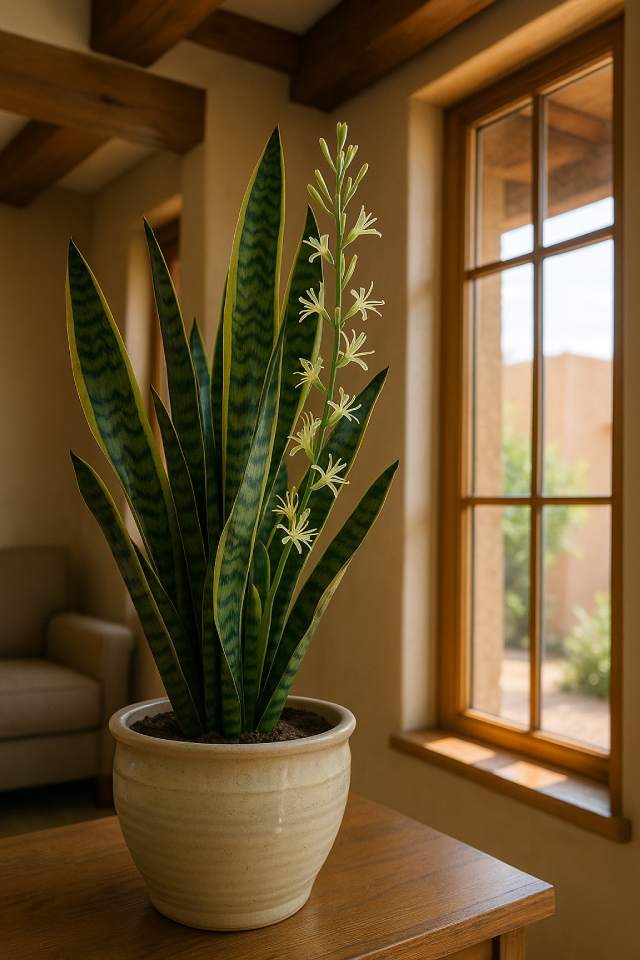
Snake plant flowers are slender, tube-shaped, and usually white or cream-colored. They grow in clusters on a tall, thin stalk that can reach up to three feet in height. When they open, they release a sweet, jasmine-like fragrance—most noticeable at night.
Interestingly, blooming often occurs when the plant experiences mild stress. This doesn’t mean neglecting it completely, but rather finding the balance between comfort and challenge. A slightly root-bound plant, combined with the right amount of light and care, can trigger blooming as a survival response.
Provide the Right Light
Snake plants can tolerate low light, but for blooming, they need bright, indirect sunlight. Place your plant near a sunny window where it gets several hours of filtered light each day. In the Southwest, a north- or east-facing window is ideal—enough sun without the harsh afternoon rays that can scorch the leaves.
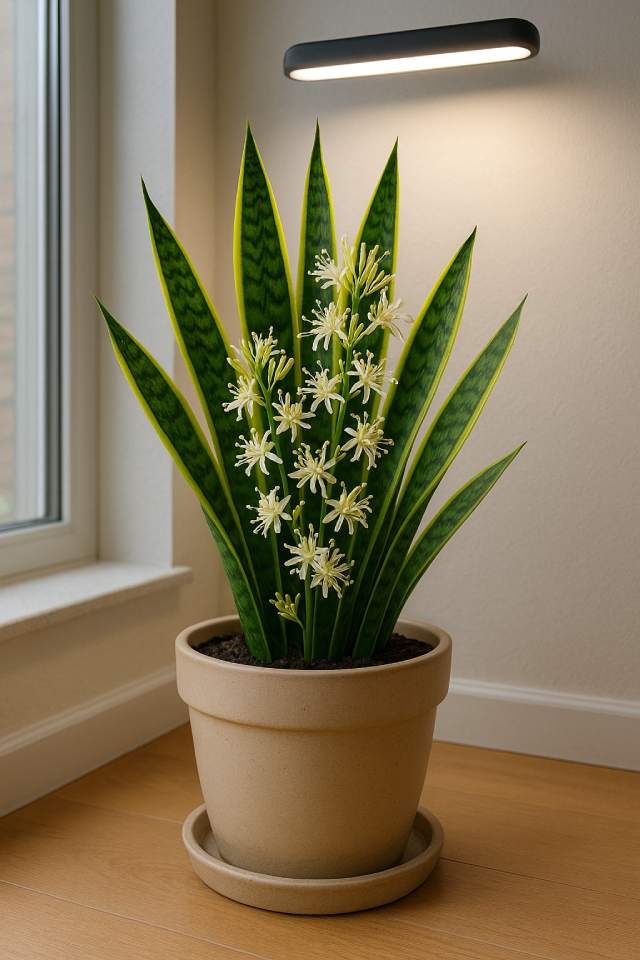
If natural light is limited, use an LED grow light for a few hours daily to mimic daylight conditions. Avoid moving the plant too often; snake plants prefer stability once they find a good spot.
Don’t Overwater
Overwatering is one of the most common mistakes with snake plants. These succulents store water in their thick leaves and prefer to dry out completely between waterings. For most indoor conditions, watering every 2–4 weeks is plenty.
Use a well-draining soil mix, such as a blend of cactus mix and perlite, and always ensure the pot has drainage holes. Excess water can cause root rot, preventing your plant from reaching the maturity needed to bloom.
A slightly dry period—without water for a few weeks—can even encourage blooming by simulating the plant’s natural drought cycle.
Keep It Root Bound
Snake plants often bloom when they’ve become root bound, meaning the roots fill the pot. When this happens, the plant directs more energy toward reproduction, which includes flowering.
If your plant has been in the same pot for a couple of years and seems crowded but still healthy, don’t rush to repot it. The gentle stress of being root bound may be exactly what triggers blooming.
When you do repot, use a container that’s only slightly larger than the current one—no more than two inches wider.
Provide Consistent Temperatures
Snake plants prefer warm, stable temperatures between 70–90°F (21–32°C) during the day and no lower than 55°F (13°C) at night. Avoid placing them near air conditioners, heaters, or drafty windows.
Desert climates like Las Cruces or around the Southwest are ideal for snake plants. They can even be moved outdoors in filtered shade during warm months, but bring them back inside before night temperatures drop below 50°F.
Feed Occasionally—but Don’t Overdo It
While snake plants aren’t heavy feeders, giving them a boost during spring and summer can help encourage flowering. Use a balanced, diluted liquid fertilizer (10-10-10 or 20-20-20) once a month during the growing seasons.
Avoid fertilizing in winter, as the plant goes semi-dormant. Too much fertilizer can build up salts in the soil and harm the roots, delaying flowering rather than promoting it.
Visit Guzmansgreenhouse.com for more Houseplant ideas.
There are many types of Snake Plants.
Be Patient and Consistent
Even with perfect care, snake plants bloom unpredictably—often as a surprise after years of steady growth. Don’t get discouraged if yours takes time. Focus on maintaining healthy growth and stable conditions. When the time is right, your patience will pay off with a beautiful, fragrant flower stalk that can last several weeks.
Once the bloom fades, you can trim the stalk back to the base. The plant will continue to thrive, and with consistent care, may bloom again in future years.
Final Tip
A thriving snake plant is already a reward—but a blooming one is truly special. By providing bright light, keeping it slightly root bound, and avoiding overwatering, you can create the perfect environment for this resilient houseplant to show its rarely seen beauty.
Are Snake Plants Toxic to Pets?
Yes — snake plants (Sansevieria trifasciata, also called mother-in-law’s tongue) are mildly toxic to both cats and dogs.
🧪 Why They’re Toxic
They contain saponins, natural chemical compounds that protect the plant from insects and fungi. When ingested by pets, these compounds can irritate the digestive system.
🐶🐱 Symptoms of Poisoning
If your pet chews or eats the leaves, they may experience:
-
Nausea or vomiting
-
Drooling or foaming
-
Diarrhea
-
Loss of appetite
-
Lethargy (in severe cases)
🏥 What To Do
If you suspect your pet has eaten part of a snake plant:
-
Remove any remaining plant material from their mouth.
-
Rinse their mouth with water if possible.
-
Call your vet or the ASPCA Animal Poison Control Center at 1-888-426-4435.
🌿 Safe Alternative Plants
If you want pet-friendly greenery, try:
-
Areca Palm
-
Boston Fern
-
Spider Plant
-
Parlor Palm
-
Calathea varieties
- Here is a list of Toxic and Non-Toxic Plants
For more indoor plant care tips or to find healthy snake plants and ceramic pots, visit Guzman’s Greenhouse.

Greenhouse Manager, Master Gardener, and Webmaster.
If you have any questions or enjoyed this post, feel free to share your thoughts in the comments below.