Last updated on November 11th, 2025 at 07:33 pm
Parry’s Agave Plant (Agave Parryi or Asparagaceae) is a desert plant that resembles an artichoke and is in the Century plant family. It’s an amazing plant that will shoot out a tall stalk that resembles asparagus plants. It does this when it is fully mature. The stalk is will grow up to 30 ft. in height. The plant itself will grow about 3 ft. in height and width making it a good choice for Xeriscape or rock gardens for smaller landscapes. It can tolerate cold temperatures down to -10° Fahrenheit.
Parry’s Agave (Artichoke Agave)
Parry’s Agave, often called the Artichoke Agave, is one of the most beautiful and cold-hardy agaves native to the desert Southwest. Its compact, symmetrical rosette resembles an artichoke—thick, blue-gray leaves with dark terminal spines and finely toothed edges give it a sculptural, architectural presence in any landscape.
Although it’s commonly mistaken for the larger Century Plant (Agave americana), Parry’s Agave has a shorter lifespan and smaller stature, usually reaching about 2 to 3 feet tall and wide. Like other agaves, it blooms only once in its lifetime, producing a tall flower stalk that can soar 10 to 20 feet into the sky. This bloom spike is topped with clusters of yellow flowers that stand out beautifully against the desert sky and attract hummingbirds, bees, and butterflies.
The plant’s blooming process takes patience—it can take anywhere from 15 to 30 years to occur, depending on the growing conditions. After flowering, the mother plant naturally dies, completing its life cycle. However, it often produces offsets or “pups” at its base, ensuring the next generation of plants will thrive without replanting.
Native to New Mexico, Arizona, and northern Mexico, Parry’s Agave is well adapted to USDA zones 5–10. It tolerates cold down to near-zero temperatures, making it one of the hardiest agaves available. Once established, it requires very little water, but it’s wise to water occasionally during the first year, especially during hot summer months, to encourage strong root development.
This agave is a favorite for xeriscape designs, rock gardens, and desert landscapes where low maintenance and striking form are desired. Its blue-gray tones pair beautifully with red yucca, desert marigold, or penstemon for a natural Southwest look that thrives under the desert sun.
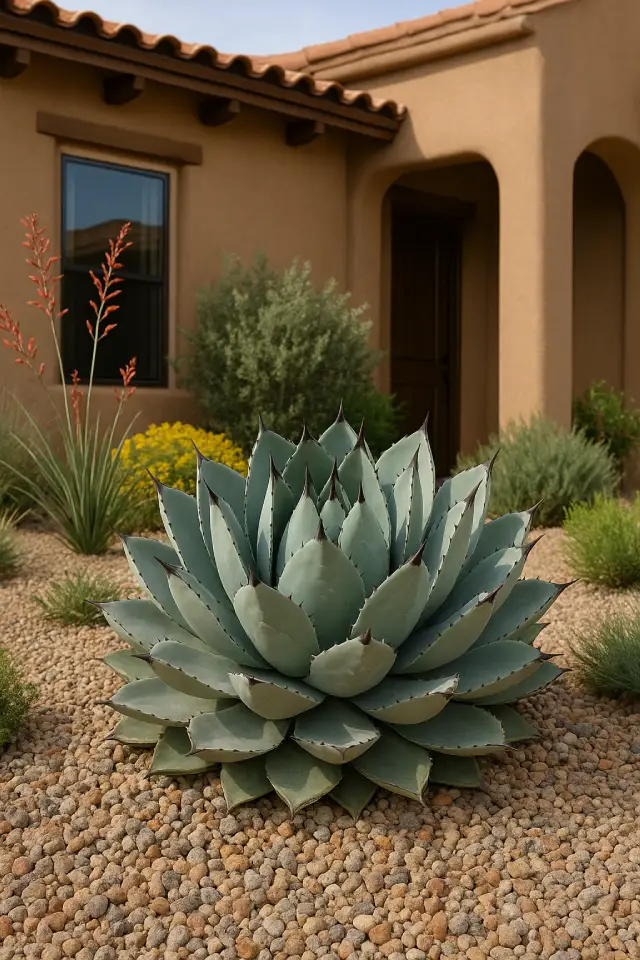
Parry’s Agave plant on the right side of the photo below and the Americana Agave on the left both are in the Century plant family.

Where to place The Parrys Agave Plant?
Plant it in the full hot sun with too much shade and it will struggle. There is very little maintenance involved with this plant and occasional cleaning of debris under its fronds is all that is needed. It does produce sharp needle-like thorns and will poke you if you are not careful!
Is it disease and insect-resistant?
Yes, it is…but it will sometimes contact mealybugs on Agave Parry’s. It’s important to check your plant occasionally during the spring season. If you see a white cotton-like appearance on its fronds it most likely is mealybugs or cochineal. Go organic and try using a strong stream of water to remove them or use neem oil to kill these insects. Insecticidal soaps work well …” how to use insecticidal soaps “.
Protecting Agaves from Wildlife Damage
Javelinas, rabbits, mice, and other rodents can cause significant damage to agave plants—especially during extended drought periods when food and moisture are scarce. These animals are often drawn to the agave’s succulent leaves and roots as a source of hydration. The most serious harm usually occurs underground, where rodents chew on the root system, weakening or even killing the plant.
To prevent this, it’s best to create a physical barrier. Surround the base of each agave with chicken wire or hardware cloth, burying the edges a few inches below the soil to deter burrowing animals. This simple step helps protect the plant’s root zone while still allowing air and water to reach the soil. Regularly inspect the barrier for damage or openings, and repair as needed—especially during dry spells when wildlife activity around your garden tends to increase.
Read more about insects and diseases on plants.

Click on the image below for more Desert Names and Pictures

More Desert plant names and pictures.
There are many types of agaves check monrovia.com for more hybrid agaves.

Greenhouse Manager, Master Gardener, and Webmaster.
If you have any questions or enjoyed this post, feel free to share your thoughts in the comments below.