Last updated on May 7th, 2026 at 03:54 pm
The Spanish Broom Plant (Spartium junceum) is a great semi-evergreen flowering shrub. It can grow up to 8-10 ft. tall and about 5-7 ft. wide. Its native home is the southern Mediterranean region of Europe. A fragrant flowering plant, and to me it smells like honey mixed with vanilla,
Where to place this plant?
The plant tolerates poor sandy soils, perfect for the desert southwest. A drought-tolerant plant that can be used in a rock garden landscape with smaller perennial or annual plants in the foreground. Place it in the full blazing hot sun, and it will thrive there. It is important not to place it in the shade, as it will not bloom. Plant it in the hottest part of your yard.
USDA Hardiness Zone: 7 – 10. Check your plant zone here.
Spanish Broom in a Landscape Design
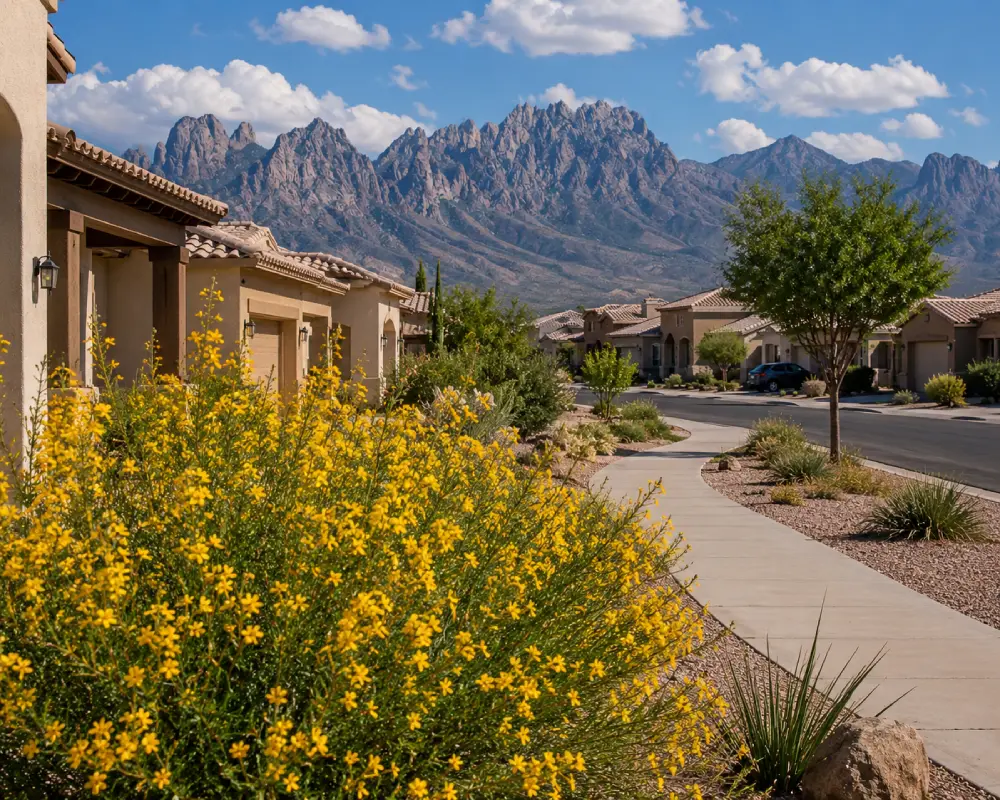
The Spanish Broom Plant in front of a Southwestern-style home

The Spanish Broom Plant
During the spring season, it will bloom with fragrant yellow flowers. It will produce seed pods in early summer.
The Spanish Broom Plant will do well in Xeriscape landscaping yards or landscapes that need low-water, maintenance-free shrubs. The bright yellow blooms will last about 3-4 weeks in early summer. After that, it is a green plant. Many landscapers will trim back this plant after it is done blooming.

A Spanish broom is tightly trimmed at the bottom. Intense fragrant flowers at the top of the plant.

Problems with the Spanish Broom
One of the main problems with Spanish Broom plants is an insect called the webworm, more commonly known as the fall webworm. These pests feed on the foliage of many different types of trees and shrubs throughout the Southwest. You will usually notice them by the large, silky webs they create on the ends of branches and stems. As the infestation grows, the webbing can spread quickly and make the plant look unattractive while damaging the foliage.
What kills Webworms on Spanish Broom?
A very effective way to control webworms is by spraying the plant with a product called Thuricide. Thuricide contains a naturally occurring bacterium known as Bacillus thuringiensis, or “BT” for short. BT specifically targets caterpillars and webworms without harming most beneficial insects, pets, or wildlife when used properly. Once the webworms feed on foliage treated with BT, they stop feeding and eventually die. For best results, spray the plant as soon as you notice small webs beginning to form, since younger webworms are easier to control than larger, more established infestations.

Remove Worms Organically
Go organic by tackling the pesky caterpillars and webworms naturally. You can pick them off with tweezers if you’re up for it, or simply set a water bowl nearby. Why? Most birds love feasting on these critters and will help keep your garden in check. So, not only do you avoid chemicals, but you also invite more birds to your yard. Plus, who wouldn’t want to watch a few feathered friends swoop in and handle pests for them? It’s a win-win for you and the environment.
Growth Rate
Moderate growing plant. Will reach 6 ft. in about 4-5 years. Prune in late winter to enhance new growth and flowers in early to mid-spring. You can read more details about this plant over at Wikipedia.com
Another great yellow flower plant is the “Yellow Bells Plant”.
New to Southwest Gardening?
Stop wasting money on plants that will not survive our heat and drought.
My Southwest Gardening Made Simple eBook shows you which trees, shrubs, flowers, and vegetables actually thrive in New Mexico, Arizona, and West Texas.
The best plants for hot, dry climates
Common mistakes that kill Southwest plants
Easy-to-follow advice for beginners

Paul Guzman is a lifelong Southwest gardener and gardening writer with decades of experience helping homeowners grow beautiful landscapes in the desert Southwest. He writes for Guzman’s Garden Centers in Las Cruces, New Mexico, with contributing expertise from Gary Guzman, owner of Guzman’s Garden Centers. If you have any questions or enjoyed this post, feel free to share your thoughts in the comments below.
How do I get the Free Desert Plant Guide mentioned on your website? I clicked on it and it went to a blank page.
Hello, Sara, I just sent you an email with the download link. I apologize for the inconvenience.