Last updated on November 20th, 2025 at 12:30 pm
The Podocarpus Hedge Plant (Podocarpus macrophyllus) is also called the African Fern Pine, Chinese Yew, and shrubby Yew. It is a great-looking upright evergreen plant that can be used as a patio tree or hedge. It does well in larger containers for that formal topiary look. It is grown and used for privacy screens, topiary landscapes, and hedges.
Care of the Podacarpus Plant
The foliage is tuff with long needle-like leaves but can still be trimmed to almost any shape. It is a moderate-watering plant but needs regular watering, especially in containers. Best to water every other day during the hot southwest summer months. The female plants will produce small, turquoise-colored fruit after 10-15 years if male plants are close by.
Most local nurseries will have this plant available during the spring, summer, and fall months.
It can work in a desert landscape if done correctly. It’s best that these plants have their own watering system as they require more water than desert plants.
How tall do Podocarpus get?
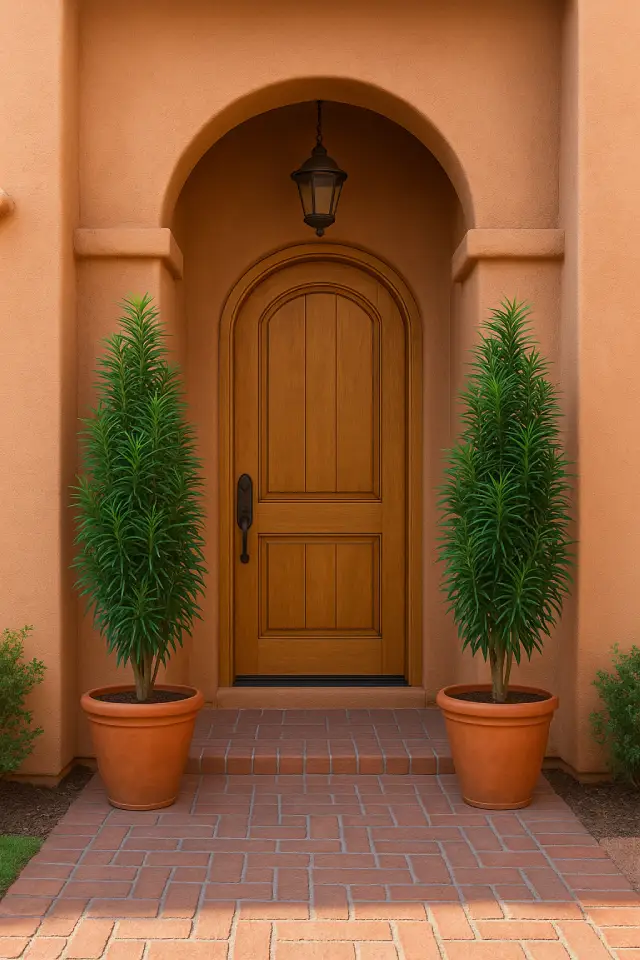
They can grow fast and will reach about 15 possibly 20 ft. tall if left untrimmed. It will also get about 8 ft. wide. It works great as a stand-alone columnar plant. See the photo above.
Where to plant the Podocarpus
The first time I saw this plant, I was convinced it had to be some sort of conifer—its upright form, fine textured foliage, and rich evergreen color certainly give off that classic conifer vibe. But looks can be deceiving! It’s not a pine, fir, or juniper at all. Instead, it belongs to the Podocarpus family—officially known as the Podocarpaceae—a fascinating group of plants often referred to as “false yews.” Despite their conifer-like appearance, Podocarpus species are actually subtropical evergreens that handle heat, drought, and pruning remarkably well. Once you know its true identity, you appreciate it even more for its versatility and refined, sculpted look in the landscape.
The plant looks best when you plant several in a row, creating a clean, elegant, columnar screen that instantly adds structure to your landscape. When mass-planted, the upright habit forms a striking architectural backdrop that works beautifully in both traditional and modern designs. For an exceptional, high-end appearance, consider placing them in the background of formal lawns, courtyards, or symmetrical landscape layouts. Their refined shape and lush evergreen foliage provide year-round sophistication, making them an excellent choice for framing entryways, defining property lines, or enhancing the overall visual balance of your outdoor space.

You can also plant them in containers and place them in front of formal entrance doors. These plants are well adapted to full sun but place them in morning sun and afternoon shade for best results.


Problems with this Podocarpus
Fire blight is a problem for this plant spray with a copper-type fungicide if you see the following. Blacktips on the foliage. It will also spread quickly, it’s best to act quickly and thoroughly. 2-4 applications will usually work. You can also prune off the bad-looking portions of the plant and make sure to disinfect your tools after using them.
Powdery mildew is another problem but it is rare in and around the southwest. Usually occurs in regions where there is lots of rain. However, if it does occur spray with a good shrub fungicide to remove it. Powdery mildew looks like a white powder substance on the foliage and can easily come off by rubbing on your leaves. Learn more about fungi, insects, and diseases.
USDA Zone 8-10

Learn more about the Podocarpus macrophyllus at Wikipedia.
The Podocarpus Hedge

Greenhouse Manager, Master Gardener, and Webmaster.
If you have any questions or enjoyed this post, feel free to share your thoughts in the comments below.
I like your writing style, very well-detailed article about Podocarpus Hedge plant!