How to treat Root rot in desert plants. Root rot is a common problem—even in dry, arid climates like the American Southwest. While desert plants are drought-tolerant, they can still suffer from overwatering, poor drainage, or extended rainy spells. This guide will help you spot the signs early and take action to save your plants.
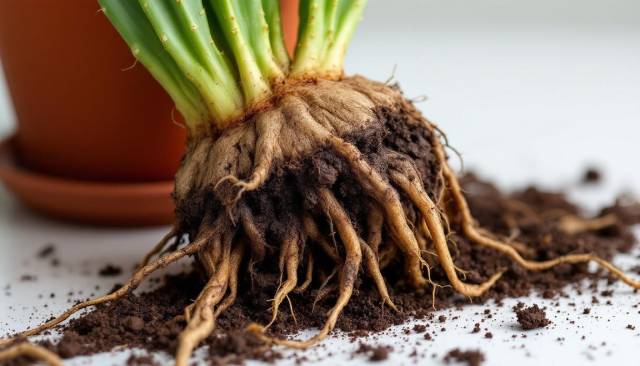
The roots are exposed and show dark, mushy, unhealthy areas—classic signs of root rot.
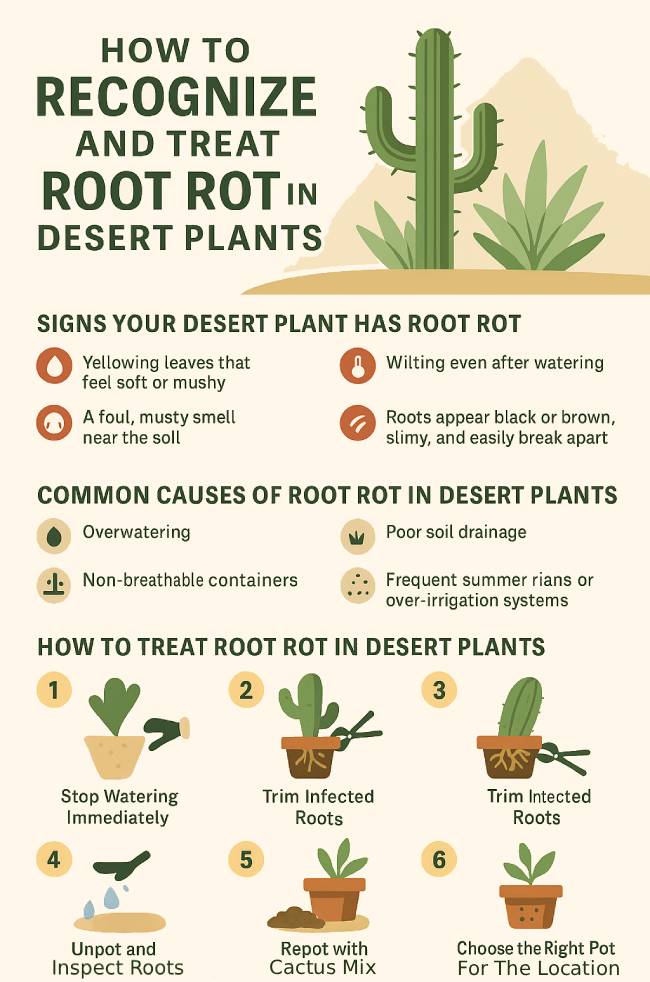
🚩 Signs Your Desert Plant Has Root Rot
Look for these early warning symptoms:
Yellowing leaves that feel soft or mushy
Wilting even after watering
A foul, musty smell near the soil
Roots appear black or brown, slimy, and easily break apart
Stem base becomes soft or discolored
Root Rot Infographic in desert plants
📷 Tip: Uproot a section and inspect the root ball. Healthy roots are white and firm.
💧 Common Causes of Root Rot in Desert Plants
Overwatering – The most common culprit
Poor soil drainage – Using regular potting soil instead of cactus/succulent mix
Non-breathable containers – Especially ceramic pots without drainage holes
Frequent summer rains or over-irrigation systems
Mulch too close to the plant base – Traps moisture near roots
🛠️ How to Treat Root Rot in Desert Plants
1. Stop Watering Immediately
Allow the soil to dry out completely.
2. Unpot and Inspect Roots
Remove the plant from its container or ground and check for damage.
3. Trim Infected Roots
Start by cleaning your shears with rubbing alcohol or boiling water to kill germs. Cut away any roots that feel soft, mushy, or look black, since these areas can spread rot fast. Don’t worry if you need to remove a lot—it’s better to stop the damage now. Keep only the firm, white roots that look healthy and strong. These are the roots that will keep your plant alive and ready to grow again.
4. Let the Plant Dry
Allow the root system to dry for 24–48 hours in a shaded, airy spot.
5. Repot With Fresh Soil
Use a cactus or succulent potting mix that drains quickly, or add some perlite or pumice if you’re working with regular garden soil. You can also mix in a bagged cactus mix to boost drainage and prevent the roots from staying soggy. Some people skip these steps and stick with garden soil, but that often leads to root rot. Sticking with a gritty, well-draining blend gives your plants the best chance to thrive.
Need help diagnosing or saving your plant? Stop by our nursery in Las Cruces, or explore more desert plant care guides at guzmansgreenhouse.com.
📩 Subscribe to Our Newsletter
Get monthly Southwest gardening tips—straight to your inbox! Sign up here.
Let me know if you’d like this turned into a WordPress-ready format, a PDF for newsletter inserts, or if you’d like a few custom images/graphics to accompany it.
To provide the best experiences, we use technologies like cookies to store and/or access device information. Consenting to these technologies will allow us to process data such as browsing behavior or unique IDs on this site. Not consenting or withdrawing consent, may adversely affect certain features and functions.
Functional
Always active
The technical storage or access is strictly necessary for the legitimate purpose of enabling the use of a specific service explicitly requested by the subscriber or user, or for the sole purpose of carrying out the transmission of a communication over an electronic communications network.
Preferences
The technical storage or access is necessary for the legitimate purpose of storing preferences that are not requested by the subscriber or user.
Statistics
The technical storage or access that is used exclusively for statistical purposes.The technical storage or access that is used exclusively for anonymous statistical purposes. Without a subpoena, voluntary compliance on the part of your Internet Service Provider, or additional records from a third party, information stored or retrieved for this purpose alone cannot usually be used to identify you.
Marketing
The technical storage or access is required to create user profiles to send advertising, or to track the user on a website or across several websites for similar marketing purposes.