Last updated on December 27th, 2025 at 08:27 am
Types of trumpet vines. These vines are fast-growing flowering vines that attract hummingbirds, butterflies, and other pollinators.
Trumpet vines thrive in hot, sunny climates, making them an excellent choice for gardeners living in the desert Southwest and similar arid regions. Their ability to tolerate reflected heat, poor soils, and long periods of drought allows them to flourish where many other flowering vines struggle. Thanks to their vigorous climbing habit, trumpet vines are ideal for covering fences, arbors, pergolas, trellises, and chain-link fences, providing fast, natural screening and vibrant seasonal color. They also serve as a magnet for hummingbirds, butterflies, and other pollinators, adding life and movement to any landscape. Whether you want shade, privacy, or a bold vertical accent, trumpet vines offer a reliable and eye-catching solution. Below are some of the best trumpet vine varieties to consider for home landscapes in warm, dry climates.
Campsis radicans (Common Trumpet Creeper)
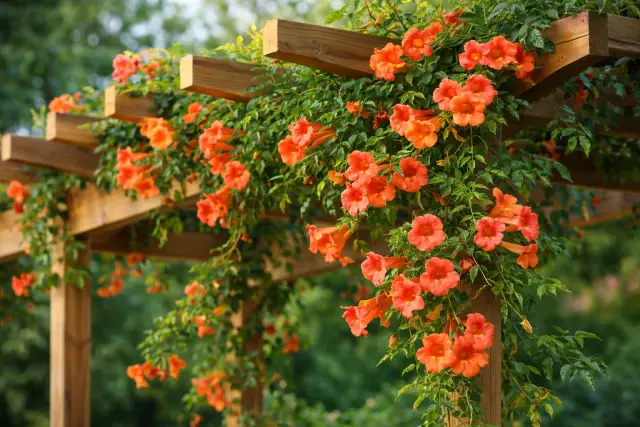
Campsis radicans, also called the Common Trumpet Creeper, is one of the most popular
flowering vines in the United States. It grows quickly, climbs aggressively, and produces showy orange-red tubular flowers that attract hummingbirds from summer through fall. This trumpet vine thrives in full sun, heat, drought, and poor soils, making it ideal for fences, arbors, and chain-link barriers. Gardeners should provide strong support and prune yearly to keep it manageable. Campsis Radicans on Wikipedia.
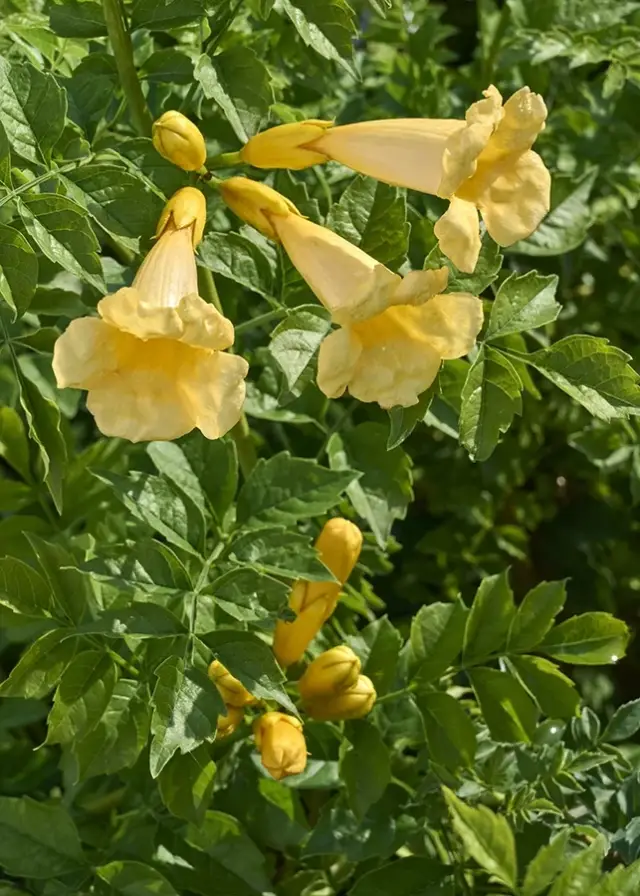
Campsis radicans ‘Flava’ (Yellow Trumpet Creeper)
golden-yellow trumpet flowers and carries the same rugged, drought-tolerant traits as the traditional orange variety. ‘Flava’ is an excellent choice for gardeners wanting a vibrant color contrast while still enjoying a fast-growing vine that attracts hummingbirds and butterflies. Plant it in full sun with sturdy support for best performance.
Campsis radicans ‘Flamenco’
This vine grows vigorously but is often more manageable than the standard radicans. It thrives in full sun and
reflected heat, making it an excellent choice for Southwest landscapes, rock walls, and trellises. Hummingbirds are
especially drawn to its intense red flowers, which provide a strong color accent in the garden.
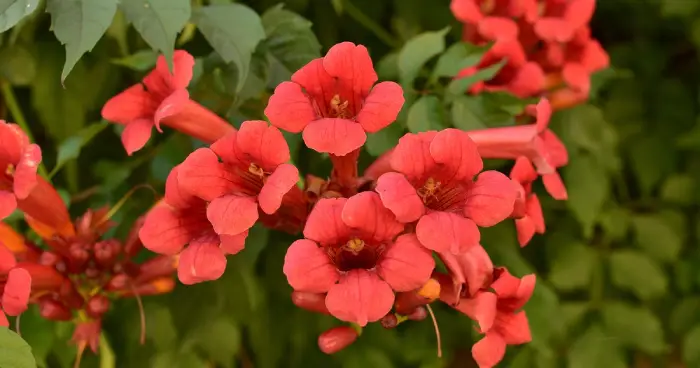
Campsis × tagliabuana ‘Madame Galen’
growth habit. It grows vigorously but is less invasive than pure Campsis radicans. This vine performs beautifully in
desert climates, tolerates poor soils, and blooms heavily from mid-summer through fall. It is one of the best options
for pergolas, fences, and patio structures where you want lots of color without a wildly aggressive vine.
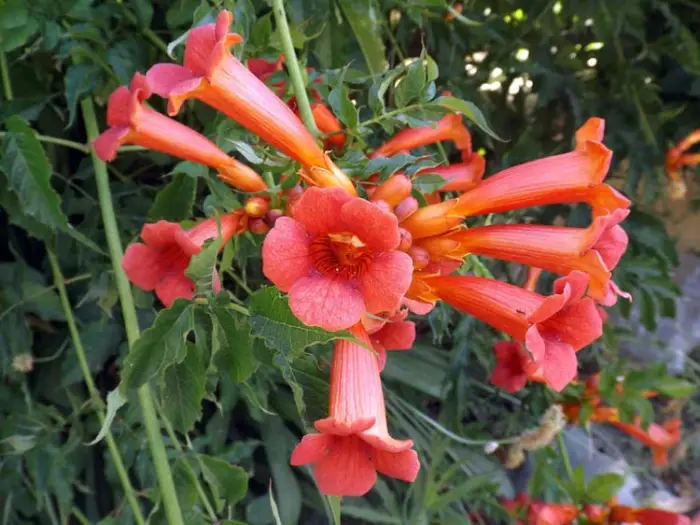
Campsis × tagliabuana ‘Indian Summer’
making it easier to maintain in smaller landscapes. It blooms earlier than many other trumpet vines and tolerates heat extremely well. This variety is perfect for homeowners wanting long-lasting color without dealing with a very aggressive vine. Provide a trellis, fence, or arbor for support and enjoy months of flowers.
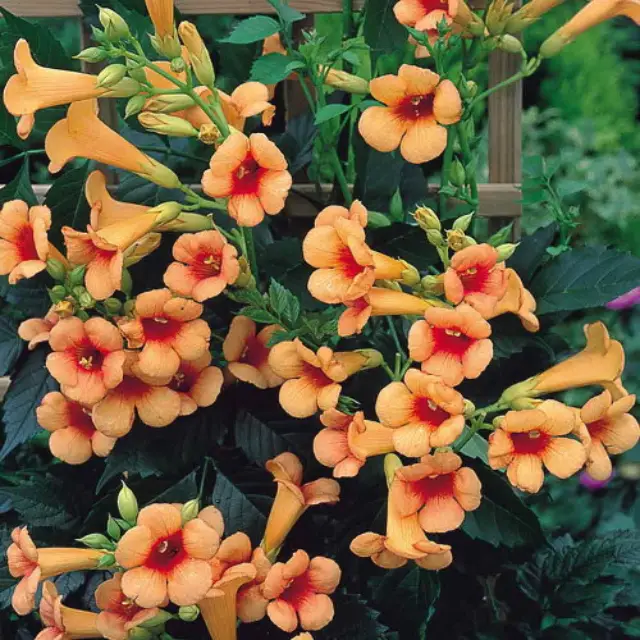
Campsis grandiflora (Chinese Trumpet Vine)
Campsis grandiflora, also called the Chinese Trumpet Vine, produces larger and more
showy flowers than Campsis radicans. It is less aggressive and prefers a bit more regular water, but still thrives in warm climates. Because it climbs by tendrils instead of strong aerial roots, it is gentler on walls and structures. Use it where you want big, tropical-looking trumpet flowers without the invasive suckering of common trumpet creeper.
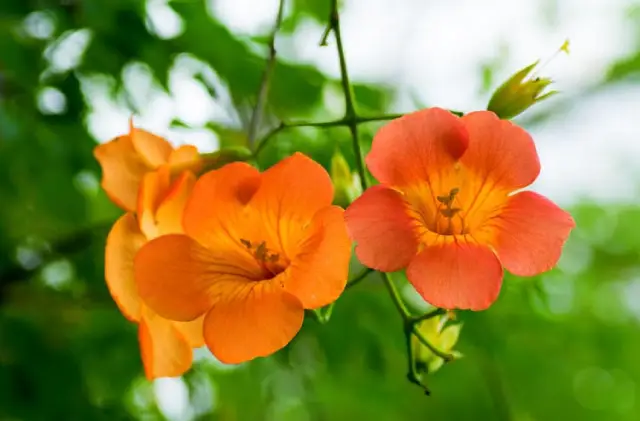
Campsis grandiflora ‘Morning Calm’
It grows vigorously but is far less invasive than Campsis radicans. This variety performs very well in warm desert climates and provides nonstop color during the summer months. Plant it on a sturdy trellis, pergola, or fence for best flowering. Morning Calm trumpet vine, grandiflora vine, orange trumpet flowers, heat-tolerant flowering vines, desert vines
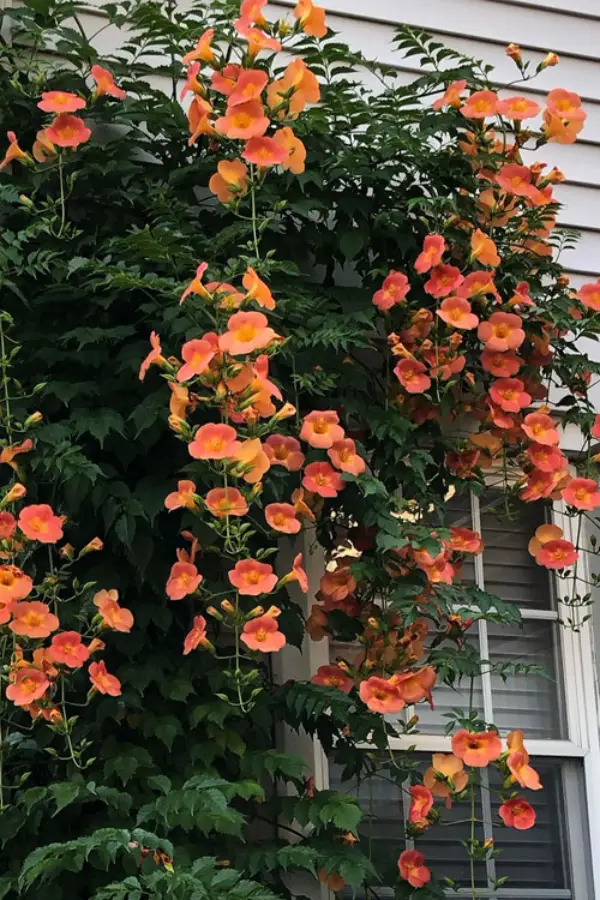
Bignonia capreolata (Crossvine)
Crossvine (Bignonia capreolata) is a fantastic alternative to trumpet vine, especially for
homeowners wanting a climbing plant that is not invasive. Also called the Tangerine crossvine. It produces long tubular orange, yellow, or red flowers that bloom heavily in spring and often again in flushes later in the season. Crossvine is semi-evergreen in mild climates, handles extreme heat, and climbs using tendrils that are gentle on stucco and wood. It is an excellent choice for Southwest-style fences, pergolas, and arbors. (Not a true trumpet vine, but often grouped with them and ideal for Southwest landscapes)
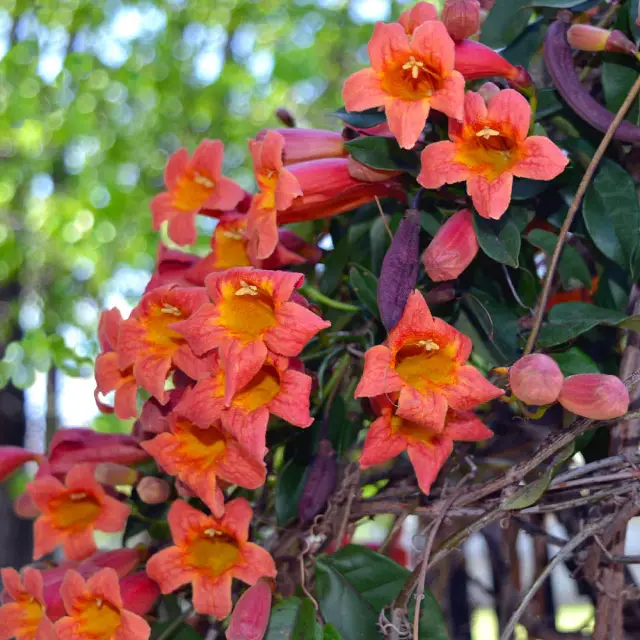
Types of Trumpet Vines
Are Trumpet Vines Toxic to Cats and Dogs?
Trumpet vines (Campsis radicans and related varieties) are not considered highly toxic to cats or dogs, but they can cause mild reactions if chewed on or if pets come into contact with the plant’s sap.
Possible Symptoms in Pets
If a cat or dog chews the leaves, stems, or seed pods, they may experience:
-
Mild vomiting
-
Diarrhea
-
Drooling
-
Upset stomach
Learn more about trumpet vines at – How to care for Trumpet vines.

Greenhouse Manager, Master Gardener, and Webmaster.
If you have any questions or enjoyed this post, feel free to share your thoughts in the comments below.


I have had a Trumpet Vine for 22 years and it has never bloomed. I stupidly planted it in a northeast corner, then moved it around the corner to the east. It gets very hot there, enough to make most plants wilt a bit and requiring water each day around 1 or 2 in the afternoon (in summer, of course). I have very “sandy” loam which becomes like concrete when dry. It gets 6 hrs. of sun daily. HELP!
Hello, Retta. To me, sandy loam soil means the soil will not retain water. Try deep watering during the hot summer months. This translates to approximately 10-12 gallons of water per week. Also, check for aphids, spider mites, or mealybugs on your vines. These bugs can prevent your vines from blooming. Learn more about these insects and diseases on this link. Insects and Diseases on Plants.
Paul, do y’all ship small plants as packages (i.e., UPS)?
Sorry, Dan we do not ship plants out of the Las Cruces, NM area. What city are you located in?