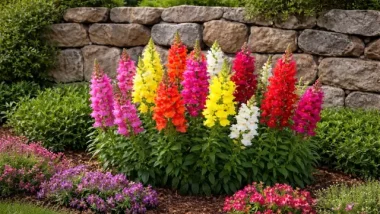
The Peace Lily plant care guide (Spathiphyllum). This plant is one of the most popular indoor houseplants, especially for homes with low light. Known for its elegant white flowers and lush green foliage, the Peace Lily is easy to care for and perfect for beginners and experienced plant owners alike.
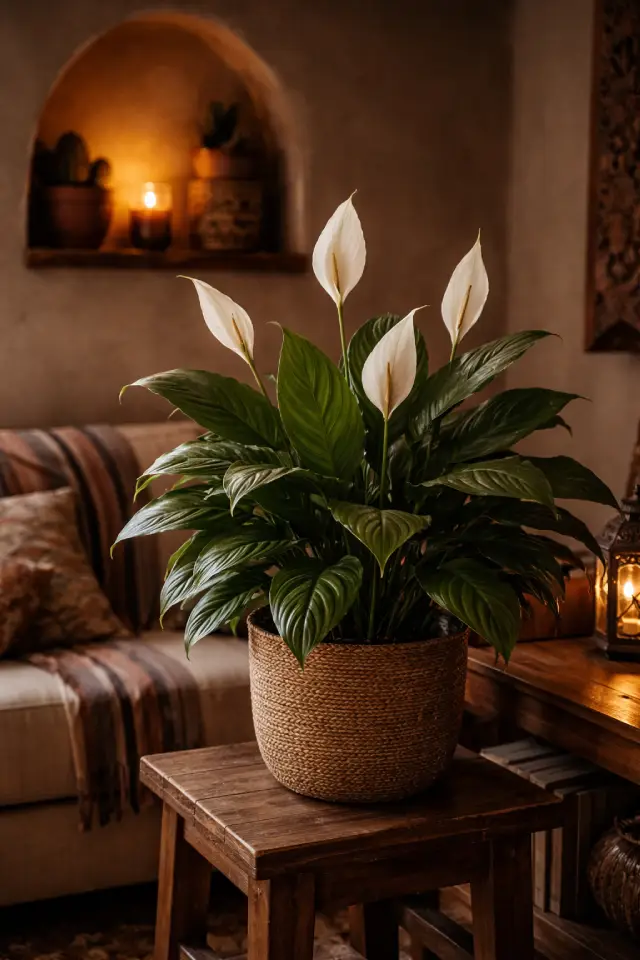
In this guide, you’ll learn everything you need to know about Peace Lily care, including light requirements, watering tips, common problems, and whether Peace Lilies are safe for pets.
More on Plants that are safe for Cats and Dogs.
What Is a Peace Lily Plant?
Despite its name, the Peace Lily is not a true lily. It belongs to the Spathiphyllum genus and is native to tropical regions of Central and South America. Its white blooms are actually modified leaves called spathes, which surround a central spike known as a spadix.
Peace Lilies are prized for their clean, modern look and their ability to thrive indoors with minimal care.
Why Peace Lilies Are So Popular as Houseplants
Peace Lilies are a top choice for indoor spaces because they are:
-
Low-maintenance and beginner-friendly
-
Excellent low-light houseplants
-
Attractive year-round, even when not blooming
-
Known for improving indoor air quality
-
Very expressive when they need water
Their ability to recover quickly after wilting makes them forgiving for busy plant owners.
Peace Lily Light Requirements
Peace Lilies grow best in bright, indirect light, but they are well known for tolerating low-ligh indoor conditions.
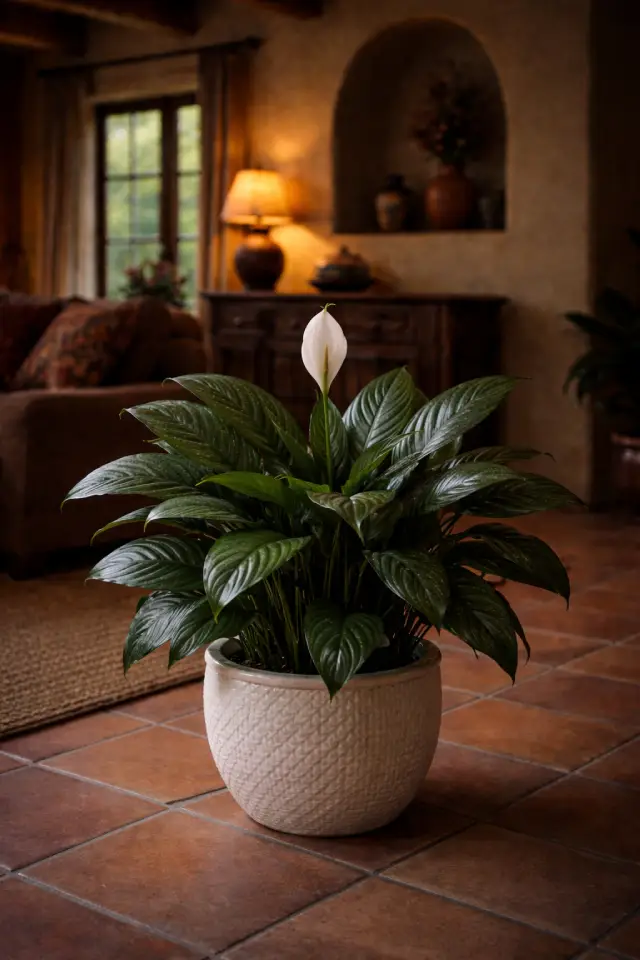
Best places to put a Peace Lily:
-
A few feet away from a window
-
North-facing rooms
-
Shaded living rooms or bedrooms
-
Offices and hallways
-
Southwest-style homes with filtered light
Avoid placing Peace Lilies in direct sunlight, as this can scorch the leaves and cause browning.
How Often to Water a Peace Lily
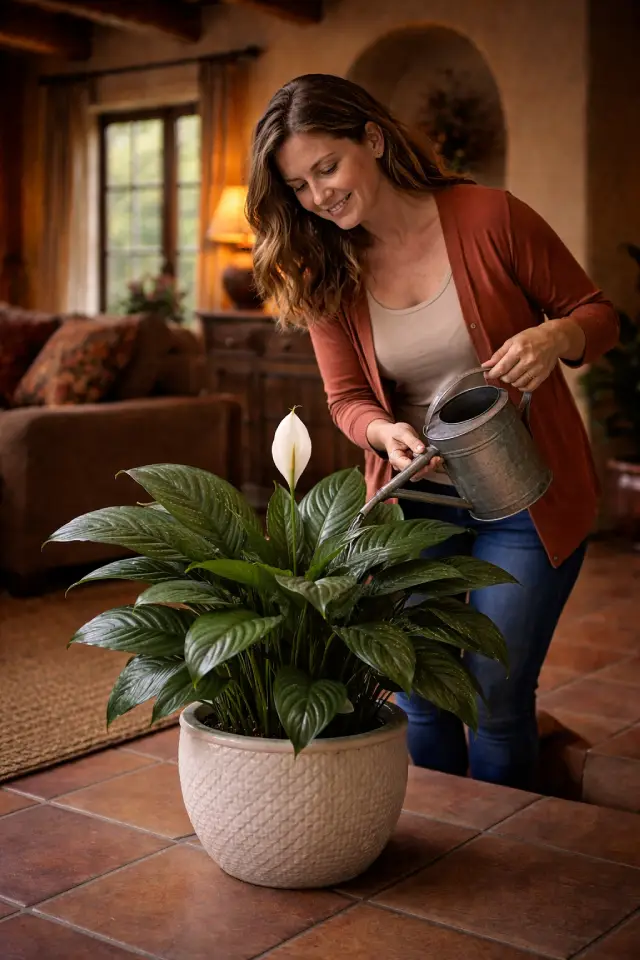
Peace Lilies prefer soil that stays evenly moist but never soggy.
Watering tips:
-
Water when the top 1–2 inches of soil feel dry
-
Always use a pot with drainage holes
-
Empty saucers after watering
-
Drooping leaves usually mean it’s time to water
Peace Lilies are famous for dramatically wilting when thirsty and perking back up soon after watering.
Humidity and Temperature Needs
Because they are tropical plants, Peace Lilies prefer warm temperatures and moderate humidity.
-
Ideal temperature range: 65–85°F
-
Protect from cold drafts and air conditioning vents
-
Light misting helps in dry climates
-
Bathrooms and kitchens are often ideal locations
In dry Southwest homes, grouping plants together can help raise humidity naturally.
Best Soil and Fertilizer for Peace Lilies
-
Use a high-quality, well-draining indoor potting mix
-
Fertilize every 6–8 weeks during spring and summer
-
Use a balanced houseplant fertilizer at half strength
Too much fertilizer can cause brown leaf tips, so it’s best to fertilize lightly.
How to Get a Peace Lily to Bloom
Peace Lilies typically bloom in spring and early summer, though healthy plants may flower at other times.
To encourage blooms:
-
Move the plant to brighter indirect light
-
Maintain a consistent watering schedule
-
Avoid over-repotting
If your Peace Lily has healthy leaves but no flowers, it likely needs more light.
Common Peace Lily Problems and Solutions
Yellow leaves
Usually caused by overwatering or poor drainage.
Brown leaf tips
Often due to low humidity, fluoride in tap water, or excess fertilizer.
Drooping leaves
Most commonly caused by underwatering.
No flowers
Typically caused by insufficient light.
Are Peace Lilies Toxic to Cats and Dogs?
Yes. Peace Lilies are toxic to cats and dogs if ingested. They can cause mouth irritation, drooling, vomiting, and difficulty swallowing.
Keep Peace Lilies out of reach of pets and small children. Pet Safe Indoor Plants.
When and How to Repot a Peace Lily
Peace Lilies prefer to be slightly root-bound but should be repotted every 1–2 years.
Signs it’s time to repot:
-
Roots growing out of the drainage holes
-
Water running straight through the pot
-
Slower growth or fewer blooms
Choose a container only 1–2 inches larger than the current pot.
Is the Peace Lily the Right Plant for Your Home?
If you’re looking for a beautiful, low-light indoor plant that requires minimal care, the Peace Lily is an excellent choice. Its elegant appearance, adaptability, and forgiving nature make it perfect for homes, apartments, and offices—especially in the Southwest.
Learn more about the Peace lily plant at Wikipedia.
More indoor House Plant Names.

Greenhouse Manager, Master Gardener, and Webmaster.
If you have any questions or enjoyed this post, feel free to share your thoughts in the comments below.