Last updated on August 2nd, 2026 at 04:56 pm
Houseplants can brighten your home, improve indoor air quality, and bring a little bit of nature inside. The good news is that you don’t need a sunny window to enjoy beautiful indoor plants. Many popular houseplants naturally grow beneath the canopy of tropical forests, where they receive filtered light instead of direct sunshine.
If you have a room with limited natural light, an office, or an apartment that doesn’t receive much sunlight, there are plenty of attractive plants that will thrive with minimal care.
One of the biggest mistakes people make is assuming that “low light” means “no light.” Every plant needs some light to survive. Even the toughest low-light houseplants should be placed near a window, under bright indoor lighting, or beneath a grow light for the best results.
In this guide, you’ll discover some of the easiest houseplants to grow indoors, along with simple watering tips and care advice to help them stay healthy for years.
The good news is that there are plenty of plants that thrive in shaded spots. And this post has five plants that I recommend for those with little to no light indoors.
Let’s explore some top picks for low-light environments and how you can care for them.
Best House Plants for Low Light Conditions
The 15 Best House Plants for Low Light
1. Peace Lily (Spathiphyllum)
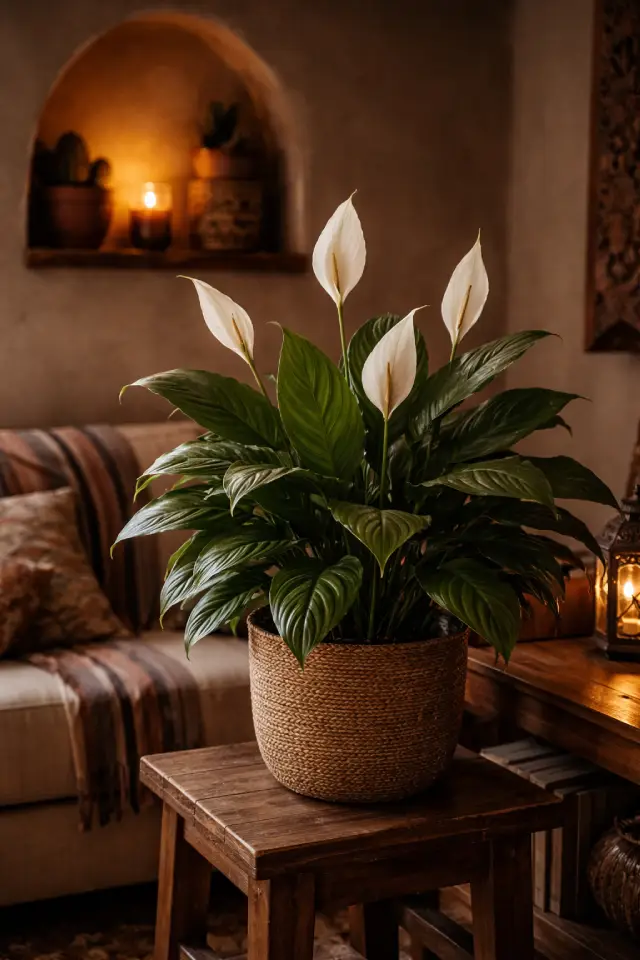
Mature Size: 2 to 4 feet tall
The Peace Lily has long been one of the most popular indoor plants because of its glossy dark green leaves and elegant white blooms. It tolerates lower light conditions better than many flowering houseplants and can bloom several times throughout the year when properly cared for.
Peace Lilies also let you know when they’re thirsty. Their leaves begin to droop noticeably before suffering permanent damage, making them an excellent plant for beginners.
Place your Peace Lily near a bright window with filtered light and keep the soil consistently moist but never soggy. Too much water can lead to root rot, while allowing the soil to dry completely may cause the plant to wilt.
Water: About once each week, allowing the top inch of soil to dry slightly between waterings.
Difficulty: Easy
Pet Safe: ❌ No
2. Snake Plant (Dracaena trifasciata)
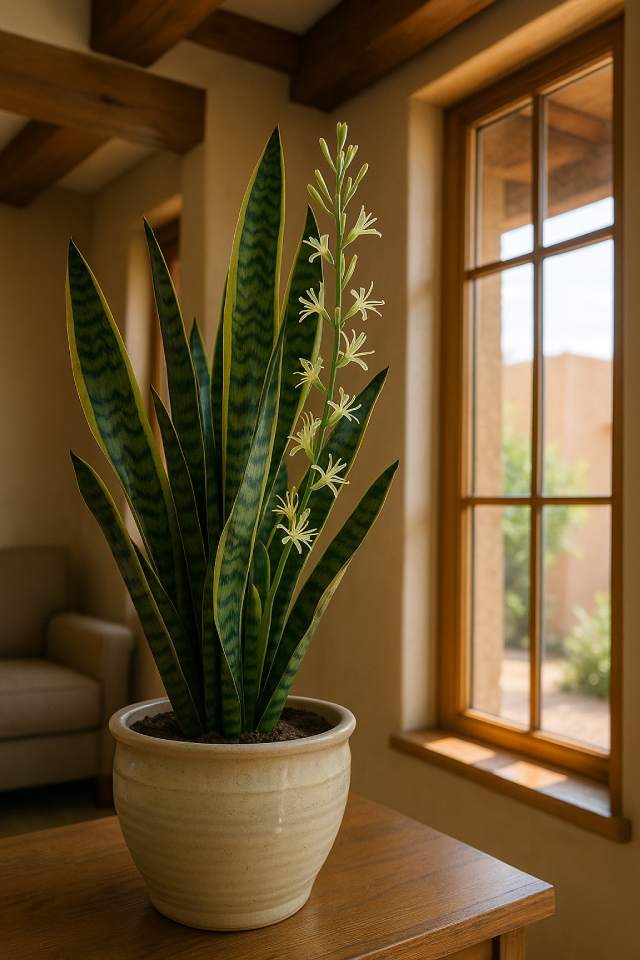
One of the toughest houseplants you can own is the Snake Plant, sometimes called Mother-in-Law’s Tongue. Its stiff, upright leaves tolerate neglect, dry indoor air, and low light remarkably well.
If you’re someone who occasionally forgets to water your plants, this may be the perfect choice. Snake Plants actually prefer their soil to dry between waterings.
They grow slowly in low-light areas but remain attractive year-round with very little maintenance. Their upright growth habit also makes them an excellent choice for corners, entryways, and office spaces.
Mature Size: 2 to 4 feet tall
Water: Every 2 to 4 weeks depending on the season.
Difficulty: Very Easy
Pet Safe: ❌ No
3. ZZ Plant (Zamioculcas zamiifolia)
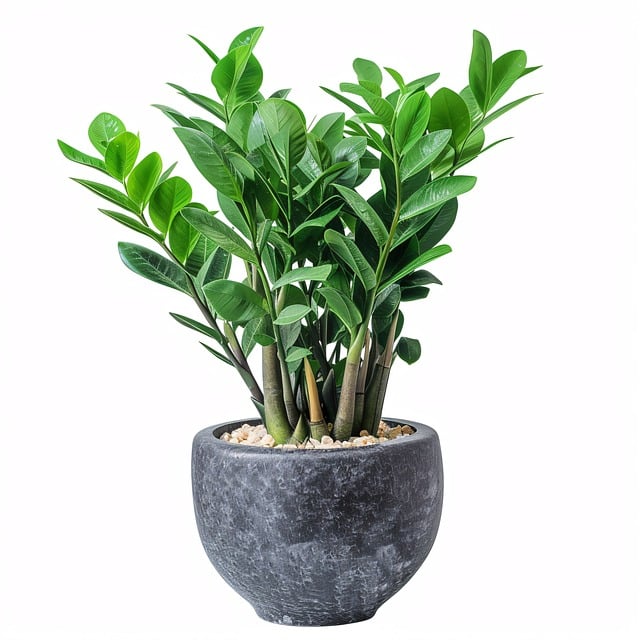
The ZZ Plant has become one of the most popular office plants because it tolerates extremely low light while requiring very little attention.
Its thick, glossy leaves store moisture, allowing the plant to go weeks without watering. In fact, overwatering is one of the few ways to damage a ZZ Plant.
From my experience, I’ve seen ZZ Plants thrive in offices that receive only overhead fluorescent lighting for much of the day. While brighter indirect light encourages faster growth, they continue looking healthy even in less-than-ideal conditions.
Mature Size: 2 to 4 feet tall
Water: Every 2 to 3 weeks.
Difficulty: Very Easy
Pet Safe: ❌ No
4. Golden Pothos (Epipremnum aureum)
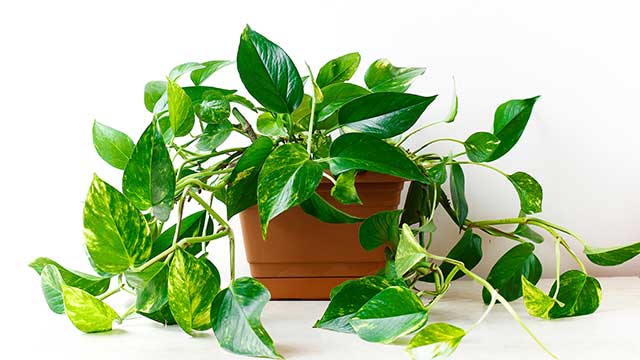
Golden Pothos is one of the easiest trailing houseplants to grow. Its heart-shaped leaves create attractive cascading vines that look beautiful on shelves, bookcases, or hanging baskets.
Pothos adapts well to lower light, although its yellow variegation may become less pronounced in darker rooms.
It’s also one of the easiest plants to propagate. Simply place a stem cutting in water, and new roots will usually appear within a few weeks.
Keep the soil slightly moist, but don’t allow the pot to remain constantly wet. There are different types of Pothos plants.
Mature Size: Vines up to 10 feet indoors
Water: Every 7 to 10 days.
Difficulty: Easy
Pet Safe: ❌ No
5. Cast Iron Plant (Aspidistra elatior)
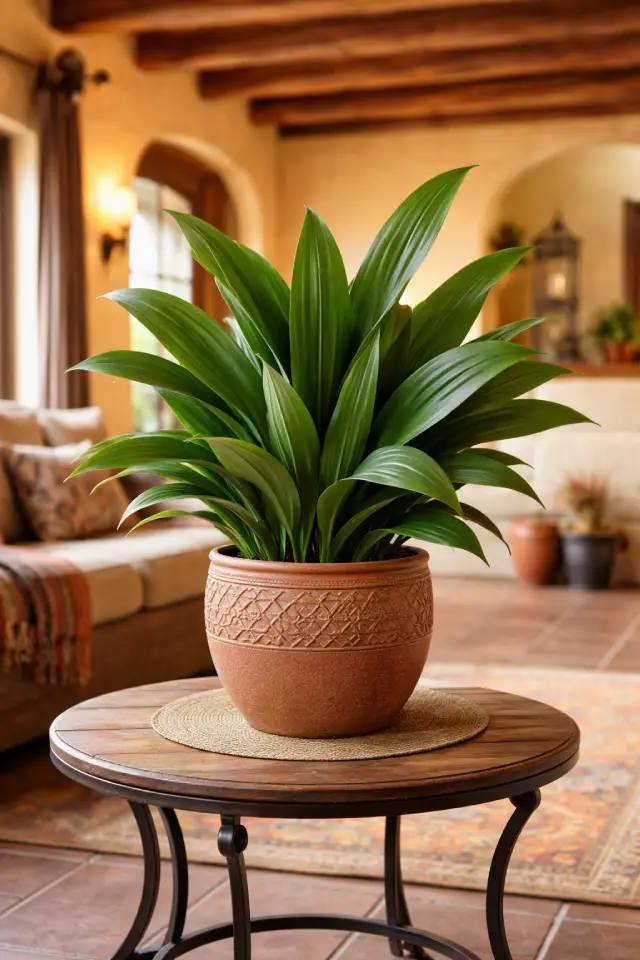
As its name suggests, the Cast Iron Plant is almost impossible to kill.
This slow-growing evergreen tolerates low light, inconsistent watering, dry indoor air, and temperature fluctuations better than nearly any other houseplant.
Its broad, deep green leaves provide a clean, elegant appearance that fits well in traditional or modern homes.
Although it grows slowly, patience is rewarded with a durable plant that can live for decades when properly cared for.
Water thoroughly whenever the top couple of inches of soil become dry, and avoid placing it in direct afternoon sunlight. More on the Cast Iron Plant Care Guide.
Mature Size: 2 to 3 feet tall
Water: Every 10 to 14 days.
Difficulty: Very Easy
Pet Safe: ✅ Yes
6. Chinese Evergreen (Aglaonema)
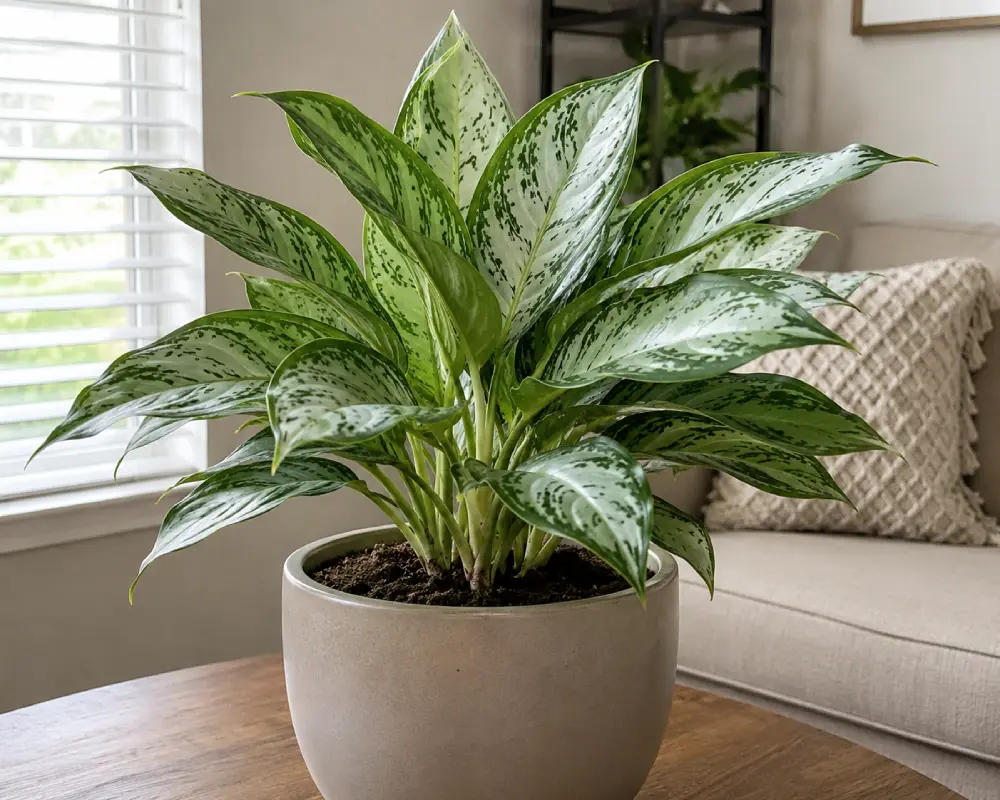
Chinese Evergreen is one of the most dependable houseplants for low-light conditions. Its large, colorful leaves come in shades of green, silver, pink, and even red, making it one of the few foliage plants that adds plenty of color indoors.
It tolerates lower humidity than many tropical houseplants and requires very little maintenance once established. Although it grows best in bright, indirect light, it adapts surprisingly well to rooms with limited natural sunlight.
Allow the top inch or two of soil to dry before watering. Overwatering is much more harmful than allowing the soil to become slightly dry.
Mature Size: 1 to 3 feet tall
Water: Every 7 to 10 days
Difficulty: Easy
Pet Safe: ❌ No
7. Heartleaf Philodendron (Philodendron hederaceum)
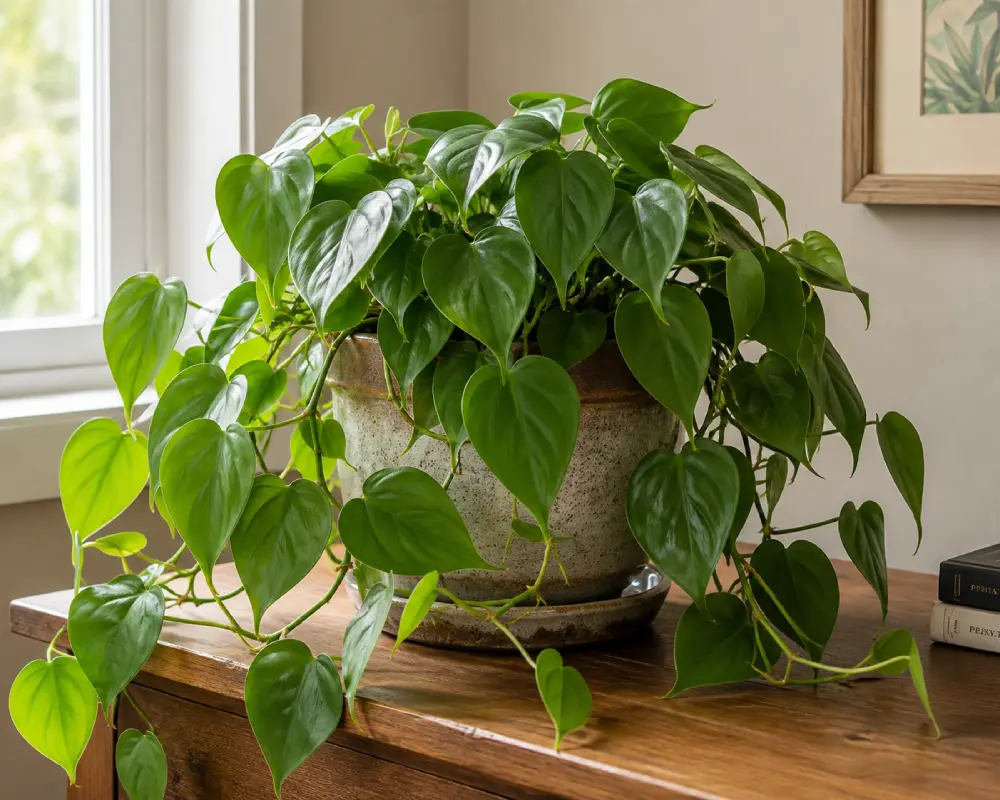
The Heartleaf Philodendron has remained a favorite indoor plant for generations because it is both beautiful and forgiving. Its glossy, heart-shaped leaves trail gracefully from hanging baskets, shelves, or decorative pots.
This plant adapts well to low-light rooms but grows faster and fuller when given bright, indirect light. If the vines become too long, simply trim them back to encourage thicker growth. The cuttings root easily in water, allowing you to grow new plants for other areas of your home.
Avoid keeping the soil constantly wet. Water thoroughly, then allow the top inch of soil to dry before watering again.
Mature Size: Vines up to 10 feet indoors
Water: Every 7 to 10 days
Difficulty: Easy
Pet Safe: ❌ No
8. Parlor Palm (Chamaedorea elegans)
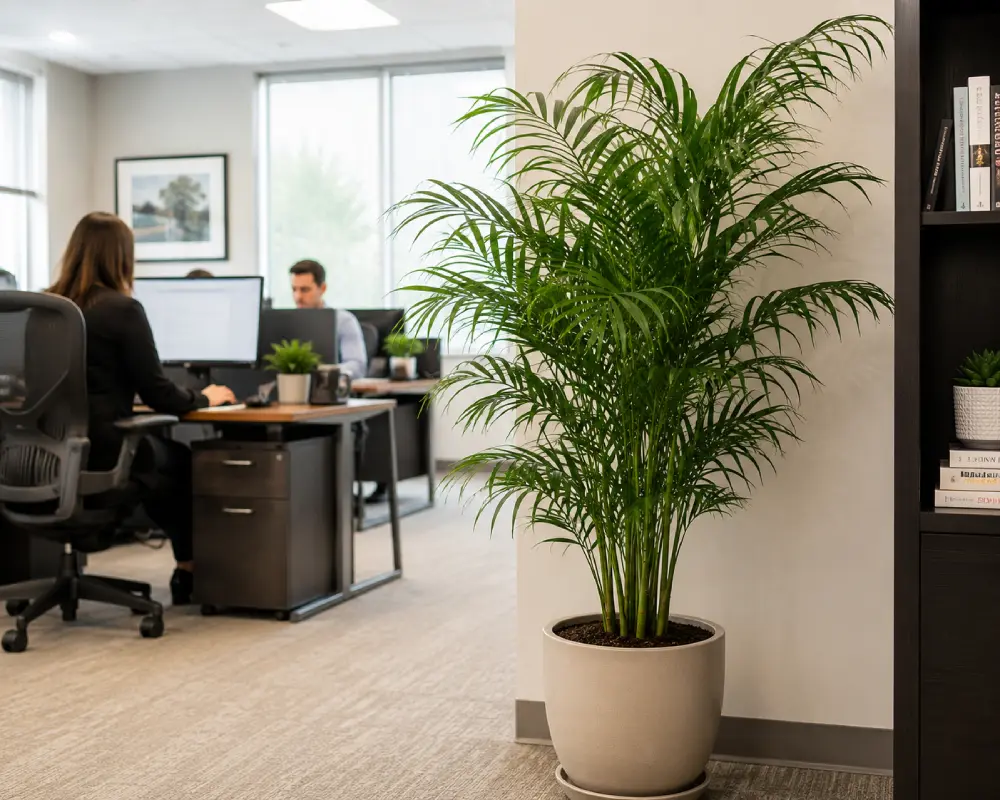
If you’re looking for a tropical appearance without demanding care requirements, the Parlor Palm is one of the best choices available. This elegant palm has been grown indoors since the Victorian era because it tolerates lower light levels better than most other palms.
Its graceful, feathery fronds add softness and texture to living rooms, bedrooms, and offices. Since it naturally grows beneath the canopy of larger trees, it actually prefers filtered light rather than direct afternoon sun.
Water when the top inch of soil becomes dry. While it appreciates moderate humidity, it generally adapts well to normal indoor conditions.
Mature Size: 2 to 6 feet tall
Water: Every 7 to 10 days
Difficulty: Easy
Pet Safe: ✅ Yes
9. Dracaena ‘Janet Craig’
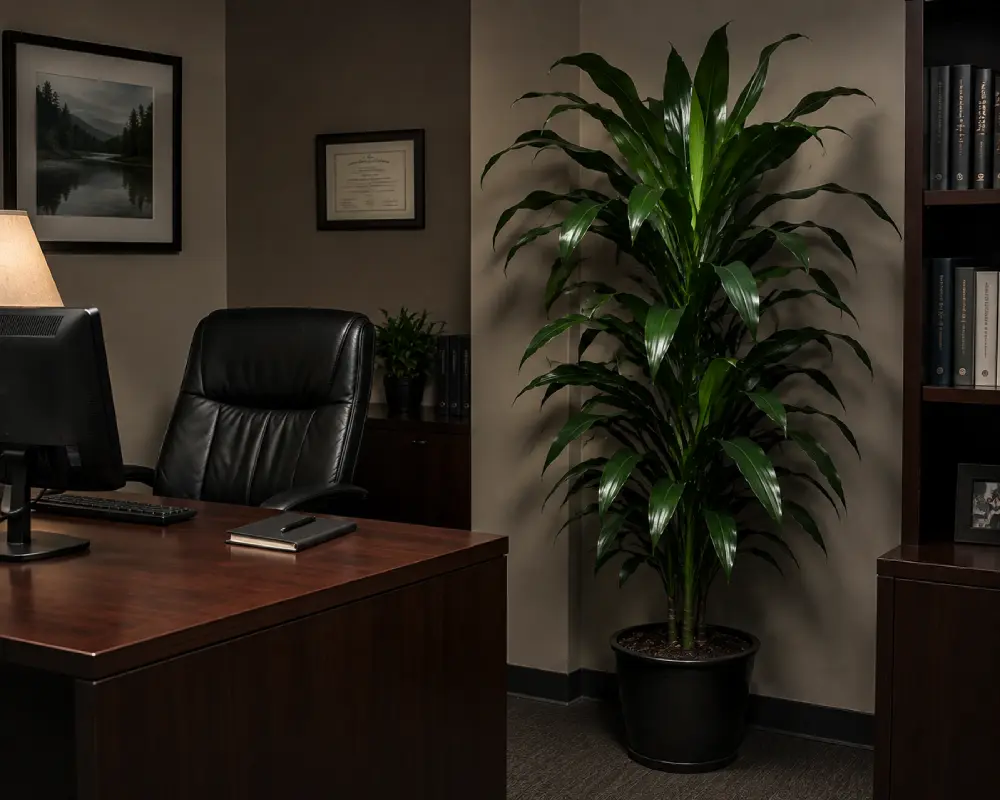
The ‘Janet Craig’ Dracaena is one of the easiest large houseplants to maintain indoors. Its long, dark green leaves arch gracefully from sturdy stems, giving it a clean, elegant appearance that complements almost any decorating style.
This plant performs exceptionally well in offices, waiting rooms, and homes with limited natural light. It also tolerates occasional missed waterings much better than many tropical plants.
Allow the soil to dry slightly between waterings, and avoid placing the plant in direct afternoon sunlight, which can scorch its leaves.
Mature Size: 3 to 8 feet tall
Water: Every 10 to 14 days
Difficulty: Very Easy
Pet Safe: ❌ No
10. Spider Plant (Chlorophytum comosum)
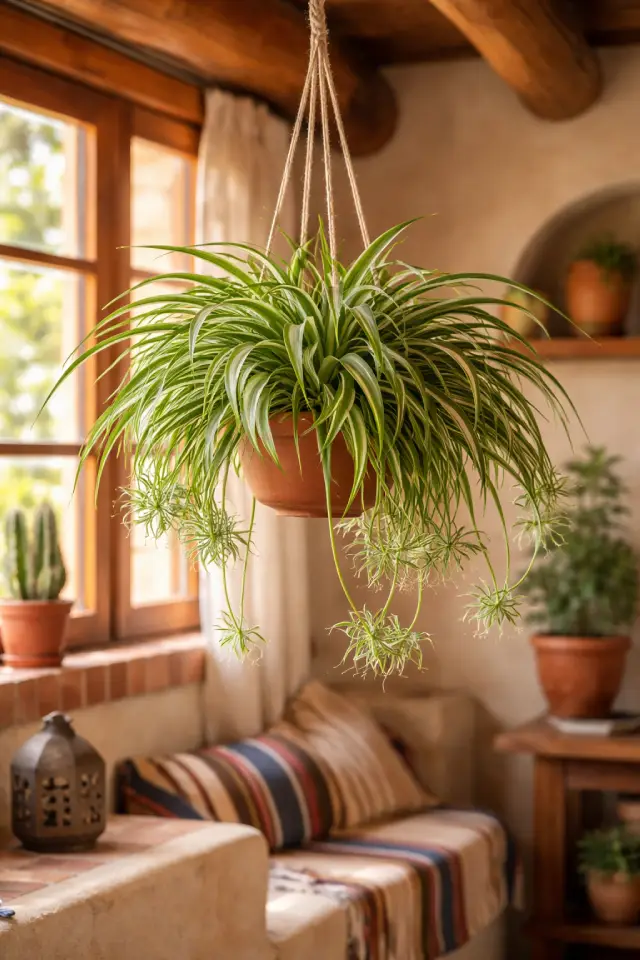
Spider Plants have remained one of America’s most popular houseplants because they are easy to grow, attractive, and produce numerous baby plants that can be propagated with little effort.
Their narrow green leaves, often accented with white stripes, arch outward to create an attractive fountain-like appearance. Mature plants produce long stems with small plantlets that can be rooted in soil or water to create new plants.
Spider Plants tolerate low light but produce their best growth and strongest variegation in bright, indirect light. They’re also one of the better choices for homes with cats and dogs since they are considered non-toxic to pets.
Water when the top inch of soil becomes dry, and avoid allowing the plant to sit in standing water.
Mature Size: 12 to 24 inches tall and wide
Water: Every 7 to 10 days
Difficulty: Very Easy
Pet Safe: ✅ Yes
11. Bird’s Nest Fern (Asplenium nidus)
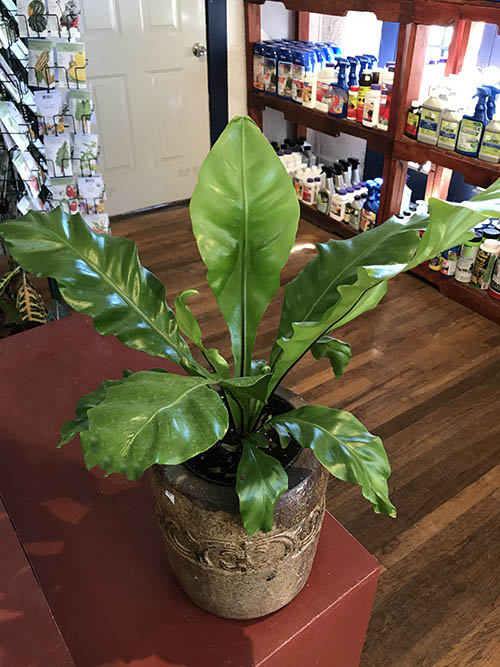
Unlike many ferns that require constant attention, the Bird’s Nest Fern is relatively easy to grow indoors. Its bright green, wavy fronds grow from a central rosette, giving the plant a tropical appearance that looks great in living rooms, bathrooms, or kitchens.
This fern prefers evenly moist soil and appreciates higher humidity, making it an excellent choice for bathrooms with natural light. Avoid watering directly into the center of the plant, as standing water can cause the crown to rot.
Mature Size: 2 to 4 feet tall and wide
Water: Keep the soil lightly moist, but not soggy.
Difficulty: Moderate
Pet Safe: ✅ Yes
12. Lucky Bamboo (Dracaena sanderiana)
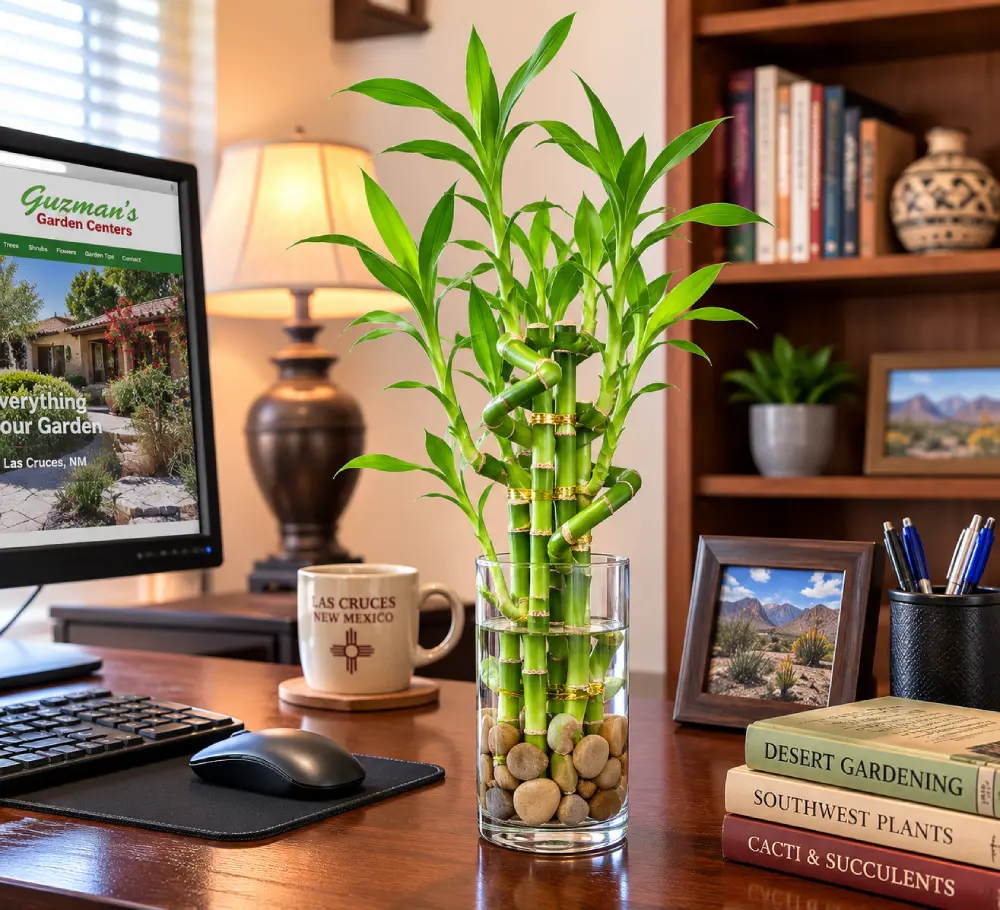
Lucky Bamboo isn’t actually bamboo at all. It’s a member of the Dracaena family and has become popular because of its unique appearance and reputation for bringing good fortune.
It grows well in low-light rooms and can be grown in either water or potting soil. If grown in water, replace the water every one to two weeks and use distilled or filtered water whenever possible to prevent leaf tip burn.
Lucky Bamboo grows slowly, making it an excellent choice for desks, shelves, and countertops.
Mature Size: 1 to 3 feet tall
Water: Change water every 1 to 2 weeks or water soil when slightly dry.
Difficulty: Easy
Pet Safe: ❌ No
13. Prayer Plant (Maranta leuconeura)
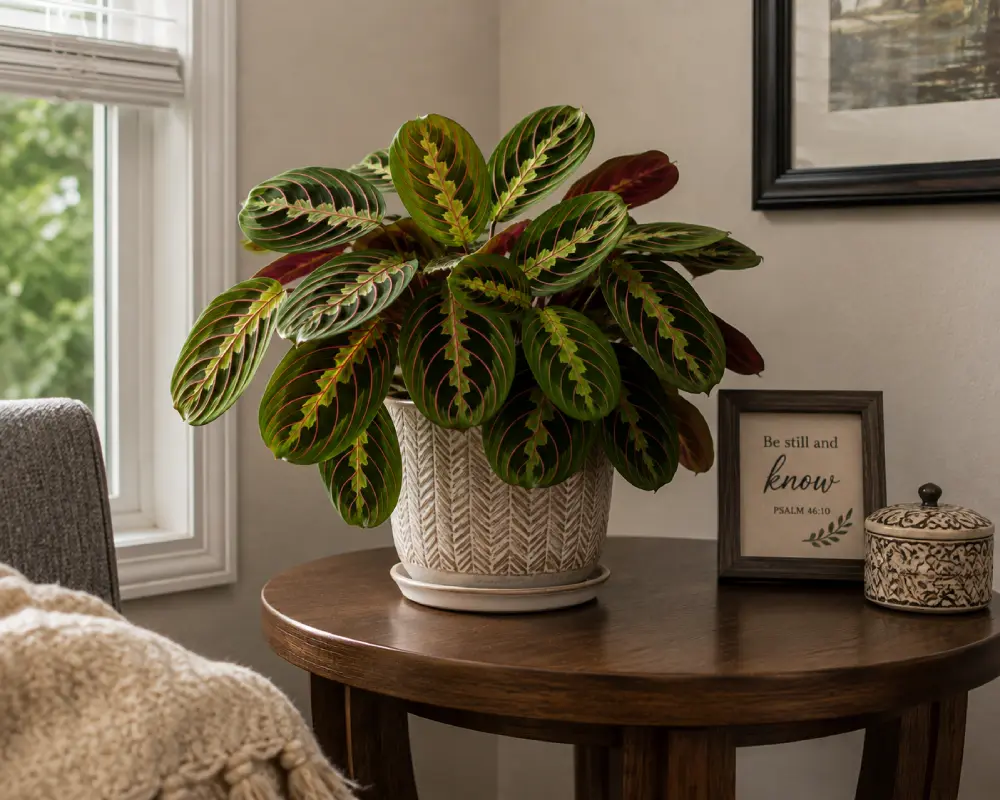
The Prayer Plant is known for its beautifully patterned leaves that fold upward each evening, resembling hands folded in prayer.
Its colorful foliage features shades of dark green, light green, red, and cream, making it one of the most decorative low-light houseplants available.
Prayer Plants prefer consistently moist soil and higher humidity than many other indoor plants. They perform best in bright, indirect light but tolerate lower light surprisingly well.
Mature Size: 10 to 15 inches tall
Water: Keep the soil consistently moist but never saturated.
Difficulty: Moderate
Pet Safe: ✅ Yes
14. English Ivy (Hedera helix)
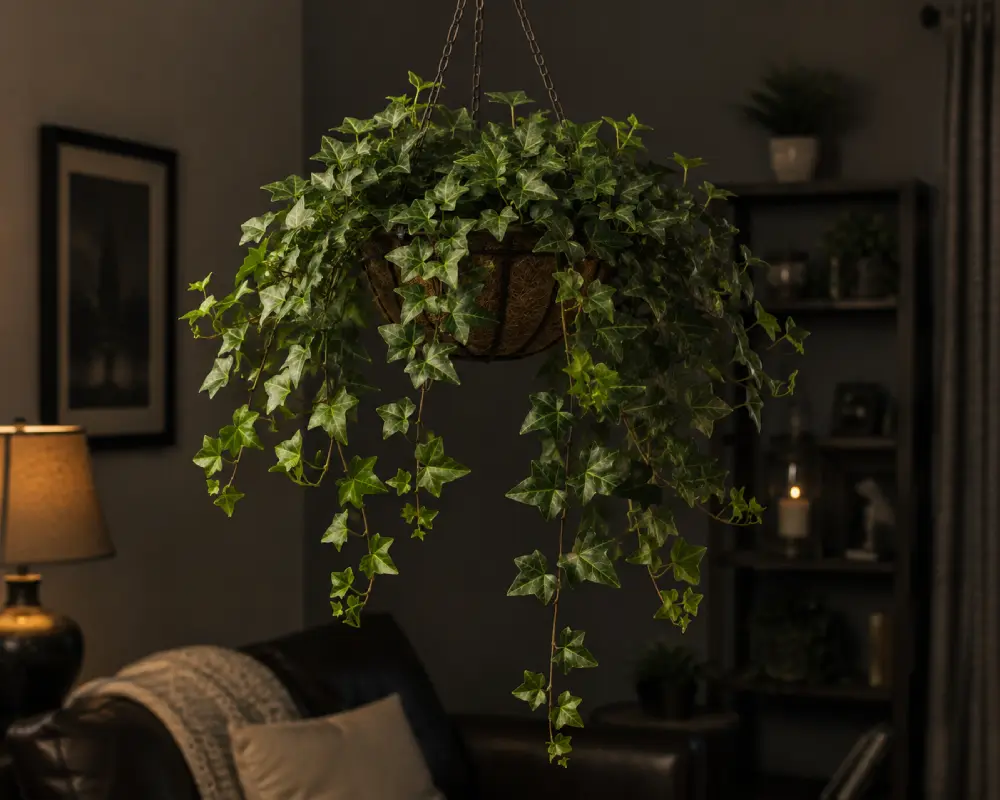
English Ivy creates beautiful cascading vines that work well in hanging baskets, decorative containers, or on shelves where the foliage can trail naturally.
It adapts well to lower light conditions but prefers cooler indoor temperatures than many tropical houseplants. Good air circulation also helps prevent common fungal problems.
Allow the top inch of soil to dry between waterings and occasionally trim the vines to maintain a fuller appearance.
Mature Size: Vines may exceed 10 feet indoors
Water: Every 7 to 10 days
Difficulty: Easy
Pet Safe: ❌ No
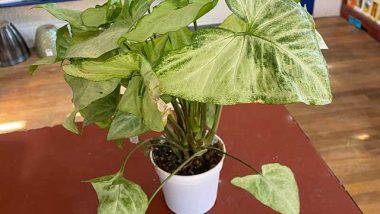
15. Arrowhead Plant (Syngonium podophyllum)
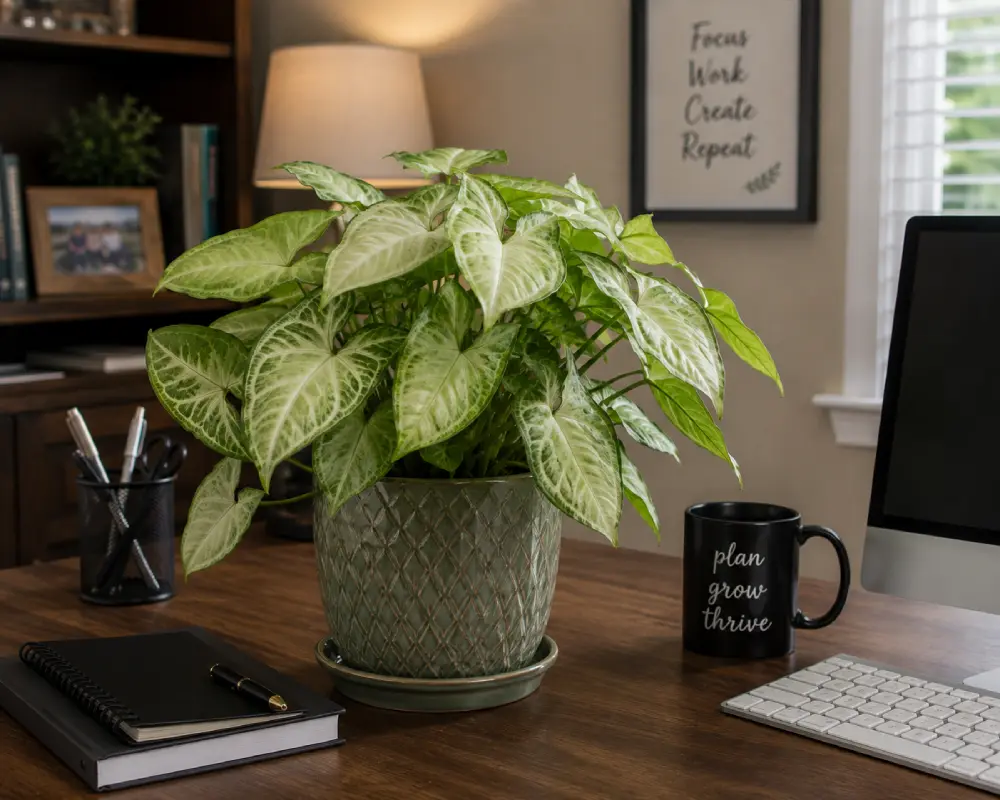
The Arrowhead Plant is another excellent choice for beginners. Its arrow-shaped leaves gradually change shape as the plant matures, creating an interesting display throughout the year.
It grows well in low-light conditions but develops fuller growth with brighter indirect light. As it matures, it can either trail from hanging baskets or be trained to climb a moss pole.
Keep the soil slightly moist and avoid allowing it to dry completely.
Mature Size: 2 to 6 feet depending on support
Water: Every 7 to 10 days
Difficulty: Easy
Pet Safe: ❌ No
Comparison Chart
| Plant | Low Light | Water Needs | Beginner Friendly | Pet Safe |
|---|---|---|---|---|
| Peace Lily | ★★★★★ | Moderate | ★★★★★ | ❌ |
| Snake Plant | ★★★★★ | Low | ★★★★★ | ❌ |
| ZZ Plant | ★★★★★ | Low | ★★★★★ | ❌ |
| Golden Pothos | ★★★★☆ | Moderate | ★★★★★ | ❌ |
| Cast Iron Plant | ★★★★★ | Low | ★★★★★ | ✅ |
| Chinese Evergreen | ★★★★★ | Moderate | ★★★★★ | ❌ |
| Heartleaf Philodendron | ★★★★☆ | Moderate | ★★★★★ | ❌ |
| Parlor Palm | ★★★★☆ | Moderate | ★★★★☆ | ✅ |
| Janet Craig Dracaena | ★★★★★ | Low | ★★★★★ | ❌ |
| Spider Plant | ★★★★☆ | Moderate | ★★★★★ | ✅ |
| Bird’s Nest Fern | ★★★☆☆ | Moderate | ★★★☆☆ | ✅ |
| Lucky Bamboo | ★★★★☆ | Moderate | ★★★★★ | ❌ |
| Prayer Plant | ★★★☆☆ | Moderate | ★★★☆☆ | ✅ |
| English Ivy | ★★★★☆ | Moderate | ★★★★☆ | ❌ |
| Arrowhead Plant | ★★★★☆ | Moderate | ★★★★★ | ❌ |
Watering Tips for Low-Light Houseplants
One of the biggest mistakes people make with indoor plants is watering too often. Plants growing in lower light use water much more slowly than plants sitting in bright sunlight.
Before watering, insert your finger about one to two inches into the soil. If it still feels damp, wait a few more days before checking again. Most low-light houseplants prefer slightly dry soil rather than constantly wet roots.
Always choose containers with drainage holes so excess water can escape. Standing water at the bottom of a pot is one of the leading causes of root rot and unhealthy houseplants.
During winter, when plant growth naturally slows, you’ll usually need to water less frequently than during spring and summer.
Five Common Mistakes to Avoid
1. Overwatering
More houseplants die from overwatering than underwatering. Wet soil deprives roots of oxygen and can quickly lead to root rot.
2. Expecting Plants to Grow Quickly
Low-light plants naturally grow more slowly than those receiving bright indirect light. Slow growth is perfectly normal.
3. Placing Plants in Complete Darkness
Even the toughest low-light plants still need some source of light. Place them near a window, beneath bright indoor lighting, or under an LED grow light.
4. Using Pots Without Drainage
Decorative containers without drainage holes trap excess water around the roots, greatly increasing the risk of root rot.
5. Applying Too Much Fertilizer
Most indoor plants require only light fertilizing during the active growing season. Too much fertilizer can burn roots and damage foliage.
Pet-Friendly Low-Light Houseplants
If you have curious cats or dogs, choosing non-toxic plants can provide extra peace of mind.
Some of the safest low-light houseplants include:
- Cast Iron Plant
- Spider Plant
- Parlor Palm
- Bird’s Nest Fern
- Prayer Plant
Even with non-toxic plants, it’s still best to discourage pets from chewing on leaves, as doing so may cause mild stomach upset.
Infographic
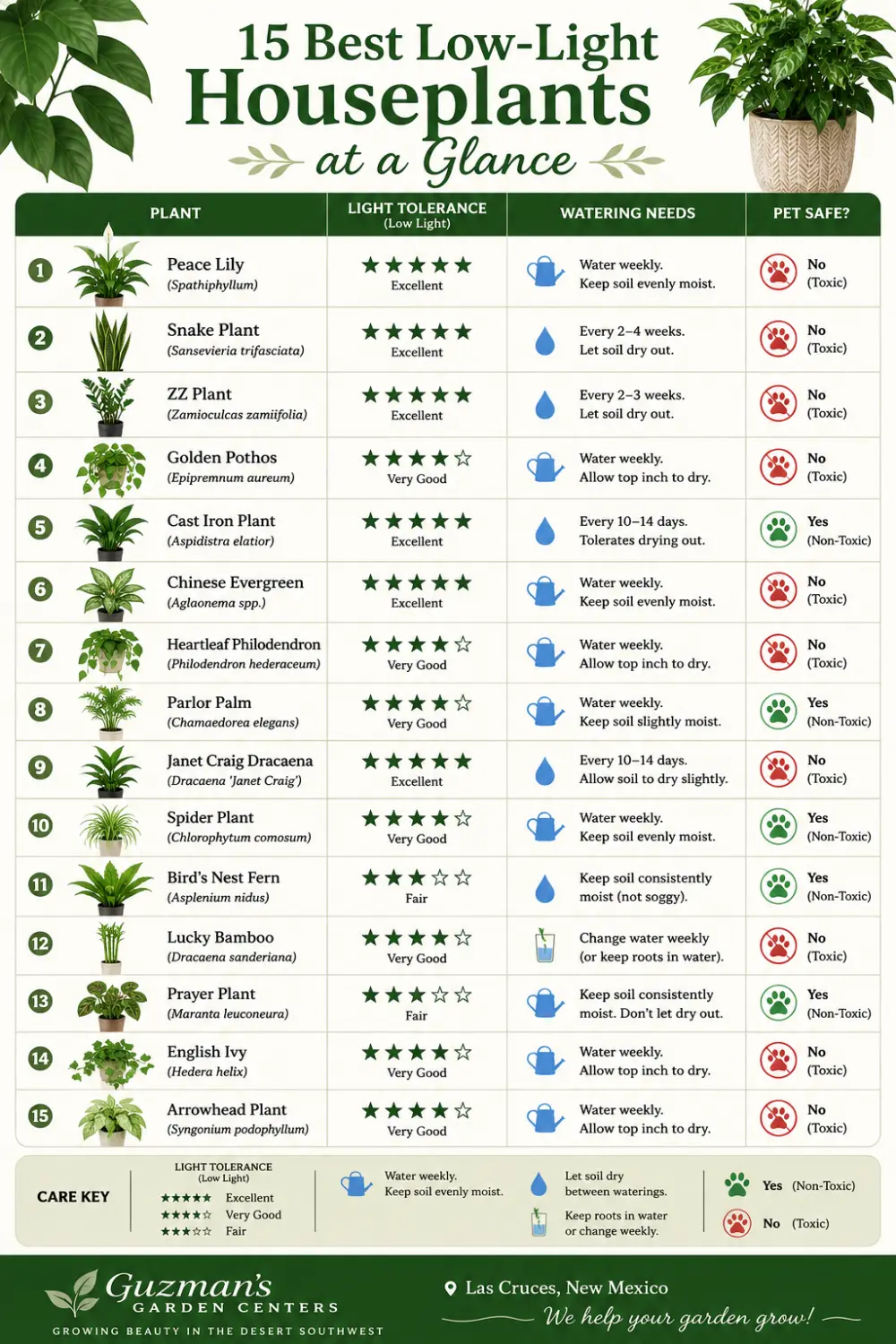
Best Low-Light Houseplants at a Glance
The infographic should summarize:
- Plant Name
- Light Requirement
- Watering Frequency
- Difficulty Level
- Pet Friendly (Yes or No)
This gives readers a quick visual reference and is highly shareable on Pinterest and other social media platforms.
Frequently Asked Questions
What is the easiest houseplant to grow in low light?
The Snake Plant and ZZ Plant are among the easiest houseplants for beginners. Both tolerate low light, require very little watering, and can handle occasional neglect.
Can houseplants survive in rooms without windows?
Not for long. Every plant requires some form of light to produce energy through photosynthesis. If your room has no windows, use an LED grow light for several hours each day.
Which low-light houseplants need the least water?
Snake Plants, ZZ Plants, and Cast Iron Plants store moisture and can often go two to four weeks between waterings, depending on indoor conditions.
Do low-light plants clean indoor air?
Many houseplants help improve indoor air quality by producing oxygen and increasing humidity. While some studies have shown certain plants can remove small amounts of indoor pollutants under controlled conditions, their greatest benefit in most homes is adding beauty, moisture, and a calming natural element.
Why are the leaves turning yellow?
Yellow leaves are usually a sign of overwatering. Check that the soil drains well and allow it to dry slightly before watering again.
Should I fertilize low-light houseplants?
Yes, but only lightly. Feed most indoor plants with a balanced houseplant fertilizer once a month during spring and summer. Little to no fertilizer is needed during fall and winter when growth naturally slows.
Final Thoughts
Growing beautiful houseplants doesn’t require a sunny home. Many indoor plants naturally thrive in filtered or indirect light, making them ideal for apartments, offices, and rooms with limited sunlight.
The key to success is choosing plants that match your home’s lighting conditions and avoiding the temptation to overwater them. With the proper care, low-light houseplants can provide years of beauty while bringing a touch of nature indoors.
Whether you’re just starting your indoor gardening journey or adding to an existing collection, the plants in this guide are among the easiest and most reliable choices available.
For additional information on houseplant care, visit:
- University of Florida IFAS Gardening Solutions – Houseplants
https://gardeningsolutions.ifas.ufl.edu/plants/houseplants/ - ASPCA Toxic and Non-Toxic Plants Database
https://www.aspca.org/pet-care/animal-poison-control/toxic-and-non-toxic-plants
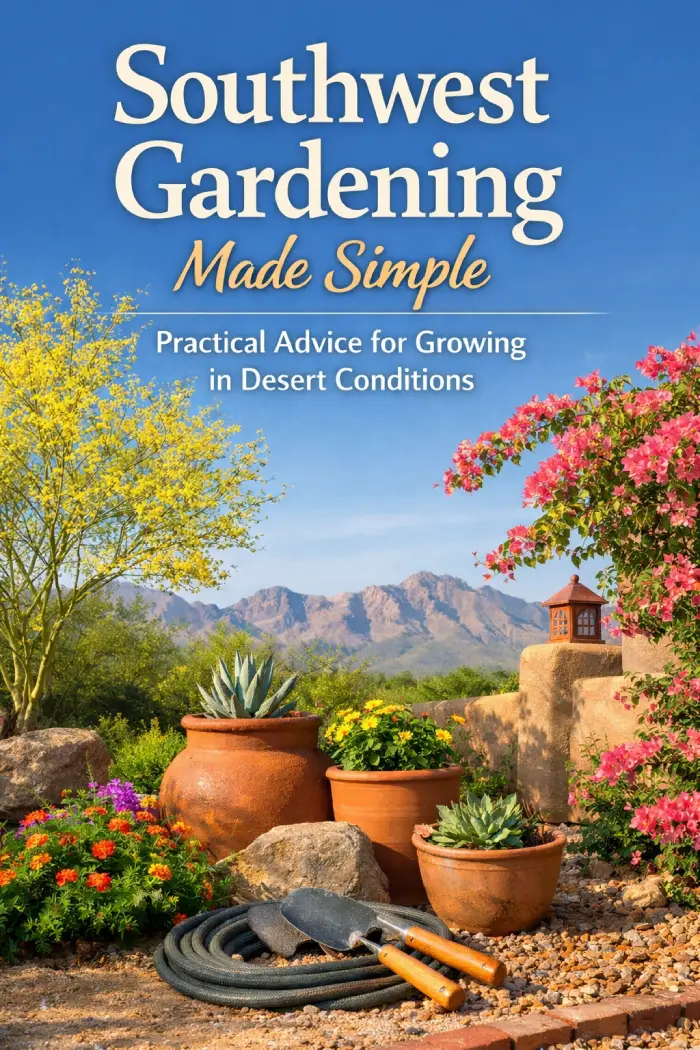
New to Southwest Gardening?
Stop wasting money on plants that will not survive our heat and drought.
My Southwest Gardening Made Simple eBook shows you which trees, shrubs, flowers, and vegetables actually thrive in New Mexico, Arizona, and West Texas.
The best plants for hot, dry climates
Common mistakes that kill Southwest plants
Easy-to-follow advice for beginners

Paul Guzman is a lifelong Southwest gardener and gardening writer with decades of experience helping homeowners grow beautiful landscapes in the desert Southwest. He writes for Guzman’s Garden Centers in Las Cruces, New Mexico, with contributing expertise from Gary Guzman, owner of Guzman’s Garden Centers. If you have any questions or enjoyed this post, feel free to share your thoughts in the comments below.