🌵 Blue Glow Agave: A Stunning Accent for Southwest Xeriscapes
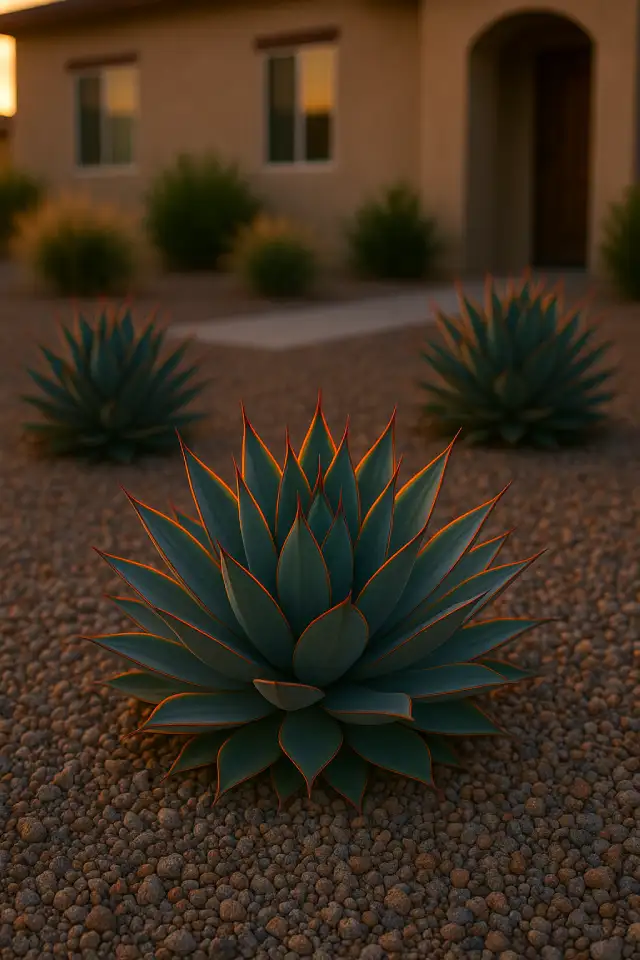
The Blue Glow Agave always amazes me whenever I see it in someone’s landscape. It is a dwarf Agave, but it looks great in a Xeriscape design. See the Image below.
🌞 The Beauty of the Blue Glow Agave
The Blue Glow Agave (Agave ‘Blue Glow’) is a compact hybrid succulent prized for its smooth blue-green leaves edged in vibrant red and yellow margins. When sunlight hits the plant just right, the edges appear to “glow,” creating a radiant halo effect that makes this agave a true focal point in any desert landscape.
Native to arid regions of Mexico, the Blue Glow thrives in hot, dry climates like Las Cruces, NM, and El Paso, TX, where other plants struggle. It’s drought-tolerant, low-maintenance, and adds a modern, sculptural element to xeriscape designs.
🌿 Ideal Placement in Xeriscape Landscapes
This agave looks its best when used as an accent plant or in repeating groups. Because of its symmetrical rosette shape and glowing leaf edges, it pairs beautifully with gravel mulch, decorative boulders, and other low-water plants.
Design Ideas:
-
Plant near pathways, entryways, or rock gardens to highlight its glowing leaf edges at sunset.
-
Combine with Red Yucca (Hesperaloe parviflora), Firecracker Penstemon, or Golden Barrel Cactus for color contrast.
-
Use pea gravel, crushed granite, or river rock as ground cover for a clean, Southwest aesthetic.
-
Works well in modern landscapes, Southwest-style homes, and container gardens.
🌵 Care and Maintenance Tips
One of the best parts of owning a Blue Glow Agave is its easy care routine:
-
Sunlight: Full sun to partial shade. It thrives in intense desert light.
-
Water: Water deeply but infrequently — about every 2–3 weeks in summer, less in winter.
-
Soil: Well-draining sandy or gravelly soil; avoid heavy clay.
-
Fertilizer: A light feeding with cactus fertilizer in spring is enough.
-
Size: Grows up to 2 feet tall and 3 feet wide, perfect for smaller spaces.
-
Cold Hardiness: Tolerates temperatures down to 20°F; protect from hard freezes.
🌿 Design & Placement Tips for Blue Glow Agave
Where would you place the Blue Glow Agave? Think of it as a living sculpture. Its symmetrical rosette shape and glowing leaf margins make it ideal as a focal point in any xeriscape. Place it where it can catch the morning or evening sun — that’s when the leaf edges light up in hues of red and gold, creating a beautiful halo effect.

For the best visual impact, use odd-number groupings (one, three, or five plants) spaced about three feet apart to allow full growth and symmetry. It pairs beautifully with Red Yucca, Mexican Feather Grass, and Firecracker Penstemon, which soften its sharp form with movement and color. Surrounding it with pea gravel, crushed granite, or decorative boulders enhances its desert appeal while keeping the area low-maintenance and weed-free.
The Blue Glow Agave Near Walkways
Consider placing Blue Glow Agave near walkways, patios, or entryways where the plant’s glowing edges can be appreciated up close. For smaller spaces or courtyards, it also thrives in large ceramic pots with good drainage. Combined with warm stucco walls or adobe tones, this agave brings a dramatic, modern elegance to Southwest-style homes while staying true to water-wise landscaping principles.
Like many agave species, the Blue Glow Agave has a fascinating life cycle. It blooms only once in its lifetime, sending up a tall, dramatic flower spike that can reach up to ten feet high. The stalk produces clusters of yellow-green flowers that attract hummingbirds, bees, and other pollinators — a stunning sight in any xeriscape garden.
After flowering, the mother plant naturally begins to decline and die back, completing its life cycle. However, it often leaves behind small offsets or “pups” at its base. These young plants can be gently separated and replanted, allowing gardeners to propagate new agaves and continue the legacy of the original plant. Over time, this process helps maintain a beautiful, self-sustaining low-water landscape, perfectly suited to the desert conditions of Las Cruces, El Paso, and the wider Southwest.
🌱 How to Remove and Replant Blue Glow Agave Pups
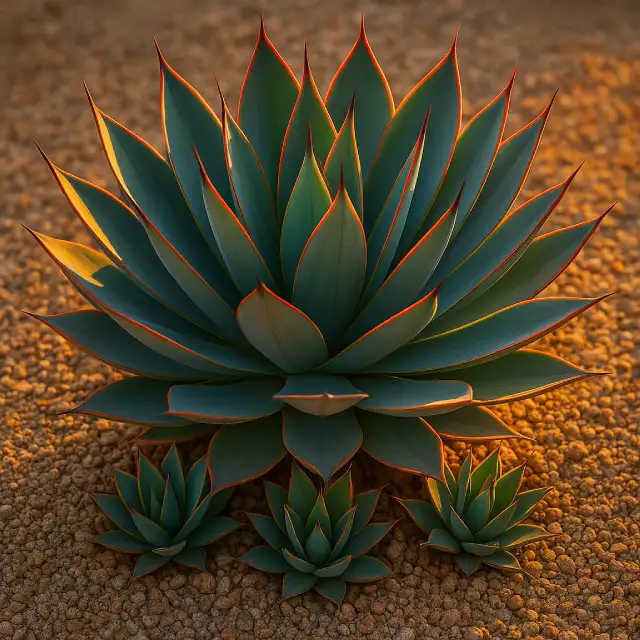
Propagating Blue Glow Agave from its pups is an easy and rewarding way to expand your garden without buying new plants. These young offsets often appear around the base of the parent agave after it blooms or as it matures.
1. Wait for the Right Time
The best time to remove pups is during the warmer months — late spring through early fall — when the soil is warm and the pups have established small root systems. Avoid doing this during cold or rainy periods.
2. Prepare Your Tools
Use a clean, sharp garden knife or pruning saw. Wearing gloves is a must; agaves have sharp leaf tips and can cause skin irritation.
3. Separate the Pups
Gently dig around the base of the pup to expose where it connects to the mother plant. Slice cleanly through the connecting root, keeping as many of the pup’s small roots intact as possible.
4. Let the Pup Heal
Place the pup in a shaded, dry area for a few days to let the cut end callous over. This prevents rot when it’s replanted.
5. Replant in Well-Draining Soil
Choose a sunny location or large container with sandy or cactus mix soil. Plant the pup just deep enough to cover its roots. Water lightly at first — just enough to settle the soil — then allow it to dry out between waterings.
6. Resume Normal Care
After two to three weeks, the pup should start to establish new roots. Gradually resume a deep, infrequent watering schedule, and watch it grow into another glowing focal point in your xeriscape landscape.

Greenhouse Manager, Master Gardener, and Webmaster.
If you have any questions or enjoyed this post, feel free to share your thoughts in the comments below.