Last updated on February 14th, 2026 at 12:01 pm
Barberry Bush Care Guide for Southwest Landscapes. The Japanese Barberry Bush (Berberis thunbergii) is a great little colorful plant that fits into almost any type of landscape design. Most Barberry plants will thrive in USDA Zones 4-9.
Care of Barberry Bush
The Barberry bush (Berberis) is a colorful, low-maintenance shrub known for its glossy burgundy to deep red foliage. In the Southwest, it adds striking contrast to desert landscapes, rocky xeriscape yards, and even Asian-inspired or formal garden designs.
Because of its bold leaf color and compact growth habit, barberry is often used as a small hedge, border plant, or foundation shrub.
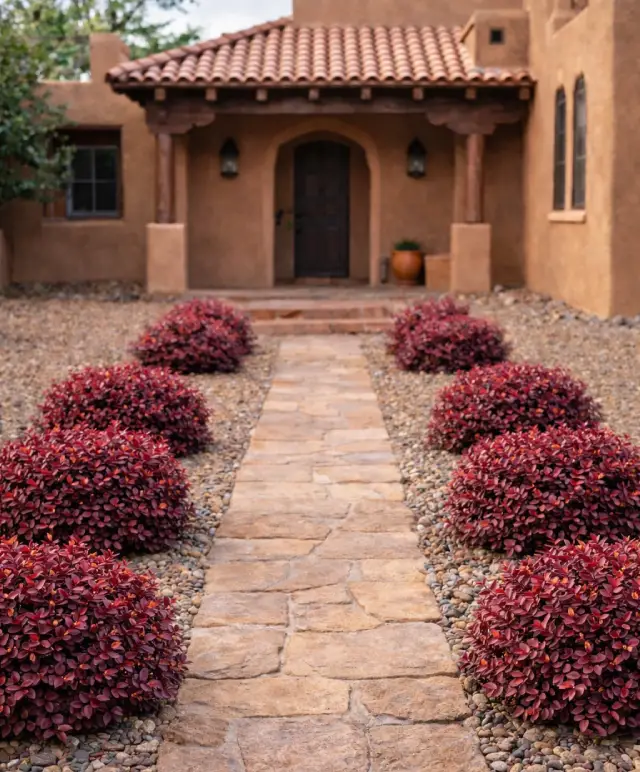
Is Barberry Good for Xeriscaping?
Yes — with proper irrigation.
Barberry works beautifully in xeriscape landscapes, but it is not a true desert plant. While it tolerates heat, it still requires consistent watering, even after it becomes established.
In Southwest climates like Southern New Mexico and West Texas:
-
Use drip irrigation for best results
-
Water deeply rather than lightly
-
Increase watering frequency during hot mid-summer months
-
Avoid soggy soil — good drainage is important
During extreme heat, supplemental hand watering may be necessary to prevent leaf scorch.
Sun Requirements
Barberry performs best in:
-
Full sun to partial shade
-
At least 6 hours of direct sunlight for strongest leaf color
Too much shade may reduce the intensity of its burgundy foliage.
Barberry Flowers and Seasonal Interest
In spring, barberry produces small pinkish to yellow blooms. The flowers are not particularly showy and are secondary to the plant’s real highlight — its rich foliage color that lasts nearly year-round.
Some varieties may also produce small red berries in fall.
How Big Does a Barberry Bush Get?
Most barberry shrubs grow:
-
3 to 5 feet tall
-
3 to 4 feet wide
-
Reach mature size in about 5–6 years
This makes it ideal for:
-
Low hedges
-
Border plantings
-
Accent shrubs
-
Mass plantings for color contrast
It stays relatively compact and responds well to light pruning.
Pruning and Maintenance Tips
-
Prune lightly in late winter or early spring
-
Remove dead or crossing branches
-
Wear gloves — many varieties have thorns
-
Avoid heavy pruning during extreme heat
Is Barberry Drought Tolerant?
Barberry is moderately drought tolerant once established, but it performs best with consistent moisture in hot desert climates. It is more heat-tolerant than many traditional shrubs, making it a reliable option for Southwest gardeners who want bold color without high maintenance.
Why Barberry Works Well in Southwest Gardens
Barberry provides:
-
Strong year-round color
-
Heat tolerance
-
Compact growth
-
Low maintenance structure
-
Contrast against green or silver desert plants
If you want a shrub that adds structure and rich foliage color without constant care, barberry is a dependable choice for Southwest landscapes.
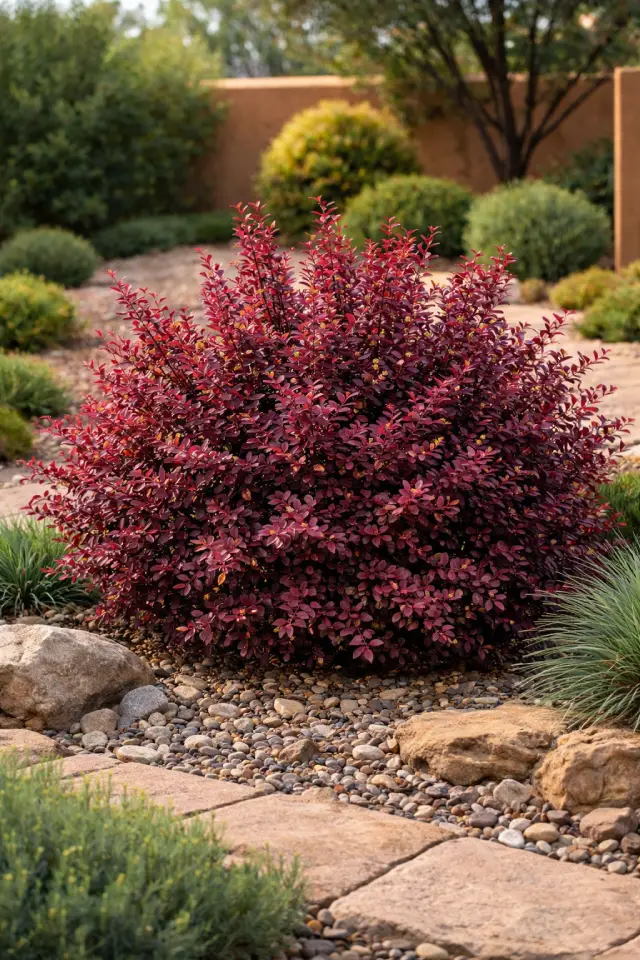
The Pygmy Ruby Barberry™ Bush
This Barberry shrub is from Monrovia. Nice-looking deep red leaves cover this commonly dense, round type shrub. Not much maintenance and very little trimming are needed to maintain its neat, dwarf-like pattern, making it a good choice for a low-maintenance mass-planting shrub, or a short-style hedge. It will lose its leaves in late fall.
The Japanese Barberry (Berberis thunbergii “Golden Ring“)

Another great-looking Japanese Barberry is the Golden Ring one. A nice burgundy color during fall, winter, and early spring. The contrasting color makes it stand out among the other green shrubs. It turns into a nice green shrub when summer comes around.
Where to Place This Bush
Plant them in full sun but they can tolerate some shade. Make sure they have good soil that drains well. Best to let them grow to their natural height and width. Trim in late fall for a better-looking plant.
Pruning
As for pruning, barberry bushes can benefit from regular trimming to maintain their shape and promote healthy growth. It’s best to prune in late winter or early spring before new growth begins. Lastly, keep an eye out for any signs of disease or pests, as barberry bushes can be susceptible to certain issues. With a little attention and care, your barberry bush will flourish and become a stunning focal point in your garden. So go ahead and embrace the joy of barberry bush care!
Problems with the Japanese Barberry Bush
It is susceptible to spider mites and verticillium wilt. Spraying with a good insecticide will kill the spider mites. You can also water from the top down to keep spider mites from infesting your Barberry bush.
However, verticillium wilt is a soilborne fungus and best to spray with a fungus spray at the first sign of trouble. The symptoms are leaves dropping prematurely and yellow scorched-looking leaves.
Barberry Bush works best in USDA zones 4-9. Find your gardening zone here.
More great shrubs for the Southwest here.

Greenhouse Manager, Master Gardener, and Webmaster.
If you have any questions or enjoyed this post, feel free to share your thoughts in the comments below.