Types of Gaillardia in the Southwest. If you garden in Southern New Mexico or West Texas, Gaillardia should already be on your radar.
Gaillardia, commonly known as blanket flower, is one of the toughest blooming plants you can grow in the Southwest. It thrives in heat, poor soil, and full sun, making it a perfect choice for low-water landscapes.
For a deeper look at proper care and growing conditions, see this Gaillardia plant care guide. You can also explore its native range and adaptability in this USDA Plant Profile for Gaillardia pulchella.
Gaillardia brings bold red, yellow, and orange blooms to desert landscapes and keeps flowering when other plants start fading in summer heat.
Let’s look at the most popular types of Gaillardia and which ones work best in Southwest gardens.
1. Gaillardia pulchella (Wild Indian Blanket)
This is the native wildflower type commonly called Indian Blanket.
It has red centers with yellow-tipped petals and a more natural, meadow-like appearance. Unlike the hybrids, it tends to grow taller and a little looser in form.
Why it works here:
-
Extremely heat-tolerant
-
Handles poor, rocky soil
-
Reseeds easily
-
Great for natural desert landscapes
If you want that “wild Southwest” look in your yard, this is a solid choice.
2. Gaillardia aristata (Perennial Blanket Flower)
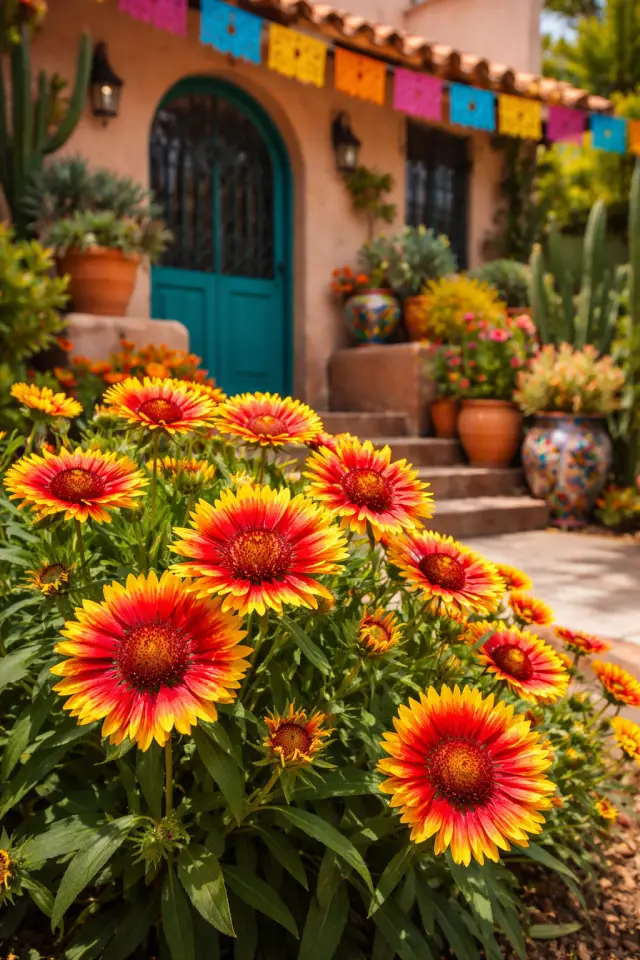
This is the perennial version of Gaillardia, meaning it comes back year after year.
The blooms are usually larger, and the plant is more structured than the wild type. It works beautifully in xeriscape beds and rock gardens.
Benefits:
-
Long bloom season
-
Drought-tolerant once established
-
Attracts bees and butterflies
-
Great for borders and mass planting
Plant it in full sun with well-draining soil. Avoid heavy clay and overwatering.
3. Arizona Sun Gaillardia
Arizona Sun is one of the most popular hybrid varieties.
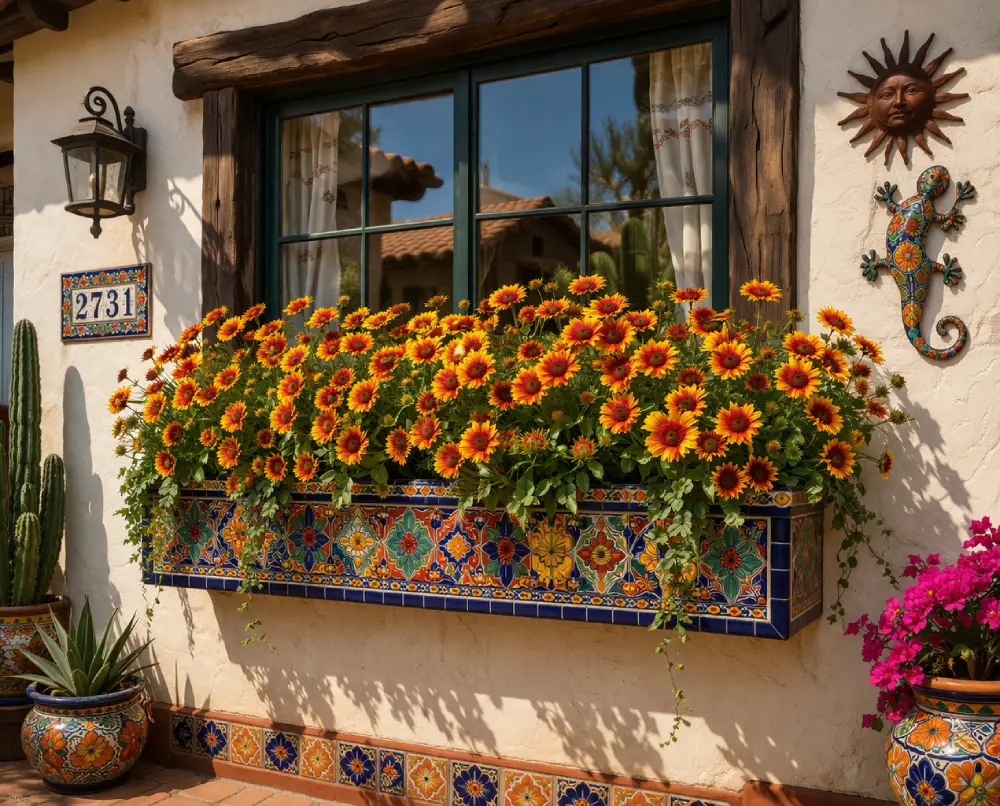
It has bold red centers with bright yellow edges and a very uniform, compact growth habit. This one looks more “landscape polished” than the wild type.
Why homeowners like it:
-
Compact and tidy
-
Heavy blooming
-
Excellent for front yard beds
-
Great in decorative containers
If you want strong color impact in a smaller space, Arizona Sun delivers.
4. Mesa Yellow Gaillardia
Mesa Yellow stands out because it’s solid bright yellow — no red center.
It has upright growth and strong stems that hold up well in summer heat. This variety adds clean, bold color to desert landscapes.
Best uses:
-
Xeriscape beds
-
Rock gardens
-
Raised beds
-
Southwest-style front yards
It pairs nicely with purple salvia, ornamental grasses, and desert shrubs.
Dwarf Gaillardia Varieties
Some Gaillardia varieties stay under 12 inches tall.
These are perfect for:
-
Walkway borders
-
Small garden beds
-
Decorative pots
-
Tight landscape spaces
Even the dwarf types are tough and heat tolerant once established.
How to Grow Gaillardia in the Southwest
Here’s the truth — Gaillardia does not like to be babied.
Follow these simple rules:
-
Plant in full sun
-
Use well-draining soil
-
Water lightly once established
-
Avoid heavy fertilizer
-
Do not overwater
Too much water is usually what kills Gaillardia, not too little.
Deadheading can encourage more blooms, but wide varieties will keep flowering on their own.
Why Gaillardia Is Perfect for Desert Landscapes
Gaillardia checks all the right boxes for Southwest gardening:
-
Handles extreme heat
-
Thrives in poor soil
-
Blooms for months
-
Attracts pollinators
-
Works in xeriscape designs
If you’re building a low-water landscape, this plant deserves a spot.
Is Gaillardia pulchella toxic to dogs and cats?
- It’s safe to plant in yards and containers around pets.
- If a pet nibbles on it, it’s unlikely to cause serious harm.
Minor caution:
- Like many plants, eating larger amounts could cause mild stomach upset (vomiting or diarrhea).
- The plant has slightly rough foliage, so chewing it might irritate sensitive mouths.
Bottom line:
Pet-safe for normal garden use
Final Thoughts
Whether you choose Wild Indian Blanket, Arizona Sun, Mesa Yellow, or a perennial Gaillardia variety, you really can’t go wrong in our climate.
Give it sun. Don’t overwater it. Then step back and enjoy the color.
Saving Water in the Southwest.
Greenhouse Manager, Master Gardener, and Webmaster.
If you have any questions or enjoyed this post, feel free to share your thoughts in the comments below.