Native vs non-native plants in the Southwest—learn which plants survive heat, use less water, and how to choose the best mix for your yard.
If You Garden in the Southwest, This Matters
If you’ve been gardening in the Southwest for a while, you already know this:
Not all plants are built for this climate.
Between the intense sun, low humidity, alkaline soil, and long dry periods, plants either make it—or they don’t.
One of the biggest decisions you’ll make is this:
Do you plant native plants, or go with non-native varieties?
Let’s break it down in a simple, real-world way so you can make the right choice for your yard.
What Are Native Plants?
Native plants are plants that have naturally grown in the Southwest for hundreds (even thousands) of years. Over time, they’ve adapted to desert conditions like extreme heat, low water availability, and alkaline soils. Because of this, native plants are some of the best choices for drought-tolerant landscaping and low-maintenance Southwest gardens.
They’re already adapted to:
Extreme heat
Drought conditions
Poor or rocky soil
Local pests
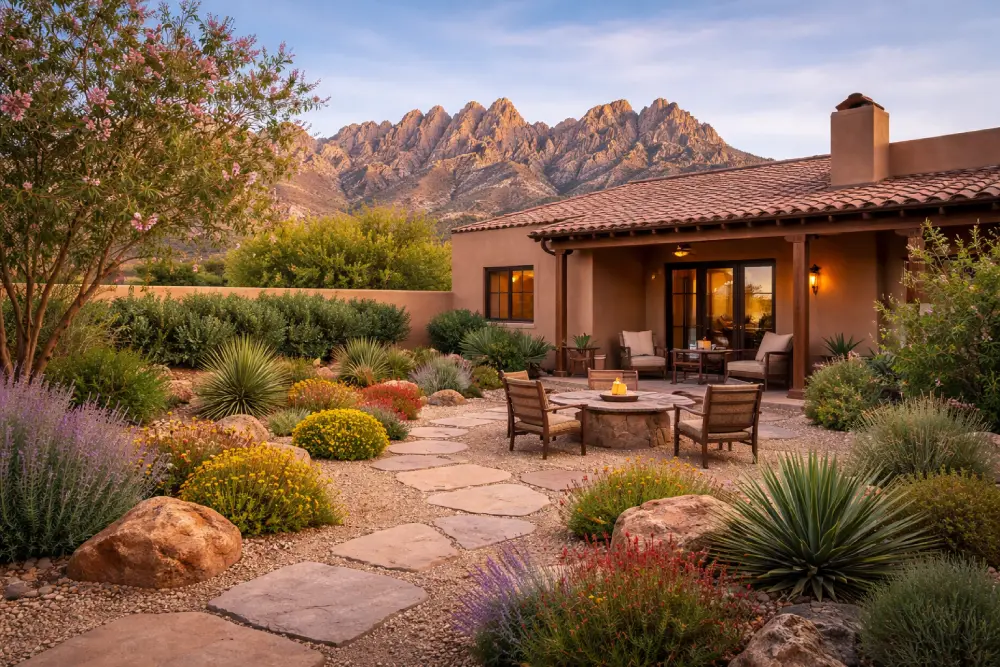
Las Cruces Home with Native Plants in the Backyard.
This is the biggest advantage—they’re built for this environment.
Require less water once established
Handle heat waves without stress
Rarely need fertilizer
Lower maintenance overall
If you’re tired of replacing plants every summer, native plants are a better option.
What Are Non-Native Plants?
Non-native plants come from other regions and climates, but many of them can still do very well in the Southwest with the right setup.
These plants are often chosen for their color, variety, and overall look—something that can really enhance a desert landscape when used the right way.
Common examples of non-native plants include:
Roses
Petunias
Lavender (some varieties perform better than others)
Other flowering or ornamental plants
Euonymus
Wax Leaf Privets
Crape Myrtles
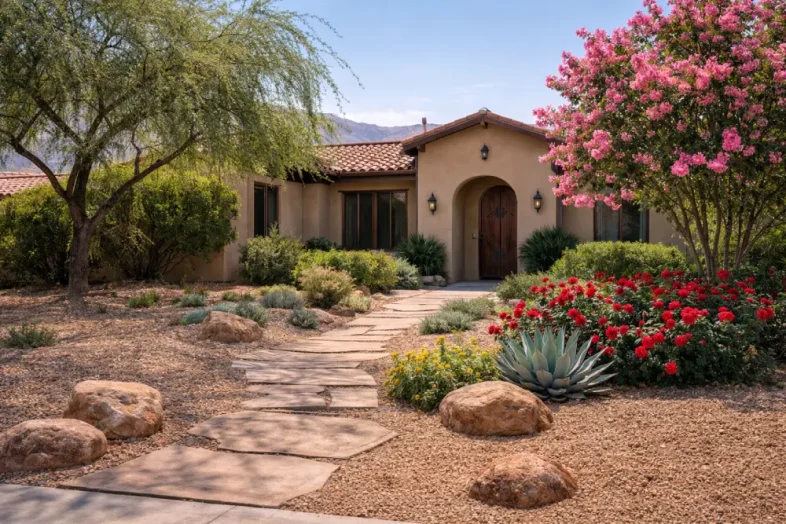
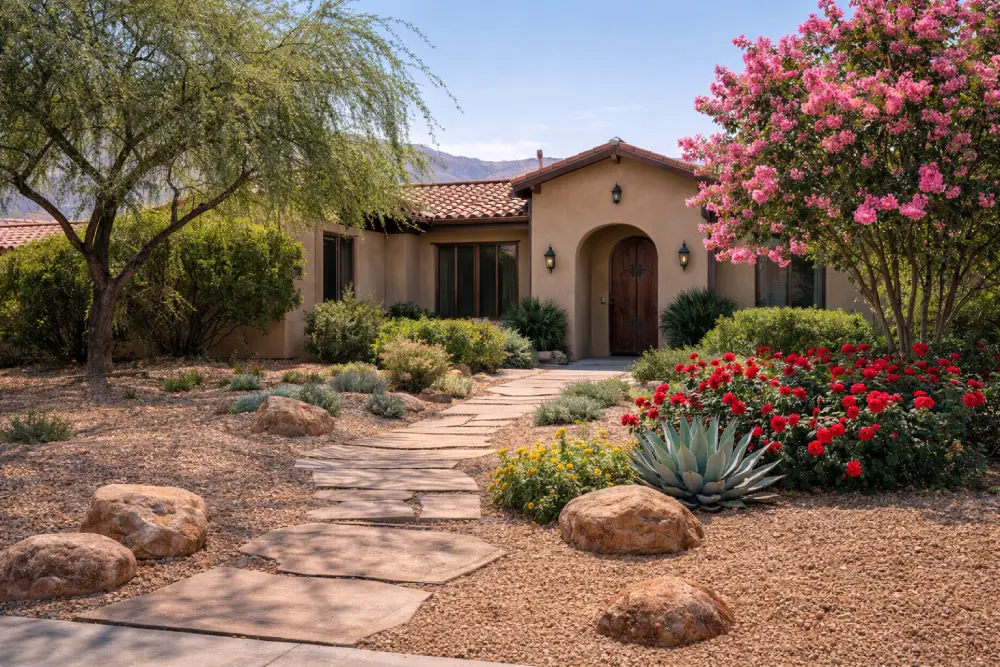
Southwest Home with Native and Non-Native plants.
Why People Still Use Non-Native Plants
Non-native plants bring things to your landscape that native plants sometimes don’t:
More color options
Longer bloom periods
A more traditional garden feel
Variety in texture and design
When placed in the right areas, they can really make a yard stand out.
What They Need to Thrive
Non-native plants just need a little more support—but it’s nothing complicated.
Consistent watering (usually with drip irrigation)
Occasionally, improving the soil
Some protection from intense afternoon sun
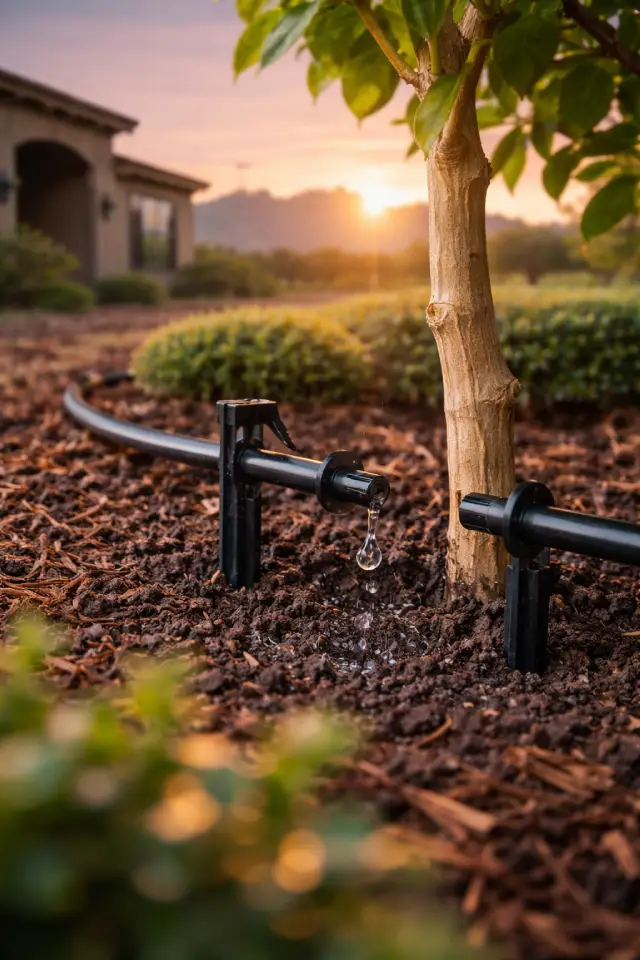
Drip System for non-native plants
Once you get that setup right, they can grow and look just as good as anything else in your yard.
Keeping Them Looking Their Best
You’ll want to check in on them from time to time. Non-native plants are actually pretty helpful in that way—they’ll show you early when they need something.
You might notice a little wilting, some leaf burn, or slower growth. Most of the time, it’s an easy fix. Adjust the watering, improve the soil, or move them to a spot with a bit more shade, and they usually bounce right back.
The Bottom Line
Non-native plants can absolutely work in the Southwest.
They just aren’t “set it and forget it.”
With a little attention and the right placement, they can add color, variety, and a more finished look to your landscape—without a lot of extra effort.
Overall Look
Native plants: natural desert landscape look
Non-native plants: more traditional, colorful garden style
This comes down to personal preference.
Should You Only Use Native Plants?
No—and this is where most people get stuck.
You don’t have to go all native or all non-native.
The best approach for most Southwest landscapes is a mix.
A Simple Southwest Landscaping Strategy That Works
If you want a yard that looks good and survives long-term:
Use native plants for 70–80% of your landscape
Add non-native plants near patios, walkways, and entry areas
Install a drip irrigation system for higher-water plants
Group plants by similar water needs
This gives you color without fighting the climate.
Common Mistakes to Avoid
The biggest mistake I see is treating all plants the same.
Native plants don’t need the same watering schedule as roses or petunias.
When everything gets watered the same, something usually dies.
Final Thoughts
If your goal is a low-maintenance, drought-tolerant yard, native plants should be your foundation.
But if you want more color and variety, you can absolutely mix in non-native plants—you just need to be strategic about it.
Start with what naturally works in the Southwest, then build from there.
If you want to explore more native plants that grow well in the Southwest, the Lady Bird Johnson Wildflower Center has a great plant database.
Want Help Choosing the Right Plants?
If you’re not sure what grows well in your area—or you’re tired of wasting money on plants that don’t last—I put together a simple guide that walks you through it step by step:
Stop wasting money on plants that will not survive our heat and drought.
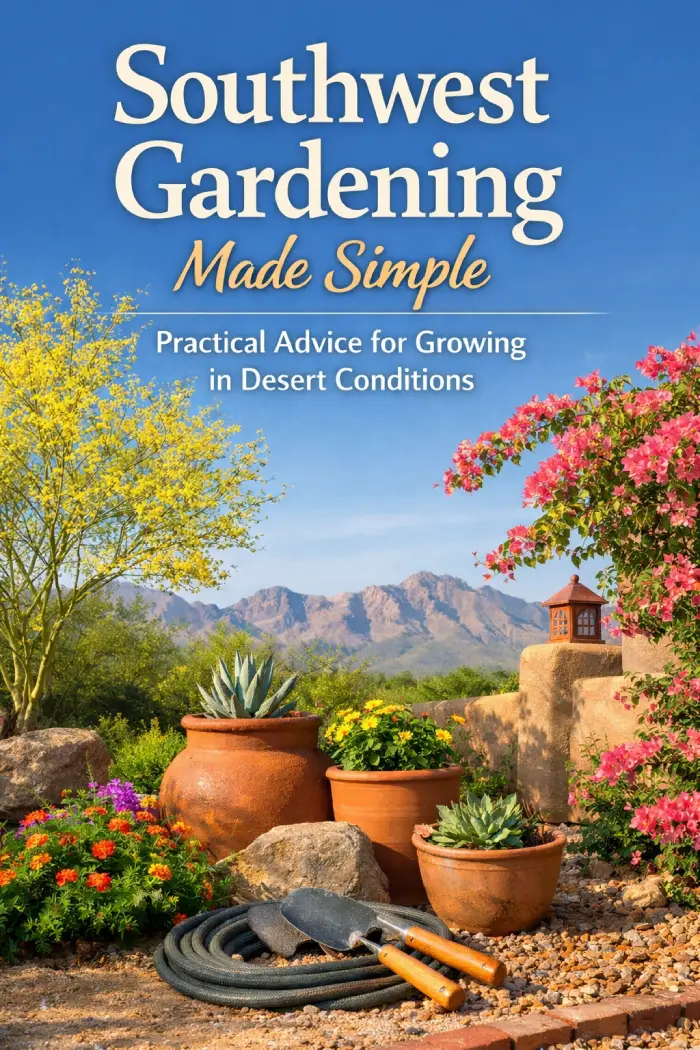
My Southwest Gardening Made Simple eBook shows you which trees,
shrubs, flowers, and vegetables actually thrive in New Mexico, Arizona, and West Texas.
Watering schedules that actually work
The best plants for hot, dry climates
Common mistakes that kill Southwest plants
Easy-to-follow advice for beginners
Paul Guzman is a lifelong Southwest gardener and gardening writer with decades of experience helping homeowners grow beautiful landscapes in the desert Southwest. He writes for Guzman’s Garden Centers in Las Cruces, New Mexico, with contributing expertise from Gary Guzman, owner of Guzman’s Garden Centers. If you have any questions or enjoyed this post, feel free to share your thoughts in the comments below.
To provide the best experiences, we use technologies like cookies to store and/or access device information. Consenting to these technologies will allow us to process data such as browsing behavior or unique IDs on this site. Not consenting or withdrawing consent, may adversely affect certain features and functions.
Functional
Always active
The technical storage or access is strictly necessary for the legitimate purpose of enabling the use of a specific service explicitly requested by the subscriber or user, or for the sole purpose of carrying out the transmission of a communication over an electronic communications network.
Preferences
The technical storage or access is necessary for the legitimate purpose of storing preferences that are not requested by the subscriber or user.
Statistics
The technical storage or access that is used exclusively for statistical purposes.The technical storage or access that is used exclusively for anonymous statistical purposes. Without a subpoena, voluntary compliance on the part of your Internet Service Provider, or additional records from a third party, information stored or retrieved for this purpose alone cannot usually be used to identify you.
Marketing
The technical storage or access is required to create user profiles to send advertising, or to track the user on a website or across several websites for similar marketing purposes.