What Is Hydrozoning and Why It Matters in Your Landscape
What is Hydrozoning? It is a smart landscaping practice that groups plants with similar water needs together in specific zones of your garden. Instead of watering every part of your yard equally, hydrozoning ensures that each plant receives just the right amount of water it requires—no more, no less. In a nutshell, set up your watering schedule according to the needs of your plants, which may require more water, moderate watering, or less watering.
This approach works especially well in Southwest gardening, where every drop of water counts. By grouping plants with similar needs, hydrozoning lets you focus water where it matters most. Homeowners often notice lower bills, less water waste, and gardens that handle harsh seasons better. Some believe this method limits plant choices, but careful planning still allows for a diverse and attractive yard. With steady attention, hydrozoning keeps your landscape healthy while saving both water and money.
How Hydrozoning Works
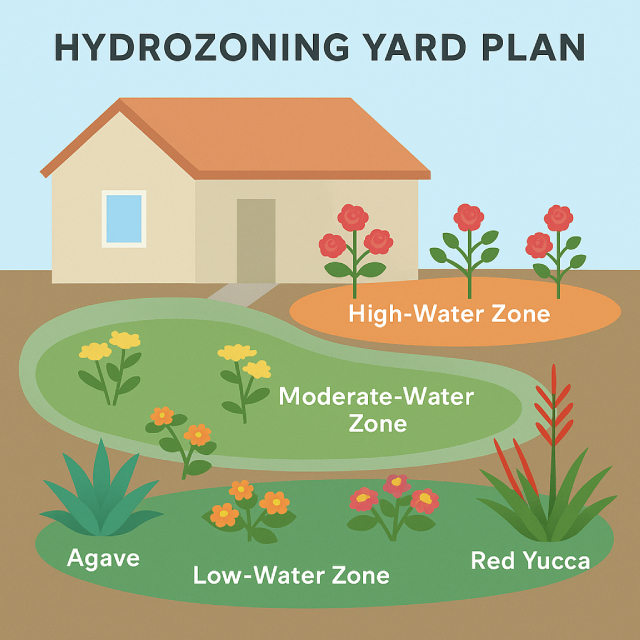
Hydrozoning typically divides a landscape into three main water-use zones:
-
High-Water Zone
-
Located near the house, patios, or entryways where you want lush, eye-catching plants.
-
Includes evergreen lawns, non-native container plants, roses, or tropical-style flowers.
-
Irrigation: more frequent watering with drip lines, sprinklers, or soaker hoses.
-
-
Moderate-Water Zone
-
Transition area with plants that can tolerate some dryness but still need consistent moisture.
-
Includes shrubs, flowering perennials, and fruit trees.
-
Irrigation: less frequent, often deep watering 1–2 times per week.
-
-
Low-Water or Xeric Zone
-
Farther from the home, often along borders or in decorative beds.
-
Includes drought-tolerant plants such as desert sage, lantanas, agaves, yuccas, and ornamental grasses.
-
Irrigation: minimal or seasonal, sometimes only during establishment.
-
By creating these zones, your irrigation system can be programmed to deliver different amounts of water, tailored to the plants’ needs.
Benefits of Hydrozoning
-
Water Conservation: Reduces waste by avoiding overwatering drought-tolerant plants.
-
Healthier Plants: Prevents stress caused by too much or too little water.
-
Lower Water Bills: Efficient irrigation can cut costs significantly over time.
-
Environmental Protection: Minimizes runoff, which reduces soil erosion and protects local water supplies.
-
Low Maintenance: Once established, hydrozoned landscapes are easier to care for.
Hydrozoning in the Southwest
In places like Las Cruces, New Mexico, or El Paso, Texas, hydrozoning is essential. Hot summers and limited rainfall mean traditional landscapes can waste enormous amounts of water. By grouping native and drought-tolerant plants such as lantanas, Mexican bird of paradise, red yuccas, and desert willows, homeowners can create vibrant yards that thrive with minimal irrigation. Learn more at Wikipedia.
Tips for Creating a Hydrozoned Yard
-
Assess Plant Water Needs: Research your plants or ask a local nursery (like Guzman’s Greenhouse) for guidance.
-
Plan Irrigation: Install drip lines, emitters, or sprinklers based on each zone’s requirements.
-
Use Mulch: Helps retain soil moisture and reduces evaporation.
-
Start Small: Even hydrozoning a few areas of your yard can make a difference.
-
Adjust Seasonally: Watering needs change between summer and winter.
Final Thoughts
Hydrozoning is more than just a water-saving technique—it’s a landscaping philosophy that promotes balance between beauty and sustainability. Whether you’re planting a lush garden around your patio or a drought-tolerant xeriscape near the street, hydrozoning ensures that every drop of water is used wisely.
How to Set Up a Hydrozoning Landscape in Your Yard
1. Evaluate Your Yard
-
Sun & Shade: Identify which areas get full sun, partial shade, or full shade.
-
Soil Conditions: Check if you have sandy, clay, or loamy soil (affects water absorption).
-
Microclimates: Walls, patios, or rocks may create “hot spots” that dry out faster.
👉 Tip: Sketch a simple map of your yard, noting these conditions.
2. Group Plants by Water Needs
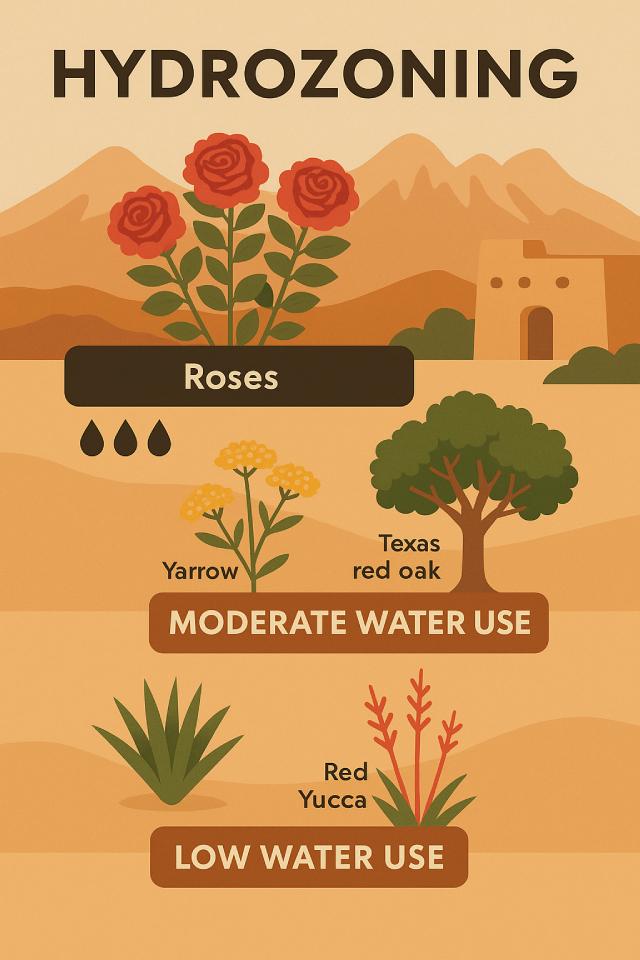
Divide your plantings into three main zones:
-
High-Water Zone (near the house or patio)
Roses, lawns, potted plants, tropicals.
Frequent watering, often with sprinklers or drip emitters. -
Moderate-Water Zone (transition area)
Yarrow, perennials, fruit trees, ornamental shrubs.
Deep watering 1–2 times per week with drip irrigation. -
Low-Water Zone (outer edges / xeriscape)
Agaves, desert sage, lantana, red yucca, cactus, and native grasses.
Minimal water once established, often only during extreme heat.
3. Plan Your Irrigation System
-
Use separate drip lines or sprinkler valves for each zone.
-
Place emitters close to the root zones of shrubs and perennials.
-
Use bubblers or soaker hoses for roses and fruit trees.
-
Adjust watering frequency by zone instead of watering everything equally.
👉 Example:
-
High-water: 3–4 times/week in summer.
-
Moderate-water: 1–2 times/week.
-
Low-water: 2–3 times/month (after establishment).
4. Use Mulch to Retain Moisture
-
Apply 2–3 inches of wood chips, gravel, or crushed rock, depending on the zone.
-
Mulch reduces evaporation and keeps roots cooler.
5. Add Visual Structure
-
Plant roses and lush plants closer to walkways where people see them.
-
Place medium-water shrubs mid-yard for balance.
-
Create a desert xeriscape border with agaves, yuccas, and lantanas.
This not only saves water but also creates a layered, professional look.
6. Adjust Seasonally
-
Summer: Increase watering frequency for high and moderate zones.
-
Winter: Cut back—most desert plants go semi-dormant.
-
Spring/Fall: Transition watering schedules gradually.
7. Monitor & Fine-Tune
-
Check soil moisture: If it’s soggy or bone dry, adjust accordingly.
-
Replace clogged emitters and check for leaks.
-
Watch plant health—yellowing or stunted growth can signal watering issues.
✅ Final Tip: Start small. Even setting up two distinct zones (high and low water use) will make a big difference in efficiency and plant health.