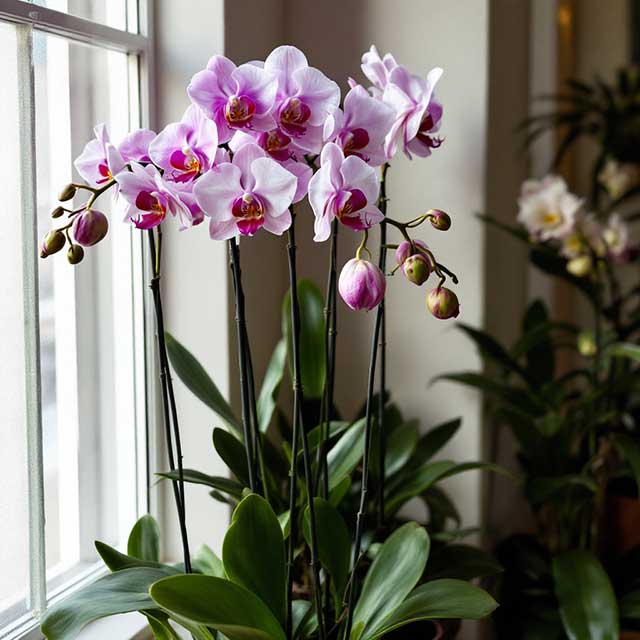
How to Make Orchid Plants Bloom Again: A Complete Guide
Introduction
How to make orchid plants bloom again. Orchids are beloved for their elegant, long-lasting blooms. But what do you do when the flowers fade and your orchid seems dormant? The good news: most orchid species can rebloom—if given the right care. In this post, we’ll walk through practical steps to help make your orchid plant bloom again, troubleshoot why it might not be flowering, and provide tips for consistent blooming success.

Why Orchids Stop Blooming
First, we must talk about why they stop blooming in the first place, it helps to understand the common reasons orchids fail to rebloom:
-
Lack of proper light or the wrong light intensity
-
Warm nighttime temperatures without a “cool down” trigger
-
Excessive or insufficient watering
-
Nutrient deficiencies (especially phosphorus)
-
Stress, pests, or disease
-
Unfavorable potting medium or poor drainage
By addressing these basic issues, you’ll increase your chances of seeing new flower spikes emerge.
Step-by-Step: How to Get Your Orchid to Bloom Again
Here’s a structured plan you can follow:
1. Understand Your Orchid Type & Natural Cycle
Different orchids have different blooming cycles (Phalaenopsis, Cattleya, Dendrobium, etc.). Some need distinct rest periods, cooler nights, or seasonal cues to trigger flowering.
Knowing your orchid’s genus helps you tailor the right way to make it bloom again.
2. Provide Sufficient, Indirect Light
-
Use leaf color as a guide: medium to light green leaves indicate good light; dark green often means too little.
-
East or west windows with filtered sunlight are generally ideal.
-
If natural light is weak, supplement with LED grow lights (slowly acclimate to avoid leaf burn).
3. Cool Nighttime Temperatures
A drop in temperature at night often signals the plant to produce flower spikes.
For many orchids (like Phalaenopsis), keeping nights in the range of 55–65 °F (13–18 °C) for a few weeks can trigger reblooming. Better Homes & Gardens
You can gently crack a window or move the orchid closer to a cooler area (without exposing it to frost).
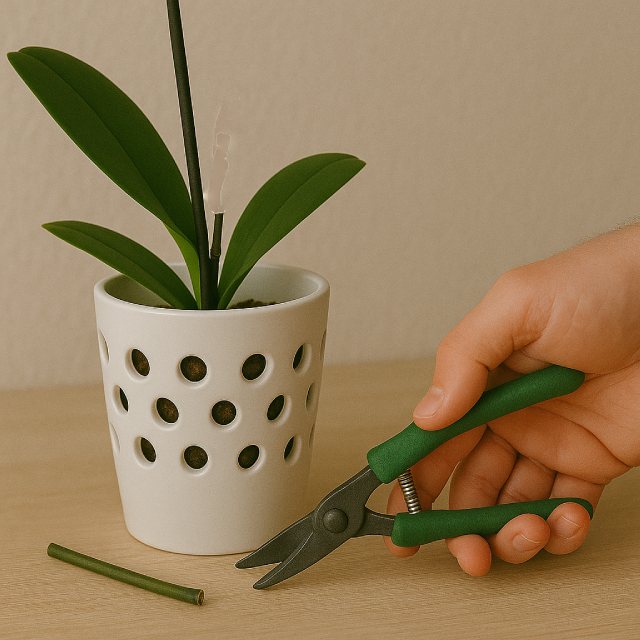
4. Prune & Cut Spikes Strategically
-
If a flower spike has finished blooming and is brown or dead, cut it back to about 1 inch (2.5 cm) above the lowest node or above the base. Orchid Bliss
-
For Phalaenopsis, a new spike may occasionally emerge from a healthy stem; however, in most cases, it’s best to remove the spent spike, allowing the plant to conserve energy.
-
Always use sterilized scissors or shears to prevent the spread of disease.
5. Fertilize Properly
-
Use a balanced orchid fertilizer with one labeled as a “Fertilizer for Blooms.” The middle number on the fertilizer product.
-
In active growth phases, feed every 1–2 weeks at half strength.
-
Avoid fertilizing during dormancy or right after repotting.
-
Flush the potting medium monthly with plain water to remove salt buildup. Gardening Know How
6. Water Wisely & Maintain Humidity
-
Water when the potting medium is nearly dry—not on a rigid schedule. Overwatering can suffocate roots; under-watering can stress the plant.
-
Use tepid water, thoroughly soak, and allow drainage. Better Homes & Gardens+1
-
Provide humidity (40–60 %) via pebble trays or a humidifier, but ensure good air circulation to prevent rot or fungal issues.
7. Repot When Needed
-
Only repot when your orchid is outgrowing its medium or the mix is decomposed (often after a flowering cycle).
-
Use an orchid-specific potting mix (bark, charcoal, or sphagnum mix for epiphytic types).
-
Keep the new pot just slightly larger—orchids like stability and not too big a container.
-
Trim dead roots and sterilize tools before handling.
8. Watch for Pests, Disease & Stress
-
Regularly inspect leaves, buds, and roots for mealybugs, scale, fungus, or rot.
-
Avoid sudden moves (e.g. big temperature or light changes) that can cause bud drop. Better Homes & Gardens
-
Keep the plant in a stable environment and avoid drafts or overheated spots.
- Learn more about how to care for Orchids page.
Troubleshooting: Why Your Orchid Still Isn’t Blooming
| Problem | Possible Cause | Solution |
|---|---|---|
| No new flower spike | Nights too warm, not enough light, or too much fertilizer | Lower night temp, increase light gradually, reduce fertilizer |
| Buds abort (bud “blast”) | Environmental stress, too much water, temperature shock | Stabilize conditions, water carefully, avoid drafts |
| Leaves yellowing or limp | Overwatering or root rot | Check roots, repot if needed, scale back watering |
| Orchid is young | It may need more time to mature | Be patient — some orchids bloom only after 2–4 years |
Tips for Consistent, Yearly Blooming
-
Grow orchids that suit your climate or indoor conditions (so they’re not always fighting against their nature).
-
Have multiple orchids with staggered bloom seasons so you always have something flowering.
-
Keep notes on what works (light changes, temperatures, fertilizing) so you can adjust each cycle.
-
Use “cool period” tricks in fall/winter to tempt a new spike.
-
Avoid over-handling or relocating the orchid too often.
Conclusion
Reblooming an orchid often comes down to creating the right balance: light, temperature fluctuations, careful watering, strategic fertilizing, and stress-free conditions. When you meet those needs consistently, your orchid is much more likely to gift you with a fresh round of beautiful flowers.
If you tell me which orchid variety (Phalaenopsis, Cattleya, Dendrobium, etc.) you have, I can customize a care and re-blooming plan just for yours. Would you like me to tailor it for your orchid type?
Guzman’s Greenhouse will normally have Orchids available on a year-round basis. Visit Guzman’s Greenhouse in Las Cruces, NM, for orchid supplies and expert tips.”

Greenhouse Manager, Master Gardener, and Webmaster.
If you have any questions or enjoyed this post, feel free to share your thoughts in the comments below.