

Last updated on January 10th, 2026 at 03:54 pm
Rose Bush Problems. Roses are beautiful spring-blooming plants and they come in many colors and varieties. Hundreds of hybrids are being made every year. Here are a few common-sense solutions to problems with roses.
Follow Label Instructions on Insecticides
Be sure to follow all label instructions and local state regulations regarding insecticides. Rosebush’s problems can be solved no matter where you live read on.
How to grow beautiful
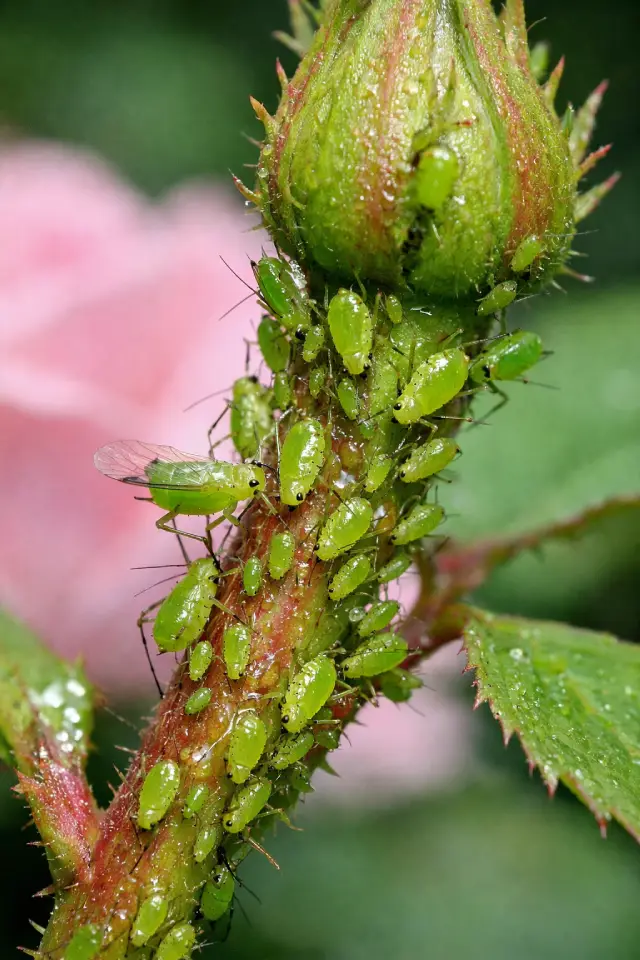
Roses’ biggest problem is aphids, which love the new shoots of roses. They will suck the life out of the stems and foliage. They are usually green in color, and they love new growth. Aphids are very small bugs about 1/8 inch long. They are green, red, black, or brown in color. They usually attack new growth in the masses. (See photo at top)
Thrips are also a problem for roses. These small,l thin insects hide inside the rose bloom thus preventing it from blooming. There are over 6,000 species of thrips, and the scientific name is “Thysanoptera”. See images and more information on these insects on Wikipedia.
It is best to use a systemic insecticide, meaning a solution or granules that you apply to the ground. The root system takes it in and throughout the rosebud stems and all. This poison will kill thrips and aphids.
Rose Bush Problems
You can also use a rose insecticide spray! The spray solution will not kill the thrips but will kill aphids and other insects. Spray upwind and make sure you thoroughly cover the plant. I personally like to use a rose food systemic type of insecticide.
There are organic ways to treat roses further down this post.
Again, It is best to use a good rose food/systemic insecticide. This means you mix your solution with water and apply this solution to the base of your plant; the root system will take it in. The plant will absorb this insecticide and will feed your roses at the same time. Once the aphid eats the foliage or stems it will die. The best thing about systemic insecticide is that all insects on your roses will die including thrips and mites.
What are Thrips?
 Thrips are another type of insect that will make your roses look bad. Very small light brown, smaller than the aphids. They prevent your blooms from opening up, and rosebuds become discolored.
What can you do? Spraying will usually not work as they are well hidden inside the bloom pod. Try using a systemic insecticide as mentioned above with aphids.
What are Grubs?

Grubs are ugly white worms with a brown-tipped head. About the size of a thumb. They eat the root systems of many plants, including roses. These worms are embedded in the soil, so spraying will not do the trick. They love lawns and rose roots.
Grubs are the larvae of Japanese beetles. Use a good grub control product and apply it to the base of the plant. We recommend Bayer Advanced Grub Control ™ – ask for it at your local nursery.
An organic substitute is Beneficial Nematodes. Most independent Garden centers will carry these beneficial insects. They are tiny microscopic insects that will eat grubs and other bugs that will damage or kill your roses.
Powdery Mildew is a fungal disease that attacks roses that have been overwatered, planted under too much shade, or both! Cool nights and warm days will also add to the problem. Appearance is a white powdery film on leaves.
What can you do? Spray with neem oil or sulfur on foliage…be sure to spray upwind and saturate the plant completely. It will normally take about 3 or 4 applications before the systems disappear.
Rose Bush Care
Water your plants in the early morning hours so the surface will dry out by the late afternoon. Trim off the worst part of the infected plant. Be sure to store branches and debris in a plastic bag, then dispose of it
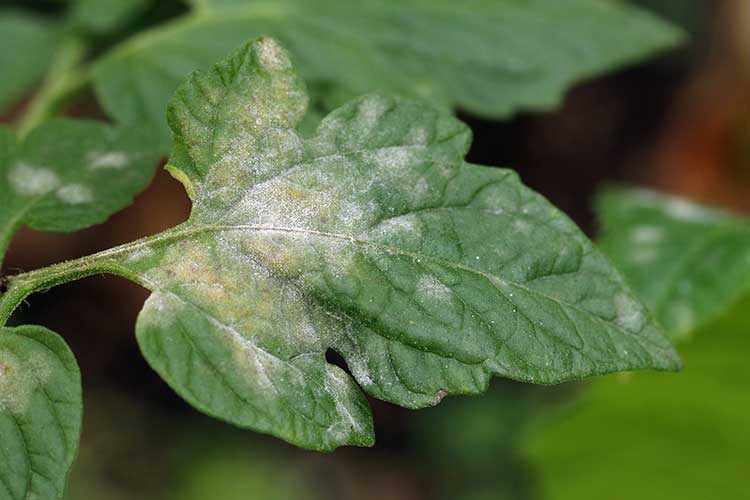
properly. Powdery mildew is a very contagious fungus. Be sure to thoroughly wash your hands and tools with soapy water before handling another plant.
What about Scale insects?
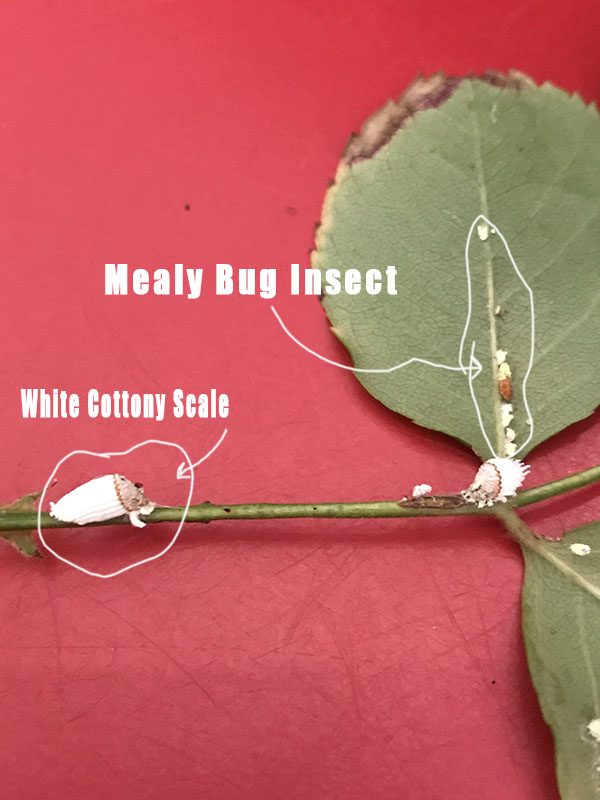
There are numerous scale insects; the most common is the white scale (see image below). They suck the juice from rose and other plant stems. Use a good systemic insecticide to remove.
White scale and mealy insects on rose foliage.
What is Black Spot Disease?

This disease is commonly known as black spot, caused by the fungal pathogen Diplocarpon rosae, and it is one of the most frequent problems seen on roses. The infection typically begins on the lower leaves and appears as round to irregular black spots with fringed or feathery edges. As the disease progresses, the tissue surrounding the spots often turns yellow, eventually causing the leaves to weaken and drop prematurely. Severe infestations can leave a rose nearly defoliated, stressing the plant and reducing flowering.
Controlling Blackspot on Roses
The most important step in controlling black spot is good sanitation. Promptly remove and discard any infected leaves from the plant, and be sure to rake up fallen leaves and debris around the base of the rose, as the fungus can overwinter in this material and re-infect the plant the following season. After cleanup, spray the plant thoroughly with neem oil, coating both the tops and undersides of the leaves. Neem oil helps suppress the fungus and can slow further spread when applied regularly. For best results, combine treatment with proper spacing, good air circulation, and watering at the soil level rather than overhead to keep foliage as dry as possible.
Organic way to treat roses
- Rosebush care. Keep your roses healthy by feeding them regularly. Plants are like people a good, healthy plant will be less susceptible to diseases and bug infestations.
- Try Neem Oil spray. The main ingredient contains neem oil seeds pressed from the fruits and seeds of the neem tree (Azadirachta indica). Read more about Neem Oil here. Make sure to saturate foliage and stems.
- Spray organic Dormant oil in the early spring season. The dormant oil will suffocate insect eggs, thus preventing them from hatching.
- Purchase ladybugs and or praying mantis from your local nursery. Ladybugs love aphids psyllids, and other nuisance insects.
- Insecticidal Soaps will work on killing insects on roses. Learn more here.
Guzman’s Garden Centers Located in Las Cruces, NM, will always have hundreds of roses to choose from. Drop by our stores if you are in the neighborhood.
Rose Bush Problems

Greenhouse Manager, Master Gardener, and Webmaster.
If you have any questions or enjoyed this post, feel free to share your thoughts in the comments below.


I just want to commend your employee (grandson?) Joseph. Every time I’ve been to Guzmans, he has been super helpful and endearingly friendly. He makes me feel welcome! Plus, he lets me hug him!!!
Sincerely,
Connie Powers
Thanks Connie. Joseph is an excellent worker. We love his attitude and his commitment to help customers and fellow workers.
Paul