Last updated on March 26th, 2026 at 03:18 pm
Saving Water in the Southwest. If you garden in the Southwest, you already know water is precious. Long stretches of heat, low rainfall, and drying winds can make even experienced gardeners feel like they’re constantly fighting nature.
The good news? You don’t need fancy irrigation systems or complicated formulas to save water. Small changes in how you plant, water, and care for your landscape can make a huge difference — and your plants will actually look better for it.
Simple Watering Rules for Native vs. Non-Native Plants in the Southwest
✔ Water native plants deeply. Soak the soil so moisture reaches deeper roots, where it lasts longer.
✔ Allow soil to dry slightly between waterings. Most native plants prefer a dry-down period and become more drought-tolerant over time.
✔ Water non-native plants more often. These plants usually have shallower roots and need more consistent moisture, especially during heat waves.
✔ Avoid light daily watering. Shallow watering encourages weak roots and increases water waste.
✔ Adjust watering by season. Reduce irrigation during cooler months and increase only when temperatures rise.
✔ Use mulch to conserve moisture. A thin layer helps reduce evaporation and keeps roots cooler.
✔ Check soil before watering. If the top few inches are still moist, wait another day or two.
✔ Water early in the morning. This reduces evaporation and allows plants to absorb moisture before the afternoon heat.
Here’s how Southwest gardeners can conserve water while still growing healthy, beautiful yards.
1. Water Deep — Not Every Day
One of the biggest mistakes gardeners make is watering too often but too lightly.
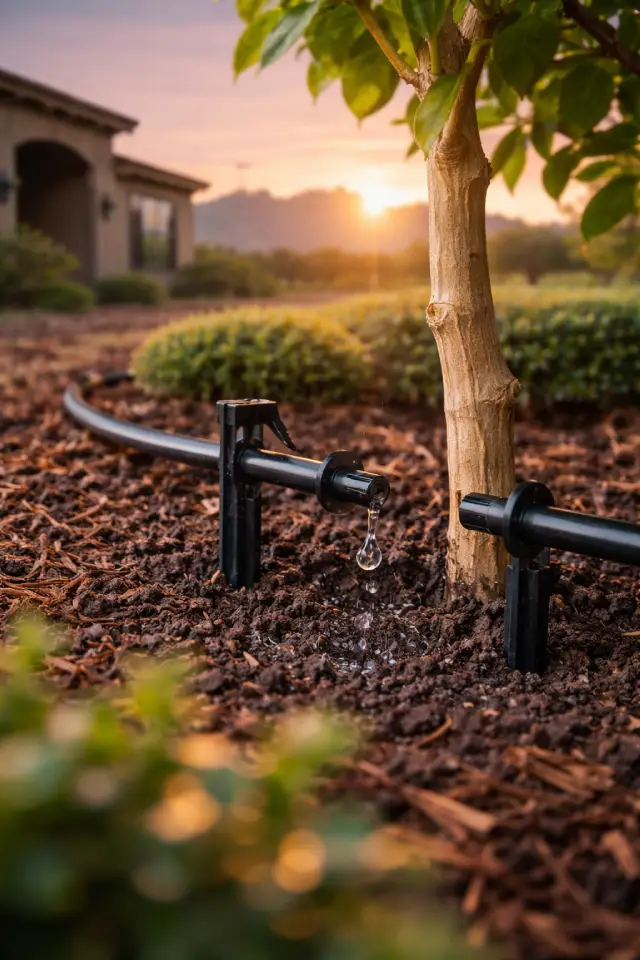
In our desert climate, shallow watering encourages shallow roots, and shallow roots dry out fast. Instead, water deeply and less frequently so roots grow down where the soil stays cooler and moist longer.
A good rule of thumb:
-
Water slowly
-
Let the moisture soak in 6–12 inches
-
Allow the soil to partially dry before watering again
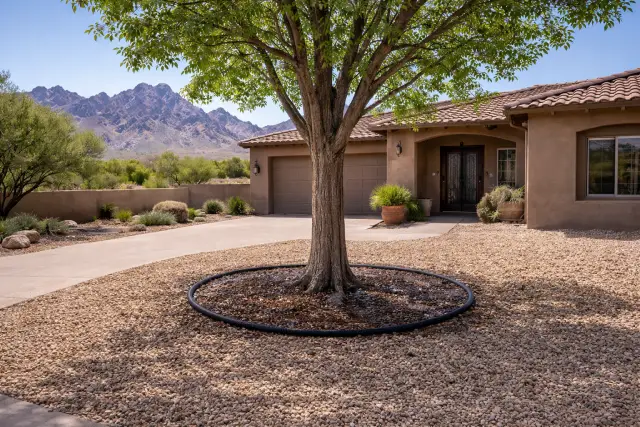
- Use a soaker hose to water trees
Plants with deeper roots handle heat waves much better.
2. Mulch Is Your Best Friend
If you only do one thing to save water, add mulch.
A 2–3 inch layer of mulch helps:
-
Reduce soil evaporation
-
Keep roots cooler in summer
-
Prevent weeds from stealing moisture
-
Improve soil over time
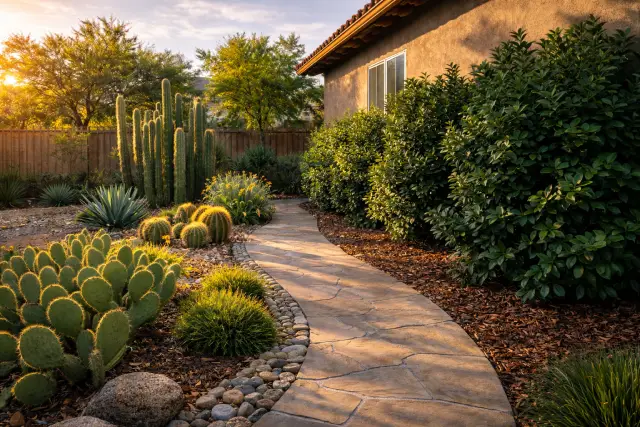
In the Southwest, natural shredded bark mulch, shredded wood, or even small gravel in certain areas works well.
You’ll use less water almost immediately — and your garden will look cleaner too.
3. Choose Plants That Actually Like Desert Conditions
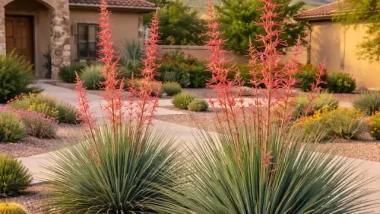
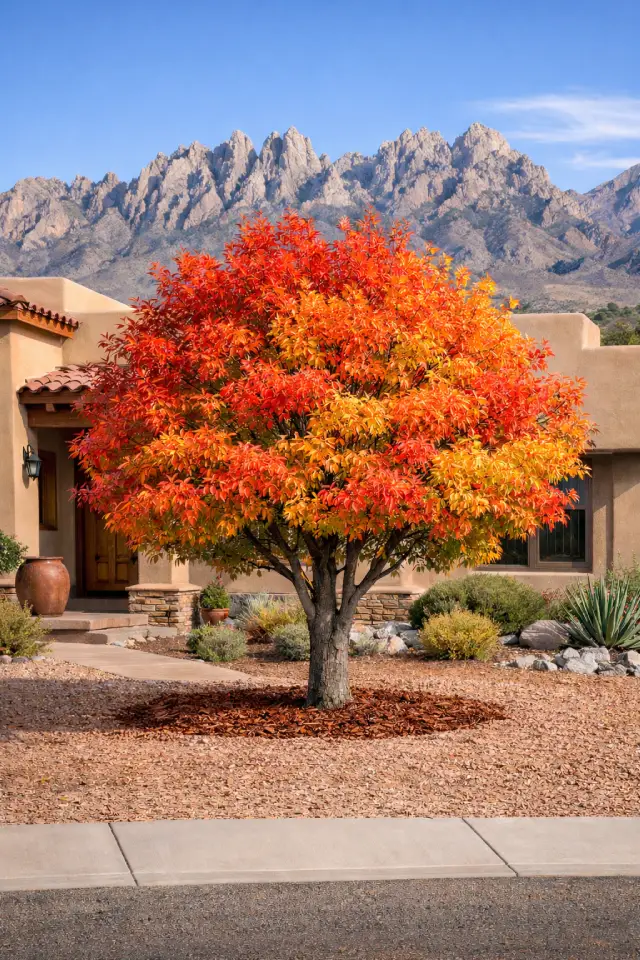
Trying to grow thirsty plants in desert soil is like pushing uphill all year long. Instead, choose plants that naturally handle heat and drought.
Some reliable choices include:
-
Agave
-
Native grasses
These plants are adapted to our conditions and usually need far less supplemental water once established.
4. Water Early in the Morning
Timing matters more than most people realize.
Watering in the early morning allows moisture to soak into the soil before the sun and wind pull it away. Evening watering can work too, but morning is ideal because leaves dry quickly and fungal problems are less likely.
Avoid watering in the middle of the day — a lot of that water simply evaporates.
5. Group Plants by Water Needs
This is a simple trick that saves both water and time.
Keep drought-tolerant plants together and separate them from higher-water plants. That way, you’re not overwatering one area just to keep another plant happy.
Think of it as creating “water zones” in your yard.
6. Improve Soil Slowly Over Time
Southwest soils tend to be alkaline, sandy, or heavy clay — none of which hold water especially well.
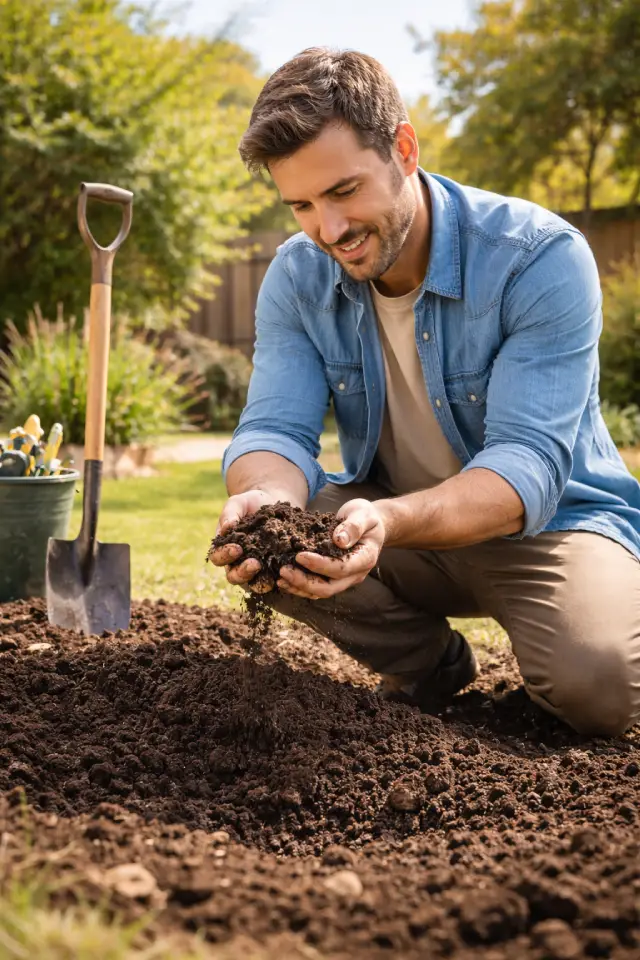
Adding compost gradually improves soil structure so it holds moisture longer while still draining properly. Healthy soil means you water less often, and plants stay stronger during hot weather.
7. Accept That Some Dryness Is Normal
This might be the biggest mindset shift for desert gardeners.
Plants don’t need to look overly lush or tropical to be healthy. Slightly dry soil between waterings encourages stronger roots and better drought tolerance.
In the Southwest, a little stress is normal — and often beneficial.
Final Thoughts: Small Changes Add Up
Saving water in the Southwest isn’t about doing one big thing perfectly — it’s about making smarter gardening choices that match our dry climate. With intense sun, low rainfall, and high evaporation rates, Southwest gardens need practical water-saving habits that work long term. The good news is that small changes can make a big impact on water use while keeping your landscape healthy and attractive.
Start by choosing drought-tolerant plants that are proven to thrive in desert conditions. These plants naturally require less irrigation once established, helping you reduce water bills without sacrificing color or beauty. Water deeply but less often to encourage deeper root growth, which makes plants more resilient during hot summer months. Adding shredded mulch around plants and trees also helps hold moisture in the soil, reduces evaporation, and keeps roots cooler.
Healthy soil plays a major role in water conservation. Improving soil with compost or organic matter increases water retention, allowing moisture to stay available to roots longer. Combined with smart watering schedules and proper plant placement, these simple strategies create a landscape that works with the Southwest environment instead of against it.
When you water deeply, mulch well, and choose the right plants, your garden starts working with the environment instead of against it.
And honestly, that’s when gardening out here becomes easier — and a lot more enjoyable.
Native versus non-native plants.

Greenhouse Manager, Master Gardener, and Webmaster.
If you have any questions or enjoyed this post, feel free to share your thoughts in the comments below.