- Japanese Beetles Control Made Easy: Simple Steps to Save Your Garden [2025 Guide]
- Identifying Japanese Beetle Infestations
- Easy and Effective Methods to Control Japanese Beetles
- Handpicking and Barriers: How to Remove Beetles by Hand, Use Traps Safely, and Set Up Netting or Row Covers
- Natural Predators and Biological Controls: Introduce Beneficial Insects, Birds, and Microbial Treatments Such as Nematodes and Milky Spore
- Organic Sprays and Repellents: Suggest Safe Homemade or Commercial Sprays Using Neem Oil or Garlic, Including Application Tips
- Chemical Controls: When and How to Use Them Safely
- Preventing Future Japanese Beetle Outbreaks
- Breaking the Japanese Beetle Cycle
- Plants that Japanese beetles usually avoid
- Conclusion
Japanese Beetles Control Made Easy: Simple Steps to Save Your Garden [2025 Guide]
If you’ve spotted shiny green beetles feasting on your plants, you’re not alone. Japanese beetles (Popillia japonica) love to munch on garden plants, leaving chewed-up leaves and unhappy gardeners behind. These tiny insects can ruin flowers and veggies fast if you let them stick around. Furthermore, the larvae turn into grubs, causing your lawn to turn yellow.
You don’t have to give up your garden to these bugs. With a few simple steps, you can protect your plants and keep your yard looking great. Let’s learn how to spot Japanese beetles early and kick them out of your garden for good.
Identifying Japanese Beetle Infestations
Spotting Japanese beetles before they take over your garden gives you the upper hand. The key is to look for the beetles themselves and the trouble they leave behind. If you know what to watch for, you can catch an invasion early and take quick action to stop the damage.
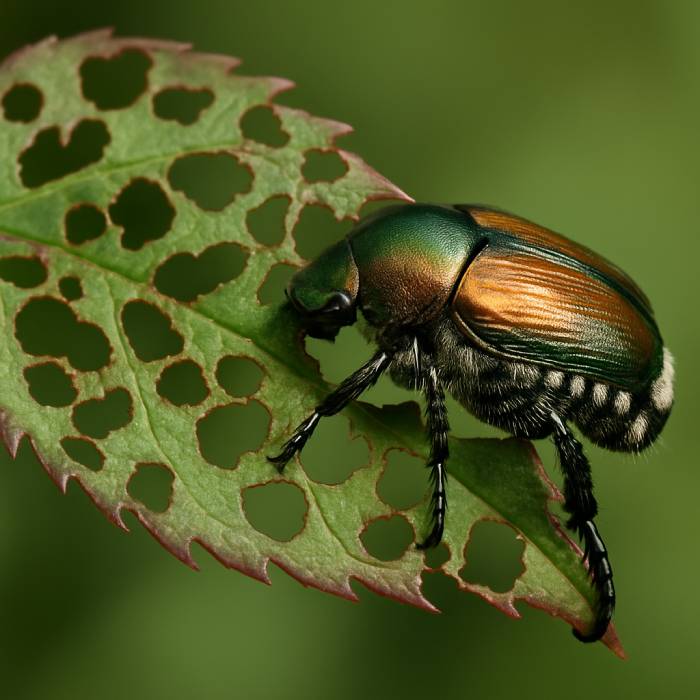
What Do Japanese Beetles Look Like?
Japanese beetles have a look that’s hard to miss once you know it. These bugs aren’t plain brown or black like many others you’ll see out in the yard. Here’s what to check for so you can pick them out right away:
- Size: They’re small, about half an inch long. Think of the length of your fingernail or a pencil eraser.
- Color: Their back is a shiny, metallic green that glimmers in the sun. They also have copper-brown wing covers that look almost like polished pennies.
- Legs and Body: Look under the wings for six legs and a rounded, hard shell.
- White Spots: Along each side of their bodies, you’ll notice little white tufts of hair. There are usually five on each side and two near the tail.
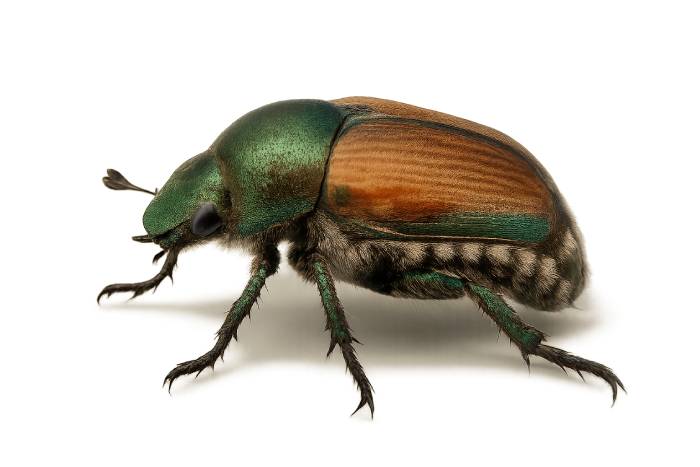
Japanese beetles often move in groups. If you spot one, look closely—there are probably more hiding nearby.
Recognizing Plant Damage
Sometimes you won’t see the beetles right away, but you’ll spot their calling cards all over your garden. Japanese beetles are messy eaters, and the signs of their feeding are easy to spot if you know what to look for.
Here’s how to recognize the damage:
- Skeletonized Leaves: Beetles eat the green parts between the veins, leaving just the veins behind. The result looks like a leaf skeleton, almost like lace.
- Defoliation: On some plants, they eat so much that hardly any leaf is left, just a few veins and the stem.
- Flower Damage: They go after flowers too, munching petals and buds so blooms get ragged or sometimes never open at all.
- Brown Edges or Dead Patches: Areas where they’ve fed will turn brown and dry, making your plants look sickly or patchy.
- Frass (Insect Droppings): You might notice tiny dark specks on leaves below where beetles have been feeding.
Common plants that get hit hard include roses, grapes, hibiscus, beans, and fruit trees. If you spot these symptoms on your favorite plants, it’s a strong sign Japanese beetles are lurking around.
It helps to walk through your garden every few days in the summer, flipping leaves and checking both tops and bottoms. Catching problems early stops the beetles from spreading and saves your garden from a lot of hurt.
Easy and Effective Methods to Control Japanese Beetles
Japanese beetles can overrun your garden if you let them, but you have plenty of easy ways to stop them in their tracks. The key is to use simple habits and tools that fit right into your routine. You don’t need fancy gear or chemicals to tackle these pests. With a mix of picking, blocking, and smart treatments, you can kick Japanese beetles out and keep your plants healthy all season.
Handpicking and Barriers: How to Remove Beetles by Hand, Use Traps Safely, and Set Up Netting or Row Covers
One of the best ways to cut beetle numbers is good old-fashioned handpicking. It might sound old-school, but it works wonders, especially when beetles first show up.
- Handpicking: Head out early in the morning while beetles are slow from the cooler air. Carry a bucket of soapy water and knock the beetles in. The soap keeps them from crawling out, and soon enough, you’ll see fewer bugs around.
- Do this every day or two for best results. Focus on plants they love, like roses and grapes, and you’ll make a big dent in the population.
If you want to go hands-off, barriers make a big difference.
- Row Covers and Netting: Put lightweight netting or floating row covers over your plants when beetles are most active (late June through August in many areas). These covers block the beetles but still let sun and rain in. Make sure the edges are sealed so bugs can’t sneak underneath.
- Ideal for protecting prized flowers and veggies. Remove covers for pollination if you’re growing things like squash or cucumbers.
Traps can tempt you, but be careful. Beetle traps use scents to lure bugs, and they attract more beetles than you already have. Only set up traps far away from the garden’s main section, along the yard’s edge. If you put them right in your garden, you’ll probably invite more beetles than you catch.
Natural Predators and Biological Controls: Introduce Beneficial Insects, Birds, and Microbial Treatments Such as Nematodes and Milky Spore
Mother Nature gives you some help against Japanese beetles if you know who the good guys are.
- Encourage Birds: Put up bird feeders and birdbaths to draw in robins, cardinals, and wrens. These birds enjoy snacking on beetles and grub larvae.
- Beneficial Insects: Invite insects like tachinid flies and parasitic wasps. You can plant things like dill, fennel, and alyssum to draw them in. Let some wildflowers bloom to make your garden more inviting.
- Microbial Controls: For beetle grubs (the ones under the soil, not the adults on plants), use helpful nematodes and milky spore.
- Nematodes (Heterorhabditis species) are tiny worms you water into the soil. They hunt grubs below ground.
- Milky Spore is a powdery treatment you sprinkle over the lawn and garden. It infects beetle grubs, but not people, pets, or helpful insects. Over a couple of years, it builds up and cuts grub numbers for good.
This natural team doesn’t give quick results, but it builds long-lasting protection as their numbers grow.
Organic Sprays and Repellents: Suggest Safe Homemade or Commercial Sprays Using Neem Oil or Garlic, Including Application Tips
Organic sprays help keep beetles off your plants without risking bees, butterflies, or pets. Two of the most popular are neem oil and garlic-based sprays.
- Neem Oil: Derived from the neem tree, this oil acts as a repellent and stops beetles from laying eggs or feeding. Mix according to the label and spray it on your plants when you see beetles. Reapply after rain or heavy watering. Early morning or evening is best to avoid harming helpful insects.
- Garlic or Pepper Sprays: You can make your own by blending garlic cloves or hot peppers with water, straining, and spraying onto leaves. The strong smell sends beetles looking elsewhere. Just be sure to test on a few leaves first to make sure sensitive plants don’t get burned.
A few more spray tips to keep in mind:
- Spray both the tops and bottoms of leaves.
- Avoid spraying during the heat of the day to prevent damage.
- Repeat every week or after it rains.
You can also find commercial organic sprays at your local garden stores. Look for ones labeled as safe for vegetables and flowers.
Chemical Controls: When and How to Use Them Safely
Sometimes, when beetles hit hard and nothing else works, chemical sprays might be your last resort. It’s smart to know how and when to use them without making the problem worse.
- When to Use: Reach for chemical sprays only if other steps fail, and the beetle damage is getting out of hand. Never use them as your first option.
- Pick Safe Options: Choose products labeled for use on food plants if you grow edibles. Look for names like carbaryl or cyfluthrin for beetles, but always double-check the label.
- How to Apply:
- Wear gloves and long sleeves to keep spray off your skin.
- Only spray in calm weather so the wind doesn’t blow spray onto other plants or people.
- Apply in the late evening, after bees and pollinators are done for the day.
- Never overspray or use more than directed.
Store all chemicals out of reach of kids and pets. Remember, chemical control is a short-term fix. Use it carefully along with the other methods above for the healthiest garden and the fewest beetles.
With these steps, you can tackle Japanese beetles head-on and keep control without turning gardening into a battle. Mix and match what works best for you and your space, and you’ll keep your plants looking great all summer.
Preventing Future Japanese Beetle Outbreaks
Stopping Japanese beetles before they even start is the real key to peace in your garden. Instead of just chasing bugs all summer, you can make life tough for beetles year after year. Focus on breaking their cycle and picking the right plants. These steps keep beetles off your plants and keep your soil healthy, too.
Disrupting the Beetle Life Cycle: Advice on Treating Soil for Grubs, Timing of Interventions, and Lawn Care.
Japanese beetles don’t just show up as adults out of nowhere. They start out as white grubs under your lawn and garden beds, feeding on roots through fall and spring before crawling up as adults in summer. If you get ahead of them while they’re still grubs, you’ll notice fewer beetles next year.
Breaking the Japanese Beetle Cycle
- Treat for grubs in late summer or early fall. After beetles lay eggs (usually in July into August), new grubs are tiny and closer to the surface. That’s the best time to treat your lawn.
- Water your lawn before applying natural grub killers, like beneficial nematodes or products with milky spore. Wet soil helps these treatments move through the ground and reach the grubs. Read more on “The Secret to Killing Grubs“.
- Keep your grass a little taller. Mow at a height of about three inches. Taller grass shades the soil, making it harder for beetles to lay eggs and for the grubs to survive.
- Don’t overwater your lawn. Grubs love damp soil. If you water less during July and August, you can dry out some eggs before they hatch.
- Rake up lawn thatch regularly. Thick thatch can give grubs hiding places, so rake up and toss out old grass every year.
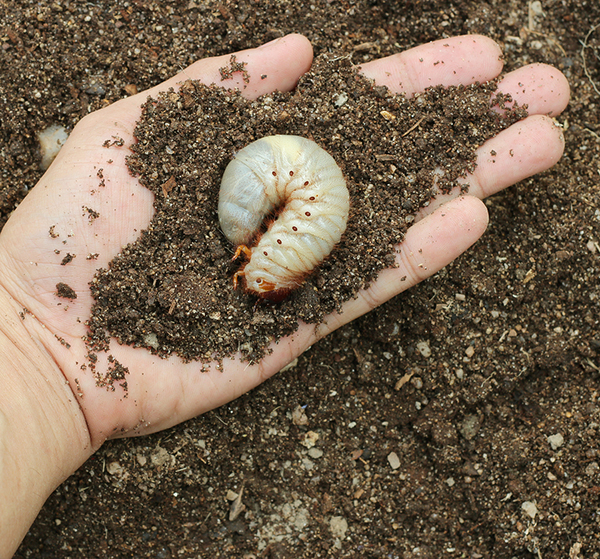
Timing is everything when it comes to grub control. Treat when the grubs are tiny—late summer and early fall work best. If you only tackle adult beetles, you might win for now but end up fighting again next year.
Some plants are like candy to Japanese beetles, but others barely get touched. Fill your garden with the right plants and you’ll see fewer beetles camping out every summer. For spots where you want pops of color but less drama, these less-loved plants can save you a lot of trouble.
Plants that Japanese beetles usually avoid
- Boxwood
- Begonia
- Impatiens
- Hostas with tough, textured leaves
- Forsythia
- Lilacs (the common types)
- Magnolia
- Lantana
- Marigold
- Holly
Build your garden beds around these choices and you’ll tempt fewer beetles to visit. If you love roses, grapes, or beans, just know those are beetle favorites and will need extra attention.
You don’t have to give up your favorite plants, though. Instead, try companion planting to mix things up and throw beetles off the scent. A few smart combos and garden tricks include:
- Mix scented herbs like garlic, chives, catnip, and tansy: These strong smells help keep beetles away from nearby veggies and flowers.
- Surround beetle favorites with marigolds or white geraniums: Some studies show that certain flowers, especially white geraniums, can actually confuse and deter beetles.
- Group less-favored plants near prized flowers: This puts a buffer around plants you want to protect, making it harder for beetles to zero in.
- Let some weeds like wild violets or smartweed grow in out-of-the-way corners: These can act as a trap crop, drawing beetles away from your prize plants so it’s easier to pick them off.
Think of your garden like a buffet. If you serve up only what the beetles hate or get clever about arranging their favorites, you’ll have fewer guests showing up to cause problems. With the right mix, your plants can grow with fewer holes, and you’ll spend less time worrying about beetles every summer.
Conclusion
Keeping Japanese beetles out of your garden takes patience, but you can do it. Handpick beetles, set up covers, bring in helpful insects, and treat your soil if you spot grubs. Switch up your plants and use smart garden tricks to make things even tougher for these bugs.
Stick with it and don’t let the beetles win. Each step counts, and with steady effort, you give your plants a real chance to thrive. Start today, share what works with your friends, and keep your garden strong all season. Thanks for reading—let’s grow something great together.

Greenhouse Manager, Master Gardener, and Webmaster.
If you have any questions or enjoyed this post, feel free to share your thoughts in the comments below.