🍂 Why You Shouldn’t Prune Trees in the Fall — and How Trees Heal Naturally
When fall arrives, it’s tempting to grab the pruning shears and tidy up your yard. Cooler days and dropping leaves make it seem like the perfect time — but fall pruning can do more harm than good, especially for trees grown in the American Southwest.
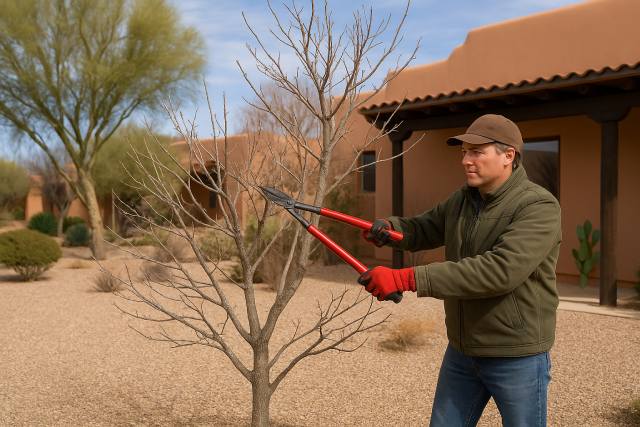
Below, let us explain why pruning in the fall is risky, how trees heal naturally, and the best times to prune in Las Cruces and nearby regions.

🍁 Why Fall Isn’t the Right Time to Prune
During fall, trees are entering dormancy. Their energy shifts from growing leaves and branches to conserving nutrients and strengthening roots. Pruning during this stage disrupts that process and can weaken the tree.
1. New Growth Gets Killed by Frost
Fresh pruning cuts trigger new shoots that don’t have time to harden before frost arrives. These tender shoots die back quickly, wasting the tree’s stored energy.
2. Pruning Wakes Trees from Dormancy
As trees slow down for winter, pruning stimulates new activity just when the tree needs to rest. This stress can reduce overall health and vigor in spring.
3. Increased Risk of Disease and Rot
Cool, damp fall conditions promote fungal infections and decay. Open pruning cuts are like wounds that can’t seal properly until warmer weather returns.
4. Sap Flow and Insect Problems
Certain trees (like maples, elms, and birches) “bleed” sap when cut in the fall, which can attract insects and cause unnecessary stress.
🌳 How Trees Heal After Pruning
Unlike people, trees don’t repair damaged tissue — they seal it off through a process called compartmentalization. Also called CODIT. Here is an article with more information about CODIT.
🌿 The Healing Process
-
Pruning Cut Made: The tree begins sealing off exposed tissue.
-
Callus Formation: Protective tissue forms around the wound edge.
-
Compartmentalization: The tree isolates the damaged area internally to block decay.
-
Closure: Over time, bark grows over the wound until it’s fully sealed.
- Pruning tips here at Pruning tips and tools.
This natural healing process depends on warmth, moisture, and active growth — conditions that are minimal in late fall. That’s why late winter to early spring is the best time to prune.
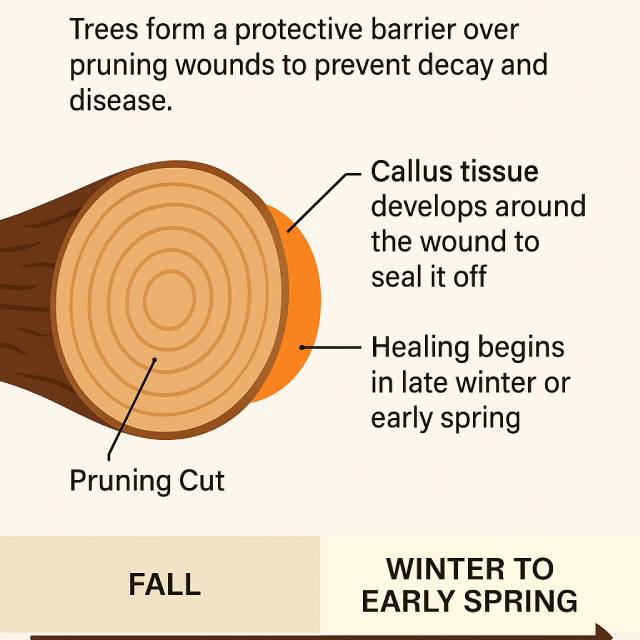
🕓 Best Times to Prune Trees
🌱 Late Winter to Early Spring
Prune trees while they’re dormant but just before new growth starts. This timing allows quick sealing of pruning wounds as temperatures rise.
🌞 Mid-Summer (for Light Shaping)
After the spring growth flush, it’s safe to remove small branches or shape ornamentals.
🌵 Pruning Tips for the Southwest
In the Las Cruces and El Paso region, extreme temperatures and low humidity mean timing is critical for healthy pruning.
Recommended Windows for Common Trees
-
Desert Willow: Late winter or early spring
-
Palo Verde: Winter to early spring before leaf-out
-
Mesquite: Late winter for shape and storm safety
-
Vitex (Chaste Tree): Late winter for best bloom
-
Texas Red Oak: Prune in mid-winter to reduce oak wilt risk
Avoid pruning during fall or hot summer months — both stress the tree and delay healing.
There is an exception to pruning in fall. Trees that have broken branches or are diseased should be pruned off.

Greenhouse Manager, Master Gardener, and Webmaster.
If you have any questions or enjoyed this post, feel free to share your thoughts in the comments below.