Last updated on May 29th, 2026 at 12:49 pm
New Mexico gardening comes with unique challenges. Intense sun, low humidity, alkaline soils, high winds, and long periods of drought can quickly stress plants that are not adapted to the Southwest climate. Xeriscaping offers a practical and attractive solution by using plants that require less water while still providing color, texture, and seasonal interest.
A properly designed xeriscape landscape can reduce water use, lower maintenance, attract pollinators, and create a landscape that thrives in the harsh conditions of Southern New Mexico and surrounding desert regions.
This guide covers some of the best xeriscape plants for New Mexico landscapes, including flowering perennials, shrubs, ornamental grasses, trees, succulents, and groundcovers that perform well in hot, dry climates.
What Is Xeriscaping?
Xeriscaping is a landscaping method designed to reduce or eliminate excessive irrigation. Instead of relying on thirsty lawns and tropical plants, xeriscapes use plants that naturally adapt to desert conditions.
A successful Southwest xeriscape typically includes:
- Drought-tolerant plants
- Efficient drip irrigation
- Gravel or rock mulch
- Proper soil preparation
- Grouping plants with similar water needs
- Reduced turf areas
Contrary to popular belief, xeriscaping does not mean a yard full of cactus and bare gravel. A well-designed xeriscape can be colorful, lush-looking, and full of seasonal blooms.
Best Flowering Xeriscape Plants for New Mexico
Red Yucca
Botanical Name: Hesperaloe parviflora
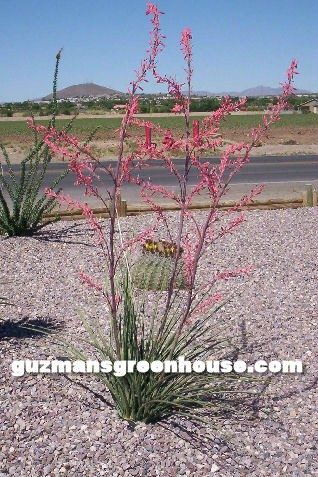
Red Yucca is one of the most dependable xeriscape plants for Southern New Mexico. Despite the name, it is not a true yucca. This plant produces tall flower spikes with coral-red blooms that attract hummingbirds throughout spring and summer.
Why It Works Well
- Extremely heat-tolerant
- Low water requirements
- Evergreen in mild winters
- Virtually pest-free
- Handles reflected heat
Growing Conditions
- Full sun
- Well-drained soil
- Water deeply but infrequently
Autumn Sage
Botanical Name: Salvia greggii
[INSERT IMAGE HERE — Autumn Sage in bloom]
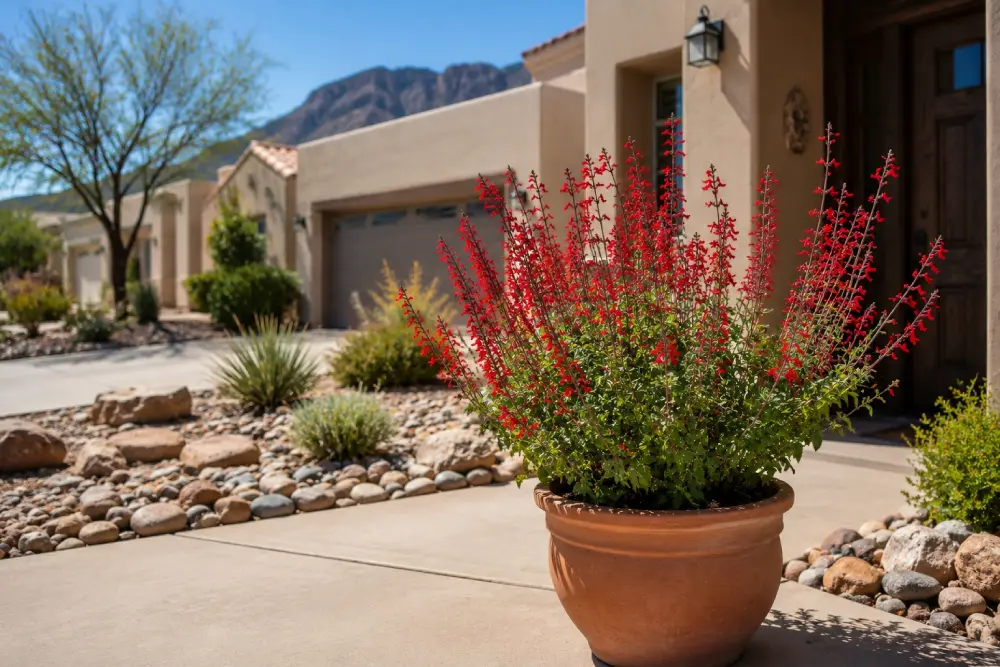
Autumn Sage is a favorite in Southwest landscapes because it blooms repeatedly from spring through fall. Flower colors include red, pink, coral, purple, and white.
Benefits
- Attracts hummingbirds and bees
- Handles intense summer heat
- Easy to prune and maintain
- Excellent for borders and rock landscapes
Blackfoot Daisy
Botanical Name: Melampodium leucanthum
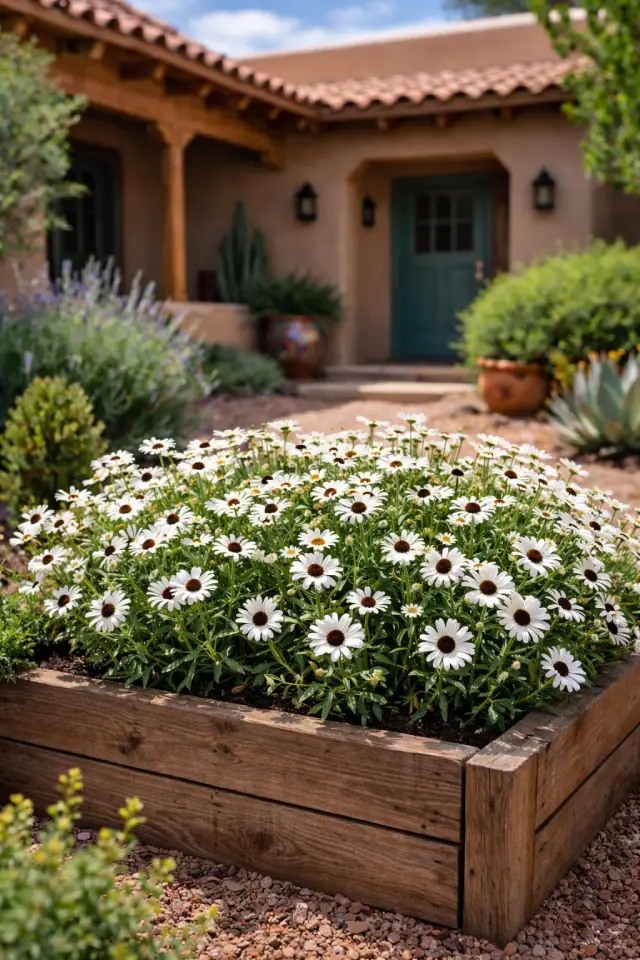
This low-growing perennial produces masses of white daisy-like flowers from spring until frost. Blackfoot Daisy thrives in poor soils and requires very little supplemental water once established.
Best Features
- Compact growth habit
- Long bloom season
- Pleasant fragrance
- Excellent for pathways and borders
Best Xeriscape Shrubs
Texas Sage
Botanical Name: Leucophyllum frutescens

Texas Sage is one of the signature shrubs of Southwest landscapes. Its silver foliage helps reflect sunlight and conserve moisture. Purple blooms often appear after humidity rises during the monsoon season.
Advantages
- Very drought-tolerant once established
- Reflects desert heat
- Minimal maintenance
- Great privacy shrub
Yellow Bells
Botanical Name: Tecoma stans
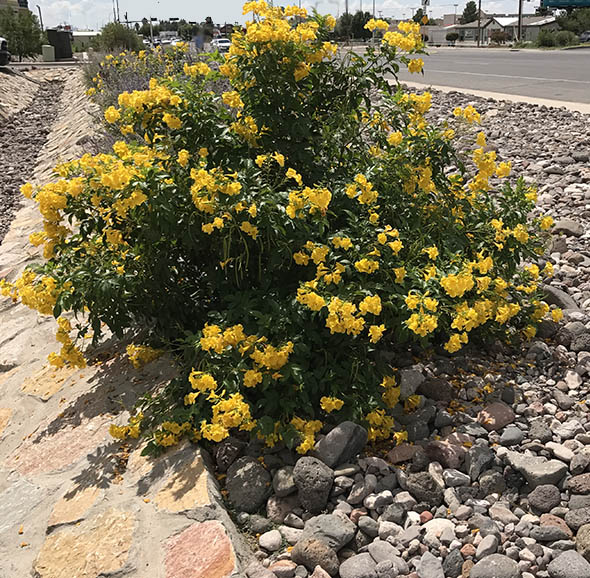
Yellow Bells provide vibrant trumpet-shaped flowers throughout the warm season and attract hummingbirds continuously.
Landscape Uses
- Accent shrub
- Privacy screening
- Pollinator gardens
- Tropical-looking xeriscapes
Best Xeriscape Trees
Desert Willow
Botanical Name: Chilopsis linearis

Desert Willow is one of the best flowering trees for New Mexico landscapes. It produces orchid-like blooms in shades of pink, burgundy, and lavender throughout summer.
Why Gardeners Love It
- Fast-growing
- Drought tolerant
- Attracts hummingbirds
- Provides filtered shade
- Handles poor soils
Chinese Pistache
Botanical Name: Pistacia chinensis
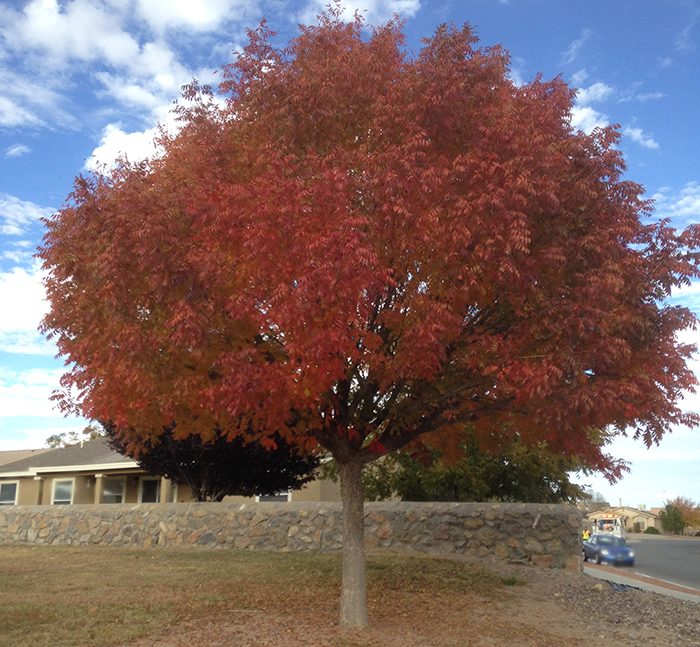
Chinese Pistache is valued for its excellent fall color and adaptability to desert conditions once established.
Benefits
- Brilliant red-orange fall foliage
- Strong shade tree
- Heat tolerant
- Handles alkaline soils well
Best Succulents and Accent Plants
Century Plant
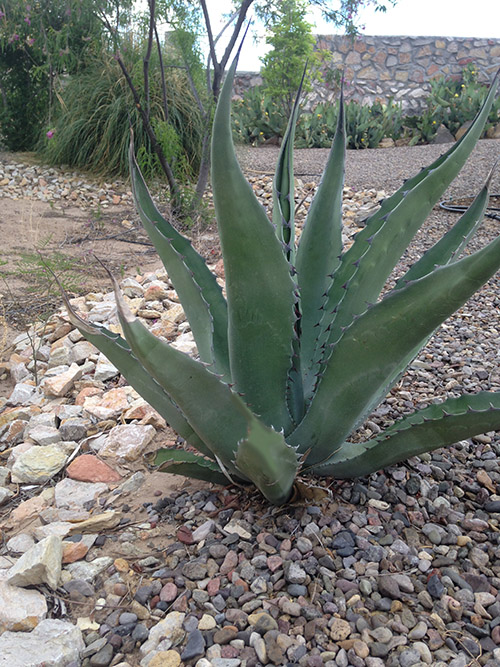
Agaves create dramatic focal points in xeriscape gardens and require very little water once established.
Popular Varieties
- Century Plant
- Blue Agave
- Whale’s Tongue Agave
- Parry’s Agave
Golden Barrel Cactus
Botanical Name: Echinocactus grusonii
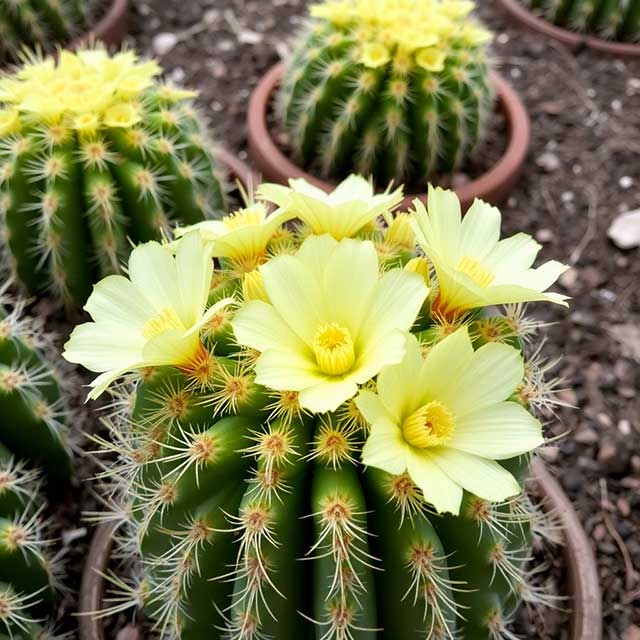
Golden Barrel Cactus adds architectural texture and contrast to desert landscapes.
Best Uses
- Accent plantings
- Rock gardens
- Modern xeriscapes
- Container gardens
Xeriscape Watering Tips
Even drought-tolerant plants need regular water during establishment. Most xeriscape plants require:
- More frequent watering during the first growing season
- Deep watering instead of shallow daily irrigation
- Reduced watering during cooler months
Drip irrigation is usually the most efficient watering method for Southwest landscapes.
Soil Preparation for New Mexico Landscapes
Many New Mexico soils contain clay, caliche, or excessive alkalinity. Improving drainage is one of the most important steps when planting xeriscape plants.
Helpful soil amendments include:
- Compost
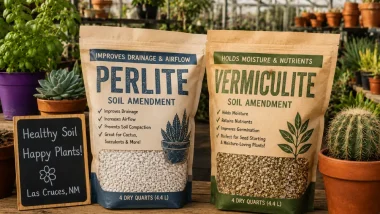
- Expanded shale
- Pumice
- Perlite for containers
- Organic mulch
Avoid over-amending native desert soil, especially for cactus and succulents.
Mulch Matters
Rock mulch is commonly used in Southwest landscapes, but organic mulch also offers benefits.
Organic Mulch Helps:
- Retain soil moisture
- Cool root systems
- Improve soil quality
- Reduce evaporation
Wood chips and bark mulch work especially well around trees and shrubs.
Common Xeriscape Mistakes
Overwatering
Many desert-adapted plants decline faster from too much water than from too little.
Poor Drainage
Standing water around roots often causes rot and fungal problems.
Planting Too Close Together
Young xeriscape plants may look sparse initially, but many mature much larger over time.
Ignoring Sun Exposure
Some drought-tolerant plants still require afternoon shade in extreme desert heat.
Final Thoughts
A well-designed xeriscape can dramatically reduce water use while still creating a colorful and inviting landscape. By choosing plants adapted to New Mexico’s climate, gardeners can enjoy lower maintenance, healthier plants, and beautiful outdoor spaces throughout the year.
Whether you prefer flowering perennials, dramatic succulents, desert trees, or pollinator-friendly shrubs, Southwest xeriscaping offers endless possibilities for sustainable gardening in New Mexico.
For additional water-wise landscaping information, the New Mexico State University Cooperative Extension Service provides valuable regional gardening resources and planting information.
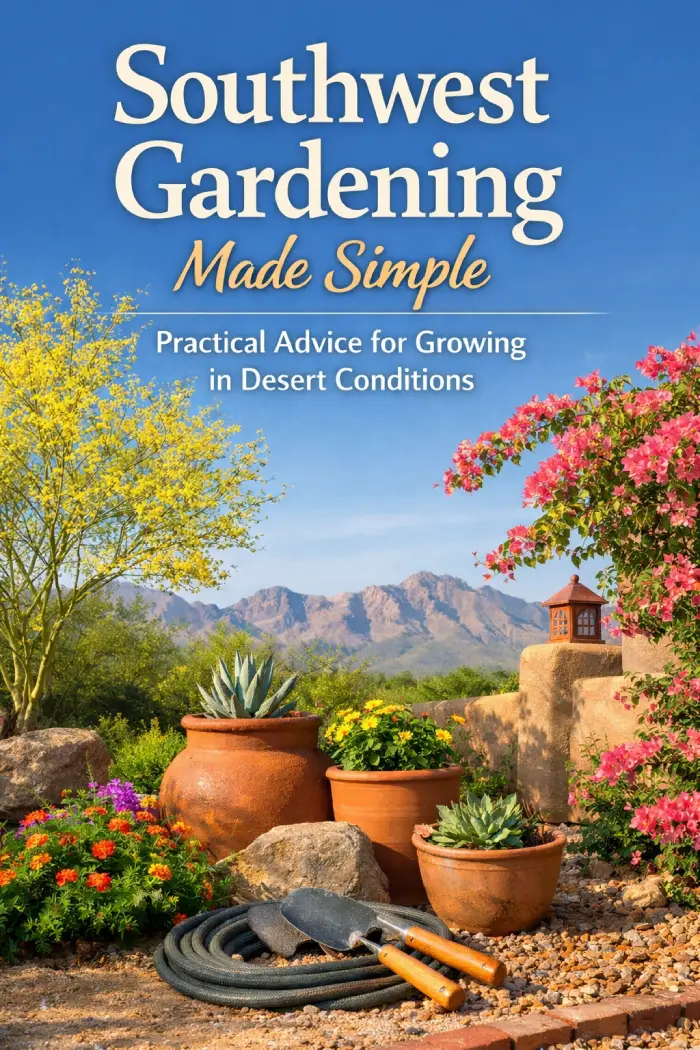
New to Southwest Gardening?
Stop wasting money on plants that will not survive our heat and drought.
My Southwest Gardening Made Simple eBook shows you which trees, shrubs, flowers, and vegetables actually thrive in New Mexico, Arizona, and West Texas.
The best plants for hot, dry climates
Common mistakes that kill Southwest plants
Easy-to-follow advice for beginners
Instant PDF Download - Only $19

Greenhouse Manager, Master Gardener, and Webmaster.
If you have any questions or enjoyed this post, feel free to share your thoughts in the comments below.