Hall's Honeysuckle in the Southwest

Hall’s Honeysuckle in the Southwest: Fragrant Beauty With Fast Growth

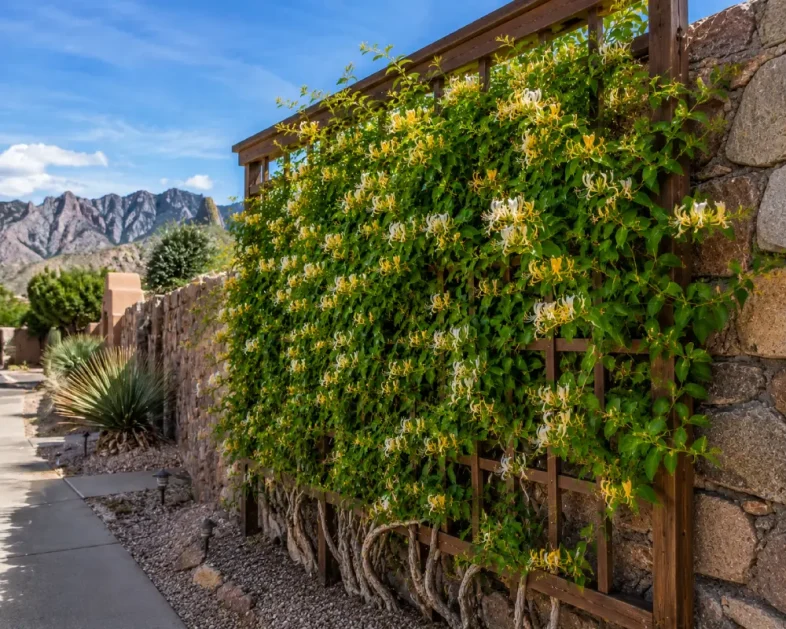
Few vines can match the sweet fragrance and vigorous growth of Lonicera japonica ‘Halliana’, commonly known as Hall’s Honeysuckle. This classic flowering vine has been popular for generations because of its long blooming season, fast coverage, and ability to thrive in difficult conditions. In many Southwest landscapes, it is often used on fences, arbors, pergolas, and trellises where gardeners want quick shade, privacy, or a burst of fragrance near patios and walkways.

Hall’s Honeysuckle in the Southwest

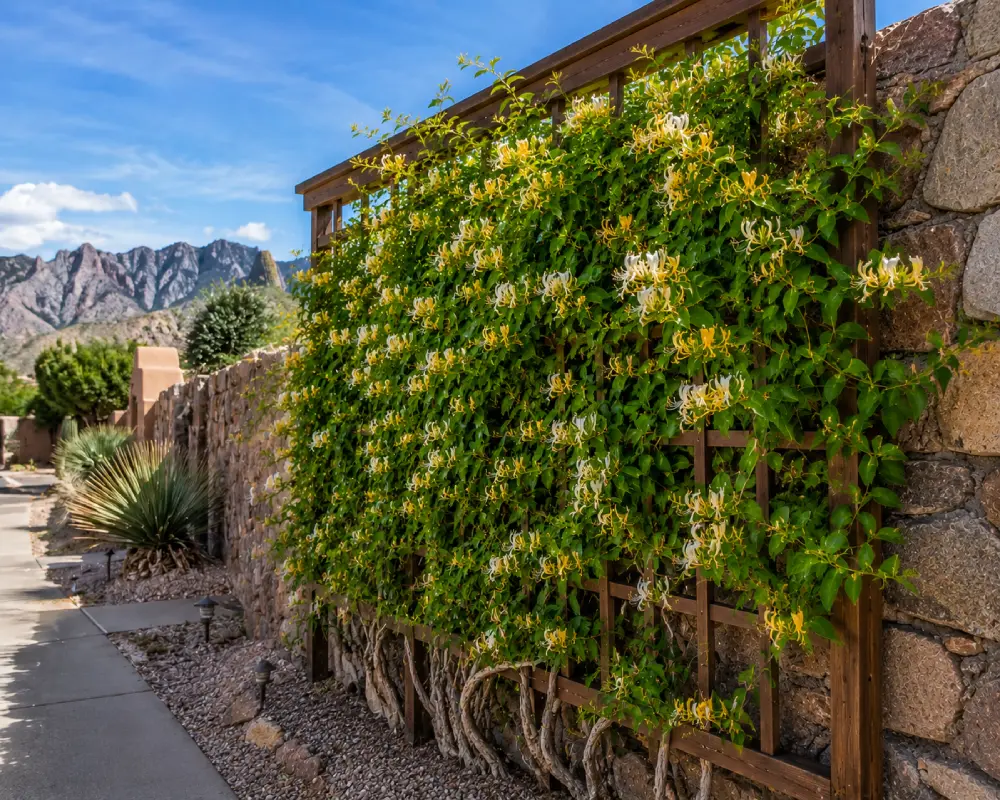
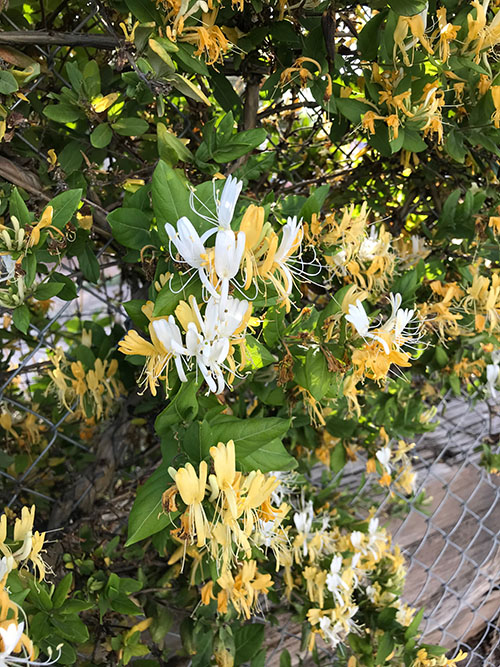
Hall’s Honeysuckle produces masses of tubular flowers that open creamy white and gradually fade to yellow. The flowers release a strong sweet scent, especially during the evening hours, attracting hummingbirds, butterflies, bees, and other pollinators. In the Southwest, the fragrance can drift through an entire backyard during warm summer nights.

Why Hall’s Honeysuckle Works Well in the Southwest

One reason this vine performs well in the Southwest is its adaptability. Once established, it tolerates heat, rocky soil, and periods of drought surprisingly well. It also grows in a wide range of soil types, including clay, sandy, and alkaline soils often found throughout New Mexico, Arizona, West Texas, and surrounding desert regions.

Although it appreciates regular watering during the hottest summer months, established plants are fairly drought tolerant. In hotter desert climates, it performs best when roots are shaded with mulch and the vine receives afternoon protection from the most intense summer sun.

This vine is especially useful for:

Honeysuckle on a fence

  • Covering chain-link fences
  • Softening block or rock walls
  • Growing over pergolas and patio covers
  • Screening unattractive areas
  • Erosion control on slopes
  • Creating hummingbird-friendly gardens

Because of its vigorous growth habit, it can quickly transform bare structures into lush green focal points.

Mature Size and Growth Rate

Hall’s Honeysuckle is considered a fast-growing vine. Under good growing conditions, it can easily grow several feet in a single season. Mature vines commonly reach:

  • Height/Length: 15–30 feet long
  • Spread: 6–10 feet wide
  • Growth Rate: Fast to very rapid

Growth tends to be strongest during spring and early summer when temperatures are moderate. In mild Southwest climates, the vine may remain semi-evergreen or evergreen during winter.

Because it grows aggressively, pruning is important. Without trimming, the vine can become tangled, woody, and overgrown. Light pruning throughout the growing season helps maintain shape and encourages fresh flowering growth.

Hardiness Zone

Hall’s Honeysuckle is extremely adaptable and performs well in a broad range of climates.

USDA Hardiness Zones

  • Zone 4 through Zone 9
  • Some references report success into Zone 10 or 11 in protected climates.

This makes it suitable for nearly all Southwest growing areas, including:

  • Las Cruces, NM
  • Albuquerque, NM
  • El Paso, TX
  • Tucson, AZ
  • Phoenix, AZ (with some afternoon shade)

In colder regions, vines may lose part of their foliage during winter but usually rebound quickly in spring.

Flowering Season

One of the biggest advantages of Hall’s Honeysuckle is the extremely long bloom period. Flowers often begin appearing in spring and continue through much of summer and even into fall in warmer climates.

Hall’s Honeysuckle in the Southwest
Hall’s Honeysuckle Flower

The flowers start white and gradually turn creamy yellow as they age, creating a beautiful two-tone appearance. Their sweet fragrance is strongest during warm evenings.

Pollinators absolutely love the blooms. Hummingbirds are frequent visitors, making this vine an excellent addition to wildlife-friendly gardens.

Watering Tips for the Southwest

Although established vines are somewhat drought tolerant, regular watering produces fuller growth and heavier flowering.

Helpful Southwest watering tips:

  • Water deeply rather than lightly
  • Use mulch around the root zone
  • Increase watering during extreme heat
  • Avoid soggy soil conditions
  • Drip irrigation works very well

If planted against hot west-facing walls, vines may need additional summer irrigation.

Is Hall’s Honeysuckle Invasive?

This is an important consideration. Japanese Honeysuckle varieties, including ‘Halliana,’ are considered invasive in many parts of the United States because of their aggressive growth and spreading habit.

However, in drier Southwest climates, the plant is often easier to control than in humid regions of the South and Southeast.

Still, gardeners should:

  • Prune regularly
  • Avoid letting vines spread into natural areas
  • Remove unwanted runners
  • Monitor nearby plantings

Growing the vine on sturdy supports and maintaining annual pruning keeps it manageable.

Other Vines for the Desert Southwest. 

Toxicity to Dogs and Cats

Hall’s Honeysuckle should be considered mildly toxic to pets if consumed in large amounts. The berries and other plant parts contain compounds that may cause digestive upset. Symptoms can include:

  • Vomiting
  • Diarrhea
  • Stomach irritation

Most pets typically avoid eating large quantities of the plant, but it is still best to monitor dogs and cats around the berries and foliage.

Interestingly, the flower nectar itself is generally considered harmless and has traditionally been tasted by children from fresh blooms.

Final Thoughts

Hall’s Honeysuckle remains a favorite vine for Southwest gardeners who want fast growth, fragrance, and long-lasting flowers. Few plants can cover a fence or arbor as quickly while also attracting hummingbirds and filling the yard with sweet perfume.

Its adaptability to heat, drought, and poor soils makes it especially useful in desert and semi-arid climates. Just remember that this vigorous vine benefits from regular pruning and should be monitored to prevent excessive spreading.

For gardeners looking for a classic, fragrant climbing vine with old-fashioned charm, Hall’s Honeysuckle continues to earn its place in Southwest landscapes.

A helpful external resource for additional plant information is the North Carolina Extension Plant Toolbox on Lonicera japonica

Southwest Gardening Made Simple eBook

Southwest Gardening Made Simple

Want more help choosing the right plants for our hot, dry Southwest climate? Check out my Southwest Gardening Made Simple eBook.

View the Southwest Gardening eBook

 
Next Post
Texas sage bushes in Las Cruces
Guzman's Greenhouse Posts Outdoor Plants Perennials Shrubs succulents Xeriscaping

Complete Southwest Xeriscape Plant Guide for New Mexico

Leave a Reply

Your email address will not be published. Required fields are marked *

This site uses Akismet to reduce spam. Learn how your comment data is processed.