Caladiums in the Southwest. If you’re looking to add bold, tropical-style color to your landscape, caladiums are a great option—even here in the Southwest. While they’re not native to our hot, dry climate, they can still perform well with the right placement and care. The key is understanding their needs and working with the environment, not against it.
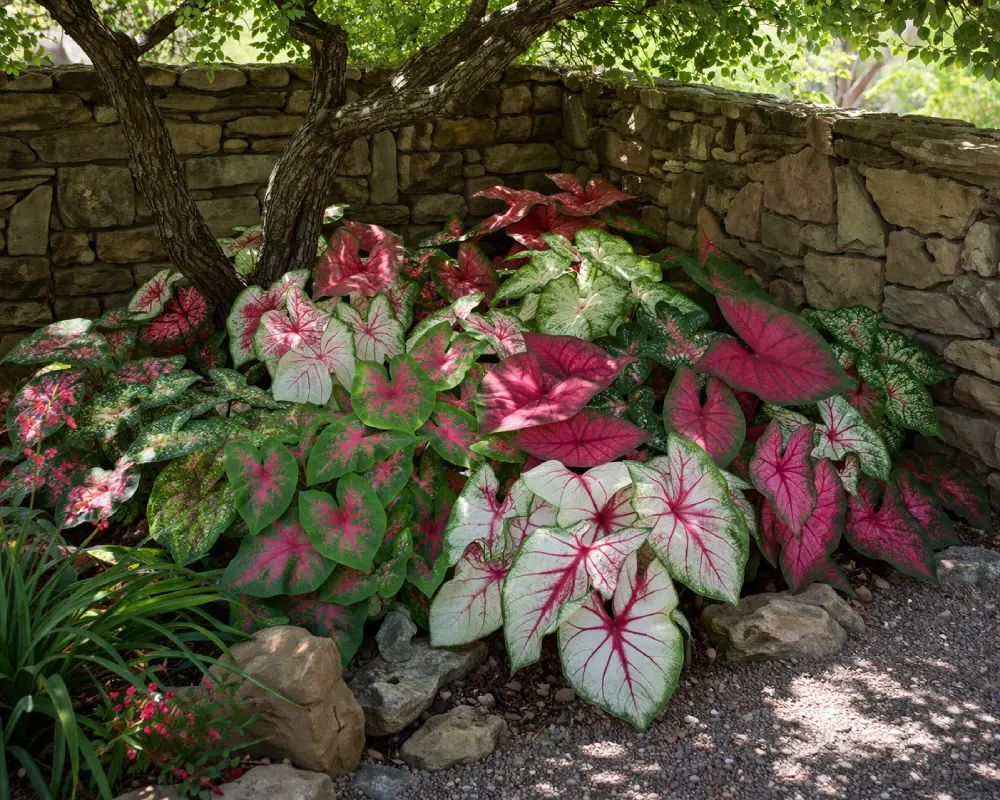
Caladiums underneath a tree.
Caladiums are grown for their striking foliage rather than flowers. Their leaves come in a wide range of colors—reds, pinks, whites, and greens—often with intricate patterns that can really brighten up shaded areas. In a region where many plants are built to handle full sun and drought, caladiums offer something different.
Sun and Shade Requirements
This is where most people go wrong. Caladiums are not full-sun desert plants. In the Southwest, they need protection from intense afternoon sun, especially during the peak summer months. Aim for a location that gets morning sun and at least half a day of shade, if not more.
Filtered light under a tree, along the north or east side of a home, or in a shaded courtyard works very well. Too much direct sun will scorch the leaves quickly, while too much deep shade may reduce their color intensity. Finding that balance is key.
Watering Needs
Caladiums are not drought-tolerant. If you want them to look their best, they need consistent moisture—especially during the hottest part of the summer.
In our climate, this means regular, deep watering. The soil should stay evenly moist but not soggy. Letting them dry out too much will cause the leaves to wilt and decline. On the flip side, poor drainage can lead to rot.
A good rule of thumb is to check the soil often during hot weather. If the top inch starts to dry out, it’s time to water. Using mulch around the base of the plants helps retain moisture and keeps the root zone cooler.
Soil and Planting Tips
Caladiums prefer well-draining soil rich in organic matter. If your native soil is heavy or rocky, amend it with compost before planting. This improves both drainage and moisture retention.
They can be planted directly in the ground or used in containers. In fact, containers are a great option in the Southwest because you can control soil conditions and move them into better shade if needed.
Plant tubers in spring once soil temperatures warm up. They won’t do much in cold soil, so patience early on pays off.
Seasonal Considerations
Caladiums thrive in warm weather but are sensitive to cold. In most Southwest areas, they are treated as seasonal plants. As temperatures cool in fall, they will naturally begin to die back.
At that point, you can either treat them as annuals or dig up the tubers and store them for the next season. If you choose to store them, keep them in a dry, cool place until spring.
Where They Fit in a Southwest Landscape
Caladiums work best as accent plants in shaded or partially shaded areas. Use them to brighten up patios, entryways, or under-canopy garden beds where other flowering plants may struggle.
They also pair well with other shade-tolerant plants to create contrast in texture and color. In a landscape dominated by desert plants, they can provide a refreshing change of pace.
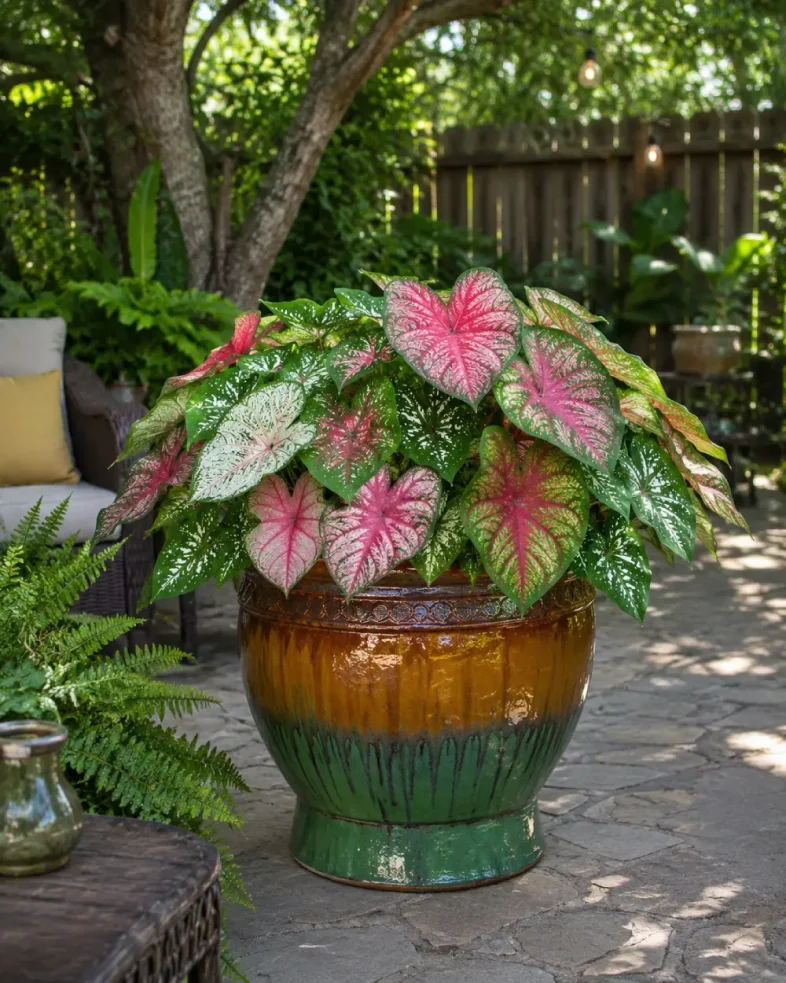
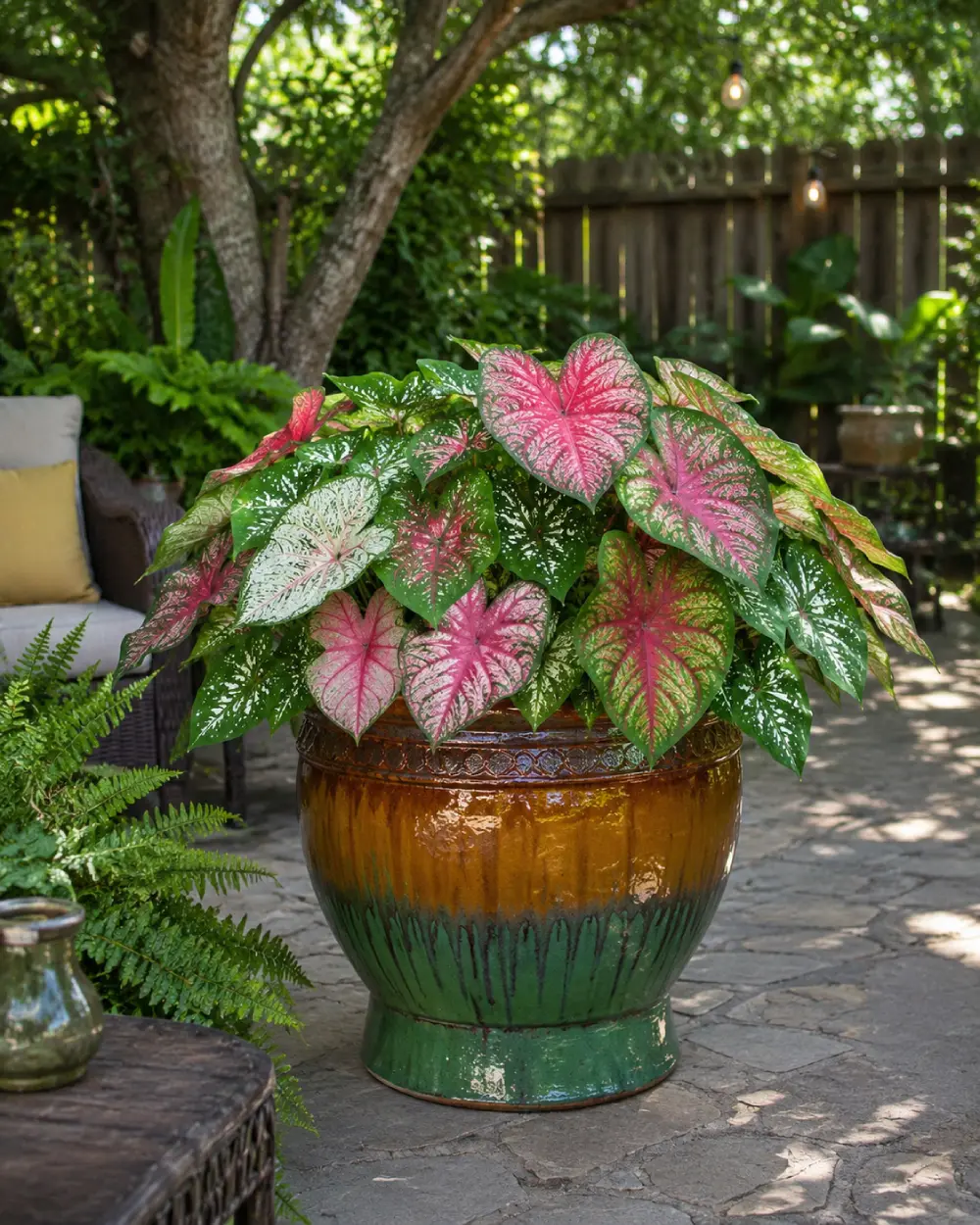
Caladiums in Pots
Caladiums in the Southwest in a shaded area
Final Thoughts
Caladiums can absolutely work in the Southwest—you just have to give them what they need. Provide at least half a day of shade, keep the soil consistently moist, and plant them in well-prepared soil.
Caladiums are technically tender perennials, but in most parts of the Southwest, they are usually grown like annuals.
In warm tropical climates, caladiums can come back year after year from their underground tubers. However, they are very sensitive to cold temperatures and frost. In areas like Las Cruces or El Paso, the tubers will often rot or freeze during winter if left in the ground.
With a little extra attention, they’ll reward you with vibrant color and a unique look that stands out in any garden.
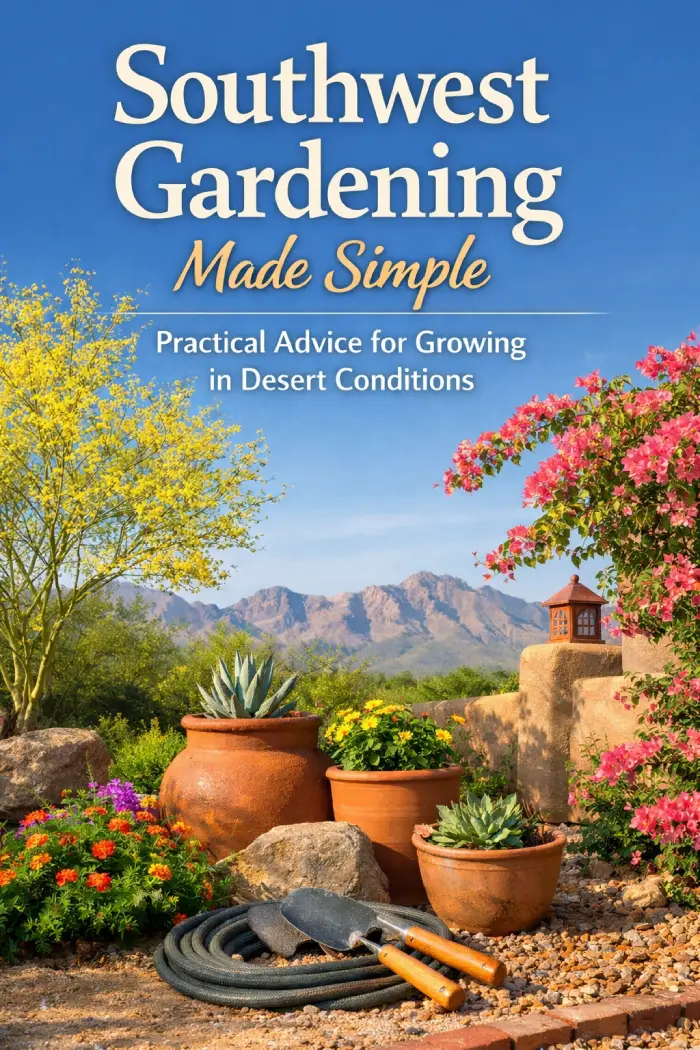
Stop wasting money on plants that will not survive our heat and drought.
My Southwest Gardening Made Simple eBook shows you which trees,
shrubs, flowers, and vegetables actually thrive in New Mexico, Arizona, and West Texas.
Watering schedules that actually work
The best plants for hot, dry climates
Common mistakes that kill Southwest plants
Easy-to-follow advice for beginners
Paul Guzman is a lifelong Southwest gardener and gardening writer with decades of experience helping homeowners grow beautiful landscapes in the desert Southwest. He writes for Guzman’s Garden Centers in Las Cruces, New Mexico, with contributing expertise from Gary Guzman, owner of Guzman’s Garden Centers. If you have any questions or enjoyed this post, feel free to share your thoughts in the comments below.
To provide the best experiences, we use technologies like cookies to store and/or access device information. Consenting to these technologies will allow us to process data such as browsing behavior or unique IDs on this site. Not consenting or withdrawing consent, may adversely affect certain features and functions.
Functional
Always active
The technical storage or access is strictly necessary for the legitimate purpose of enabling the use of a specific service explicitly requested by the subscriber or user, or for the sole purpose of carrying out the transmission of a communication over an electronic communications network.
Preferences
The technical storage or access is necessary for the legitimate purpose of storing preferences that are not requested by the subscriber or user.
Statistics
The technical storage or access that is used exclusively for statistical purposes.The technical storage or access that is used exclusively for anonymous statistical purposes. Without a subpoena, voluntary compliance on the part of your Internet Service Provider, or additional records from a third party, information stored or retrieved for this purpose alone cannot usually be used to identify you.
Marketing
The technical storage or access is required to create user profiles to send advertising, or to track the user on a website or across several websites for similar marketing purposes.