Why are my plants wilting? If you’ve been watering regularly but your plants still look wilted, you’re not alone. This is one of the most common questions gardeners ask during late spring and summer in New Mexico, West Texas, Arizona, and other parts of the Desert Southwest.
The surprising truth is that a wilted plant doesn’t always mean it needs more water. In fact, giving a wilted plant additional water can sometimes make the problem worse. Understanding the difference between heat stress, overwatering, and underwatering can help you keep your landscape healthy through the hottest months of the year.
Heat Stress vs. Lack of Water
Many plants naturally wilt during the hottest part of the day, even when there is plenty of moisture in the soil. This is known as temporary heat stress.
During the afternoon, plants lose water through their leaves faster than their roots can absorb it. As a result, leaves may droop, curl, or appear limp. Once temperatures cool in the evening, healthy plants often recover and look normal again by morning.
This is especially common with:
- Hydrangeas
- Tomatoes
- Roses
- Cucumbers
- Squash
- Newly planted trees and shrubs
If your plant looks wilted at 3 p.m. but recovers by sunset, it is probably experiencing heat stress rather than a lack of water.
Check the Soil Before Watering
Before reaching for the hose, check the soil moisture.
Insert your finger two to three inches into the soil near the root zone. If the soil feels cool and slightly moist, the plant likely has enough water. If it feels dry and dusty, it may need irrigation.
You can also use a soil moisture meter, but your finger often works just as well.
One of the biggest mistakes Southwest gardeners make is watering based on what the plant looks like instead of checking the soil first.
Signs You’re Underwatering
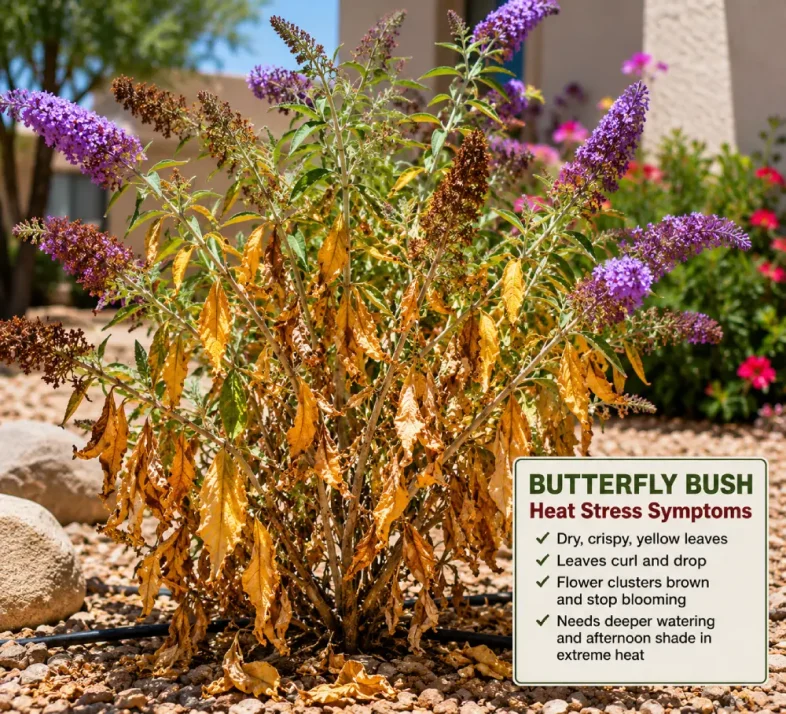
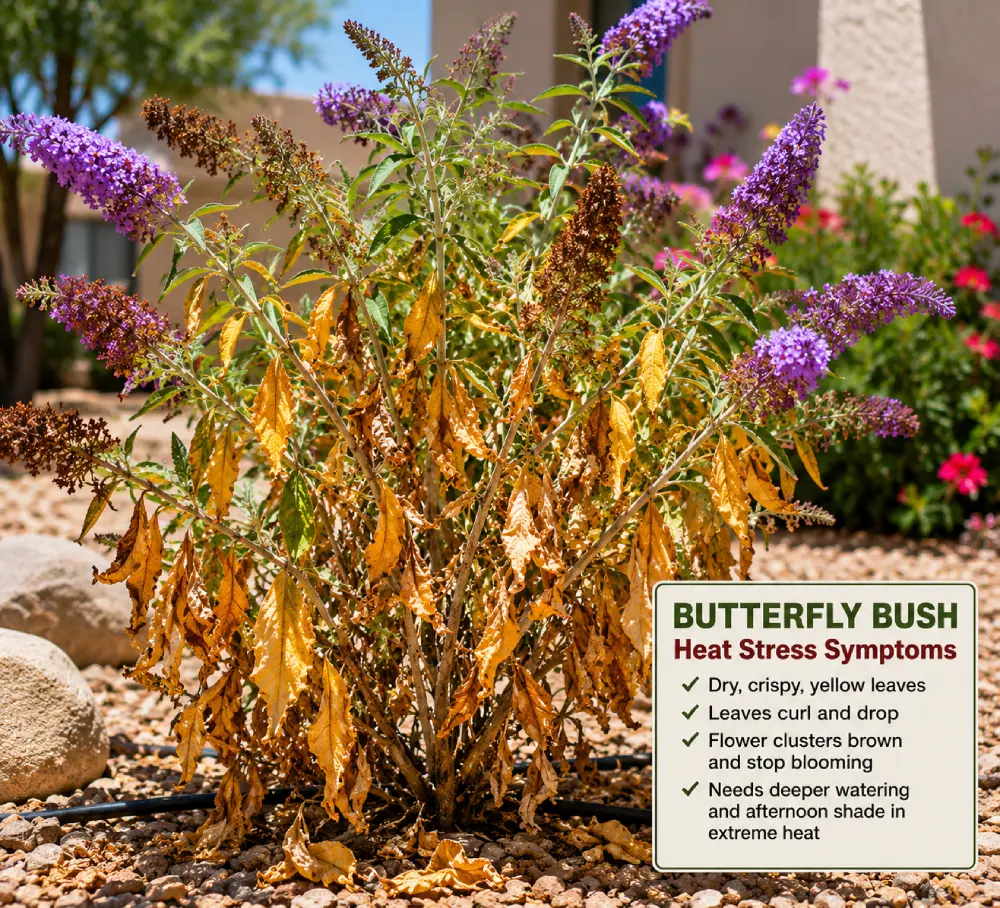
A plant that is not receiving enough water will usually show several symptoms beyond simple wilting.
Common signs include:
- Dry soil several inches below the surface
- Crispy brown leaf edges
- Leaves turning yellow and dropping
- Smaller flowers
- Stunted growth
- Branch dieback
Container plants are especially vulnerable because pots dry out much faster than landscape beds.
During periods of extreme heat, hanging baskets and decorative containers may require daily watering.
Signs You’re Overwatering
Too much water can cause symptoms that look surprisingly similar to drought stress.
When soil remains constantly wet, roots cannot access oxygen. Over time, roots begin to rot, preventing the plant from absorbing moisture properly.
Common signs of overwatering include:
- Yellow leaves
- Soft stems
- Mushy roots
- Leaf drop
- Fungus growth
- Soil that remains wet for several days
If the soil feels soggy and the plant is still wilted, adding more water will not solve the problem.
Why Afternoon Wilting Is Normal
Many established plants temporarily wilt during the hottest hours of summer.
In Las Cruces, afternoon temperatures frequently exceed 100 degrees. During these periods, even drought-tolerant plants may appear stressed.
Common examples include:
- Roses
- Crape Myrtles
- Butterfly Bushes
- Tomatoes
- Sunflowers
As long as these plants recover by morning, there is usually no cause for concern.
Think of it as a natural response to intense heat rather than an emergency.
Water Deeply Instead of Frequently
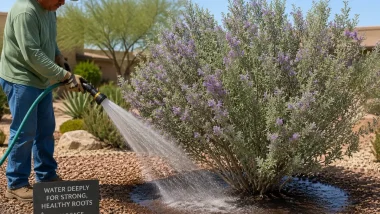
One of the best ways to help plants survive Southwest summers is to water deeply.
Deep watering encourages roots to grow downward where moisture remains available longer. Frequent shallow watering keeps roots near the soil surface, making plants more vulnerable to heat and drought.
For most established trees and shrubs:
- Water deeply
- Water less often
- Allow the soil surface to dry slightly between waterings
Deep root systems create healthier, more drought-tolerant plants.
Mulch Makes a Huge Difference
Mulch is one of the simplest ways to reduce wilting during summer.
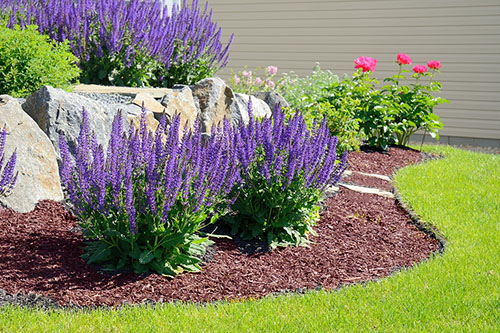
A layer of mulch helps:
- Retain soil moisture
- Reduce evaporation
- Keep roots cooler
- Suppress weeds
- Improve soil quality over time
Wood chips, bark mulch, compost, and shredded leaves all work well.
Apply mulch two to four inches deep around plants while keeping it a few inches away from trunks and stems.
Newly Planted Trees Need Extra Attention
New trees often struggle during their first summer.
Even if they were planted correctly, the limited root system cannot access moisture as efficiently as an established tree.
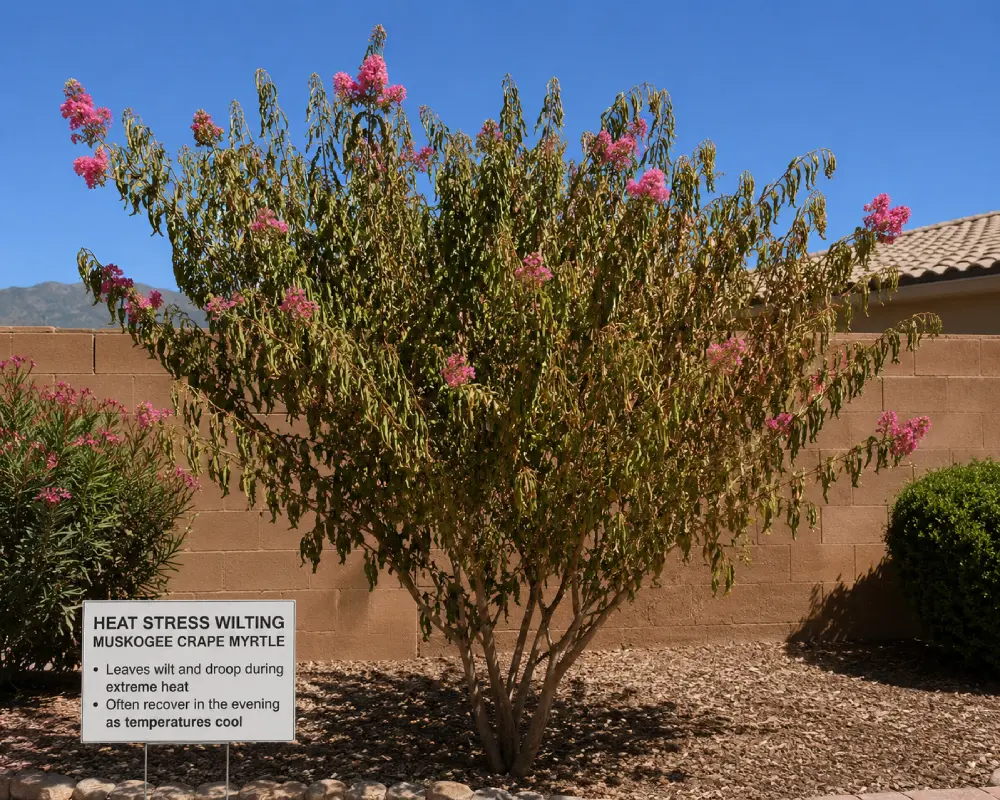
Watch newly planted trees carefully for:
- Drooping leaves
- Curling foliage
- Premature leaf drop
- Slow growth
New trees generally require more frequent watering during their first year than established specimens.
When Wilting Is a Serious Problem
Occasional afternoon wilting is normal.
However, take action if you notice:
- Wilting early in the morning
- Plants failing to recover overnight
- Branch dieback
- Extensive leaf drop
- Yellowing throughout the canopy
- Mushy stems or roots
These symptoms may indicate drought stress, root rot, disease, or irrigation problems. See images of disease and insects here.
The Bottom Line
Just because a plant is wilting doesn’t mean it needs more water. In many cases, especially during hot Southwest summers, temporary afternoon wilting is a normal response to heat.
Before watering, always check the soil. Look for other signs of stress and determine whether the problem is heat, underwatering, or overwatering.
With proper watering, good drainage, and a layer of mulch, most landscape plants can handle even the hottest New Mexico summer days.
Visit the NMSU Agriculture Extension website for further information.
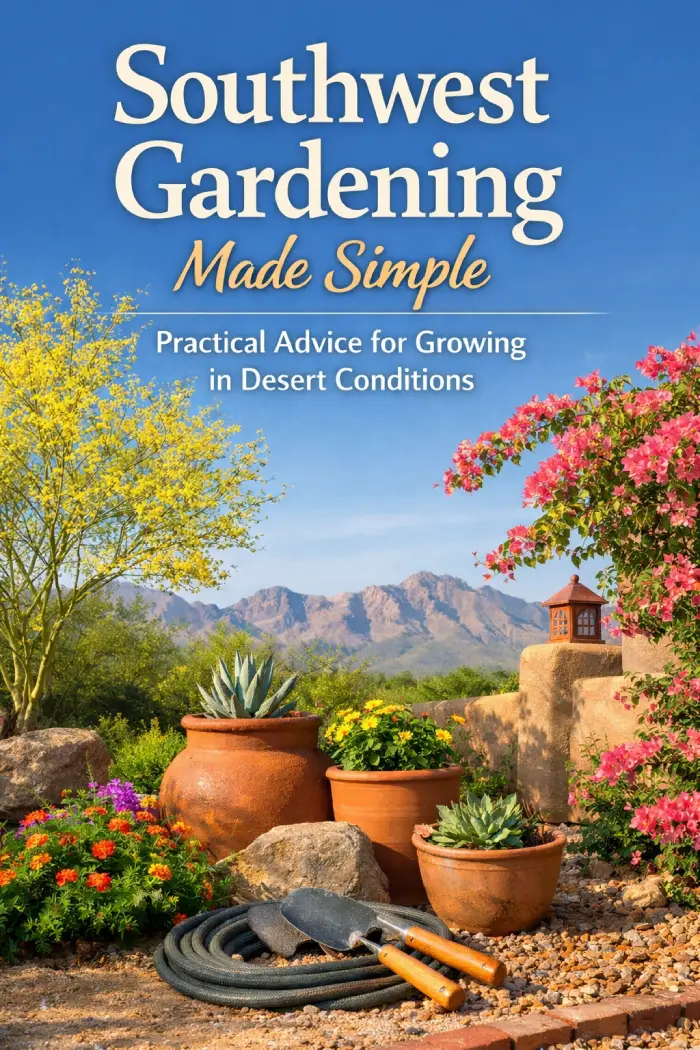
New to Southwest Gardening?
Stop wasting money on plants that will not survive our heat and drought.
My Southwest Gardening Made Simple eBook shows you which trees, shrubs, flowers, and vegetables actually thrive in New Mexico, Arizona, and West Texas.
The best plants for hot, dry climates
Common mistakes that kill Southwest plants
Easy-to-follow advice for beginners

Paul Guzman is a lifelong Southwest gardener and gardening writer with decades of experience helping homeowners grow beautiful landscapes in the desert Southwest. He writes for Guzman’s Garden Centers in Las Cruces, New Mexico, with contributing expertise from Gary Guzman, owner of Guzman’s Garden Centers. If you have any questions or enjoyed this post, feel free to share your thoughts in the comments below.