Growing Hostas in the Southwest. Hostas are one of the most popular shade-loving perennials in the gardening world, and surprisingly, they can also grow well in the Southwest when given the right conditions. While many gardeners associate hostas with cooler northern climates, these beautiful foliage plants can thrive in areas like southern New Mexico, Arizona, west Texas, and other warm regions if they receive adequate shade and consistent moisture.
Hostas are prized for their dramatic leaves, easy-care nature, and ability to brighten shady garden spaces. Their foliage ranges from deep green and blue-gray to chartreuse, gold, and creamy white variegated patterns. Some varieties stay compact while others can spread several feet wide, making them excellent for borders, containers, courtyards, patios, and shaded landscape beds.
Hostas are herbaceous perennials, meaning they return year after year when properly cared for. In the Southwest, the key to success is protecting them from intense afternoon sun and keeping the soil evenly moist during hot weather.
Best Conditions for Hostas in the Southwest
The number one rule for growing hostas in the Southwest is shade. Morning sun is usually acceptable, but strong afternoon sun can scorch the leaves and quickly dry out the soil. A location with filtered light, eastern exposure, or full afternoon shade works best.
Hostas prefer rich, well-draining soil loaded with organic matter. Mixing compost into the planting area helps retain moisture while still allowing excess water to drain properly. Mulch is extremely helpful in Southwest landscapes because it keeps the root zone cooler and slows moisture evaporation.
Consistent watering is critical. Hostas have large leaves that lose moisture rapidly in dry climates. Deep watering several times per week during summer is often necessary, especially during periods of extreme heat. Drip irrigation works very well for hostas because it provides steady moisture directly to the roots.
Despite their reputation as shade plants, some hosta varieties tolerate more sun than others. Gold and yellow-leaved hostas generally handle brighter conditions better than blue hostas.
Popular Hosta Varieties for the Southwest
There are thousands of hosta cultivars available, but some varieties perform better in warmer climates than others.
Blue Hostas
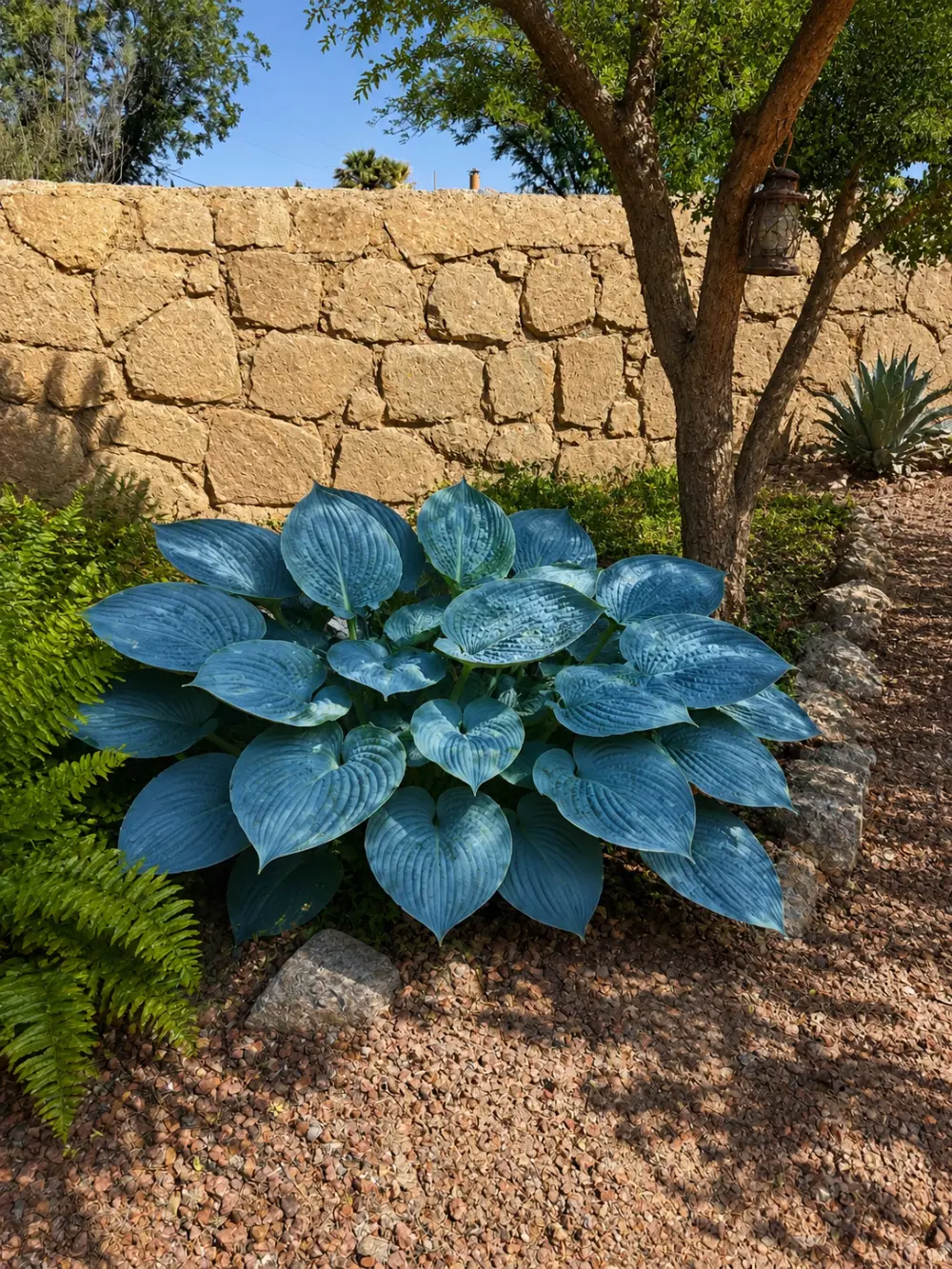
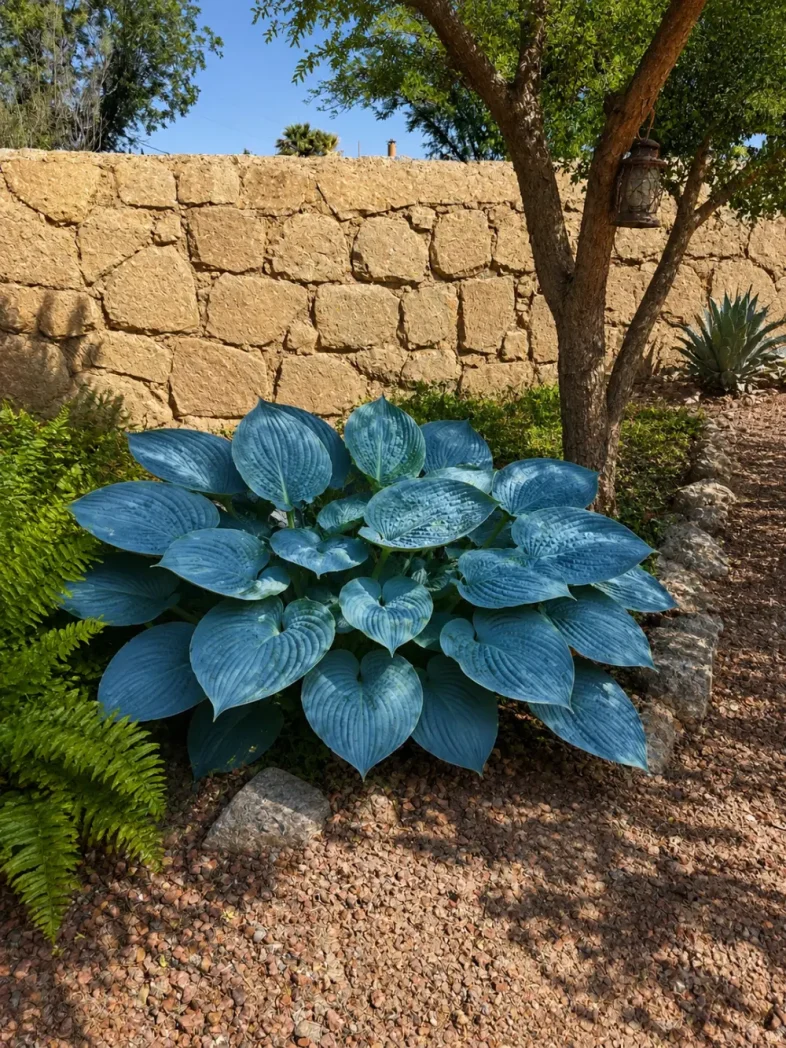
Blue hostas are known for their powdery blue-gray foliage and elegant appearance. Popular varieties include:
- ‘Halcyon’
- ‘Blue Angel’
- ‘Blue Mouse Ears’
- ‘Touch of Class’
Blue hostas prefer heavier shade because direct sunlight can fade their blue coloring. They look especially attractive planted near rocks, pathways, or water features.
Gold and Yellow Hostas
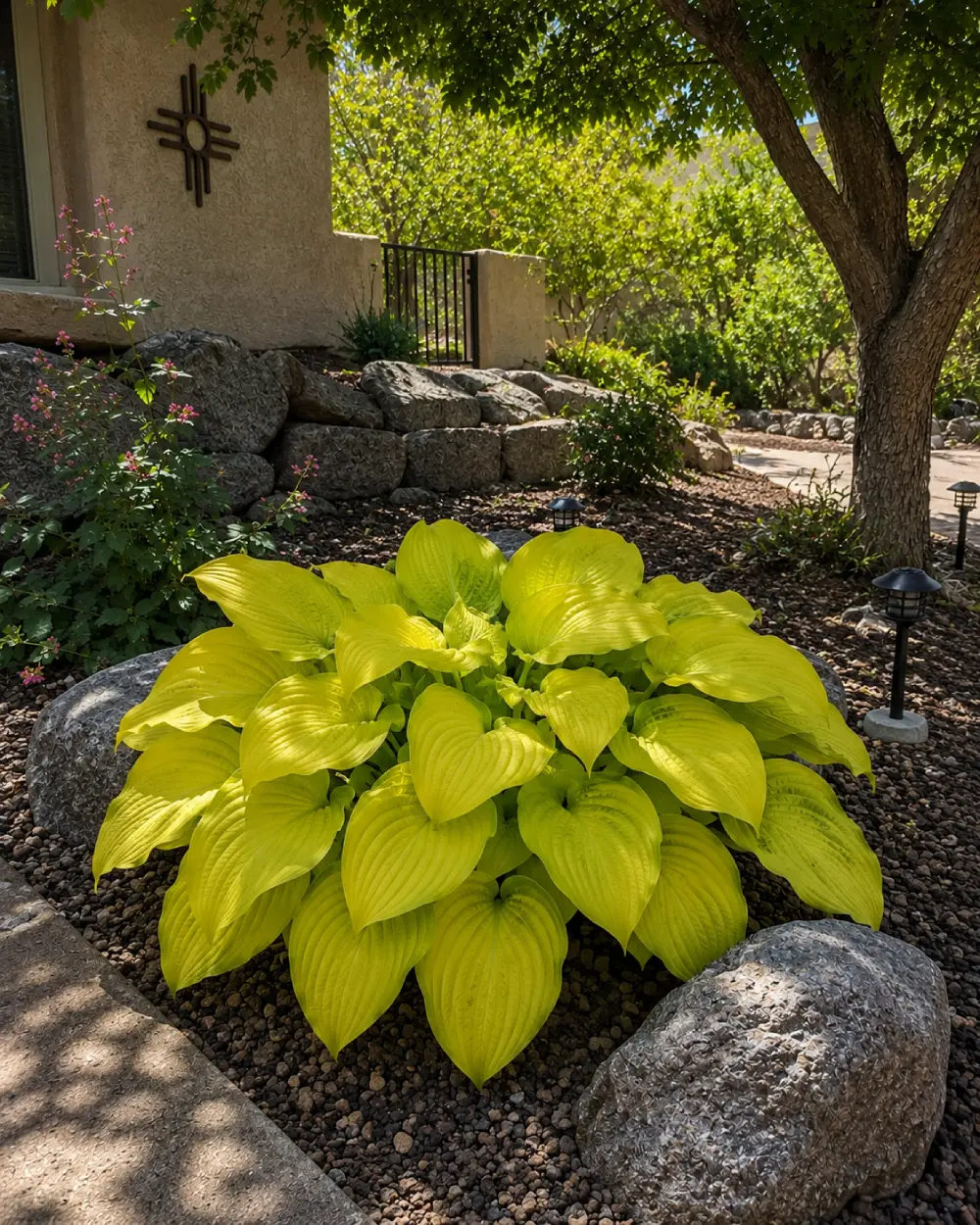
Gold varieties brighten dark corners of the garden and tend to tolerate a bit more sunlight.
Popular selections include:
- ‘Sum and Substance’
- ‘August Moon’
- ‘Sun Power’
- ‘Golden Tiara’
These hostas develop richer color when they receive some morning sun. Large gold hostas can become dramatic focal points in shaded courtyards or beneath patio trees.
Variegated Hostas
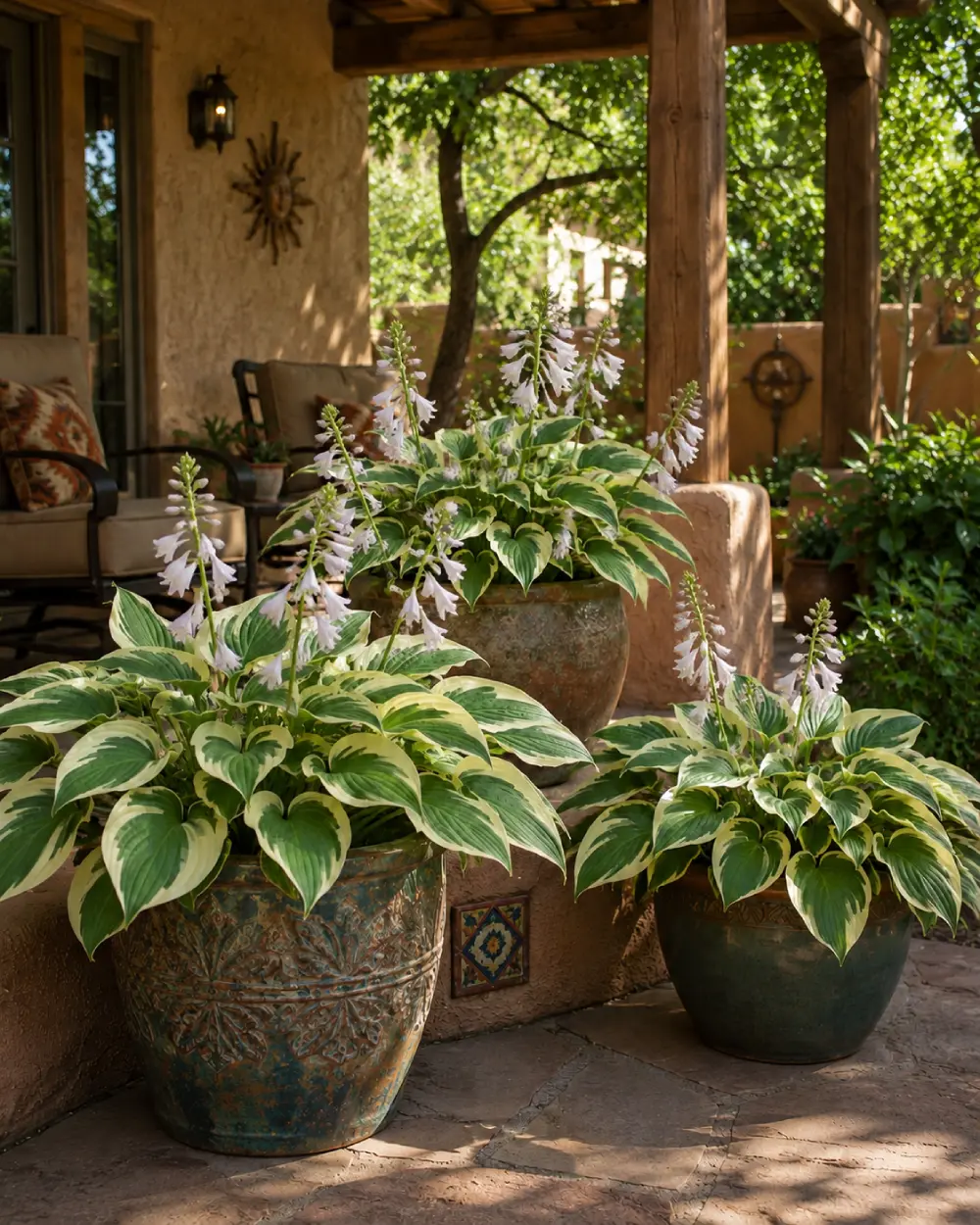
Variegated hostas are extremely popular because of their striking leaf patterns.
Excellent varieties include:
- ‘Patriot’
- ‘Francee’
- ‘Liberty’
- ‘Whirlwind’
- ‘June’
These cultivars provide contrast and texture in shaded beds and pair beautifully with ferns, coral bells, caladiums, and impatiens.
Giant Hostas
Large hostas create a tropical appearance in Southwest shade gardens.
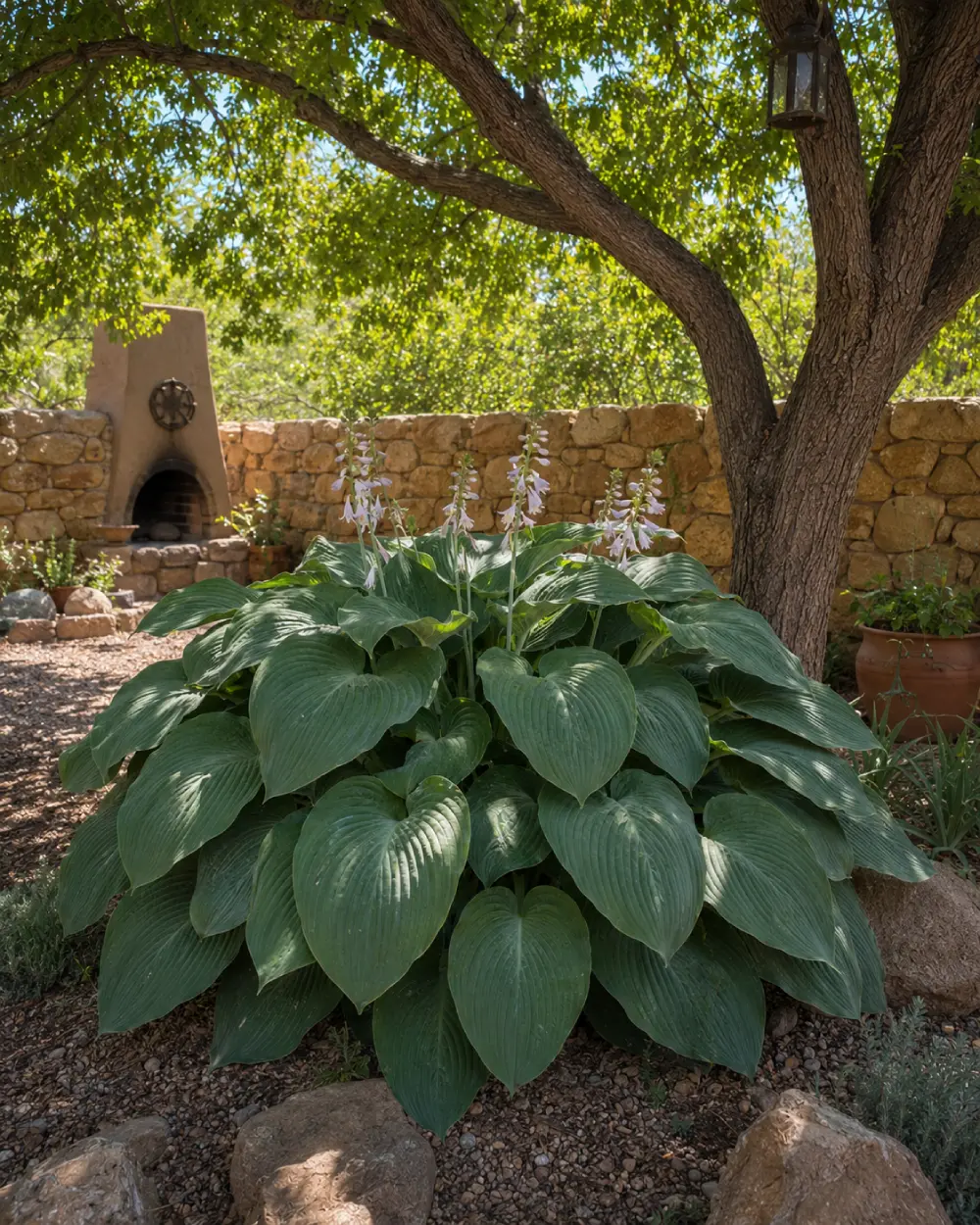
Popular giant varieties include:
- ‘Sagae’
- ‘Krossa Regal’
- ‘Sum and Substance’
- ‘Empress Wu’
These massive hostas can grow several feet wide when given enough water and rich soil. They work especially well under large shade trees or along north-facing walls.
Miniature Hostas
Mini hostas are perfect for containers, borders, or small courtyards.
Popular mini varieties include:
- ‘Blue Mouse Ears’
- ‘Cracker Crumbs’
- ‘Paradise Puppet’
Mini hostas are easier to maintain in containers and are excellent for patios with filtered sunlight.
Watering and Maintenance
Hostas are considered fairly low-maintenance once established, but Southwest gardeners should pay close attention to irrigation during summer.
Water deeply rather than lightly sprinkling the soil surface. Deep watering encourages stronger root systems and healthier foliage. Mulching around the plants with bark, compost, or shredded mulch helps tremendously during hot weather.
Fertilize lightly in spring with a balanced slow-release fertilizer to encourage healthy leaf growth. Avoid overfertilizing because excessive nitrogen can produce weak foliage.
Hostas naturally die back during winter. In colder Southwest areas, the foliage may completely disappear until spring. Simply remove dead leaves after frost damage occurs.
Common Problems
The biggest issue for hostas in the Southwest is heat stress. Brown leaf edges, faded color, or drooping foliage usually indicate insufficient water or too much sun exposure.
Slugs and snails, which are major pests in humid climates, are often less problematic in dry Southwest regions. However, grasshoppers, rabbits, and especially snails can still damage leaves.
Blue hostas are especially sensitive to harsh sunlight and dry wind. Planting them in protected locations helps preserve their color and appearance.
Companion Plants for Hostas
Hostas combine beautifully with other shade-loving plants. Good companions include:
- Ferns
- Coral Bells (Heuchera)
- Caladiums
- Astilbe
- Japanese Forest Grass
- Impatiens
- Begonias
These plants create layered texture and color in shady Southwest landscapes.
Final Thoughts
Hostas may not be the first plant people think of for Southwest gardening, but they can become beautiful, long-lived perennials when planted in the right location. Shady conditions, rich soil, mulch, and consistent watering are the keys to success.
From giant blue varieties to colorful miniatures, hostas add elegance and lush texture to areas where many flowering plants struggle. Whether planted beneath trees, along shaded walkways, or in decorative containers, hostas can bring a cool, refreshing look to Southwest landscapes even during the hottest months of the year.
Other shade-loving plants in the Southwest.
A great external resource for additional hosta information and varieties is the American Hosta Society.
New to Southwest Gardening?
Stop wasting money on plants that will not survive our heat and drought.
My Southwest Gardening Made Simple eBook shows you which trees, shrubs, flowers, and vegetables actually thrive in New Mexico, Arizona, and West Texas.
The best plants for hot, dry climates
Common mistakes that kill Southwest plants
Easy-to-follow advice for beginners

Paul Guzman is a lifelong Southwest gardener and gardening writer with decades of experience helping homeowners grow beautiful landscapes in the desert Southwest. He writes for Guzman’s Garden Centers in Las Cruces, New Mexico, with contributing expertise from Gary Guzman, owner of Guzman’s Garden Centers. If you have any questions or enjoyed this post, feel free to share your thoughts in the comments below.