How to Grow Red Valerian: A Tough, Colorful Bloomer for Southwest Gardens
If you are looking for a flowering perennial that thrives in the challenging conditions of the Southwest, Red Valerian might be one of the best plants you can add to your landscape. Also commonly called Jupiter’s Beard, Red Valerian is loved for its clusters of colorful blooms, drought tolerance, and ability to handle poor soils and hot summer conditions.
In places like Las Cruces, El Paso, and other Southwest desert communities, gardeners are always searching for plants that provide long-lasting color without demanding constant attention. Red Valerian checks nearly every box. Once established, this plant can tolerate heat, dry conditions, rocky soil, and reflected sunlight surprisingly well.
Whether you are planting a cottage-style garden, xeriscape landscape, pollinator bed, or simply looking for an easy flowering perennial, Red Valerian deserves serious consideration.
What is Red Valerian?
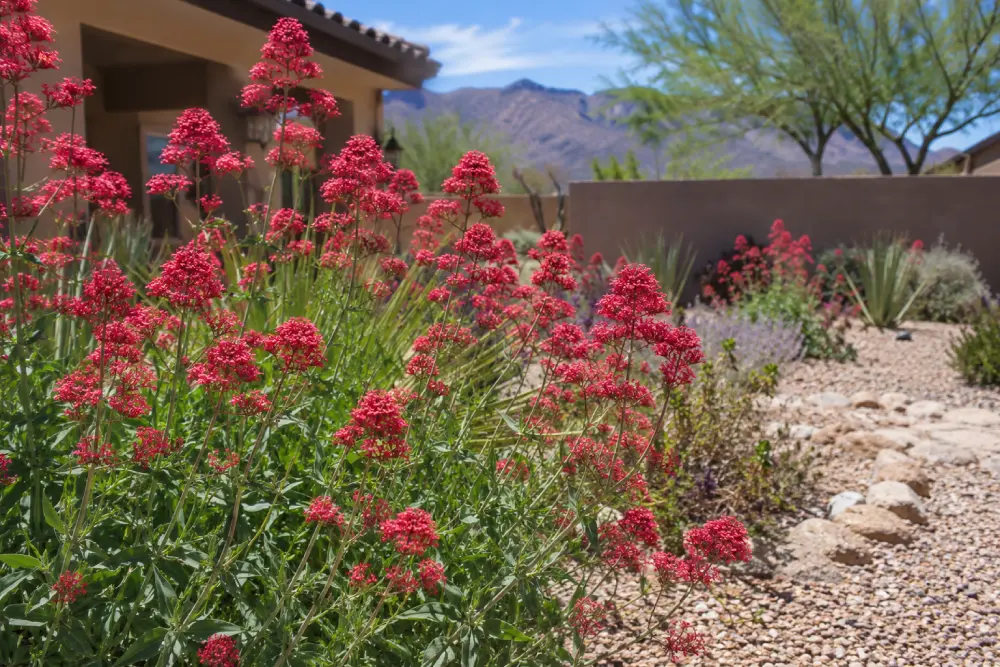
Red Valerian, botanically known as Centranthus ruber, is a flowering perennial native to the Mediterranean region. Despite the name, the flowers are not always red. Depending on the variety, blooms may appear in shades of deep pink, rose-red, lavender-pink, or white.
The plant forms upright stems with soft blue-green foliage and produces clusters of fragrant flowers from spring through fall. In the Southwest, blooming often begins in late spring and may continue well into autumn if temperatures remain mild.
One of the biggest advantages of Red Valerian is its ability to reseed naturally. In the right conditions, it can slowly spread and create beautiful drifts of color throughout the landscape.
Why Red Valerian Works Well in the Southwest
Many flowering plants struggle with the intense summer heat and dry conditions found throughout New Mexico, West Texas, Arizona, and surrounding desert regions. Red Valerian is different.
This hardy perennial adapts surprisingly well to Southwest landscapes because it prefers:
- Well-drained soil
- Full sun to partial shade
- Dry conditions once established
- Rocky or sandy soil
- Low humidity environments
Unlike some delicate flowering perennials, Red Valerian does not require rich soil or constant watering. In fact, overly wet soil can sometimes cause problems.
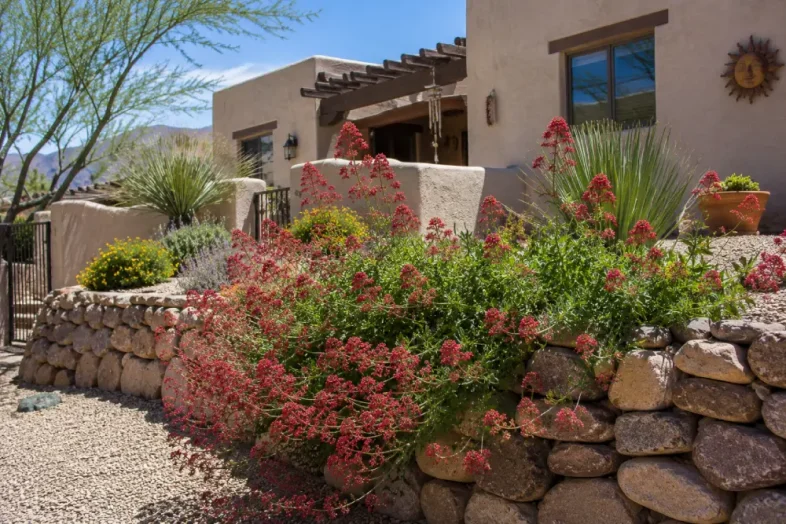
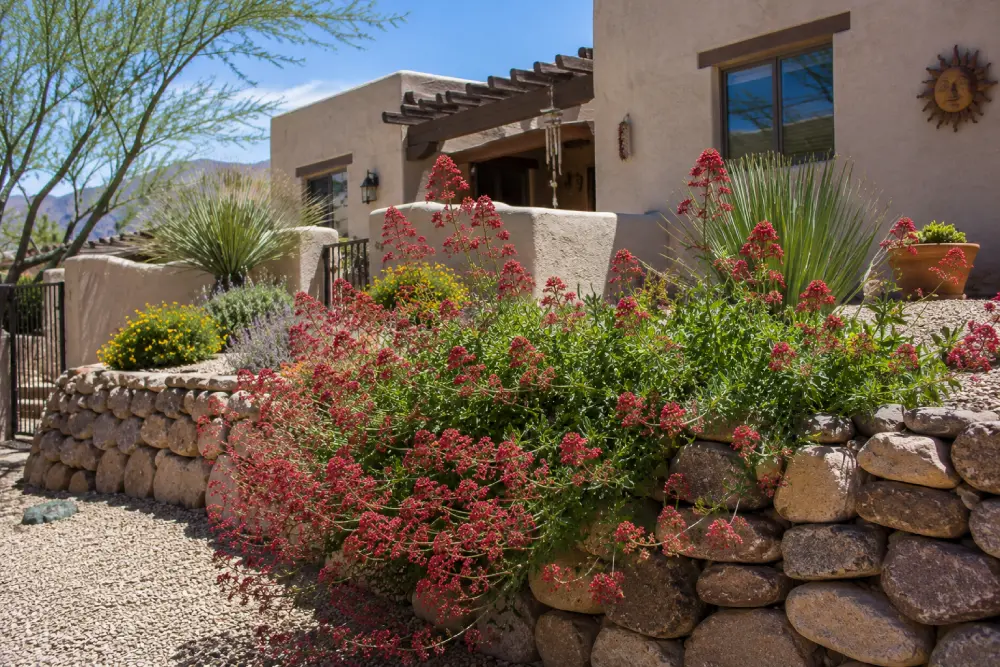
The plant performs especially well in raised beds, rock gardens, retaining walls, and areas with gravel mulch or arroyo rock. It also looks attractive, spilling slightly over rock walls or softening the edges of pathways.
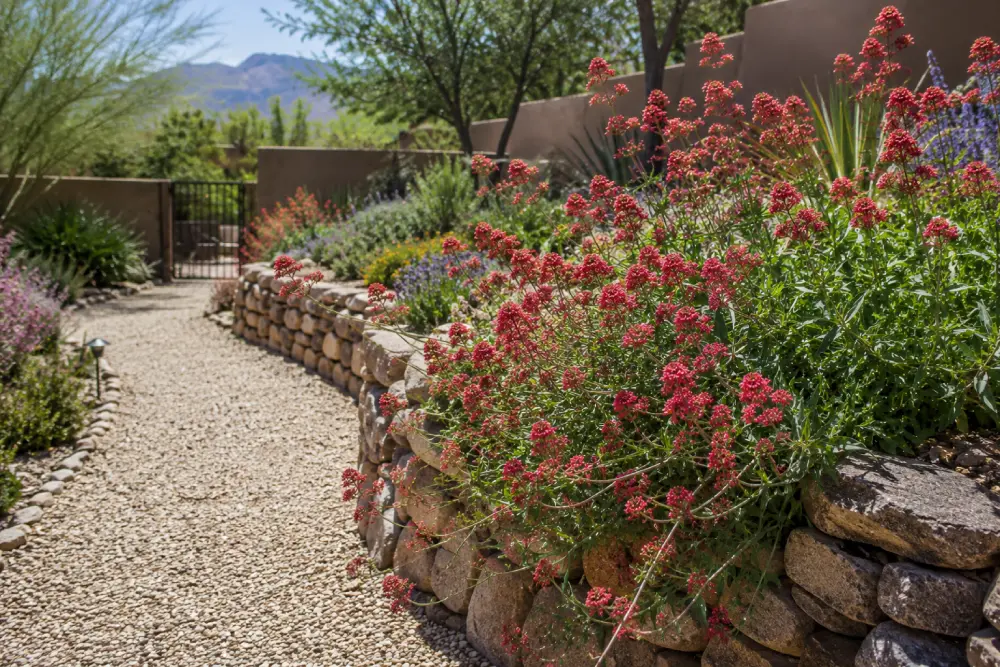
For homeowners wanting a colorful low-water landscape, Red Valerian fits naturally into desert-friendly garden designs.
Flower Color and Blooming Season
One reason gardeners love Red Valerian is the impressive blooming period. In the Southwest, flowers often begin appearing in late spring and continue throughout summer and into early fall.
The clusters of blooms attract butterflies, bees, and hummingbirds, making this plant an excellent addition to pollinator gardens.
The most common flower colors include:
- Deep rose-red
- Bright pink
- Soft lavender-pink
- White
The flowers rise above attractive gray-green foliage, creating a soft, natural appearance that works beautifully in both formal and informal landscapes.
Deadheading spent blooms can encourage additional flowering throughout the season.
Best Planting Locations
In the Southwest, choosing the right planting location is extremely important.
Red Valerian performs best in areas that receive at least six hours of sunlight daily. However, in extremely hot desert climates like Las Cruces or Phoenix, some afternoon shade can help the plant look fresher during the hottest months.
Excellent planting locations include:
- Along rock walls
- Desert cottage gardens
- Xeriscape landscapes
- Pollinator gardens
- Walkway borders
- Raised planters
- Hillsides and slopes
- Courtyard gardens
The plant combines beautifully with other Southwest-friendly perennials and shrubs such as:
- Lavender
- Blackfoot Daisy
- Damianita
- Autumn Sage
- Mexican Evening Primrose
- Red Yucca
- Penstemon
- Desert Marigold
The soft flower clusters provide a nice contrast against bolder desert plants like agaves, yuccas, and ornamental grasses.
Watering Requirements
Although Red Valerian is drought tolerant once established, it still benefits from regular watering during the first growing season.
Newly planted specimens should be watered deeply about two to three times per week during hot weather. Once the roots become established, watering can usually be reduced significantly.
Established plants often perform well with:
- Deep watering once every 7 to 10 days during summer
- Less watering during cooler months
- Occasional supplemental watering during extended drought
Avoid constantly soggy soil. Poor drainage is one of the few things this plant dislikes.
Using mulch or decorative rock around the base can help conserve moisture while keeping the roots cooler during summer.
Pruning and Maintenance
Red Valerian is considered a fairly low-maintenance perennial.
Basic maintenance includes:
- Removing spent flowers to encourage reblooming
- Cutting back leggy growth if needed
- Dividing crowded plants every few years
- Removing unwanted seedlings if spreading becomes excessive
In colder winter areas, the plant may die back somewhat, but usually returns quickly in spring.
Some gardeners prefer allowing a few seed heads to remain on the plant since they often reseed naturally and create additional plants nearby.
Common Problems
One reason Red Valerian has become increasingly popular is its resistance to many common garden problems.
However, a few issues may occasionally occur:
Overwatering
Too much water or poorly drained soil can lead to root problems, yellowing foliage, or weak growth.
Excessive Summer Heat
Although heat-tolerant, extreme reflected heat from concrete or block walls may cause temporary wilting during the hottest afternoons.
Spreading Too Much
In ideal conditions, Red Valerian can reseed freely. Some gardeners love this naturalized appearance, while others may need to thin out seedlings occasionally.
Fortunately, the plant is generally resistant to deer and rabbits.
Is Red Valerian Good for Pollinators?
Absolutely.
Butterflies, hummingbirds, native bees, and other beneficial pollinators are highly attracted to Red Valerian flowers. If you are trying to create a pollinator-friendly landscape in the Southwest, this plant can become an excellent nectar source.
The long blooming season means pollinators continue benefiting from the flowers for several months.
Final Thoughts
Red Valerian is one of those easygoing perennials that surprises many Southwest gardeners. It provides months of colorful blooms, handles difficult conditions well, attracts pollinators, and requires far less maintenance than many traditional flowering plants.
For homeowners looking to add soft color and a more natural appearance to desert landscapes, Red Valerian is definitely worth trying.
Whether planted near a rock wall, mixed into a cottage-style desert garden, or combined with other drought-tolerant perennials, this plant can bring reliable beauty to Southwest landscapes year after year.
Red Valerian (Centranthus ruber) is generally considered to have low toxicity and is not commonly listed as highly poisonous to dogs or cats. However, that does not necessarily mean it is completely safe for pets to eat in large amounts.
“For additional botanical information on Red Valerian, visit the Royal Horticultural Society’s Red Valerian page
New to Southwest Gardening?
Stop wasting money on plants that will not survive our heat and drought.
My Southwest Gardening Made Simple eBook shows you which trees, shrubs, flowers, and vegetables actually thrive in New Mexico, Arizona, and West Texas.
The best plants for hot, dry climates
Common mistakes that kill Southwest plants
Easy-to-follow advice for beginners

Paul Guzman is a lifelong Southwest gardener and gardening writer with decades of experience helping homeowners grow beautiful landscapes in the desert Southwest. He writes for Guzman’s Garden Centers in Las Cruces, New Mexico, with contributing expertise from Gary Guzman, owner of Guzman’s Garden Centers. If you have any questions or enjoyed this post, feel free to share your thoughts in the comments below.