
Fruit Trees for Desert Southwest
Fruit trees can grow very well in the Desert Southwest—especially in lower elevations like Las Cruces, New Mexico. Below, you’ll find descriptions and planting tips for varieties that are proven to do well in our climate.
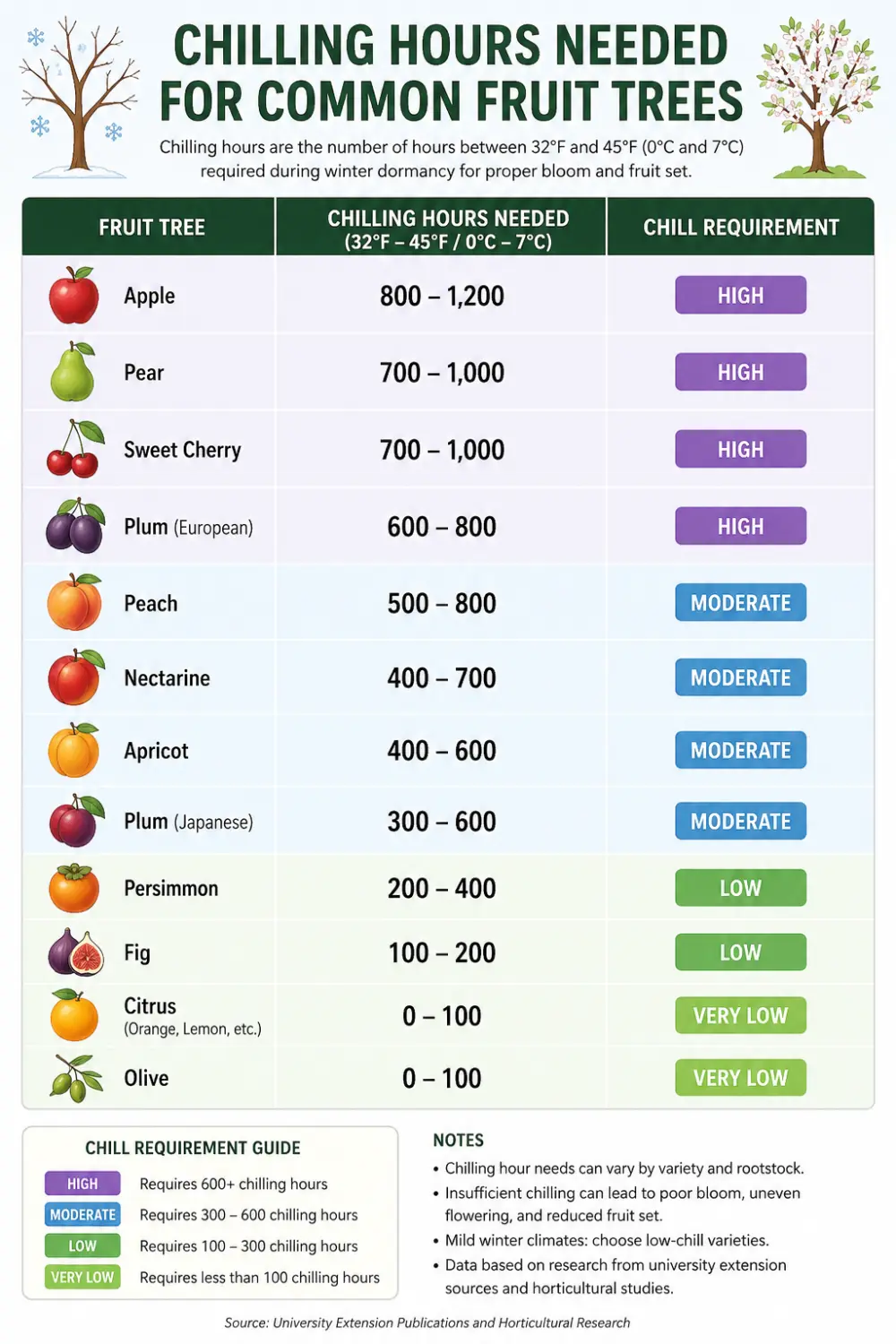
One important thing to understand is chilling hours. Fruit trees need a certain number of hours of cold (near-freezing temperatures) during the winter to properly set fruit in the spring. Without enough chilling hours, you may get little to no fruit—even if the tree looks healthy.
Chilling hours can vary depending on your exact location. Here in Las Cruces, New Mexico, we average around 900 chilling hours, which is ideal for growing a wide range of fruit trees. That means you have a lot of flexibility when choosing varieties that will produce consistently year after year.
However, this also means that if you live in places where it rarely or never freezes, you will have a hard time growing fruit trees.
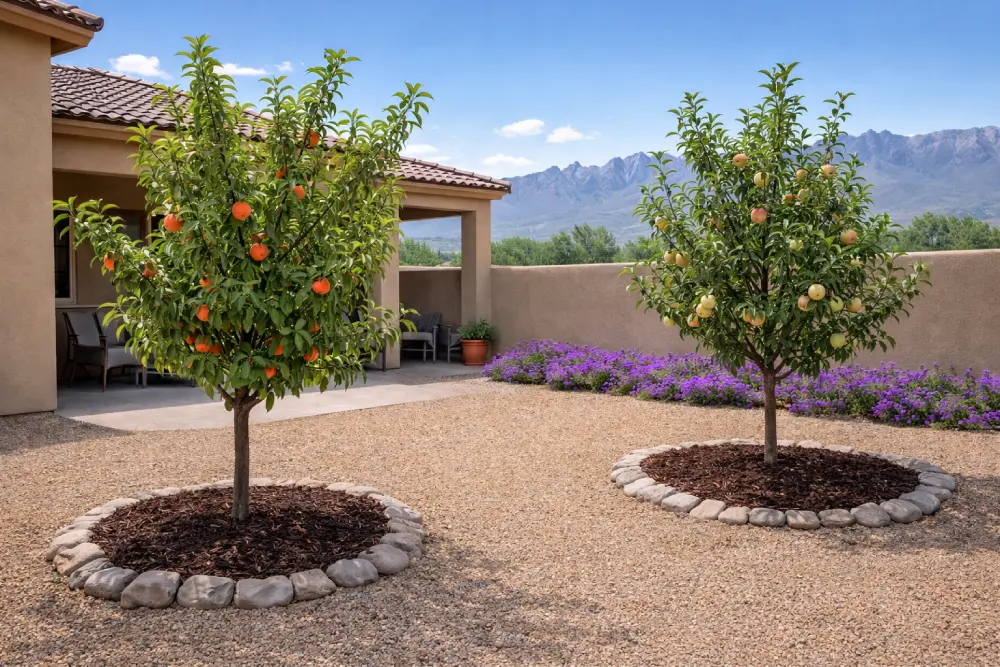
Fruit Trees for the Desert Southwest.
Most types of fruit trees are available at Guzman’s Garden Centers during the early spring seasons. We are located in Las Cruces, NM.
Fruit trees need so many chilling hours in order to produce fruit. Call and ask your friendly nursery what kind of fruit trees do well in your area. Make sure the fruit trees that you want are good for your gardening zone. Click your area to find your hardiness zone.
A few fruit tree tips
The best time to plant fruit trees is in late January or early March. You can also plant them in the summer as well, but you must provide them with ample water. How much water? Good question. About 5-7 gallons daily during the summer.
Try to water during the early morning hours. Water will evaporate less during this time. Apply good mulch to help keep moisture in.
Spray dormant oil to control scale insects, aphids, and spider mite eggs. Do this in the early spring, and you will have fewer insect problems during the summer. Dormant oil prevents the insect eggs from hatching.
Prune your fruit tree during the late winter season. This will enhance vigorous growth during the spring season. Remove any dead branches or limbs. Trim off any branches that are crisscrossing and touching.
Most fruit trees in the southwest require at least 800 chill hrs or more. If you are unsure as to how many chilling hours your climate has, please contact your local county extension office. Or visit this page for further information. Chilling Requirements.
Painting Your Tree Trunks. There is an ongoing debate as to whether you should paint your fruit tree with exterior white latex paint to help extend its life. Many folks think this will help keep insects at bay, but what it really does is protect the bark from sunscald.
Fruit trees need lots of room to grow and produce fruit. Do not plant them near other large shade or ornamental trees. The soil in and around the southwest is poor; use good organic soil when you plant your fruit trees.
When to Fertilize Fruit Trees?
Yes, you should fertilize your fruit trees. The soil is poor in and around the southwest, and this is why it’s important to fertilize your fruit trees. This should be done once in early spring, early summer, and once more in autumn. Use a good fruit tree fertilizer. Most nurseries will carry this.
How long does a fruit tree live?
Did you know most fruit trees live about 20 years? With proper care, they can make it closer to 30. The key is staying on top of things—regularly check your trees for signs of insects or disease so small problems don’t turn into big ones.
One thing I always recommend: apply horticultural oil in early spring. This helps suffocate insect eggs before they hatch and get out of control. Make it part of your yearly routine—it’s one of the easiest ways to prevent pest issues before they even start.
If you’re not sure which product to use, stop by your local nursery and ask. They’ll point you in the right direction for your area.
Common Fruit Trees for the Southwest
Apple Trees
Garden Delicious – Sweet, crisp, excellent dessert-quality apple fruit. Self-fertile ripens in September. Fuji – Started in Japan. This fruit has reddish-green flesh, white, very crunchy, and juicy. Medium-sized apple. Pollinates with Red or Golden Delicious. Ripens in August.
Granny Smith – Malus x Domestica ‘Granny Smith’. Bright Green apple. Good for pies, sauces, and fresh eating. Self-fertile. Produces heavy fruit. It does very well in the Southwest and needs about 400-500 chilling hours. It will grow to about 20ft. tall. A great fruit tree for a medium to large-sized backyard. Ripens late August-early September. It does very well in the Southwest, where there are ample chilling hours.

Jonathan – Malus Domestica ‘Jonathan’. Usually a large-sized apple. Bright Red stripes with a Yellow background. Very juicy, crisp, and white flesh. Very good all-purpose apple. Self-fertile. Ripens in October. A good pollinator for other apple trees.
Red Delicious – Malus x domestica ‘Red Delicious’. Very Crisp and juicy apple. It does well in colder climates, and you can pollinate with the Golden Delicious. Ripens in late August-early September. Harvest in late fall. Needs about 900 chilling hrs.

Yellow Delicious – Malus Domestica (‘Yellow) – All-purpose apple. Very large, golden yellow, and juicy fruit. Good pollinator for Red Delicious. Self-fertile and ripens in September.

Peach Trees
Babcock – (freestone) Semi-Dwarf, Juicy and sweet white flesh, and a little fuzz. Heavy bearing fruit. Self-fertile. Ripens in July.
Elberta – Semi-Dwarf, Large fruit is deep golden yellow, blushed red. Self-fertile. Ripens in July. Red Haven – (freestone) Medium to large red blushed fruit. Sweet and juicy. Good for canned use. Self-fertile. Ripens in Mid-August. Click here for more PEACH tree information and photos.
Desert Gold Peach – A vigorous and heavy-bearing tree offers fruit with exceptionally good flavor and sweetness for such an early variety. Its medium-sized semi-freestone fruit has firm yellow flesh and yellow skin with a red blush. Fragrant pink flowers adorn the green foliage on this self-fruiting tree.
Red Haven Peach – An excellent freestone peach with red-blushed yellow skin and firm, sweet yellow flesh. Ideal for fresh eating, canning, and freezing. Attractive accent tree, with dark pink buds that open to fragrant pink flowers in early spring. The Red Haven is self-fertile.
Plum Trees
Santa Rosa Plum – Excellent southwestern fruit tree. Large oval purplish-skinned fruit. Tart flavor. Self-fertile. Ripens in June to July.
Satsuma Plum – Medium round fruit. Has a dark red skin and juicy, dark flesh. Use Santa Rosa as a pollinator. It will ripen in early August. We also carry the following fruit trees during the spring months.
Pecan Trees – Are big favorites throughout the southwest. Not only do they give pecans, but they will also provide your area with an ornamental shade tree.
Fruit Trees for the Southwest Desert
Your region’s climate determines the type of fruit trees for the southwest and what fruit will grow successfully. The climate must be compatible with the growing requirements of the selected fruit tree. Some varieties will even prevail in the harsher Upper Midwest climates.
Find your USDA gardening zone here. Gardening Zone.
Learn more about insects and diseases on plants. Including fruit trees.