Last updated on June 12th, 2026 at 03:32 pm
How Often Should You Water Plants in Las Cruces, NM? (Complete Desert Guide)
If you live in Las Cruces, you already know gardening here is different.
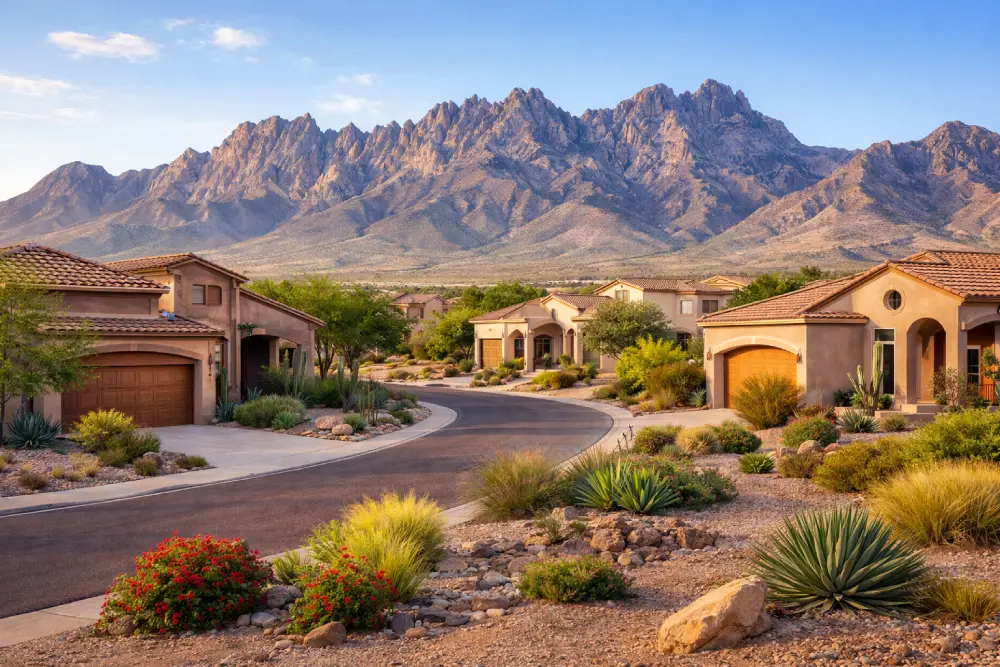
You are dealing with intense sun, low humidity, fast-draining soil, and long stretches of heat. Because of that, watering your plants is not just important—it is everything.
Most plant problems in the desert come down to one thing: watering incorrectly.
Either too much, too little, or at the wrong time.
Let’s break it down so you can get it right.
It is important to note that the watering guidelines in this post are intended specifically for plants and trees that have been established in the ground for at least three years or more. At this stage, their root systems are well-developed and better able to access moisture deeper in the soil, allowing them to tolerate longer intervals between watering compared to newly planted or immature plants, which require more frequent care and attention.
Why Watering Is Different in Las Cruces
In Las Cruces, NM, water does not behave the same way it does in other parts of the country.
- The sun is stronger
- The air is drier
- The soil drains quickly
What this means for you:
Water evaporates fast, but that does NOT mean you should water every day.
In fact, watering too often is one of the biggest mistakes you can make, especially with native plants.
If you want to understand why plants struggle so much here, take a look at this guide on why plants fail in the desert: Why do plants die in the Desert?
The Biggest Mistake: Watering Too Often
This might surprise you, but watering every day can actually harm your plants. Especially desert or native plants.
When you water too frequently:
- Roots stay shallow
- Plants become dependent on constant moisture
- Heat stress gets worse
- Disease risk increases
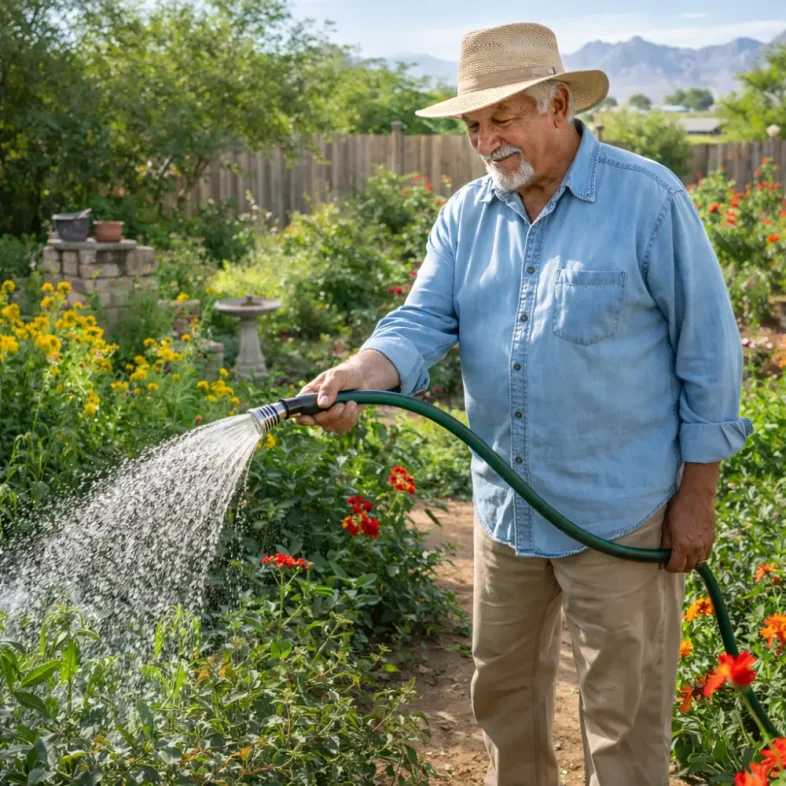
What you want instead is deep, less frequent watering.
This encourages roots to grow deeper into the soil, where moisture lasts longer.
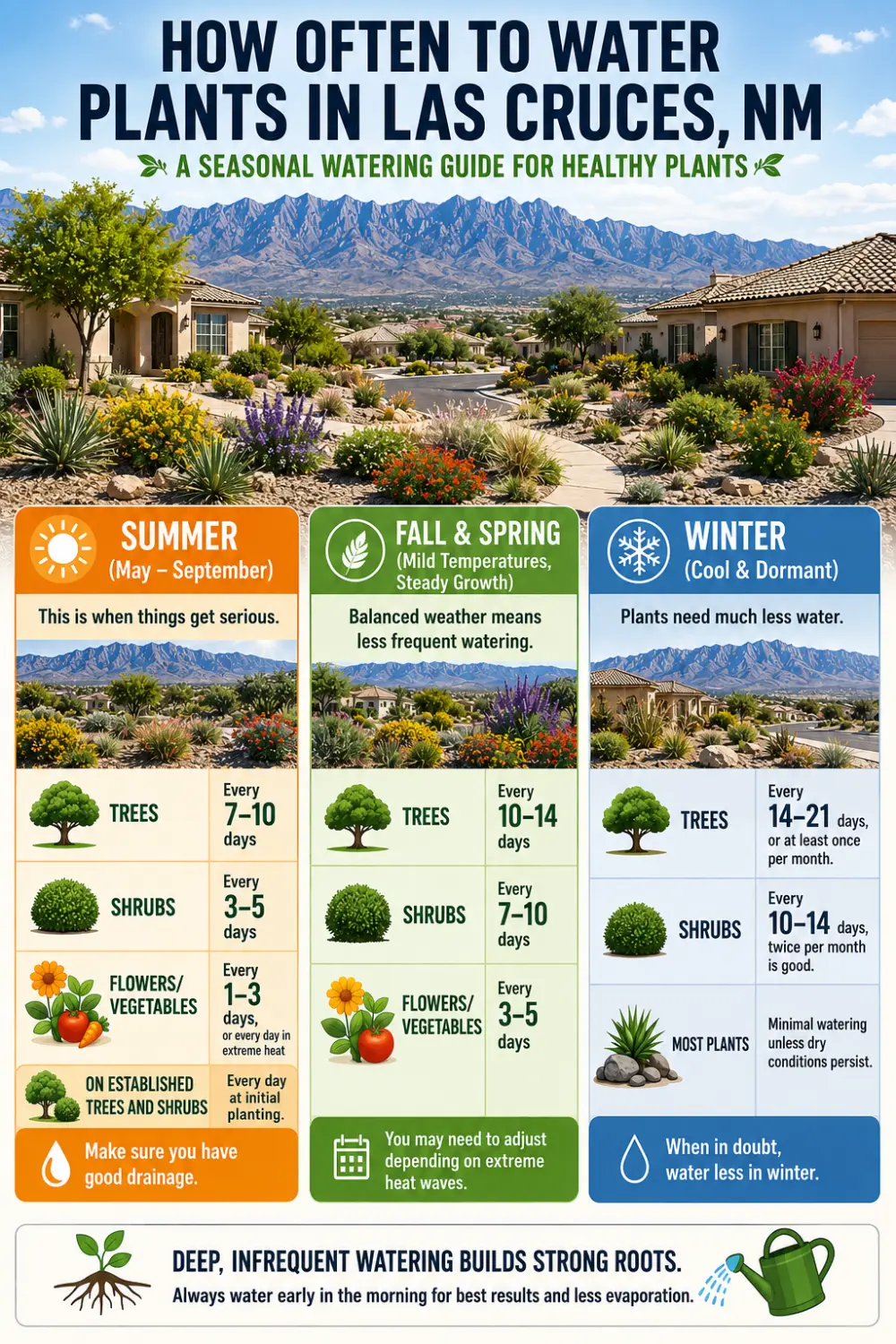
General Watering Schedule for Las Cruces
Here is a simple breakdown to follow on established trees, shrubs, flowers, and vegetables
Summer (May – September)
This is when things get serious.
- Trees: every 7–10 days for established trees.
- Shrubs: every 3–5 days for established shrubs
- Flowers/vegetables: every 1–3 days, or every day in extreme heat. Make sure you have good drainage.
- Hanging flowering pots every day, except for succulents and desert plants.
You may need to adjust depending on extreme heat waves.
Fall and Spring
- Trees: every 10–14 days on established trees.
- Shrubs: every 7–10 days on established trees
- Flowers/vegetables: every 2–4 days
Winter
Plants need much less water.
- Trees: every 14–21 days, or at least once per month.
- Shrubs: every 10–14 days, twice per month is good.
- Most plants: minimal watering unless dry conditions persist
Drip Irrigation: The Best Option for the Desert
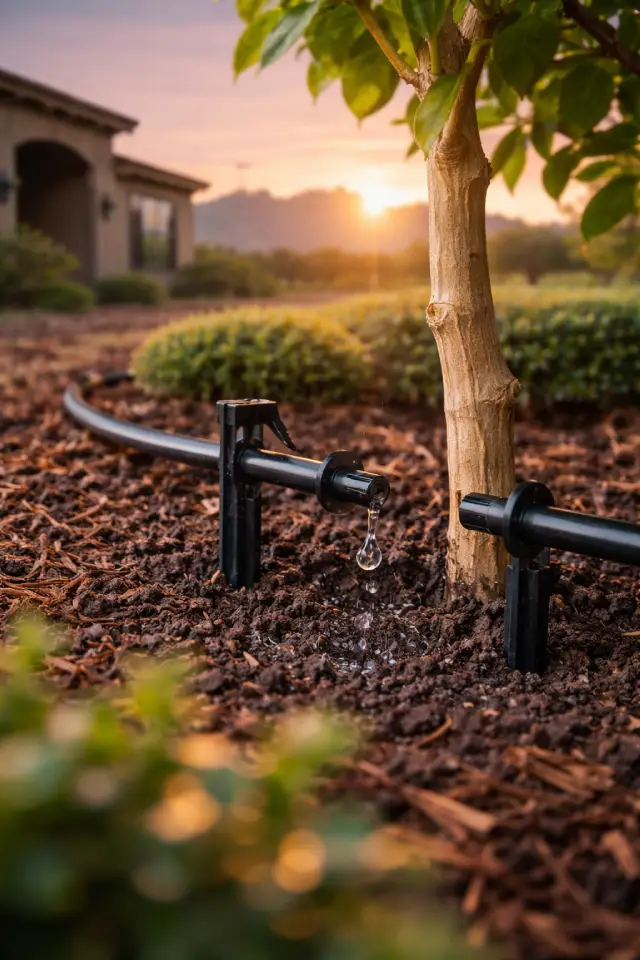
If you are not using drip irrigation, you are making things harder than they need to be.
Drip systems:
- Deliver water directly to the roots
- Reduce evaporation
- Save water
- Improve plant health
A simple drip system with a timer can make a huge difference. A simple search online of “Las Cruces Landscapers who install drip systems” will get you a plethora of landscapers.
How Long Should You Water?
This depends on your system, but here is a good rule:
You want water to reach at least:
- 12 inches deep for smaller plants
- 18–24 inches deep for trees
Short watering cycles do not accomplish this. Do not depend on lawn sprinkler system to water larger trees and or shrubs. Long, slow watering is what works best in the desert.
Signs You Are Watering Incorrectly
Your plants will tell you what is going on—you just need to pay attention.
Underwatering:
- Wilting during the day and not recovering at night
- Dry, brittle leaves
- Slow growth
Overwatering:
- Yellowing leaves
- Mushy stems or roots
- Fungus or mold issues
If your plants are struggling, watering is usually the first place to look.
Not All Plants Need the Same Water
This is where a lot of people go wrong.
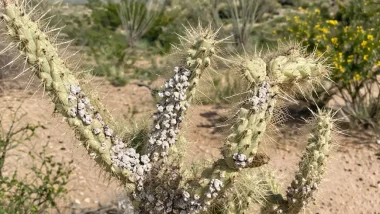
Desert-adapted plants (like agave or yucca) need much less water than non-native plants.
Non-Native Plants Can Thrive Here (With the Right Care)
It’s important to understand that many of the plants you see in local landscapes are not native to the desert—and that’s okay.
We grow and sell a wide variety of non-native plants at Guzman’s Greenhouse because they perform very well here when they are taken care of properly.
The key difference is this:
Non-native plants need a little more attention, especially when it comes to watering.
When you first plant them, this is critical:
- Water deeply every day for the first 2–3 weeks
- After that, switch to every other day as they establish
- Always water deep—not shallow
- Add mulch around the base to help retain moisture and reduce evaporation
You might notice:
- Slight wilting during extreme heat
- Leaf burn on very hot days
- Faster drying compared to desert-adapted plants
This does not mean the plant is a bad choice—it just means it needs support.
With the right watering schedule and a little observation, non-native plants can absolutely thrive in Las Cruces and add color and variety that native plants alone cannot provide.
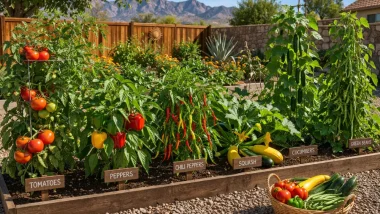
Vegetables Need Special Attention
If you are growing vegetables, watering becomes even more important.
Vegetables:
- Have shallow roots
- Dry out faster
- Need consistent moisture
If you are planning a garden, this planting guide will help you get started:
Best vegetables to grow in Las Cruces, NM.
Final Thoughts
Watering in Las Cruces is not about doing more—it is about doing it correctly.
- Water deeper, not more often
- Adjust for the seasons
- Pay attention to your plants
- Use drip irrigation if possible
Once you dial this in, everything else becomes easier.
Want a Step-by-Step System?
If you want to take the guesswork out of desert gardening, I put everything together in one place.
My guide breaks down:
- Exact watering schedules
- What to plant and when
- How to avoid common desert mistakes
You can check it out here:

https://guzmansgreenhouse.com/southwest-gardening-made-simple-ebook/
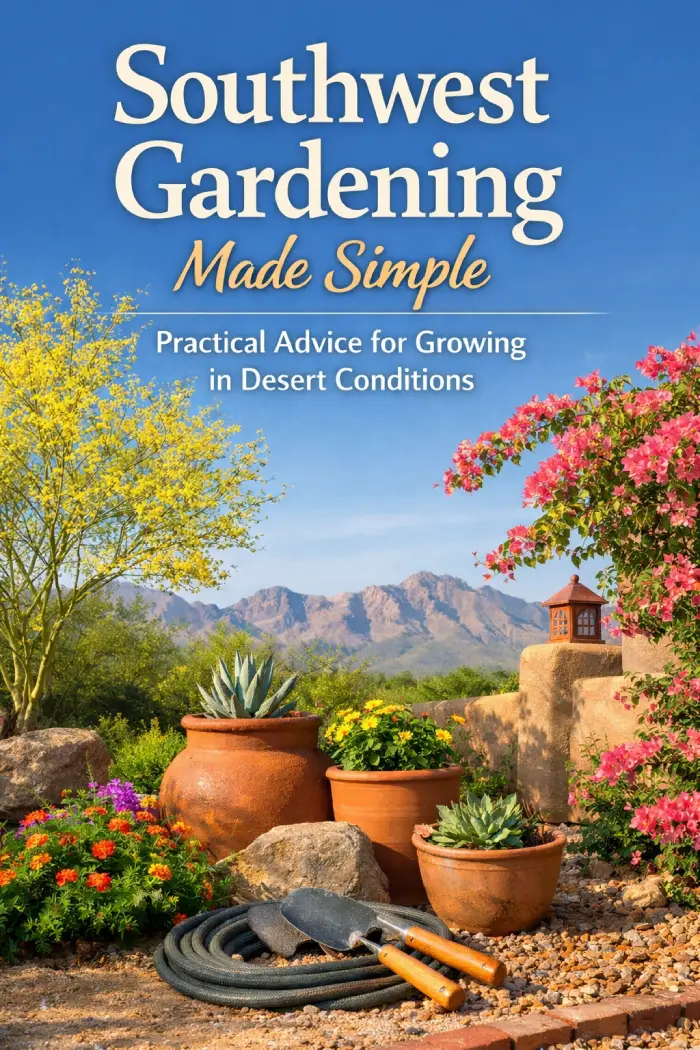
New to Southwest Gardening?
Stop wasting money on plants that will not survive our heat and drought.
My Southwest Gardening Made Simple eBook shows you which trees, shrubs, flowers, and vegetables actually thrive in New Mexico, Arizona, and West Texas.
The best plants for hot, dry climates
Common mistakes that kill Southwest plants
Easy-to-follow advice for beginners

Paul Guzman is a lifelong Southwest gardener and gardening writer with decades of experience helping homeowners grow beautiful landscapes in the desert Southwest. He writes for Guzman’s Garden Centers in Las Cruces, New Mexico, with contributing expertise from Gary Guzman, owner of Guzman’s Garden Centers. If you have any questions or enjoyed this post, feel free to share your thoughts in the comments below.