Last updated on June 27th, 2026 at 03:58 pm
Rose of Sharon Plants (Hibiscus syriacus). The Aphrodite rose of Sharon flower.
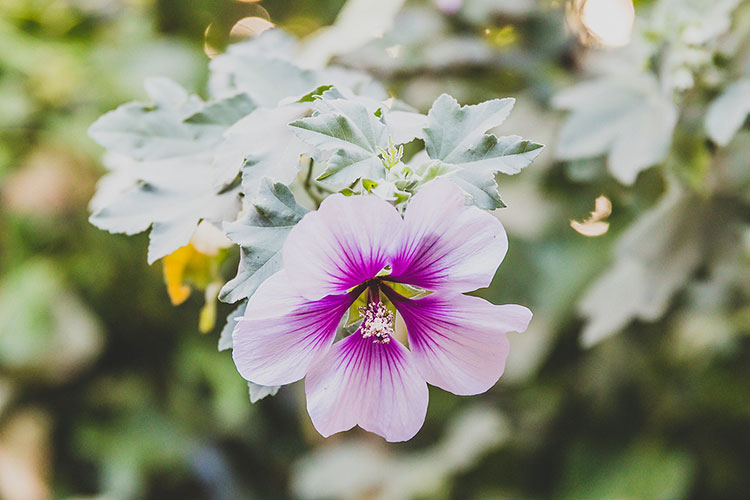
The Rose of Sharon or “althaea” (althea) Hibiscus syriacus. This plant does very well in the desert southwest. They will bloom in late spring and continue blooming till late fall. This means great color throughout the spring, summer, and fall seasons.
It is a deciduous plant and, once established, is drought-tolerant. They have large tropical-like blooms and should be fertilized in late spring, summer, and fall.
When to Prune
You can easily train a Rose of Sharon (Hibiscus syriacus) into a small ornamental tree by removing the suckers and lower branches that develop along the base and lower trunk. As the plant matures, continue pruning these shoots to maintain a single trunk or a few well-spaced trunks, creating an attractive tree-like form.
Rose of Sharon performs best in full sun, where it produces the greatest number of blooms. It grows well in fertile, well-drained soil enriched with organic matter, such as compost. While this shrub thrives with at least 6 to 8 hours of direct sunlight each day, it will also tolerate light shade or filtered sunlight, especially beneath the canopy of larger trees. However, too much shade can reduce flowering and cause the plant to become more open and leggy.
Once established, Rose of Sharon is fairly heat-tolerant and can handle periods of drought, although regular deep watering during extended dry spells will keep it healthier and blooming more abundantly.
See the image below.
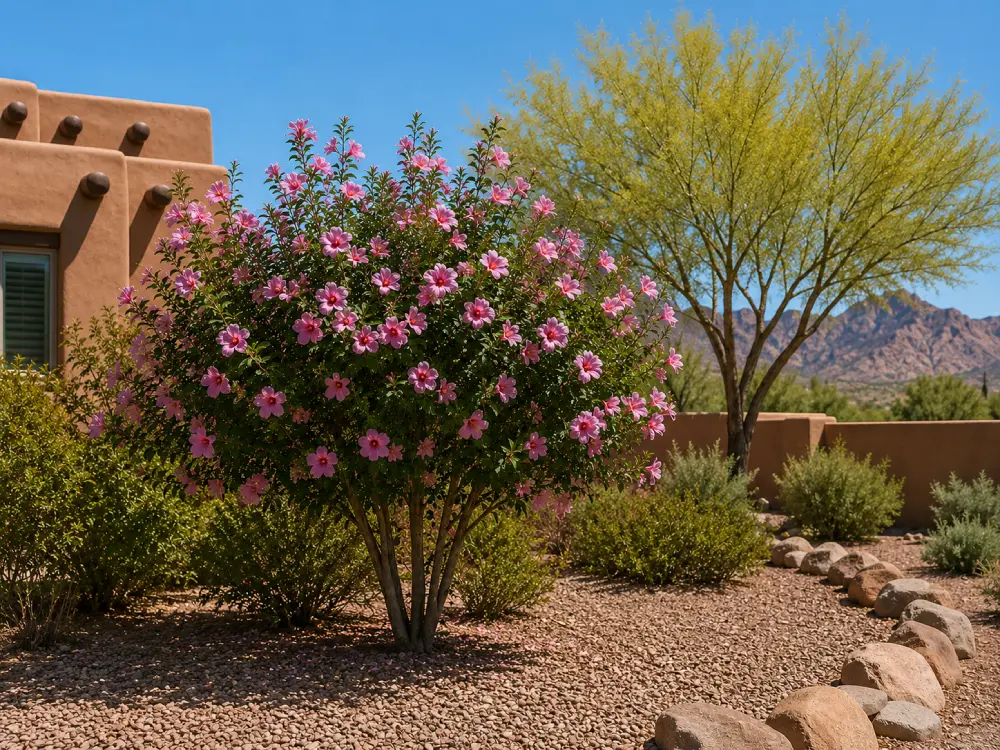
They can get up to 10′ tall, but there are some cultivars that stay shorter. This plant is an excellent choice for an abundance of blooming colors. Place them in a front entrance, as they can be very showy during the spring months.
Where to place itThe
Rose of Sharon (Hibiscus syriacus) is a versatile flowering shrub that is commonly used as a hedge, privacy screen, accent, or specimen plant in the landscape. Its upright growth habit and abundant summer blooms make it an excellent choice for adding color and structure to gardens.
One of its greatest features is its long blooming season, producing large, showy flowers in shades of white, pink, lavender, purple, blue, and even bicolor varieties from midsummer into early fall. These colorful blooms are highly attractive to butterflies, hummingbirds, and other beneficial pollinators, making Rose of Sharon an excellent addition to wildlife-friendly gardens.
This hardy shrub performs best in full sun but will tolerate light afternoon shade. Once established, it is moderately drought-tolerant, although regular deep watering during extended hot, dry periods will keep it looking its best. Pruning in late winter or early spring encourages vigorous new growth and more abundant flowering.
Whether planted as a colorful focal point or as part of a flowering hedge, Rose of Sharon provides months of beauty while helping support local pollinators in the landscape.
Best Rose of Sharon varieties for the Desert Southwest
If you garden in southern New Mexico, Arizona, or West Texas, these varieties generally perform the best:
- Diana – Outstanding white flowers and excellent heat tolerance.
- Minerva – Reliable bloomer with attractive lavender-pink flowers.
- Lucy – One of the best pink double-flowered varieties.
- Purple Pillar® – Excellent for narrow planting areas and privacy screens.
- Lil’ Kim® – Great choice for patios, courtyards, and smaller yards.
Single vs. Double Flower Types
- Single-flowered varieties produce one row of petals and tend to attract more bees, butterflies, and hummingbirds because nectar is easier to access.
- Double-flowered varieties have many layers of petals, creating a fuller, showier bloom that is prized for ornamental landscapes.
For homeowners in the Southwest, choose a planting location with 6 to 8 hours of direct sunlight, well-drained soil, and deep, infrequent watering once established. Applying a 2- to 3-inch layer of mulch around the root zone helps conserve moisture and keeps roots cooler during the hottest part of summer.
They are an excellent choice for a stand-alone shrub specimen. If you have questions regarding your shrubs, please contact us.
Problems with these plants
The number one problem is Aphids. These little insects will suck on the stems and the flowers themselves. Try spraying with a good insecticide to kill these pests. You can also try a systemic insecticide, pour a mixture of insecticide and water, and apply it to the ground. Make sure you apply this solution one ft. away from the trunk and not past the tree stem line. As an organic substitute, try neem oil or insecticidal soap.
Another problem is the leaf spot. This is a fungal disease that affects many plants throughout the U.S.A.
But not so much in the American Southwest. A good fungicide with copper will work well for this plant.
Fertilizer
Keeping your Rose of Sharon Plants healthy through regular feeding and watering is the best deterrent to insects and diseases. A well-balanced 20-20-20 fertilizer will work well.
Where to buy these plants? Guzman’s Garden Centers will normally have these plants in early spring, until late fall.
USDA growing zone is 5 – 9. Check your Plant Hardiness zone.
There are many types of Rose of Sharon Plants. See photos of these plants over at Monrovia.com
Rose of Sharon Plant’s post
New to Southwest Gardening?
Stop wasting money on plants that will not survive our heat and drought.
My Southwest Gardening Made Simple eBook shows you which trees, shrubs, flowers, and vegetables actually thrive in New Mexico, Arizona, and West Texas.
The best plants for hot, dry climates
Common mistakes that kill Southwest plants
Easy-to-follow advice for beginners

Paul Guzman is a lifelong Southwest gardener and gardening writer with decades of experience helping homeowners grow beautiful landscapes in the desert Southwest. He writes for Guzman’s Garden Centers in Las Cruces, New Mexico, with contributing expertise from Gary Guzman, owner of Guzman’s Garden Centers. If you have any questions or enjoyed this post, feel free to share your thoughts in the comments below.

Would the rose of Sharon be good for a privacy wall? If so, what would the spacing be between each plant?
The Rose of Sharon is a good privacy wall however it will go dormant during the winter season. I would space them out about 5ft. or more apart. The shorter the spacing the sooner you get that “wall”.
What is the correct way to plant Rose of Sharon
Patti, decide where you want to plant the Rose of Sharon. It should be in full sun but it can tolerate partial shade. Make your hole twice as wide and about the depth as the container, it came in. Remove from container making sure you do not expose the root system. Place in hole and backfill with well-composted organic soil. You can mix some of the native soil with organic compost about 50/50 ratio.
Water daily for about 2-3 weeks, then cut back to every other day. On a drip system, this is typically about 20 minutes. Or water by hand it’s about 3-5 gallons each time. Use root stimulator to help make new roots for your Rose of Sharon. Fertilize 2-3 days after planting and use a good shrub all-purpose fertilizer an analysis of 20-20-20 will work. I hoped this helped?