
Grasses for the Southwest
Grasses for the Southwest. Most Grasses are easy to take care of. They are not susceptible to insects and rarely need to be fertilized. Most will go dormant during the winter seasons. You can cut them down low to the ground, and they will vigorously grow back during spring.
Pampas Grass or Cortalderia Selloana.
This is a fast-growing ornamental grass. It is usually evergreen in warmer climates. The normal variety grows to about 10ft high and 20ft wide and should be planted in groups. It has showy spiked flower plumes and razor-edged leaves (ouch)! The dwarf variety called ivory tower is mainly sold at your local nursery. It likes full sun and is very drought tolerant. It grows best at about 6500 ft. elevation.
More on the Pampas Grass for Landscaping
Fountain Grass or Pennisetum spp.
Also known as the “Purple Fountain Grass”. Most grow about 3ft. tall and about 5ft. wide. Purple fountain grass or Pennisetum alopecuroides is a favorite among southwestern New Mexicans. Nice feathery plumes in the fall. They all like full sun and well-fertilized soil. Nice purple undertones for good natural color. It is a tender perennial in the higher elevations of the Southwest. This grass loves southern New Mexico and West Texas regions.

Blue Fescue Grass
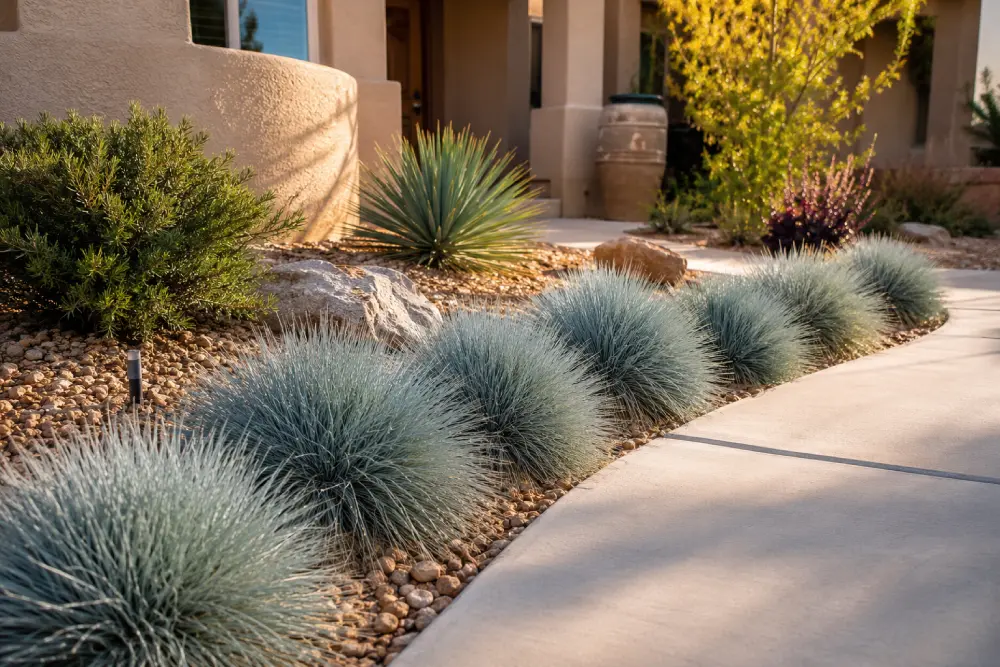
Blue Fescue, commonly listed as Festuca glauca or Festuca caesia, is a compact perennial ornamental grass valued for its fine, blue-gray foliage. It naturally forms tidy, rounded mounds that add color and texture to Southwestern landscapes.
Most varieties grow about 9–12 inches tall and spread 12–18 inches wide. Slender flower stalks rise above the foliage in late spring or early summer. The flowers begin greenish or slightly purple and gradually fade to a light tan as they mature.
Blue Fescue grows best in full sun, which helps produce its strongest blue color. It will tolerate some partial shade, although too much shade can cause the foliage to become greener and less compact. It is drought tolerant once established but performs best in well-drained soil. Avoid planting it where water collects, because constantly wet soil can cause the center of the plant to rot.
In the Desert Southwest, Blue Fescue may benefit from some afternoon shade during extremely hot weather. It is considered semi-evergreen, but its appearance can change during periods of intense summer heat or winter cold.
Use Blue Fescue as a border along walkways, plant several together for a ground-cover effect, or place one in a decorative container for an attractive display. Remove faded flower stalks and comb out dead foliage when needed to keep the mound looking neat.
Check with your local nursery for the best Blue Fescue varieties for your particular climate and landscape.
Pink Muhly Muhlenbergia capillaris
USDA Hardiness Zone: 6-9. Lots of tall, delicate flower stems create a vibrant rosy, red haze over the fine-textured leaves. They’ll remain eye-catching all winter long. Isn’t that what you want in your garden? This grass makes a fantastic ground cover when paired with shrubs and trees, creating a lush visual tapestry. Thriving under the blazing Southwestern sun, it can handle poor soil with ease. It’s commonly known as Mexican feather grass. Also called Regal Mist.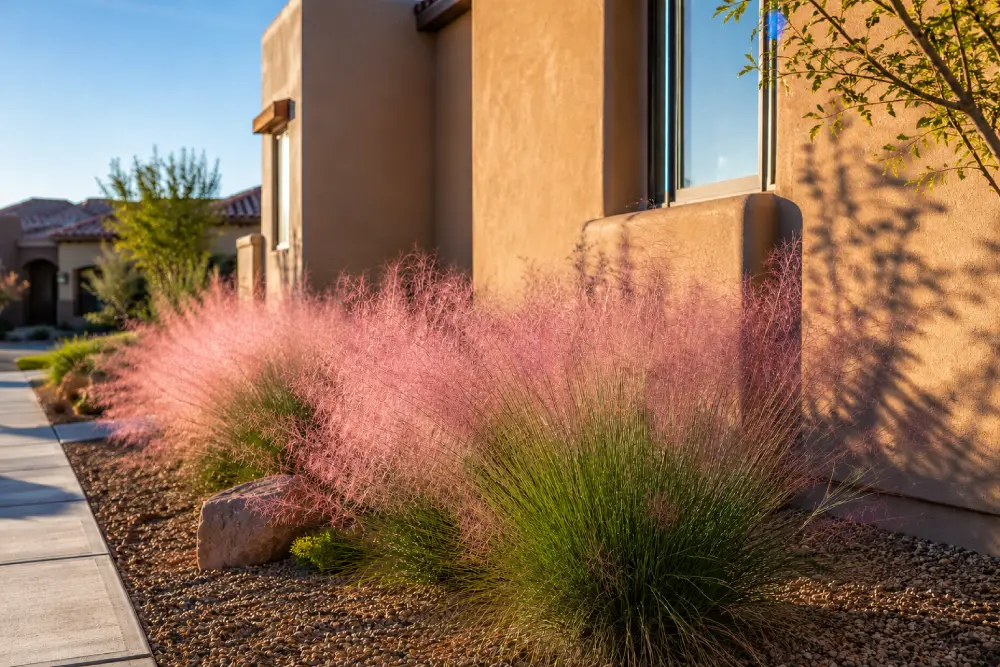
Fountain Grass (alopecuroides)
This grass produces a clump of narrow, half-inch shiny green leaves that most landscapers and gardeners use for the flowering spikes it produces. They look great from early through late fall seasons. Plant them as a showy single specimen or lined up for edging. Good in USDA zones 4-9

Japanese Silver Grass Miscanthus Sinensis ‘Variegatus’
USDA Hardiness Zone: 5 – 9. Excellent arch-type grass with silvery white plumes. Dark green blades with creamy white stripes. An excellent choice for textural contrast in perennial or shrub beds. Put them in a container or use them as a border plant to hide utility boxes. See images of this grass over at Monrovia.com
Variegated Sweet Grass Plant
Variegated Sweet Flag Grass. It does well in the Southwest and is considered an evergreen grass in warmer regions such as the lower elevations of the Southwest. Rich yellow and green long leaves that sway back and forth when the days are windy. Grows about 1ft. tall and 8″ wide but will grow larger in its tenth year or so.
Deer Grass (Muhlenbergia rigens)
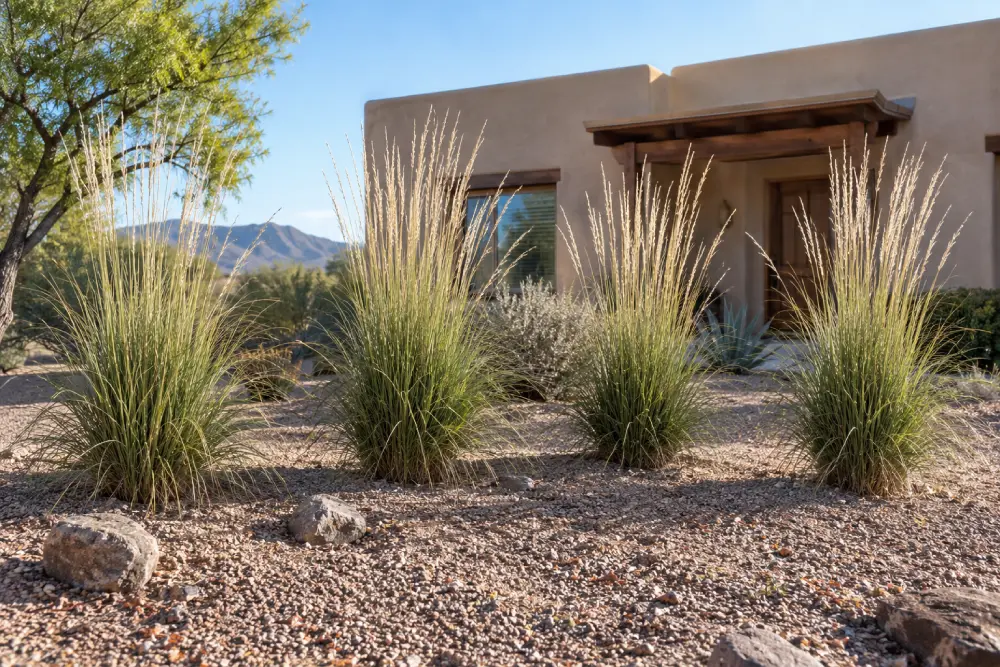
This grass is perfectly suited for the desert Southwest, thriving in dry conditions and proving easy to care for. It’s ideal for those in gardening zones 5 through 11. If you’ve been eyeing Pampas grass but want something smaller and more manageable, this is a great alternative. During winter, it transforms into a charming pale white shade, adding a unique touch to your landscape even in the colder months. Plus, its low-maintenance nature makes it an excellent choice for busy gardeners. Why not give it a try and see how it can elevate your outdoor space?
Grasses for the Southwest