Last updated on April 26th, 2026 at 01:44 pm
The Bottlebrush Plant (Callistemon spp.) This is a versatile plant that will produce dark red bottle brush-like blooms during the spring and into early summer. It is a drought-tolerant plant once it becomes established, usually after its third season in the ground. In colder regions, it will lose its foliage but will bounce back nicely once the weather heats up again. In warmer climates, it is an evergreen.
A slow grower, but will respond quickly if watered more often. If you live in a region where below-freezing temperatures are common, the leaves will tend to turn brown or a whitish color…sort of like what Oleanders do. Temperatures that are consistently below 15° degrees Fahrenheit during the winter seasons are not recommended for the Bottlebrush Plant.
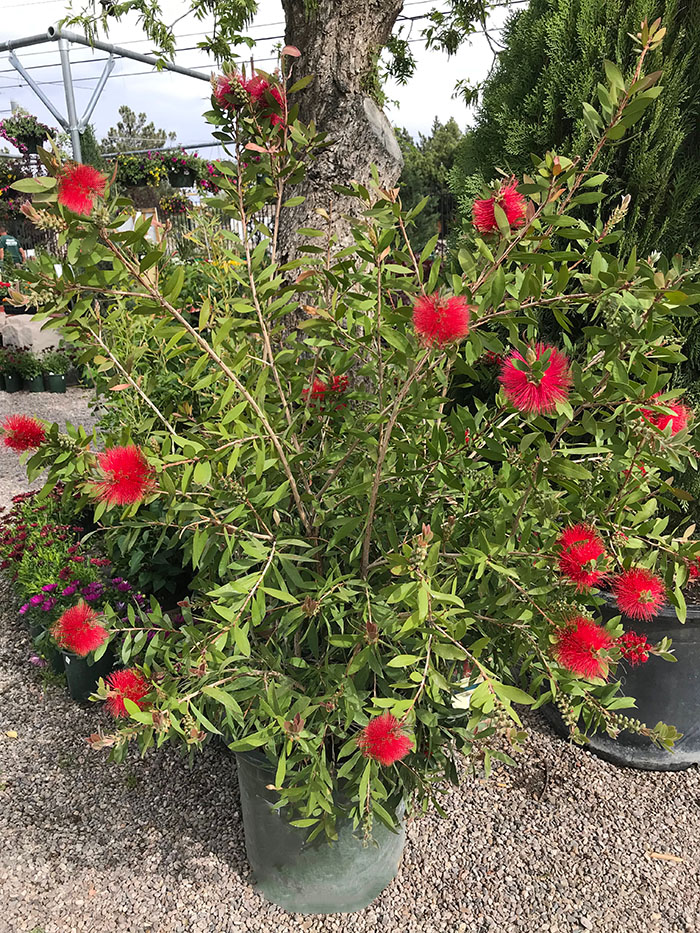
There are many species of this plant; the one pictured here is the Lemon Bottlebrush. It can be grown as a large shrub and, if trimmed correctly, can become a small tree. Place it in a desert landscape scene or in more traditional landscapes.
The leaves will give off a citrus smell when crushed. The flower itself has no scent.

Bottle Brush as a Small Tree Below
Ashton 29 [CC BY-SA 4.0], via Wikimedia Commons
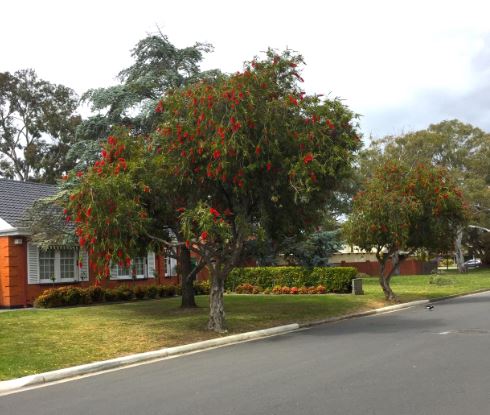
Trimming the bottom springs and stems, it can become a small to medium-sized tree, especially in places where it rarely freezes. See the photo above.
Little John Dwarf Bottlebrush
Red bottlebrush-like flowering spikes cover this dwarf evergreen shrub. It will also bloom from mid-spring until early summer. In warmer climates, it will bloom off and on throughout the year. The foliage has thick, blue-green leaves that produce a citrus scent when crushed. Height size is about 3-4 ft. tall and 5 ft. wide.
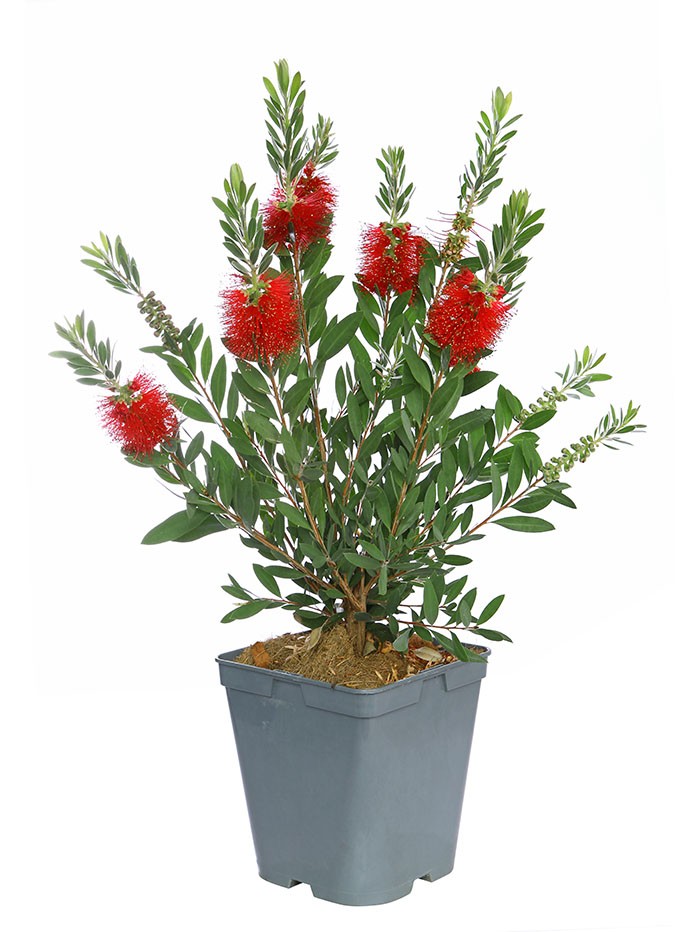
USDA Hardiness Zone: 8 – 11
Where to place this plant?
Plant it in full sun or in Xeriscape gardens as it is considered a water-wise plant. Fertilize once in spring, summer, and one more time in the fall. Put it in a large container and place it where family and friends can view it when it blooms.
Problems with the Bottlebrush plant
These plants in the southwest are hardy, but they are susceptible to twig gall and powdery mildew. Both problems can be avoided by planting them in full sun and avoiding overspray from sprinkler watering systems. Be sure your soil drains well.
Powdery mildew can be removed by spraying with a good fungicide at the first signs of any fungus. Twig fall can be removed by trimming the infected twigs with pruning shears. Yes, your Bottlebrush may look a little bare, but it will regrow new stems and foliage. Make sure to clean all pruning tools before reusing them on other plants.
The Chilean Mesquite tree is a good companion tree.
Shrubs for the Southwest.
New to Southwest Gardening?
Stop wasting money on plants that will not survive our heat and drought.
My Southwest Gardening Made Simple eBook shows you which trees, shrubs, flowers, and vegetables actually thrive in New Mexico, Arizona, and West Texas.
The best plants for hot, dry climates
Common mistakes that kill Southwest plants
Easy-to-follow advice for beginners

Paul Guzman is a lifelong Southwest gardener and gardening writer with decades of experience helping homeowners grow beautiful landscapes in the desert Southwest. He writes for Guzman’s Garden Centers in Las Cruces, New Mexico, with contributing expertise from Gary Guzman, owner of Guzman’s Garden Centers. If you have any questions or enjoyed this post, feel free to share your thoughts in the comments below.