Last updated on September 18th, 2026 at 08:55 am
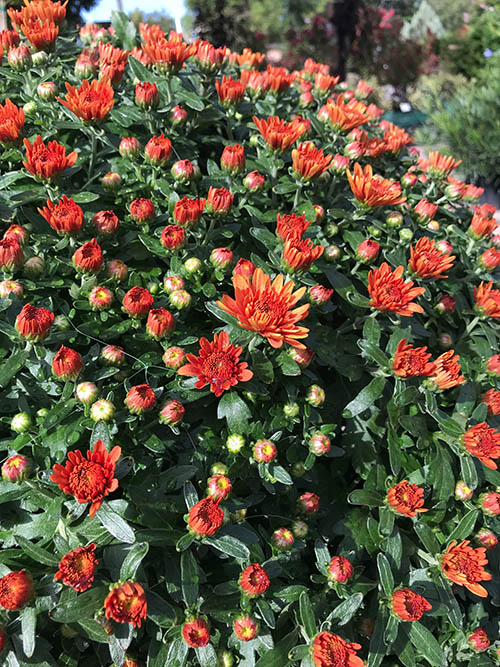
How to Care for Chrysanthemums: Chrysanthemums, usually called mums, are an easy way to add fall color to a porch, patio, or flower bed. Their yellow, orange, purple, red, and white flowers look right at home as the seasons change.
But here in Las Cruces, fall does not always arrive with cool weather. A flowering mum sitting beside a hot wall can dry out much faster than you expect.
The basics of how to care for chrysanthemums are straightforward: give them suitable sunlight, keep the root ball evenly moist without leaving it soggy, and make sure excess water can drain. A little attention to placement and watering can help your fall display last longer.
Why are my mums already wilting?
Before adding fertilizer or moving the plant, check the soil inside the root ball.
- Dry soil and a lightweight pot: The plant may need a thorough watering.
- Wet soil and a drooping plant: Check drainage. More water may make the problem worse.
- Moist soil but wilting during the hottest part of the afternoon: Heat may be contributing. Try a cooler location with morning sun.
- Brown flowers but healthy green leaves: The blooms may simply be finishing. Remove spent flowers and check for unopened buds.
These clues are a starting point, not a complete diagnosis. If the plant continues declining, bring clear photographs of the whole plant, leaves, and pot to the garden center.
Choose a mum with more color still to come
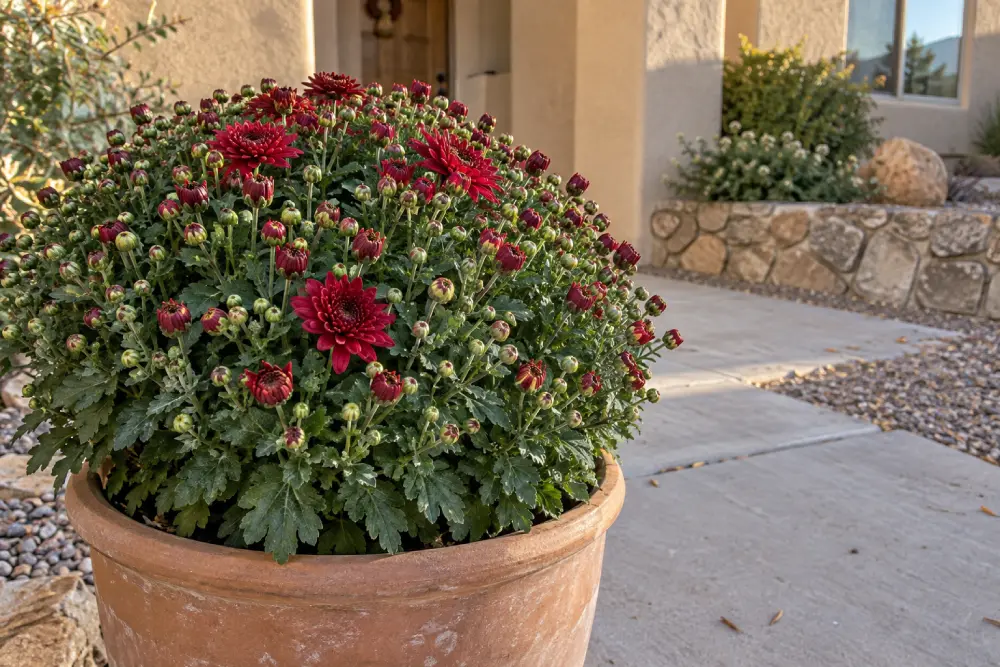
A plant covered in open flowers is tempting, especially when you want an instant display. For a longer show, look for a healthy plant with plenty of unopened buds and only some flowers already open.
Choose compact growth and healthy leaves. Avoid plants with extensive yellowing, wilted stems, or a root ball that has become extremely dry.
Also ask what kind of mum you are buying. A decorative flowering plant intended for a seasonal display is not necessarily the best choice for a permanent garden bed. If you want a plant that may return next year, ask about garden varieties suited to your conditions.
Where should mums go in Las Cruces?
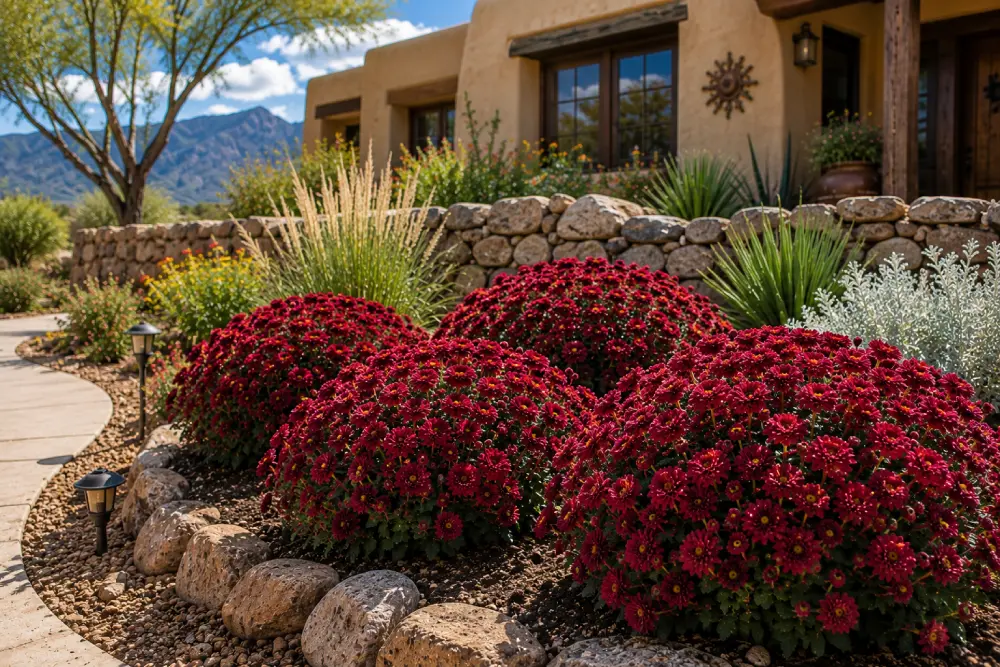
For a flowering potted mum during warm fall weather, start with a bright location that gets morning sun and some protection from intense afternoon heat. Avoid setting it directly against a hot west-facing wall or on pavement that radiates heat into the pot.
That does not mean mums are shade plants. Garden mums generally grow and flower best with ample sun. The goal is to balance their light needs with our lingering desert heat, especially when a small container is packed with roots.
As temperatures cool, a sunnier location may work well. Watch how the plant responds rather than assuming every patio has the same conditions.
How often should you water chrysanthemums?
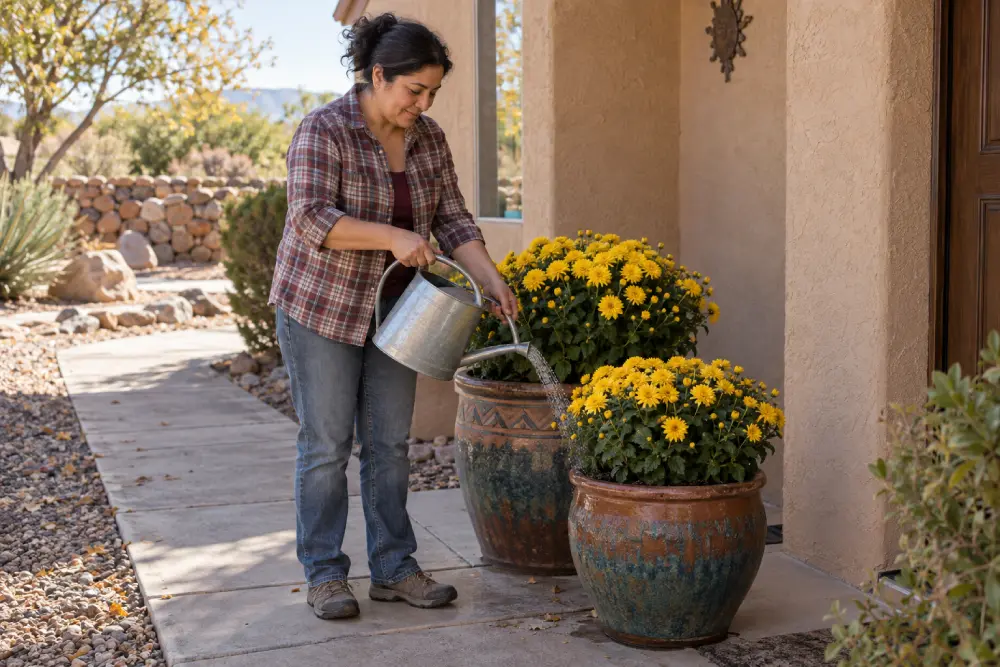
There is no single watering schedule that works for every mum. Pot size, wind, temperature, sunlight, and the condition of the root ball all matter.
Check potted mums daily during warm weather, but do not automatically water them daily. Feel the soil about an inch below the surface. When it begins to dry, water slowly and thoroughly until excess water comes out of the drainage holes.
Let the pot drain, then empty any saucer. Remove decorative foil or make sure it cannot trap water around the bottom of the container.
Try to direct water toward the soil instead of repeatedly soaking the flowers.
What if water runs straight through the pot?
A badly dried root ball can be difficult to rewet. Water slowly in several passes, giving it time to absorb moisture. Then check the soil within the root ball—not just along the edge of the pot—to see whether it actually became wet.
A larger decorative container does not automatically solve this problem. If the mum is still inside its original nursery pot, that small root ball can dry out even when the surrounding container looks large.
For mums planted in the ground, check moisture in the original root ball and surrounding soil. A newly planted mum needs attention while its roots establish; it should not immediately be treated like an established drought-tolerant shrub.
Use a container and soil that drain well
For containers, use a pot with drainage holes and a good-quality potting mix. Heavy garden soil can compact in a pot and make watering harder to manage.
For garden beds, choose a location that does not stay waterlogged after irrigation. If your soil drains poorly, address that before planting or keep your mum in a suitable container.
Mulch can help moderate soil temperature and moisture in a bed. Keep it away from the plant’s crown rather than piling it against the stems.
Should you fertilize flowering mums?
Do not reach for fertilizer first when a newly purchased flowering mum looks unhappy. Check moisture, drainage, and heat exposure before treating it as a feeding problem.
Extra fertilizer will not bring old flowers back to life. For mums you keep as garden plants, follow the fertilizer label and consider your soil’s needs during active growth. Avoid heavy feeding late in the season simply to push new growth before cold weather.
Remove faded flowers, but expect the display to end
Clip off spent flowers to keep the plant looking tidy. If unopened buds remain, those may continue opening.
Deadheading does not guarantee another full flush of blooms. A mum sold in peak flower has a limited display period, and warm weather can shorten it. When most flowers have faded, a healthy plant may still be worth keeping even though its seasonal show is finished.
Will chrysanthemums come back next year?
Some will, but it is not a promise. Variety, winter conditions, drainage, planting time, and root establishment all affect survival.
A garden mum planted earlier has more time to develop roots than a flowering mum planted late in fall. A plant labeled “hardy” also needs suitable growing conditions; the label does not mean it will survive every situation.
If returning flowers are your main goal, choose an appropriate garden variety and plan for establishment rather than buying solely for the current flower display.
What to do after flowering
Remove spent flowers, but do not immediately cut down healthy foliage. Continue checking moisture as the weather cools. Plants usually need less frequent watering in cooler conditions, although containers can still dry out.
For garden mums, remaining stems can be left through winter and cleaned up in spring when new growth appears. Avoid keeping the crown constantly wet.
If you keep a mum in its pot, remember that its roots are more exposed to temperature swings than roots in the ground. A sheltered outdoor location may help, but survival still depends on the variety and conditions.
Spring and summer care for garden mums
Once an established mum resumes growth, give it adequate sunlight and monitor watering as temperatures rise.
Pinching young shoots can encourage a fuller shape. Stop well before fall flowering so you do not remove developing flower buds; timing depends on the variety. Ask for guidance if you are unsure rather than continuing to pinch all summer.
A little attention makes a better fall display
The biggest mistake is treating mums as decorations that do not need checking. They are living plants, and a small pot full of roots can dry out quickly in our climate.
Choose a healthy plant, give it a comfortable location, and check the root ball before watering. Those simple habits do more good than following a rigid schedule.
Visit Guzman’s Garden Centers in Las Cruces for help choosing plants for your patio or garden. If you want a mum for lasting garden color rather than a short seasonal display, ask us about the right type before you buy.
Further reading
Texas A&M AgriLife Extension: How to choose and care for fall mums — September 15, 2026.
Problems with Mums
The most common problems include powdery mildew, blight, spider mites, and thrips. Powdery mildew appears as a white, powdery coating on the leaves and is most likely to develop when plants are overcrowded or exposed to cool, damp conditions with poor airflow. Blight can cause leaves and stems to turn brown or black, while spider mites and thrips feed on the foliage and flower buds, causing discoloration, stippling, distorted growth, or reduced flowering.
The good news is that these problems are usually easy to control if caught early. Regularly inspect your mums, especially the undersides of the leaves, for signs of insects or disease. Spraying with an organic Neem oil product is an excellent choice because it helps control many common insects, including spider mites and thrips, while also helping suppress fungal diseases such as powdery mildew. Insecticidal soaps are another safe and effective option for controlling soft-bodied insects and can be used throughout the growing season as needed.
The best defense is keeping your mums healthy. Plant them where they receive good air circulation, avoid overcrowding, water at the base of the plant rather than wetting the foliage, and promptly remove any dead or diseased leaves. Healthy mums are much more resistant to insects and diseases and will reward you with an abundance of colorful blooms throughout the fall season.
. Read more about Insects and Diseases on Plants.
Read more about the History and the origin of Mums over at Wikipedia.com
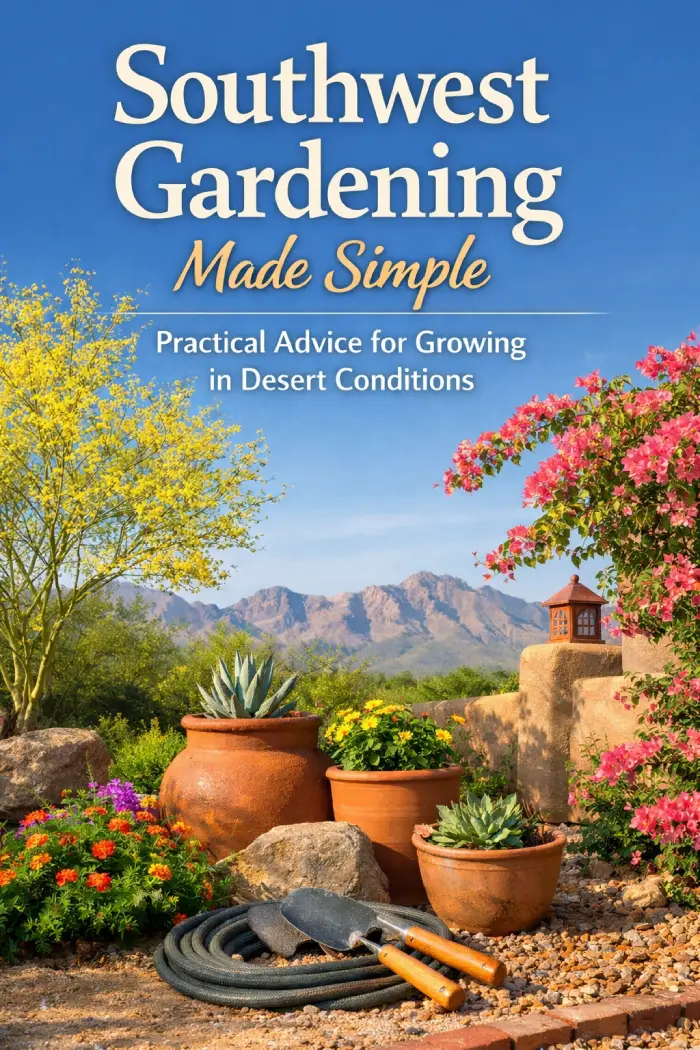
New to Southwest Gardening?
Stop wasting money on plants that will not survive our heat and drought.
My Southwest Gardening Made Simple eBook shows you which trees, shrubs, flowers, and vegetables actually thrive in New Mexico, Arizona, and West Texas.
The best plants for hot, dry climates
Common mistakes that kill Southwest plants
Easy-to-follow advice for beginners

Paul Guzman is a lifelong Southwest gardener and gardening writer with decades of experience helping homeowners grow beautiful landscapes in the desert Southwest. He writes for Guzman’s Garden Centers in Las Cruces, New Mexico, with contributing expertise from Gary Guzman, owner of Guzman’s Garden Centers. If you have any questions or enjoyed this post, feel free to share your thoughts in the comments below.