Last updated on September 3rd, 2026 at 12:24 pm
How to care for Geraniums. Geraniums are great plants to use in the ground, pots, or hanging containers. They do well in and around the Southwest; however, there are some things to consider before using them in your garden.
Geraniums love the full sun during the spring and fall seasons, but not the full hot southwest sun during mid-summer, so it’s best to place them where there is afternoon shade.
They can tolerate drought conditions and don’t mind if you plant them in pots; they thrive in containers.

What kind of soil do Geraniums want?
It’s always best to use good, well-composted soil that is loamy and drains well if you are planting them in the ground. If you live in places where it does not freeze, they will last all year long (perennial), providing you care for them accordingly.
Use a good potting mix, or so if you are planting them in containers. The main thing to remember is to make sure your pots drain well. They can easily develop root rot if the root system stays in water too long.
Geraniums are considered succulents, which means they do not like to be watered consistently. As a matter of fact, during the growing season, wait until they dry out before watering again.
Feeding Geraniums
If you want your geraniums to look bright and beautiful, you should fertilize them about twice per month. A good all-purpose 20-20-20 fertilizer will work well; however, if your plant is not blooming, you might want to purchase fertilizer with a higher concentration of phosphorus. Something like BR-61’s 9-58-8 analysis will help with making fresh flowers. Remember to water your plants first before applying fertilizer. The best seasonal time to feed Geraniums is in early spring. Hold off feeding during the winter season.
Where to place Geraniums
You can place them in full sun, but if you live in a hot arid climate zone, they will do better with the morning sun and afternoon shade. In the patio or courtyard in the afternoon, shade works well. Placing it underneath a large shade tree that provides filtered light is good.
Put them in hanging baskets and place them on the patio or hang them around the courtyard.
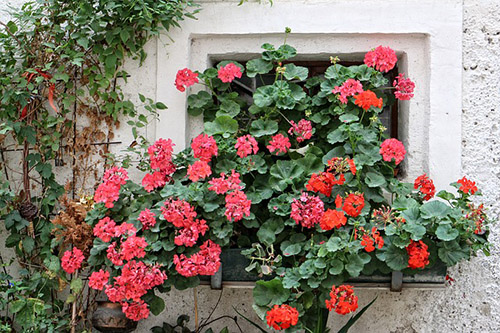
What type of colors do they come in?
They come in many beautiful colors and varieties, ranging from deep purple to bright pink and crisp, bright white. Their blooming season usually begins in early spring and can continue all the way into mid-summer, sometimes longer. The key to keeping them blooming throughout the season is deadheading. By regularly removing the older, faded flowers, the plant is encouraged to produce new blooms again and again.

How to make Geraniums bloom repeatedly.
There are two things needed to make geraniums bloom often. The first one is called deadheading. It’s really simple: just remove the old blooms often, and you will be rewarded with new ones. The second thing is fertilizer.
You can also place them indoors. 7 indoor plants that need bright light to bloom.
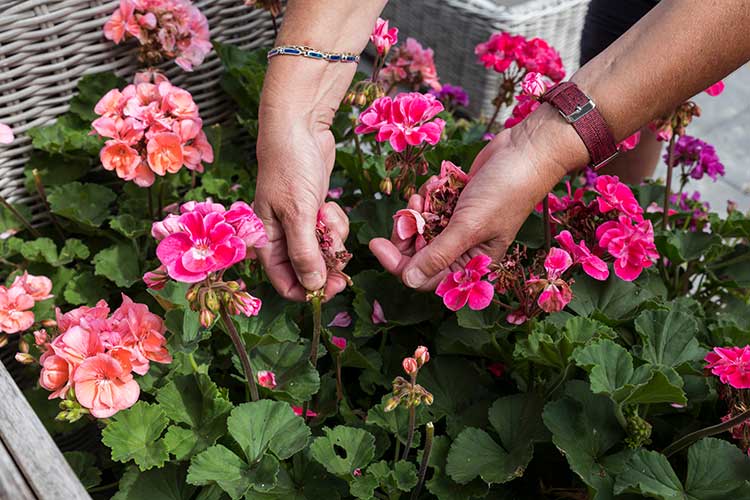
Fertilizing Geraniums
You should always fertilize geraniums with a high concentration of phosphorus…as this element is what makes all plants bloom or make more flowers. How often? Good question about once a month during the growing season, March, April, May, and June. You should always water first, then feed, and water one more time for the best results.
Types of Geraniums
Ivy Geraniums
Ivy Geraniums (Pelargonium peltatum) are somewhat different; the blooms are narrow but long, and the leaves are almost heart-shaped as opposed to the zonal Geraniums.
Growth habit:
-
Trailing or cascading plant
-
Stems can grow 2–3 feet long
Leaves:
-
Smooth, glossy leaves shaped like ivy
-
No dark zone on the leaves
Flowers:
-
Slightly smaller blooms, but still colorful
-
Often pink, red, purple, or white
Best uses:
-
Hanging baskets
-
Containers where plants can spill over the edge
-
Balcony boxes
Heat tolerance:
-
Prefers cooler conditions than zonal geraniums
-
In the Southwest, they do better with morning sun and afternoon shade
Zonal or Garden Geraniums
Zonal Geraniums are hybrid Geranium plants that are produced to have better-looking leaves and long-lasting flowers. This is what most local nurseries will have. The care of zonal Geraniums is the same as for most Geraniums.
-
Upright, bushy plant
-
Typically 12–24 inches tall
Leaves:
-
Rounded leaves with a darker circular band or “zone” across the leaf
-
Slightly fuzzy texture
Flowers:
-
Large round clusters of blooms
-
Colors include red, pink, salmon, white, and orange
Best uses:
-
Flower beds
-
Patio pots
-
Window boxes where height is desired
Heat tolerance:
-
Handles heat fairly well
-
Very reliable in the Southwest sun
Scented Geraniums
As the name suggests, scented geraniums are prized for their wonderfully fragrant leaves, which release their
or during unusually harsh winters, they may not survive outdoors. Their ability to overwinter depends largely on how cold the temperatures become.
These fragrant plants also make excellent houseplants. Place them near a bright, sunny window or beneath a skylight where they can receive several hours of sunlight each day. With adequate light and proper care, scented geraniums will continue to grow well indoors while filling your home with their pleasant fragrance.
Martha Washington Geraniums
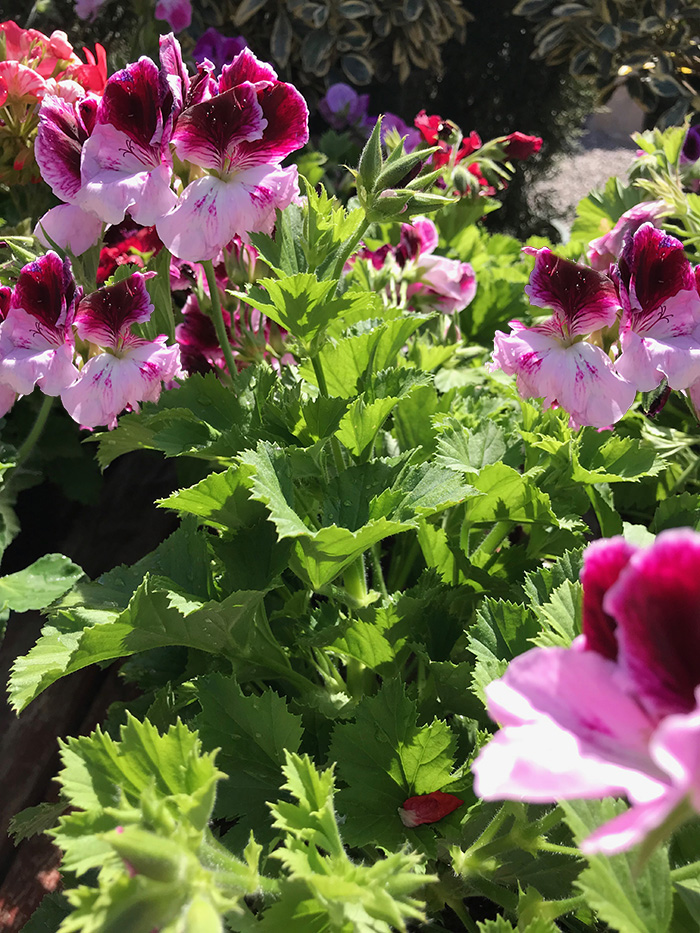
Also called Regal Geraniums. A much showier ruffled flower, and the foliage has a spiky, serrated edge to it. These types of geraniums are a bit more expensive.
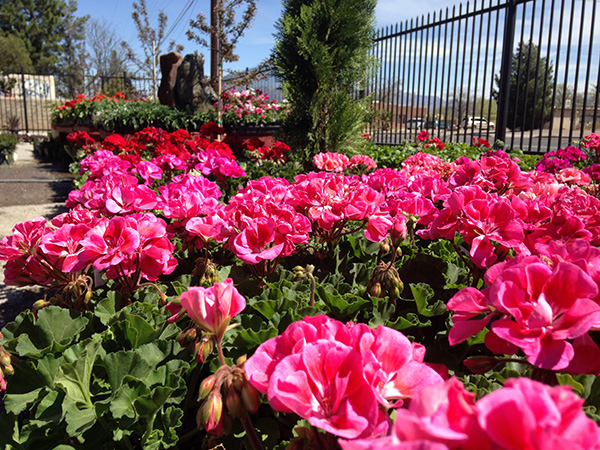
A vast selection of Geraniums at Guzman’s Garden Centers.
What type of problems do Geraniums have?
The biggest problem is mealybugs. These insects love Geraniums. Mealybugs produce a white substance that resembles a white, waxy powder, and are sap-sucking insects that can kill or make plants look bad. Spray with a good insecticide to kill them. It will take at least 2-3 applications before it works. If it is heavily infested with insects, it is best to wrap your geranium in a plastic bag and toss it in the trash bin!
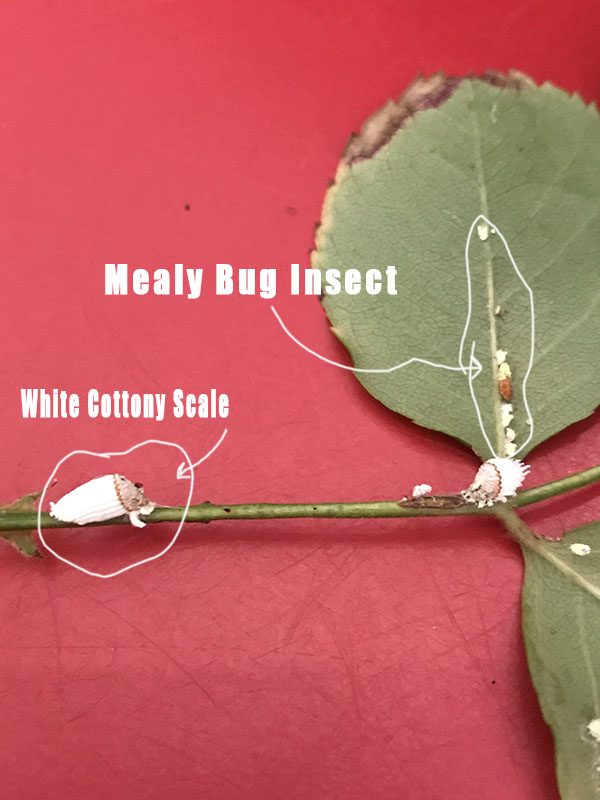
You can also use a systemic insecticide, as this works by adding the insecticide into the soil, the root system takes it in and spreads it throughout the plant. Any insects sucking or chewing on the foliage will die. Learn more about insect diseases on plants.
Go organic and use insecticidal soap or neem oil to kill mealybugs or any type of insect. If the plant is completely infested, your best option is to trash the plant. Make sure to put your plant in a plastic bag before you throw it in the trash bin. Learn how to use insecticidal soaps.
Geraniums can be toxic to both cats and dogs if they are eaten.
The type most commonly grown in gardens and containers—Pelargonium, which includes zonal and ivy geraniums—contains compounds that can cause problems for pets. The two main substances are geraniol and linalool, which are irritating to animals when ingested.
Possible symptoms in pets include:
-
Vomiting
-
Loss of appetite
-
Drooling
-
Depression or lethargy
-
Skin irritation (especially in cats)
In most cases, the reaction is mild to moderate, but it’s still best to keep geraniums out of reach of pets, especially curious cats that like to chew on plants.
Good news:
Pets usually have to eat a noticeable amount of the plant to show symptoms. Simply brushing against or being near the plant typically isn’t a problem.
Heard of the Mexican hat plant?
How to care for Geraniums
New to Southwest Gardening?
Stop wasting money on plants that will not survive our heat and drought.
My Southwest Gardening Made Simple eBook shows you which trees, shrubs, flowers, and vegetables actually thrive in New Mexico, Arizona, and West Texas.
The best plants for hot, dry climates
Common mistakes that kill Southwest plants
Easy-to-follow advice for beginners

Paul Guzman is a lifelong Southwest gardener and gardening writer with decades of experience helping homeowners grow beautiful landscapes in the desert Southwest. He writes for Guzman’s Garden Centers in Las Cruces, New Mexico, with contributing expertise from Gary Guzman, owner of Guzman’s Garden Centers. If you have any questions or enjoyed this post, feel free to share your thoughts in the comments below.