Last updated on May 9th, 2026 at 04:15 pm
The Care of Madagascar Palm Plants (Pachypodium lamerei ). The plant comes from an island called “Madagascar”. The island is located on the east coast of Africa. They do well indoors where there is lots of light, in front of a large southwest-facing window will do the job. It is considered a low-watering plant perfect for those who want low-maintenance indoor plants.
Madagascar Palm Plant Information
The Madagascar Palm Plant is NOT a true palm; it looks like one, but it isn’t. It is in the Apocynaceae dogbane family, the Pachypodium genus. You can learn more about how it grows in its native habitat over at Wikipedia.com. Its native habitat is, of course, south Madagascar, and it will grow up to twenty feet tall in its native land.
When will they bloom? It is rare for them to bloom indoors; however If planted outdoors in areas where there are no freezing temperatures, and it is well established, they will bloom in about the 8th or 10th year. Furthermore, if the conditions are just right, they can bloom indoors as shown in the photo below.
The flower is a small white trumpet flower, but only if it is grown outdoors. It will have a challenging time blooming indoors. With proper care, they can grow up to three feet tall and broad at the crown of the plant.
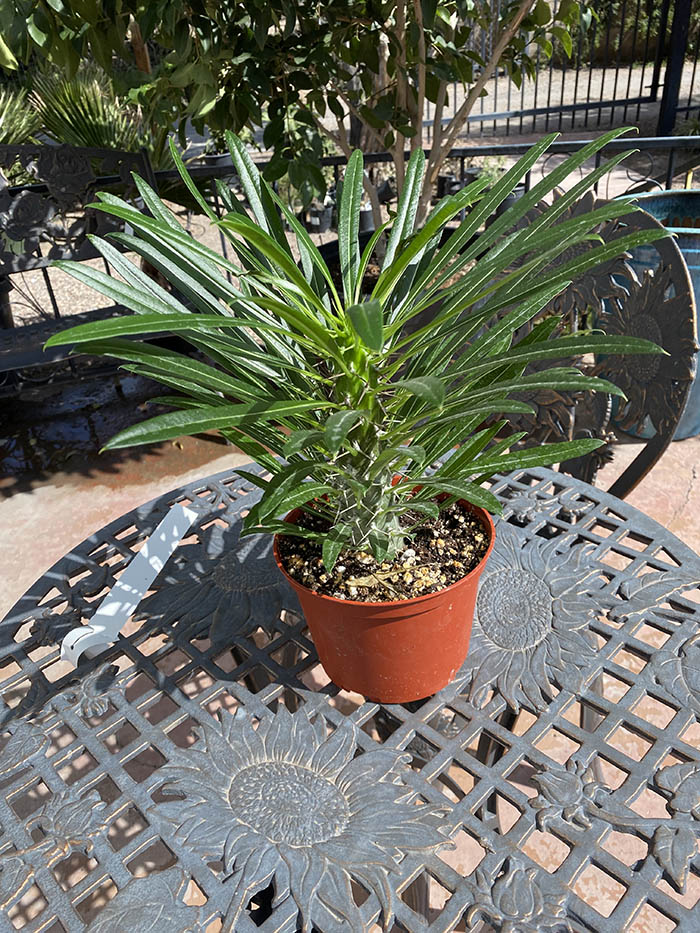
Madagascar Palm Plants
It is a plant that you would think twice before picking up. Large prickly thorns that keep animals and humans from trying to remove them from the ground. However, in reality, the thorns are not that prickly and will rarely penetrate the human hand. See the image below.
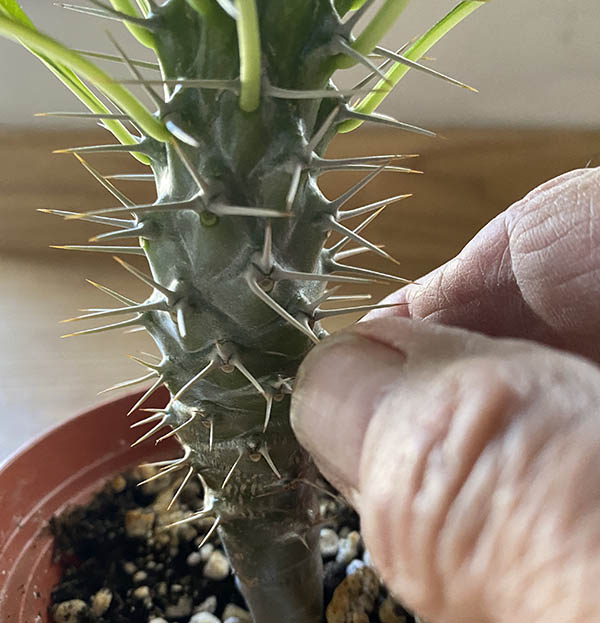
Large, slender, thick leaves on top of its thorny trunk. It is NOT a true palm nor are they a cactus. However, it is succulent, which means low watering requirements. They like slightly alkaline soil or straight-up sandy soil. Use Cactus soil/mix when potting this plant. Learn more about indoor houseplant names.
How to keep it alive indoors
They will do best in a cactus soil mix are semi-succulent and likes to be fertilized regularly, but always dilute your fertilizer at half the recommended dosage.
Place them where there is full light indoors; a south-facing window is a good place. Make sure it stays there during the cooler seasons in your area.
Watering a Madagascar plant is simple if you follow one key rule. Always let the soil dry out completely between waterings. Overwatering can harm the plant, so resist the urge to add water if the soil still feels damp. If you’re unsure, check the top inch of soil with your finger—it should be completely dry before you water again. This approach mimics its natural environment and keeps the plant healthy. More often during the hot summer months and less often in winter. About once per week. The one thing I learned about the care of this plant is that if the leaves fall off, you are over-watering or under-watering.
Fertilize with a good indoor liquid fertilizer about once every two or three months.
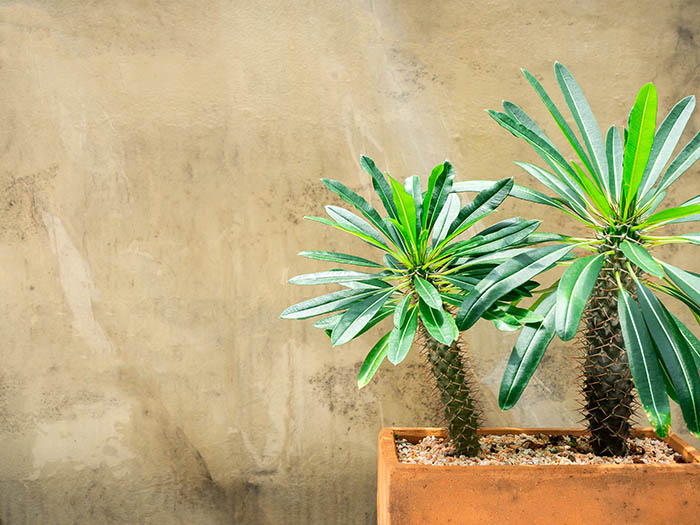
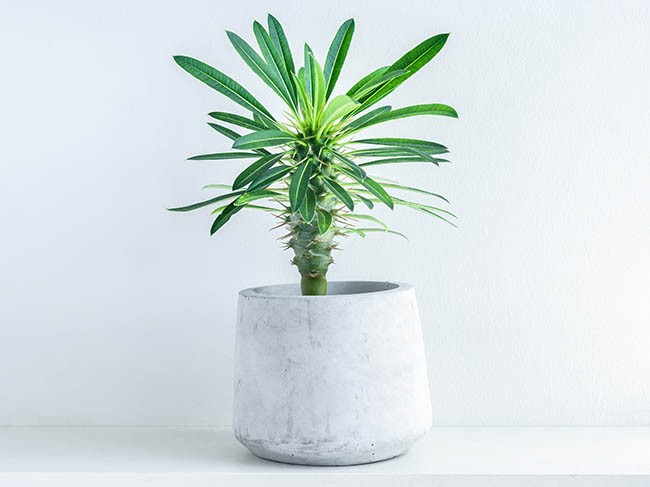
Madagascar Palm Plant in a decorative pot
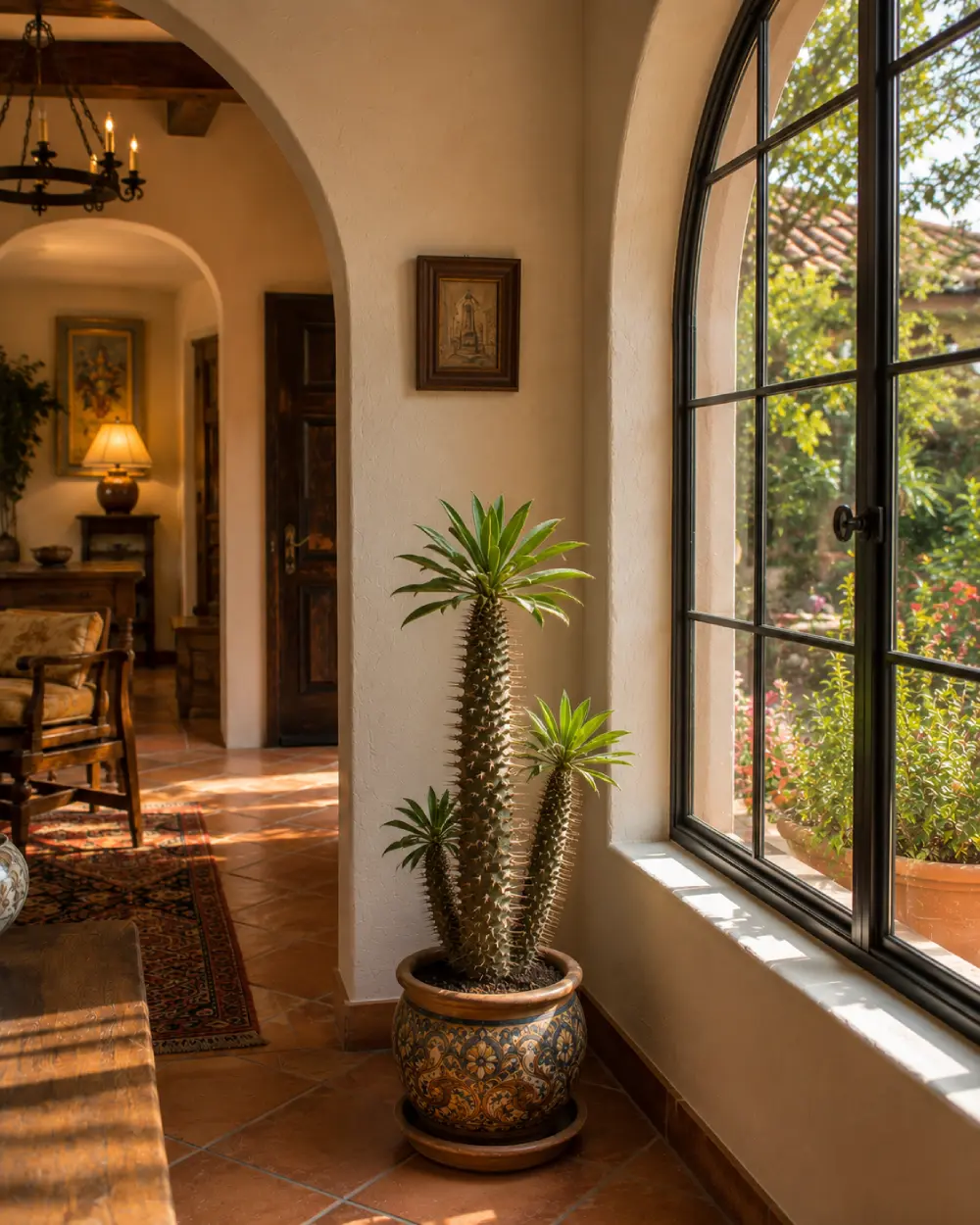
Very little pruning, if at all, on this plant
It is a single-trunk plant. Aphids and spider mites will attack this plant, but spraying with good organic insecticides like neem oil, insecticidal soaps, or houseplant insecticides.
Problems with Madagascar Palm Plant
Madagascar Palm problems are usually caused by improper watering, especially overwatering. This is one of the most common mistakes beginner gardeners make when growing this unusual succulent-type plant indoors or in containers.
Too much water can quickly lead to yellowing leaves, leaf drop, root rot, and a weak-looking plant. If you notice the leaves beginning to fall off, soggy soil is often the first thing to check. Madagascar palms prefer their soil to dry out between waterings. Before watering again, allow the soil to become mostly dry several inches down into the pot.
During warmer months, watering is usually needed about once per week, but this can vary depending on indoor temperatures, sunlight, humidity, pot size, and soil drainage. Plants placed near bright sunny windows or outdoors during summer may dry out faster and require more frequent watering.
On the other hand, not enough water can also create problems. When the plant becomes too dry for long periods, the leaves may begin to curl, wrinkle, or develop dry brown edges. The trunk can also appear slightly shriveled if the plant is severely dehydrated.
Good drainage is extremely important for Madagascar palms. Always use a well-draining cactus or succulent soil mix and make sure containers have drainage holes. During winter, when the plant slows down or becomes semi-dormant, watering should be reduced even more.
Mealybugs will attack this plant rarely, but it does happen. Spraying with Neem oil at the first signs of mealybugs should do the job. Neem oil is an organic insecticide and fungicide. It is best to spray several times throughout the week to make sure these insects are gone.
Where can you purchase this plant? At one of our local nurseries. Or ask for them at your local greenhouse or nursery.
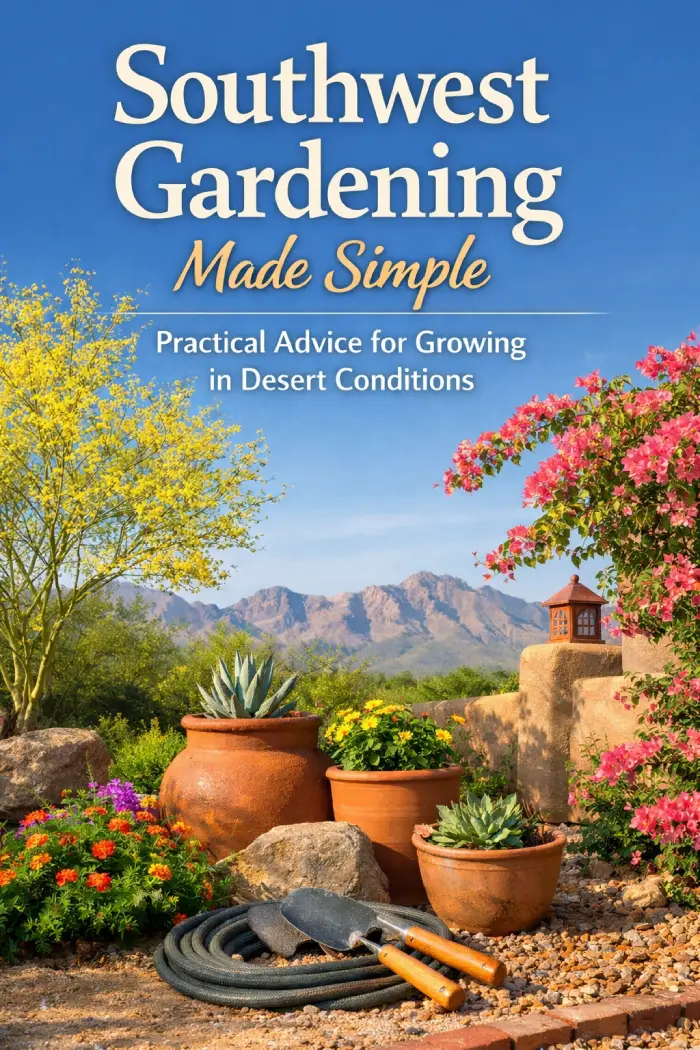
New to Southwest Gardening?
Stop wasting money on plants that will not survive our heat and drought.
My Southwest Gardening Made Simple eBook shows you which trees, shrubs, flowers, and vegetables actually thrive in New Mexico, Arizona, and West Texas.
The best plants for hot, dry climates
Common mistakes that kill Southwest plants
Easy-to-follow advice for beginners

Paul Guzman is a lifelong Southwest gardener and gardening writer with decades of experience helping homeowners grow beautiful landscapes in the desert Southwest. He writes for Guzman’s Garden Centers in Las Cruces, New Mexico, with contributing expertise from Gary Guzman, owner of Guzman’s Garden Centers. If you have any questions or enjoyed this post, feel free to share your thoughts in the comments below.