Last updated on May 8th, 2026 at 11:23 am
One question I get all the time is… ” How to increase flowering in plants ?” Especially during the hot summer season when flowering plants rarely bloom. It is a big problem when the temperatures can reach 110° Fahrenheit in the lower elevations of the Southwest.
However, here are some gardening tips that will help maintain those blooms longer and more often.
How to increase flowering in plants
As most gardeners in the southwest know, the soil is poor and lacks the nitrogen and other elements needed for plants to grow and thrive.
Rainfall is also less frequent, but there are some things you can do to help your plants flower and thrive. Here are some tips to help make your flowers bloom longer and more often.
There are many factors involved in trying to keep flowers on roses, bougainvilleas, crape myrtles, and native and non-native plants.
Water often
One of the most important gardening tips for the Southwest is to water your plants regularly during the hot summer months. This is especially true for flowering plants, shrubs, vegetables, tropical plants, and most landscape plants. The only major exceptions are cactus, succulents, and well-established desert plants, which naturally require much less water. Our intense summer heat, dry air, and strong sunlight can quickly dry out soil and stress plants if they are not watered properly.
Yes, I know many Southwest cities now have water restrictions and conservation guidelines. One of the best ways to keep your plants healthy while still being water-conscious is to install a drip irrigation system. Drip systems are efficient because they slowly deliver water directly to the root zone instead of wasting it through runoff or evaporation.
Once your drip system is installed, it becomes fairly easy to adjust watering schedules throughout the year. During the peak summer heat, you can increase watering frequency, then reduce it during cooler fall and winter months. I highly recommend setting your irrigation timer to water during the early morning hours. Watering early allows moisture to soak into the soil before the heat of the day causes rapid evaporation.
It is also very important to inspect your drip system regularly. Check your drippers often and make sure they are positioned close to the plant’s root system, where the water is actually needed. Drippers can clog, shift out of place, or stop working altogether without you noticing. A good habit is to manually turn on your irrigation timer occasionally and inspect each dripper one by one to make sure water is flowing properly.
Whether your plants are growing in containers or directly in the ground, good drainage is essential. Soil that stays overly wet can lead to root rot and unhealthy plants. Adding mulch, bark, or other organic material on top of the soil is another excellent way to help retain moisture, reduce evaporation, and keep root systems cooler during the hottest part of summer. Mulch can also help reduce weeds and improve the overall appearance of your landscape beds.
15-20 minutes every other day on established plants and trees will work. More often on new non-native plants.
Water newly planted plants, trees, and shrubs daily during the months of June, July, and August. The exceptions are Cactus, Agave, and succulents.
Too much water can also deplete the nutrients in the soil, and the one ingredient needed for flower development is phosphorus.
Fertilize often for the best results
How much? Many gardening experts recommend at least once in spring, summer, and fall. But in the southwest, it should be done once per month, starting in early spring and ending in late October.
There are some gardening experts who think too much fertilizer is not good. This is true, but not in the Southwest, where the rainfall is low, and the soil is poor and alkaline.
For even better results, fertilize twice per month! It is important to note that it’s best to water first and then fertilize your plants…always.
Many Good fertilizers will have an analysis of a 20-20-20 mix, and this mix is a good all-around fertilizer. Grow More’s all-purpose fertilizer will work wonders, and so will Miracle-Gro.

Apply phosphorus to the soil.
What is phosphorus? It is a naturally occurring element in the soil, but in and around the Southwest, it is usually lacking this one element.
On a bag of fertilizer, it is the second number and is referred to by the symbol “P”.
Plants need phosphate to stimulate healthy root development for flowering, and it also helps in the prevention of disease and stress. The phosphate process combines phosphate rock with sulfur and produces a phosphoric solution. Phosphate helps in the root stimulation and flowering of plants.
There is also Nitrogen and Potash. You can read more about these elements here. What is Fertilizer?
Most local nurseries will carry phosphate products, including our stores Color Your World and Guzman’s Greenhouse in Las Cruces, NM.
It is commonly called a bloom booster. There are many phosphate products online or at your local nursery, and one of the best to use is Carl Pool’s BR61 . The analysis is 9-58-8. You can also purchase straight-up phosphorus and superphosphorus.
Go Organic and use Bone Meal
Yes, bone meal works great as an organic flowering fertilizer. It comes from dried-up animal bones. It is what the name suggests, crushed bones from animals, specifically cows. You can use it for trees, and flowering plants, and it helps your root system grow and flourish. It is a slow-release organic fertilizer. The analysis of bone meal is normally 0-15-0.
Dead-Head expired blooms often
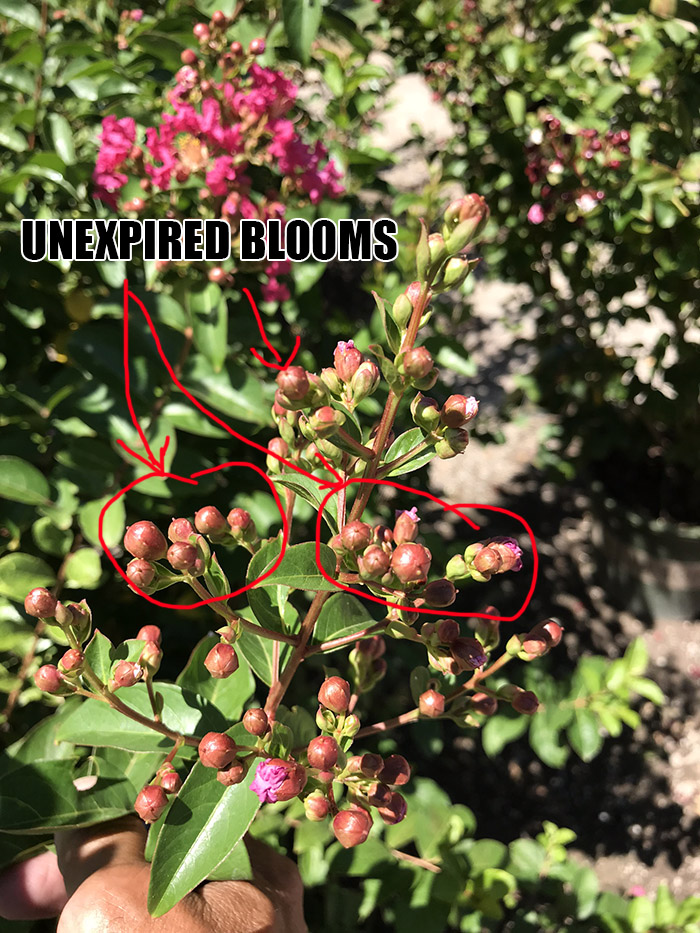
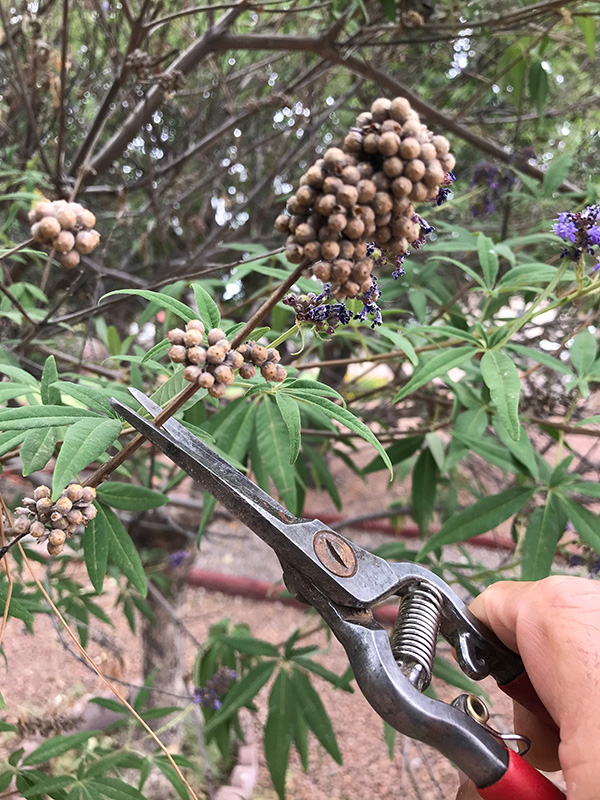
Dead-heading and pruning off expired blooms will help generate new blooms on almost all plants. Geraniums and roses respond well to deadheading. Crape Myrtles and the Vitex tree produce pods once the bloom expires. Prune them, and they will regenerate new growth and bloom again in about 2-3 weeks after pruning. If possible, do this throughout the growing seasons for better blooming results.
I know it is a lot of work, but well worth it when you see your flowers blooming again!
Crape Myrtles and Vitex trees also love to have their expired blooms pruned off. Do this several times during the spring and summer seasons for long-lasting blooms. (Click Image for Larger Photo)

You can also hire an expert to help you do the pruning. Click here for the best landscapers in your area.
Plants that bloom all summer long
There are many plants that will bloom all summer long throughout the Southwest. Here is a list of these plants.
- Lantanas – Flowers all summer long, no deadheading.
- Russian Sage – Blooms from early summer to mid-fall.
- Yellow Yarrow plants and Pictures – Yarrow will bloom almost all summer long, and trim off faded blooms.
- Wave Petunias – Water daily for blooms all summer. No deadheading.
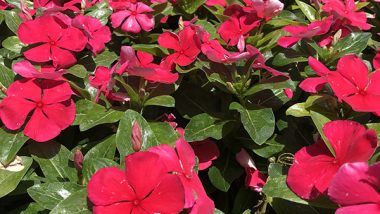
- Flowering Vinca – Water daily for blooms all summer long. No need to prune expired blooms.
- Catmint – Keep moist for nice-looking blue flowers.
- Bougainvillea – Prune stems occasionally for long-lasting flowers throughout summer.
- Milkweed – Attracts butterflies. Blooms late spring until late-August
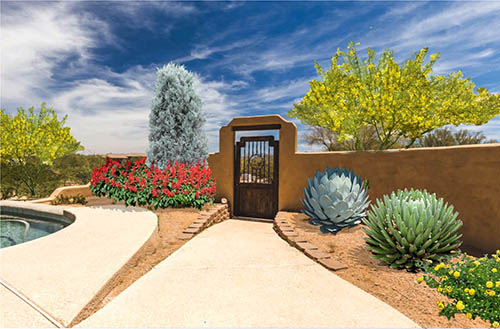
Here are some great Southwest front yard landscaping ideas.
New to Southwest Gardening?
Stop wasting money on plants that will not survive our heat and drought.
My Southwest Gardening Made Simple eBook shows you which trees, shrubs, flowers, and vegetables actually thrive in New Mexico, Arizona, and West Texas.
The best plants for hot, dry climates
Common mistakes that kill Southwest plants
Easy-to-follow advice for beginners

Paul Guzman is a lifelong Southwest gardener and gardening writer with decades of experience helping homeowners grow beautiful landscapes in the desert Southwest. He writes for Guzman’s Garden Centers in Las Cruces, New Mexico, with contributing expertise from Gary Guzman, owner of Guzman’s Garden Centers. If you have any questions or enjoyed this post, feel free to share your thoughts in the comments below.