How to Remove Weeds After Monsoon Rains. Monsoon rains can bring much-needed moisture to your Southwest landscape. They cool the air, help replenish dry soil, and give trees, shrubs, lawns, and flowering plants a welcome break from the intense summer heat. Unfortunately, the rain also creates ideal conditions for weeds. They seem to pop up almost everywhere.
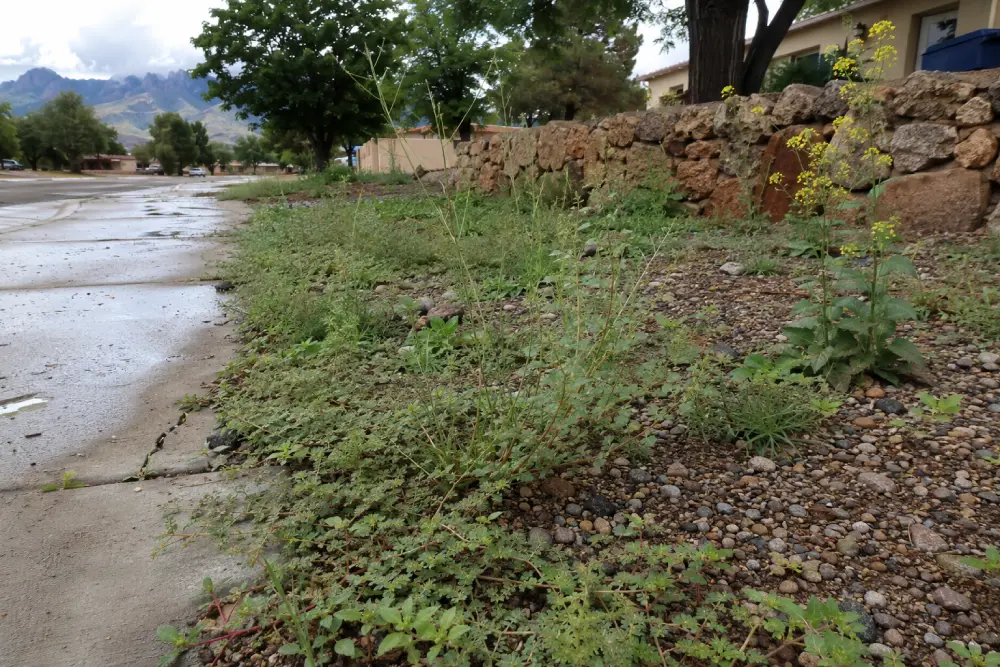
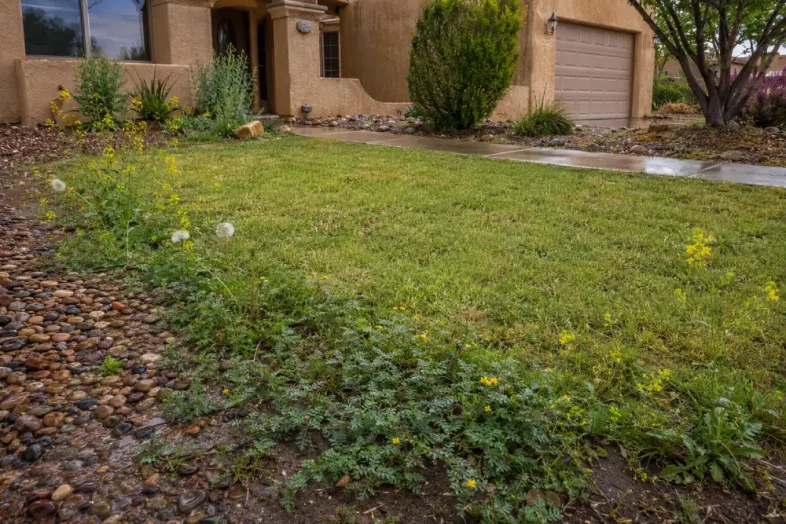
After a good monsoon storm, weeds can seemingly appear overnight. Seeds that have been sitting dormant in the soil may suddenly germinate once moisture reaches them. Within a few days, small weeds can spread throughout gravel areas, flower beds, lawns, and spaces around trees and shrubs.
The best time to remove weeds is shortly after the rain, while the soil is still slightly damp. You should not ignore them or wait until the end of the season. Removing weeds early will make the job easier and help prevent a much larger weed problem later.
Why Monsoon Rains Cause So Many Weeds
Weed seeds can remain dormant in the soil for months or even years. During long periods of dry weather, they may not have enough moisture to germinate. A soaking monsoon rain can quickly change those conditions.
Warm soil, summer temperatures, and added moisture create an ideal environment for germination. Some weeds can sprout, grow, and begin producing flowers and seeds in a surprisingly short time.
Monsoon storms can also move weed seeds from one area to another. Water flowing through an arroyo, drainage channel, gravel landscape, or low area of your yard may carry seeds with it. Birds, wind, pets, shoes, and landscaping equipment can spread them as well.
Even if you controlled the weeds earlier in the season, you may notice a completely new group growing after a heavy rain.
Spurge is one of the most common warm-season weeds found in Southwest landscapes. It grows rapidly and can quickly spread across gravel, lawns, and garden beds when moisture is available. Learn more about managing spurge in Southwest landscapes from the University of Arizona Cooperative Extension.
Pull Weeds While the Soil Is Damp
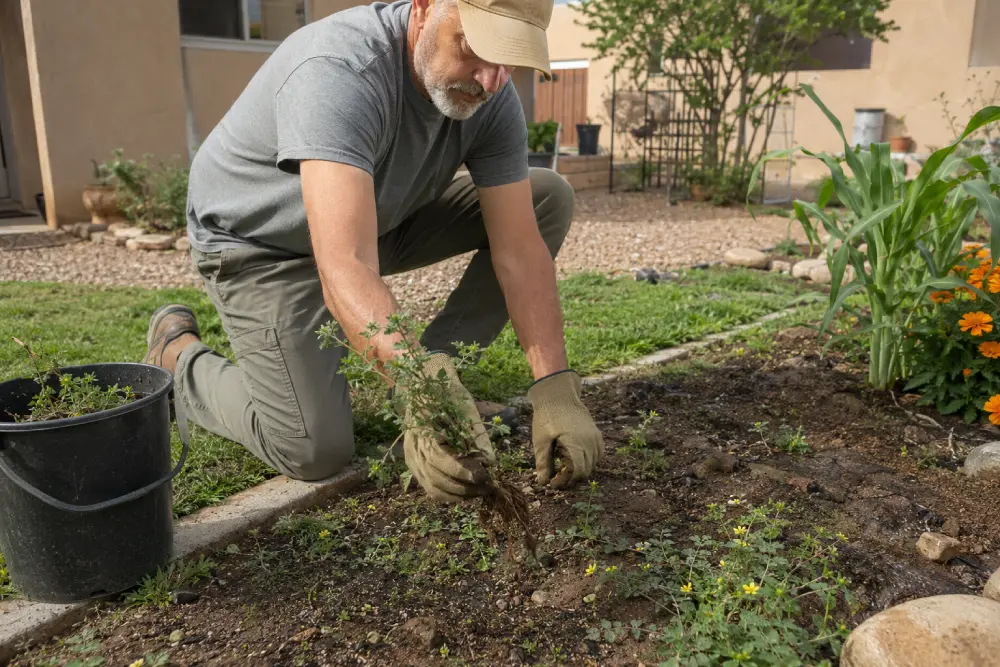
The easiest time to pull weeds is usually one or two days after a soaking rain. The ground should be moist and workable but not muddy.
When the soil is slightly damp, roots are easier to remove without breaking. If you pull weeds when the soil is dry and hard, the top growth may break off while the root remains underground. Many weeds can quickly grow back from the remaining root.
Grasp the weed close to the soil and pull upward slowly. Avoid grabbing only the upper leaves or stems. For larger weeds, gently loosen the soil around the root with a hand trowel or weeding tool before pulling.
Wear gardening gloves, especially if you are unfamiliar with the weed. Some weeds have thorns, irritating sap, sharp seed heads, or rough foliage.
Remove Weeds Before They Produce Seeds
Do not wait for weeds to grow large before removing them. A small weed is much easier to pull than one with an established root system.
More importantly, you should remove weeds before they flower and produce seeds. One mature weed may scatter hundreds or even thousands of seeds throughout your yard. Those seeds may remain in the soil and cause problems during future monsoon seasons.
If a weed already has flowers or seed heads, remove it carefully. Avoid shaking or dragging it acros the landscape because this can scatter more seeds.
Place mature weeds in a bag and dispose of them. Do not add weeds with developed seed heads to an ordinary compost pile unless you know the pile becomes hot enough to destroy the seeds.
Use the Right Tool for the Area
Hand-pulling works well for small flower beds, containers, and areas around landscape plants. A hand weeder or narrow trowel can help you remove weeds with long taproots.
A hoe is useful when numerous young weeds are growing in open soil. Scrape just below the surface to separate the weeds from their roots. Hoeing works best when weeds are still small.
Be careful when working around drip irrigation lines. A sharp hoe can easily cut tubing or pull emitters out of place. You should also avoid digging deeply near trees and shrubs because many landscape plants have shallow feeder roots near the soil surface.
For weeds growing between pavers or in sidewalk cracks, a narrow crack-weeding tool may be helpful. Pull or scrape them out before their roots spread farther underneath the hard surface.
Check Your Drip Irrigation System
Monsoon weeds often reveal hidden problems with your irrigation system. If weeds grow heavily in one particular area, look for a leaking drip line, broken emitter, or sprinkler that is spraying beyond its intended location.
A slow leak can keep the soil wet long after the surrounding landscape has dried. This provides weeds with a steady supply of moisture.
Walk through your yard while the irrigation system is running. Check every emitter and connection. Repair leaks, replace clogged emitters, and reposition any tubing that has moved.
You may be able to reduce your regular watering after a soaking monsoon rain. However, do not assume every part of your landscape received the same amount of moisture. Summer storms can soak one neighborhood—or even one side of your yard—while leaving another area nearly dry.
Be Careful When Removing Weeds from Lawns
Weeds in a Bermuda grass lawn may be more difficult to remove because their roots become tangled with the grass. Small weeds can be pulled by hand, but you should try to remove the root without creating a large bare spot.
Regular mowing can prevent many lawn weeds from producing seeds. However, mowing alone may not eliminate weeds that grow low to the ground.
Keep your Bermuda grass healthy by watering deeply and mowing it at the proper height. A thick, healthy lawn leaves less open space for weeds to establish.
Avoid fertilizing the lawn immediately after every monsoon rain. Too much fertilizer combined with heat and moisture can encourage excessive growth, increase mowing, and potentially cause fertilizer burn.
Mulch Helps Reduce Future Weed Growth
After removing weeds from flower beds and areas around trees and shrubs, consider applying a layer of mulch. Mulch blocks sunlight from reaching many weed seeds and helps reduce new germination.
Use approximately two to three inches of organic mulch, such as wood chips or shredded bark. Keep mulch several inches away from tree trunks and the crowns of shrubs. Piling mulch directly against a trunk can trap moisture and contribute to decay or insect problems.
Gravel can also reduce some weed growth, but it will not stop weeds completely. Dust and organic matter eventually collect between the rocks, creating a place for new seeds to germinate. Landscape fabric may help underneath gravel, but weeds can still grow in material that accumulates above it.
Should You Use a Weed Killer?
Hand-pulling is usually the safest option around desirable plants, especially when the soil is moist and the weeds are young.
If you decide to use a weed killer, read the entire product label before applying it. Do not spray on a windy day because the product may drift onto nearby flowers, vegetables, shrubs, or trees. Some herbicides can damage a plant through contact with its leaves, green bark, or exposed roots.
High temperatures can also increase the risk of plant damage. Many products have temperature restrictions and should not be applied during extreme summer heat.
Never assume that a product labeled “natural” or “organic” is harmless. Vinegar-based and other contact weed killers may burn any green plant they touch. They may also kill the leaves without destroying the root, allowing the weed to return.
Always read and follow the complete product label before applying an herbicide. The EPA explains that using a pesticide in a manner inconsistent with its labeling violates federal law. You can review the EPA’s pesticide-labeling information for additional guidance.
Make Weed Control Part of Your Monsoon Routine
The longer you wait, the more difficult weed removal becomes. Walk through your landscape after each substantial monsoon rain and look for new growth. Pay close attention to gravel areas, fence lines, tree wells, sidewalk cracks, drainage areas, and spaces near drip emitters.
Pulling a few small weeds every week is much easier than clearing an entire yard at the end of summer.
Monsoon rains are beneficial to Southwest landscapes, but they also awaken countless weed seeds hiding in the soil. By acting early, removing the complete root, preventing seed production, and correcting irrigation problems, you can keep weeds from taking over your yard.
A little work immediately after the rain can save you many hours of pulling, digging, and spraying later in the season.
More on Removing Weeds. How to get rid of weeds.
New to Southwest Gardening?
Stop wasting money on plants that will not survive our heat and drought.
My Southwest Gardening Made Simple eBook shows you which trees, shrubs, flowers, and vegetables actually thrive in New Mexico, Arizona, and West Texas.
The best plants for hot, dry climates
Common mistakes that kill Southwest plants
Easy-to-follow advice for beginners

Paul Guzman is a lifelong Southwest gardener and gardening writer with decades of experience helping homeowners grow beautiful landscapes in the desert Southwest. He writes for Guzman’s Garden Centers in Las Cruces, New Mexico, with contributing expertise from Gary Guzman, owner of Guzman’s Garden Centers. If you have any questions or enjoyed this post, feel free to share your thoughts in the comments below.