Last updated on July 19th, 2026 at 08:29 am
Why Are My Plant Leaves Turning Brown? Have you noticed brown tips, crispy edges, or entire leaves turning brown on your favorite plants? Don’t panic just yet. Brown leaves are one of the most common gardening problems in the Desert Southwest, especially during the long, hot summer months.
The good news is that brown leaves don’t always mean your plant is dying. In many cases, they’re simply a warning that something needs attention. Heat stress, watering problems, salt buildup, insects, and even fertilizer can all cause leaves to turn brown.
Here in southern New Mexico, West Texas, Arizona, and other desert areas, our intense sunshine, low humidity, drying winds, and alkaline soils create growing conditions that are very different from many parts of the country. Plants that thrive in cooler climates often need extra care to handle our extreme summer weather.
In this guide, you’ll learn the nine most common reasons plant leaves turn brown, how to identify the cause, and what you can do to help your plants recover.
1. Heat Stress Is the Most Common Cause
When temperatures climb above 100°F for days or weeks at a time, plants can lose water through their leaves faster than their roots can replace it. This is especially common in the Southwest, where low humidity and intense afternoon sun increase water loss.
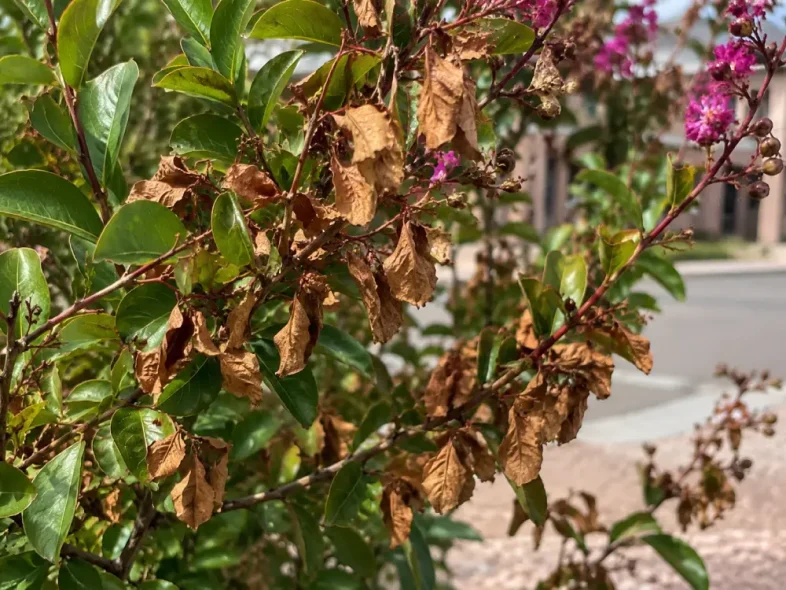
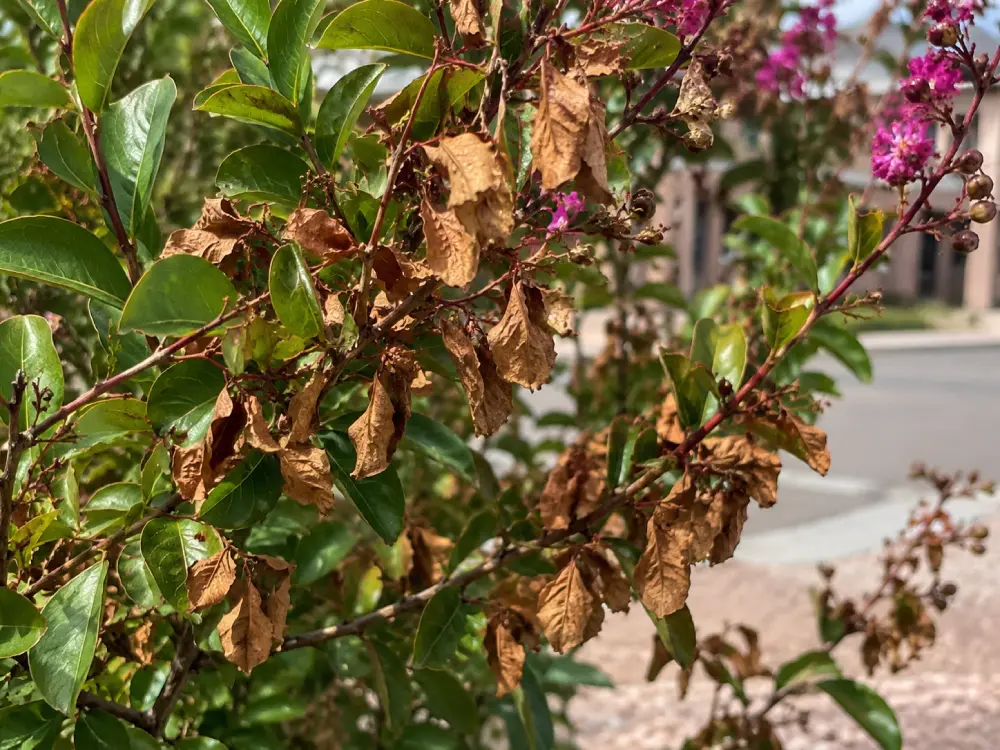
One of the first signs of heat stress is brown or crispy leaf edges. The outer portions of the leaf dry out first because they’re farthest from the plant’s water supply. If the extreme heat continues, the entire leaf may eventually dry up and fall off.
Even drought-tolerant plants such as lantana, oleander, and crape myrtle can show signs of heat stress during prolonged heat waves, particularly if they were planted recently or are growing in containers. Are your rose leaves turning brown?
Signs of Heat Stress
- Brown edges on leaves
- Crispy leaf tips
- Curling leaves
- Wilting during the afternoon
- Leaves dropping prematurely
- Flowers fading faster than normal
What You Can Do
- Water deeply instead of lightly sprinkling every day.
- Water early in the morning whenever possible.
- Apply 2 to 4 inches of mulch around plants to keep the soil cooler and reduce evaporation.
- Delay fertilizing until temperatures become more moderate.
- Provide temporary shade for newly planted shrubs, flowers, and vegetables during extended heat waves.
- Trim off dry and crispy leaves
Remember that established trees and shrubs usually recover once temperatures cool and proper watering resumes.
2. Underwatering
One of the easiest causes to identify is simply not giving plants enough water.
When roots cannot absorb enough moisture, plants begin sacrificing their oldest leaves first. Those leaves often develop brown tips before turning completely brown and dropping off.
Keep in mind that watering every day doesn’t always mean the plant is receiving enough water. Short watering cycles often moisten only the top few inches of soil while the deeper roots remain dry.
This is especially common with drip irrigation systems that aren’t running long enough.
Symptoms of Underwatering
- Dry, brittle leaves
- Brown tips beginning on older leaves
- Leaves curling inward
- Dry soil several inches below the surface
- Smaller flowers than usual
- Slow growth
How to Fix It
Instead of watering more often, try watering more deeply. Deep watering encourages roots to grow farther into the soil where moisture remains available longer.
For container plants, check the soil daily during periods of extreme heat. Pots can dry out much faster than plants growing in the ground.
3. Overwatering Can Look Surprisingly Similar
Many gardeners are surprised to learn that too much water can produce symptoms that closely resemble underwatering.
When soil remains constantly saturated, roots cannot obtain enough oxygen. Eventually, the roots begin to die, making it impossible for the plant to absorb water efficiently. Even though the soil is wet, the leaves begin turning brown because the damaged roots can no longer support healthy growth.
This problem is especially common in heavy clay soils, poorly drained containers, or areas where irrigation runs too frequently.
Signs of Overwatering
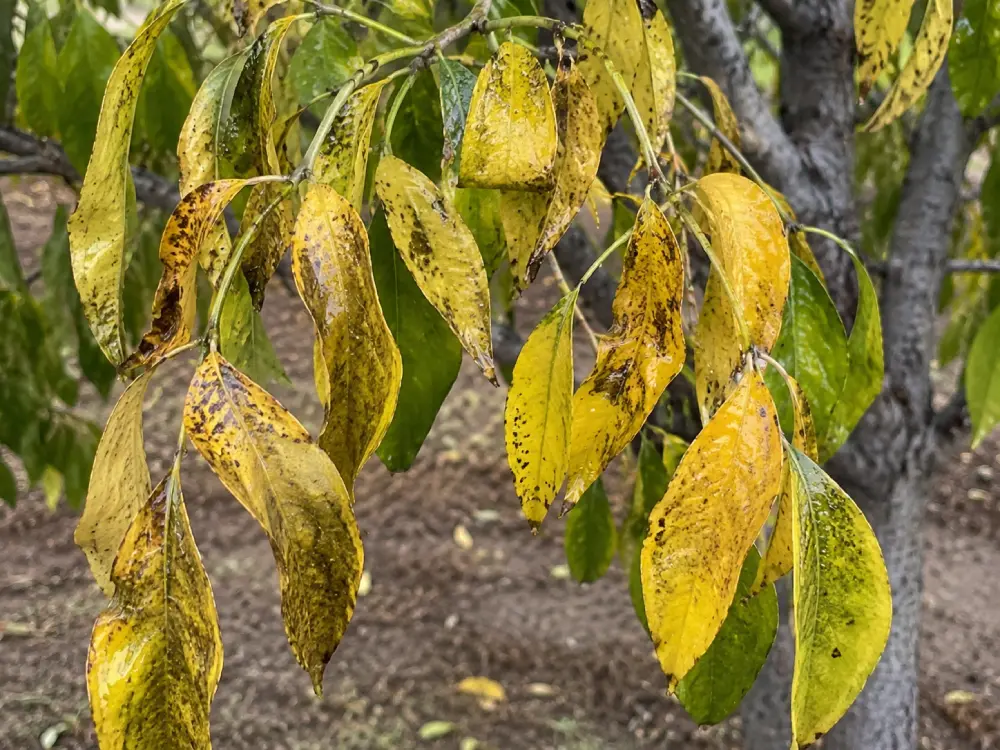
- Brown leaves with yellowing first
- Soft or mushy stems
- Wilting despite wet soil
- Mold or algae growing on the soil surface
- Sour or musty smell around the roots
- Leaves falling while still green or yellow
How to Correct It
Allow the soil to dry slightly between waterings. Check moisture several inches below the surface before turning on your irrigation system.
If your plant is growing in a container, make sure excess water drains freely through the bottom. Containers without proper drainage are one of the leading causes of root problems.
Coming Up Next
Not every brown leaf is caused by watering or heat. In the next section, we’ll cover several other common causes, including:
- Salt buildup in Southwest soils
- Fertilizer burn
- Spider mites and other damaging insects
These problems are often overlooked, but they’re responsible for thousands of struggling plants every summer.
4. Salt Buildup Is a Common Southwest Problem
One of the biggest differences between gardening in the Desert Southwest and many other parts of the country is our naturally alkaline soil and irrigation water. Over time, minerals and salts can build up around plant roots, especially if plants receive frequent shallow watering or are growing in containers.
As these salts accumulate, they interfere with the plant’s ability to absorb water. Even when the soil is moist, the roots struggle to take up enough moisture. The result is often brown leaf tips that gradually spread toward the center of the leaf.
Container plants are especially vulnerable because salts remain trapped in the pot instead of being washed deeper into the soil by rain.
Signs of Salt Buildup
- Brown leaf tips on otherwise healthy plants
- White crust on the surface of the soil
- White deposits around clay pots
- Slower growth
- Leaf edges turning brown while the center remains green
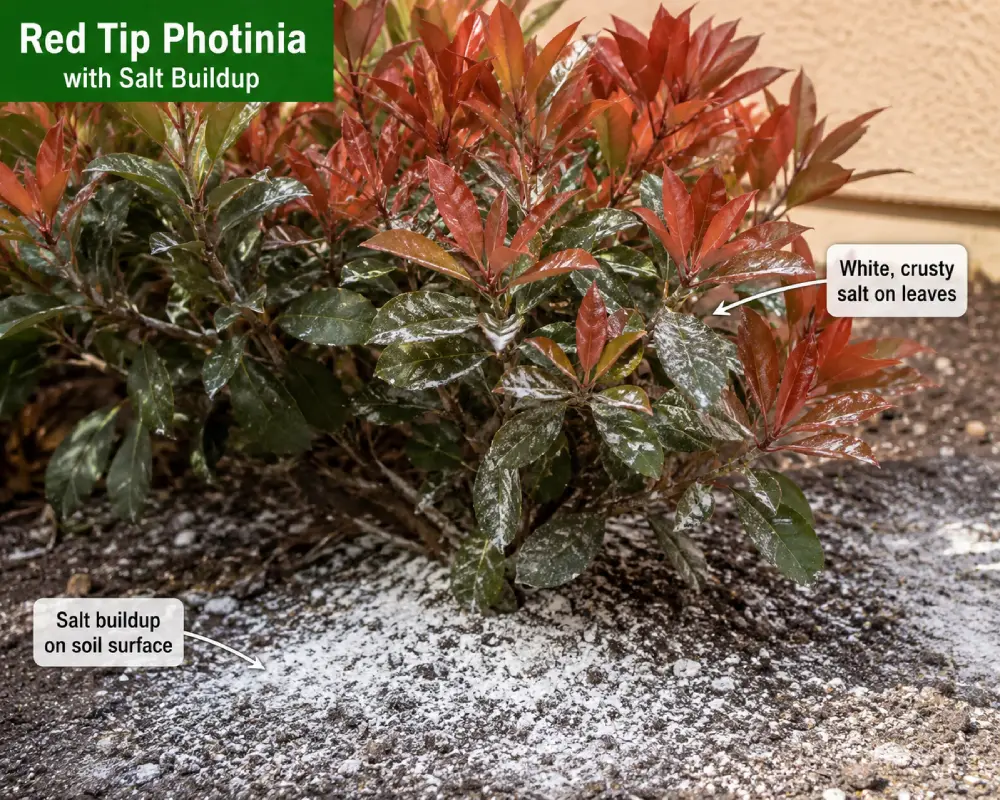
More information on Salt Buildup at NMSU.Edu
How to Fix It
Every few weeks during the growing season, water deeply enough to flush excess salts below the root zone. For container plants, water until plenty of water drains from the bottom of the pot.
Avoid applying more fertilizer than the label recommends. Extra fertilizer adds even more salts to the soil.
5. Fertilizer Burn
Many gardeners assume that if a little fertilizer is good, more must be better. Unfortunately, too much fertilizer can actually burn plant roots and damage leaves.
Excess fertilizer increases the salt concentration in the soil, making it difficult for roots to absorb water. The first symptom is often brown or burned leaf tips.
Fast-growing annual flowers, vegetables, and potted plants are especially sensitive to overfertilizing.
Symptoms of Fertilizer Burn
- Brown tips shortly after fertilizing
- Yellowing followed by browning
- White fertilizer residue on the soil
- Wilting despite adequate watering
- New leaves smaller than normal
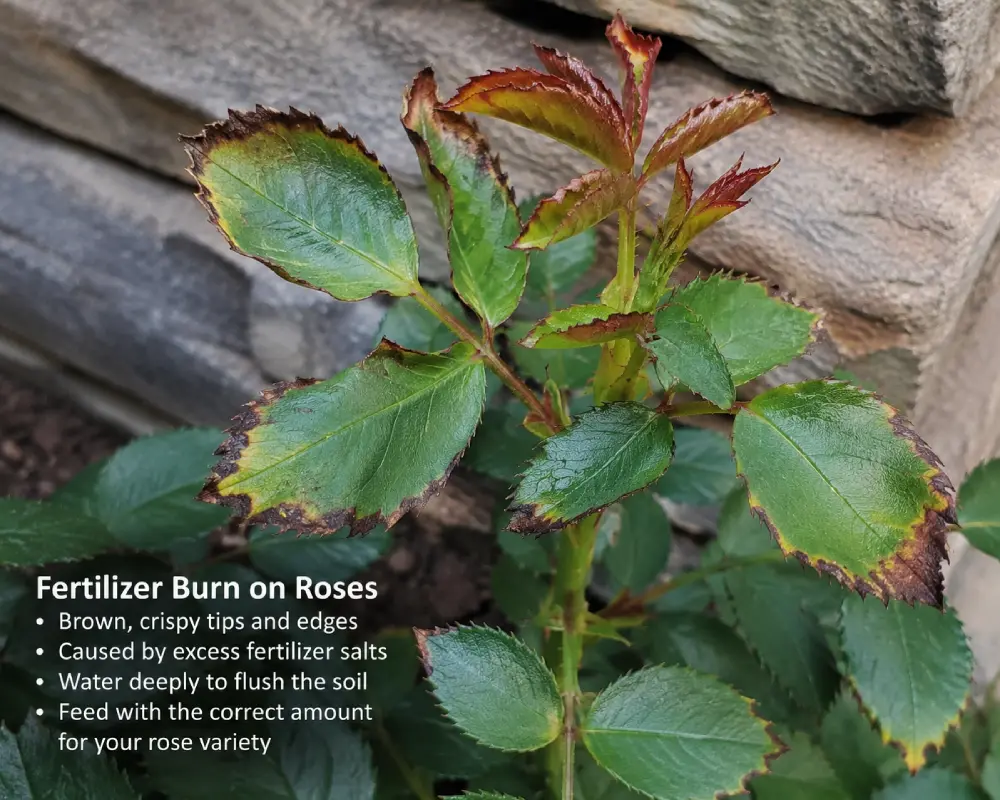
How to Correct It
If you suspect fertilizer burn:
- Water deeply to help flush excess fertilizer from the soil.
- Stop fertilizing for several weeks.
- Remove severely damaged leaves.
- Resume feeding later using the recommended rate.
Remember that stressed plants recovering from extreme heat usually don’t need additional fertilizer right away. Focus on proper watering first.
How often should you water plants in Las Cruces?
6. Spider Mites Love Hot, Dry Weather
Spider mites are one of the most destructive pests in the Southwest, especially during July and August. These tiny pests feed by piercing leaves and sucking out their contents.
Because they’re so small, most gardeners don’t notice them until the damage becomes obvious.
As the infestation grows, leaves may develop tiny yellow or white speckles before turning brown and drying out. Fine webbing is often visible underneath the leaves.
Spider mites commonly attack:
- Roses
- Tomatoes
- Crape myrtles
- Junipers
- Cypress
- Burning bushes
- Many flowering annuals

Symptoms
- Tiny yellow or white speckles
- Browning leaves
- Fine webbing under leaves
- Leaves dropping early
- Overall unhealthy appearance
How to Control Spider Mites
A strong spray of water directed at the undersides of leaves once or twice a week can greatly reduce spider mite populations.
Severe infestations may require insecticidal soap, horticultural oil, or another appropriate control product. Always follow the label directions.
Keeping plants properly watered also helps reduce stress, making them less attractive to spider mites.
Learn more about keeping spider mites on conifers.
Quick Troubleshooting Guide
When you’re not sure what’s causing the problem, start here. Why Are My Plant Leaves Turning Brown?
| If your plant looks like this… | The most likely cause | What to check first |
|---|---|---|
| Brown leaf tips only | Salt buildup, fertilizer burn, or underwatering | Check soil moisture and look for white salt deposits on the soil. |
| Brown edges around the leaf | Heat stress or drought stress | Has it been over 100°F for several days? Check soil moisture. |
| Crispy, dry leaves | Underwatering or heat stress | Dig 4–6 inches down and check if the soil is dry. |
| Yellow leaves that later turn brown | Overwatering or poor drainage | Is the soil staying wet for several days after watering? |
| Tiny webs under leaves | Spider mites | Inspect the undersides of leaves for tiny webs and moving dots. |
| Brown leaves soon after fertilizing | Fertilizer burn | Think back to any recent fertilizer applications. |
| Brown patches only on the sunny side | Sunscald (sunburn) | Did the plant recently lose shade or was it newly planted? |
| Brown leaves after strong winds | Wind scorch | Consider recent hot, dry, windy weather or monsoon winds. |
| Brown spots with yellow halos | Fungal or bacterial leaf spot | Look for circular spots that spread after humid or rainy weather. |
| Brown leaves on only one branch | Root or branch damage | Check for broken branches, damaged roots, or irrigation problems on that side of the plant. |
| Brown leaves on a newly planted tree or shrub | Transplant shock | Has the plant been in the ground less than a year? Keep the root ball evenly moist, not soggy. |
| Only the oldest leaves are browning | Natural aging | Look for healthy new growth elsewhere on the plant. |
Southwest Gardening Tip
Most brown leaves are not caused by disease. In the Desert Southwest, heat stress, watering mistakes, fertilizer salts, spider mites, and sunscald account for the vast majority of brown leaf problems. Before treating your plant, identify the actual cause first.
Pro Tip
Don’t assume the problem is watering just because the leaves are brown.
In the Southwest, heat stress, alkaline soils, salt buildup, spider mites, and fertilizer burn often occur at the same time. Before making changes, inspect the soil, check for insects, and think about any recent weather changes or fertilizer applications.
7. Sunscald Can Burn Plant Leaves
Just like people can get sunburned, plants can suffer from sunscald when exposed to more intense sunlight than they can handle.
This often happens after a tree is pruned, a neighboring plant is removed, or a newly purchased shade-loving plant is placed in full afternoon sun. The intense Southwest sun can quickly scorch leaves, leaving large brown or bleached patches.
Unlike heat stress, which usually causes the edges of leaves to turn brown, sunscald often appears as irregular brown or white patches on the side of the plant facing the afternoon sun.
Signs of Sunscald
- Large brown patches on leaves
- Bleached or white areas that later turn brown
- Damage mostly on the west or south side of the plant
- Healthy new growth in shaded areas
- Sudden leaf damage after pruning or transplanting
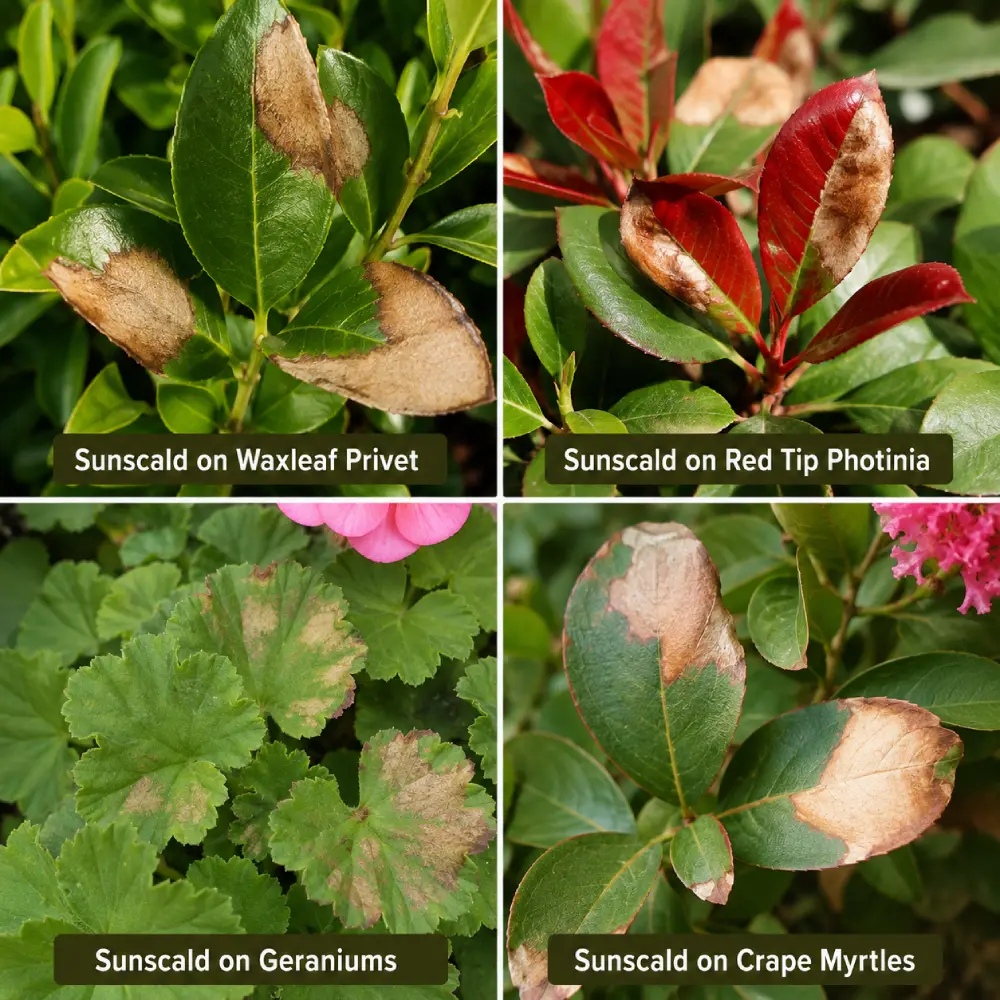
More information on Sunscale or leaf Scorch at Colorado State University Extension.
How to Prevent It
- Gradually acclimate new plants to full sun.
- Use shade cloth during extreme heat if necessary.
- Avoid heavy pruning during the hottest months.
- Keep plants properly watered to reduce stress.
8. Hot, Dry Winds Can Dry Out Leaves
Strong desert winds don’t just cool the air—they can actually pull moisture from plant leaves faster than the roots can replace it.
This condition, often called wind scorch, is especially common during spring winds and summer monsoon outflow storms throughout the Southwest.
Plants growing near walls, open fields, or exposed corners of the yard are especially vulnerable.
Symptoms of Wind Damage
- Brown leaf edges after windy weather
- Torn or tattered leaves
- Wilted appearance despite moist soil
- Leaf drop shortly after wind events
- New growth drying out first
How to Protect Plants
- Water deeply before predicted wind events.
- Use mulch to reduce moisture loss.
- Plant wind-sensitive species in protected locations.
- Install temporary windbreaks for young trees and shrubs.
9. Sometimes It’s Simply Natural Aging
Not every brown leaf is a cause for concern.
As plants grow, older leaves age naturally, turn yellow or brown, and eventually fall off. This is especially common on evergreen shrubs, perennial flowers, and many indoor plants.
If the rest of the plant looks healthy and continues producing vigorous new growth, you’re probably seeing normal leaf replacement rather than a disease or watering problem.
Signs of Natural Aging
- Only the oldest leaves are affected
- New growth remains healthy
- No insects or spots are present
- Browning occurs gradually
- The overall plant looks vigorous
Simply remove the old leaves if desired and continue your normal care routine.
How to Save a Plant With Brown Leaves
Once you’ve identified the most likely cause, the next step is helping your plant recover. Fortunately, most plants can bounce back if the problem is corrected before permanent damage occurs.
Step 1: Identify the Cause
Before changing your watering schedule or reaching for fertilizer, inspect the plant carefully.
Ask yourself:
- Has it been unusually hot?
- Is the soil dry or constantly wet?
- Did I recently fertilize?
- Are there signs of insects?
- Has the plant recently been transplanted or exposed to more sun?
Making the correct diagnosis is far more important than treating the symptoms.
Step 2: Adjust Your Watering
Deep watering is almost always better than frequent shallow watering.
Allow water to soak into the root zone where roots can actually use it. During periods of extreme heat, newly planted trees, shrubs, and flowers may need more frequent watering than established plants.
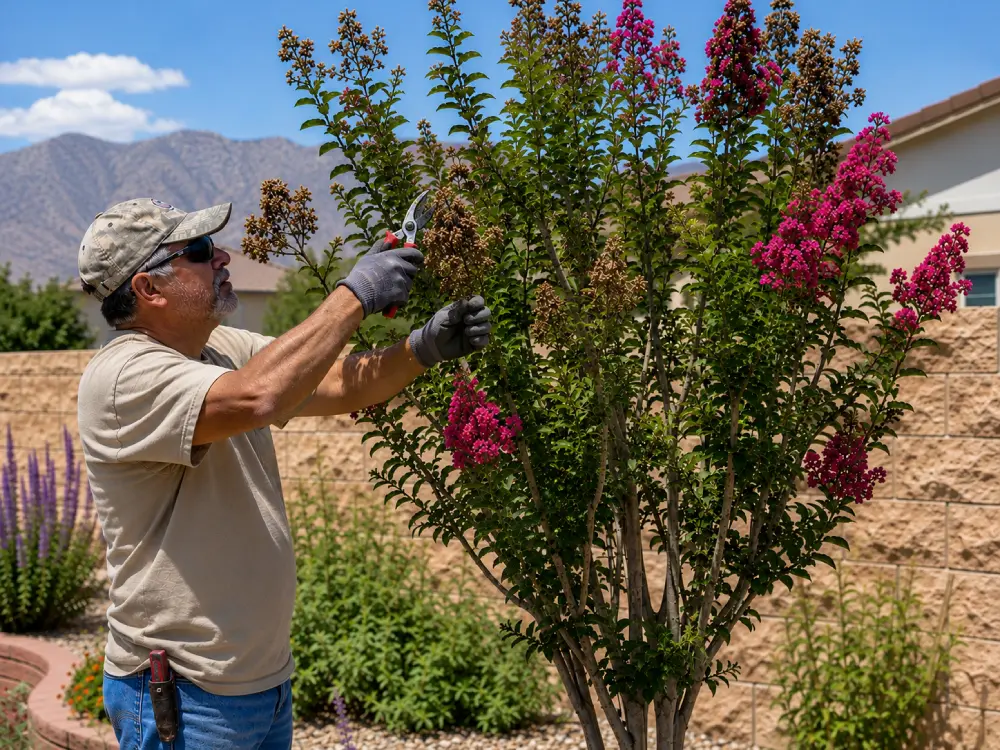
Step 3: Remove Dead Foliage
Prune off completely brown, dead leaves with clean pruners.
However, don’t remove leaves that are only partially damaged. The remaining green portions continue producing energy for the plant.
Step 4: Avoid Fertilizing a Stressed Plant
Many gardeners immediately apply fertilizer hoping it will “green up” the plant.
Unfortunately, this often makes the problem worse.
Wait until the plant begins producing healthy new growth before resuming a normal fertilizing schedule.
Step 5: Be Patient
Plants rarely recover overnight.
New healthy growth is a much better indicator of recovery than expecting damaged leaves to turn green again.
In most cases, brown tissue will remain brown, but healthy new leaves will replace the damaged ones over the following weeks.
Southwest Gardening Tip
One of the biggest mistakes homeowners make is assuming every brown leaf means the plant needs more water.
In reality, heat stress, poor drainage, fertilizer burn, salt buildup, spider mites, and sunscald can all produce nearly identical symptoms. Taking a few extra minutes to inspect the plant before making changes often prevents unnecessary watering and helps solve the real problem faster.
Related Southwest Gardening Guides
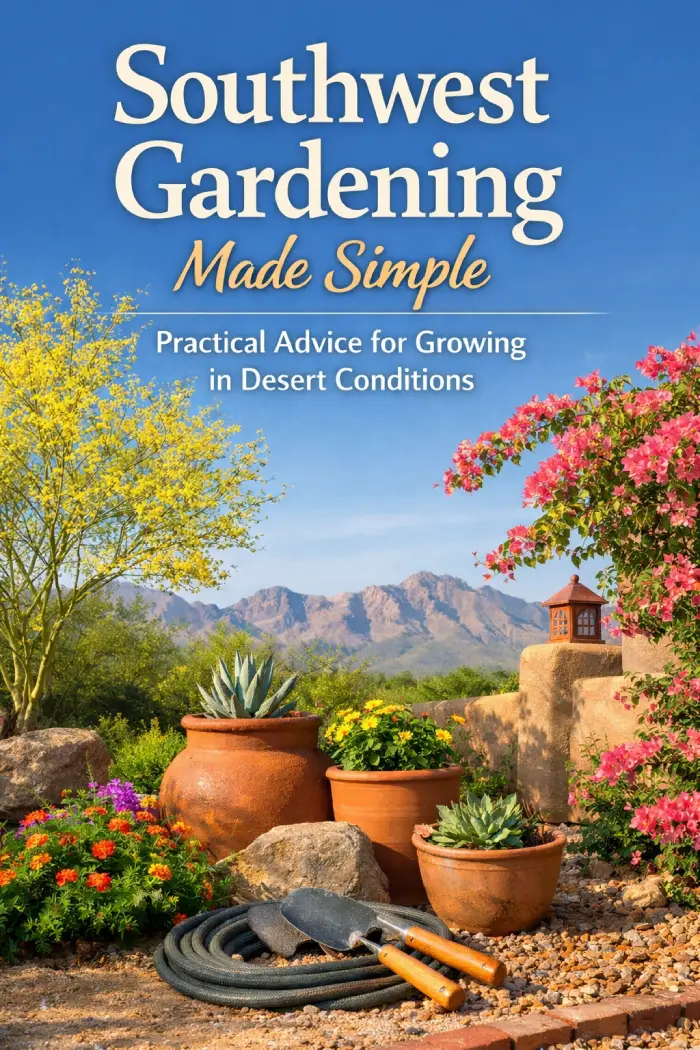
New to Southwest Gardening?
Stop wasting money on plants that will not survive our heat and drought.
My Southwest Gardening Made Simple eBook shows you which trees, shrubs, flowers, and vegetables actually thrive in New Mexico, Arizona, and West Texas.
The best plants for hot, dry climates
Common mistakes that kill Southwest plants
Easy-to-follow advice for beginners

Paul Guzman is a lifelong Southwest gardener and gardening writer with decades of experience helping homeowners grow beautiful landscapes in the desert Southwest. He writes for Guzman’s Garden Centers in Las Cruces, New Mexico, with contributing expertise from Gary Guzman, owner of Guzman’s Garden Centers. If you have any questions or enjoyed this post, feel free to share your thoughts in the comments below.