How to Protect Plants from Extreme Heat. If you’ve stepped outside lately, you already know it’s hot. Triple-digit temperatures are a normal part of summer in the Southwest, but they can take a toll on your landscape if you’re not careful.
The good news is that most plants don’t die because it’s hot—they die because we unintentionally make things worse.
Here are five common mistakes to avoid during a Southwest heat wave.
Mistake #1: Watering Too Often Instead of Watering Deeply
When temperatures climb above 100°F, it’s tempting to water every day. While that may be necessary for newly planted trees, shrubs, flowers, and vegetables, established plants are a different story.
Frequent, shallow watering encourages roots to stay near the soil surface where temperatures are the hottest. Those shallow roots dry out quickly, making your plants even more dependent on constant watering.
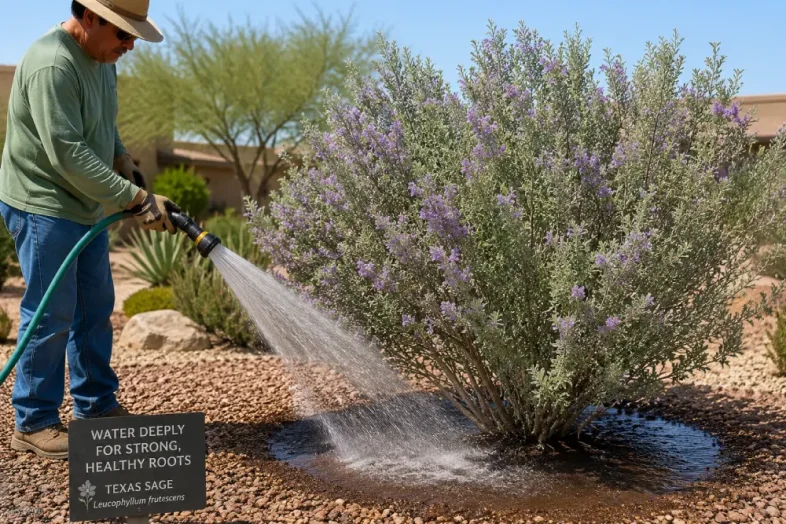
Instead, water deeply so the moisture reaches well below the root zone. Deep watering encourages roots to grow downward, where the soil stays cooler and retains moisture much longer.
Remember, a deep soaking every few days is usually far better than a quick sprinkle every afternoon.
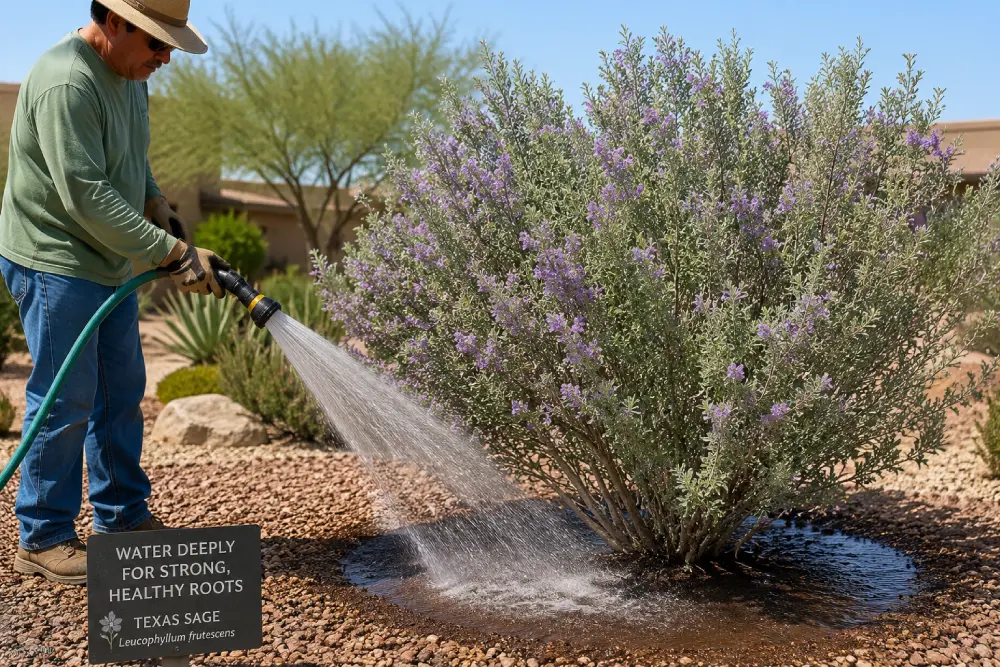
Homeowner deep watering his Texas Sage Bush
Mistake #2: Watering During the Hottest Part of the Day
You may think you’re helping your plants by watering at 3:00 in the afternoon, but that’s usually the least effective time.
Much of the water evaporates before it ever reaches the roots. Wet foliage can also contribute to powdery mildew if humidity rises.
The best time to water is early in the morning, before the sun gets high. This allows the soil to absorb moisture while giving your plants plenty of water to handle the afternoon heat.
If morning watering isn’t possible, evening watering is your next best option.
Mistake #3: Fertilizing Heat-Stressed Plants
Many gardeners notice yellow leaves or slow growth during summer and immediately reach for fertilizer.
Don’t.
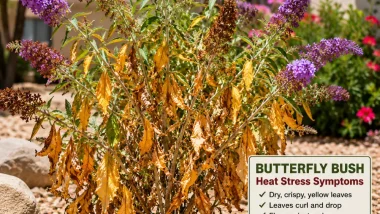
When a plant is struggling from extreme heat, adding fertilizer often creates additional stress. Instead of encouraging healthy growth, you can actually burn already stressed roots or force tender new growth that quickly gets scorched by the sun.
If your plants are wilting because of heat, concentrate on proper watering first. Wait until temperatures moderate before applying fertilizer unless the plant clearly has a nutrient deficiency.
Mistake #4: Pruning During Extreme Heat
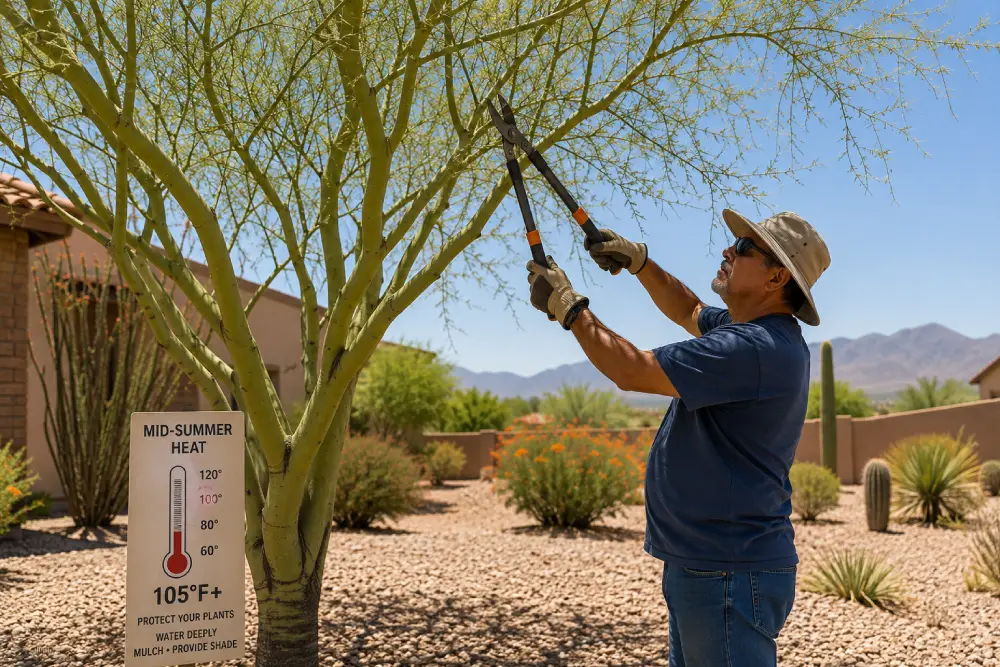
Summer is not the time for heavy pruning.
Leaves act like tiny umbrellas, protecting branches and even the trunk from the intense Southwest sun. Removing too much foliage exposes bark to direct sunlight, increasing the chance of sunscald and additional heat stress.
If you must prune, limit yourself to removing dead, damaged, or diseased branches. Save major pruning jobs for cooler weather.
Mistake #5: Forgetting About Mulch
One of the easiest ways to help your plants survive a heat wave is by adding mulch.
A two- to four-inch layer of organic mulch helps:
- Keep the soil cooler
- Reduce evaporation
- Suppress weeds
- Improve soil as it breaks down
- Protect feeder roots from extreme temperatures
Just be sure to keep mulch a few inches away from the trunk of trees and shrubs. Piling mulch directly against the trunk can trap moisture and lead to rot or insect problems.
What about using a Drip System
If you have a drip irrigation system, don’t assume a short watering cycle is enough during a heat wave. Established trees and shrubs often need a longer, slower soak so the water can penetrate 12 to 24 inches into the soil where most of the active roots are growing. During periods of extreme heat, you may need to increase the run time rather than the number of watering days. Check the soil with a shovel or long screwdriver after watering. If the soil is only wet a few inches deep, your drip system isn’t running long enough to provide the deep watering your plants need.
Bonus Tip: Don’t Panic Over Afternoon Wilting
One of the most common questions I hear this time of year is:
“My plant is wilting every afternoon. Is it dying?”
Not necessarily.
Many plants temporarily wilt during the hottest part of the day to reduce water loss. If they perk back up after sunset or early the next morning, they’re usually doing exactly what nature designed them to do.
However, if your plant is still wilted the following morning, that’s a sign it probably needs additional water or has another underlying problem.
Final Thoughts
Summer gardening in the Southwest isn’t about watering more—it’s about watering smarter.
Deep watering, morning irrigation, avoiding unnecessary fertilizer, holding off on heavy pruning, and using mulch can make the difference between a landscape that barely survives and one that continues to thrive despite triple-digit temperatures.
Heat waves are part of life in the Southwest. With a few simple adjustments, your plants can make it through the hottest days of summer looking much healthier.
Additional Resource: For more general tips on watering during extreme heat, see the University of California Agriculture & Natural Resources guide on gardening in hot weather.
New to Southwest Gardening?
Stop wasting money on plants that will not survive our heat and drought.
My Southwest Gardening Made Simple eBook shows you which trees, shrubs, flowers, and vegetables actually thrive in New Mexico, Arizona, and West Texas.
The best plants for hot, dry climates
Common mistakes that kill Southwest plants
Easy-to-follow advice for beginners

Paul Guzman is a lifelong Southwest gardener and gardening writer with decades of experience helping homeowners grow beautiful landscapes in the desert Southwest. He writes for Guzman’s Garden Centers in Las Cruces, New Mexico, with contributing expertise from Gary Guzman, owner of Guzman’s Garden Centers. If you have any questions or enjoyed this post, feel free to share your thoughts in the comments below.