Best Fast-Growing Shade Trees for the Southwest. If you’ve lived in the Southwest for any length of time, you know one thing for certain—shade is valuable. During the summer, a well-placed shade tree can lower temperatures around your home, make your backyard more enjoyable, and even help reduce cooling costs.
The problem is that many fast-growing trees recommended on national gardening websites simply aren’t suited to our hot, dry climate. Some require too much water, while others struggle in alkaline soils or become short-lived because they were never intended to grow in the desert Southwest.
Fortunately, there are several excellent shade trees that grow quickly and perform well in New Mexico, West Texas, southern Arizona, and similar high-desert climates. Many have been planted successfully throughout Las Cruces for decades.
Whether you’re looking to shade your patio, cool your backyard, or simply enjoy a beautiful landscape, these are some of the best fast-growing shade trees to consider.
Jump to:
- Why Plant a Fast-Growing Shade Tree?
- Choosing the Right Tree for Your Yard
- Quick Comparison Guide
- Western Schley Pecan
- Arizona Ash
- Chinese Pistache
- Fruitless Mulberry
- Weeping Willow
- Purple Robe Locust
- Desert Willow
- Muskogee Crape Myrtle
- Which Tree Is Right for You?
- Frequently Asked Questions
- Final Thoughts
Why Plant a Fast-Growing Shade Tree?
A shade tree is one of the best long-term investments you can make in your landscape.
Not only do trees add beauty and increase property value, but they also provide benefits you’ll appreciate every summer.
A mature shade tree can:
- Cool patios and outdoor living areas
- Reduce heat around your home
- Lower air conditioning costs
- Provide habitat for birds
- Improve curb appeal
- Make your landscape more enjoyable year-round
Unlike shrubs and flowers, trees become more valuable every year they grow.
If you plant the right tree in the right location today, you’ll enjoy its benefits for decades.
Choosing the Right Tree for Your Yard
Before purchasing the largest tree you can find, spend a few minutes thinking about where it will grow.
Ask yourself:
- How much room does the tree have to mature?
- Will it eventually shade your house?
- Is there enough distance from sidewalks and driveways?
- Are overhead power lines nearby?
- How close is it to your irrigation system?
- Does the tree produce fruit, flowers, or seed pods?
- Will the mature canopy interfere with neighboring trees?
Planting a tree in the proper location is just as important as choosing the right species.
One mistake many homeowners make is planting too close to the house. A young tree may look small today, but in fifteen or twenty years it could spread forty feet or more.
Giving your tree enough room now prevents expensive pruning and future problems.
Quick Comparison Guide
| Tree | Growth Rate | Mature Height | Best Feature |
|---|---|---|---|
| Western Schley Pecan | Fast | 50–70 ft. | Excellent shade and edible pecans |
| Arizona Ash | Very Fast | 40–50 ft. | Creates shade quickly |
| Chinese Pistache | Moderate to Fast | 30–40 ft. | Outstanding fall color |
| Fruitless Mulberry | Very Fast | 35–50 ft. | Dense canopy for maximum shade |
| Weeping Willow | Very Fast | 35–50 ft. | Graceful form and excellent shade |
| Purple Robe Locust | Fast | 30–40 ft. | Attractive purple spring flowers |
| Desert Willow | Moderate | 20–30 ft. | Beautiful flowers and attracts hummingbirds |
| Muskogee Crape Myrtle | Moderate to Fast | 18–20 ft. | Long-lasting lavender flowers and moderate shade |
Pro Tip
Don’t choose a tree based solely on how fast it grows.
The fastest-growing tree isn’t always the best choice. Consider mature size, maintenance, watering needs, root system, and how the tree will look twenty years from now—not just two years after planting.
Western Schley Pecan
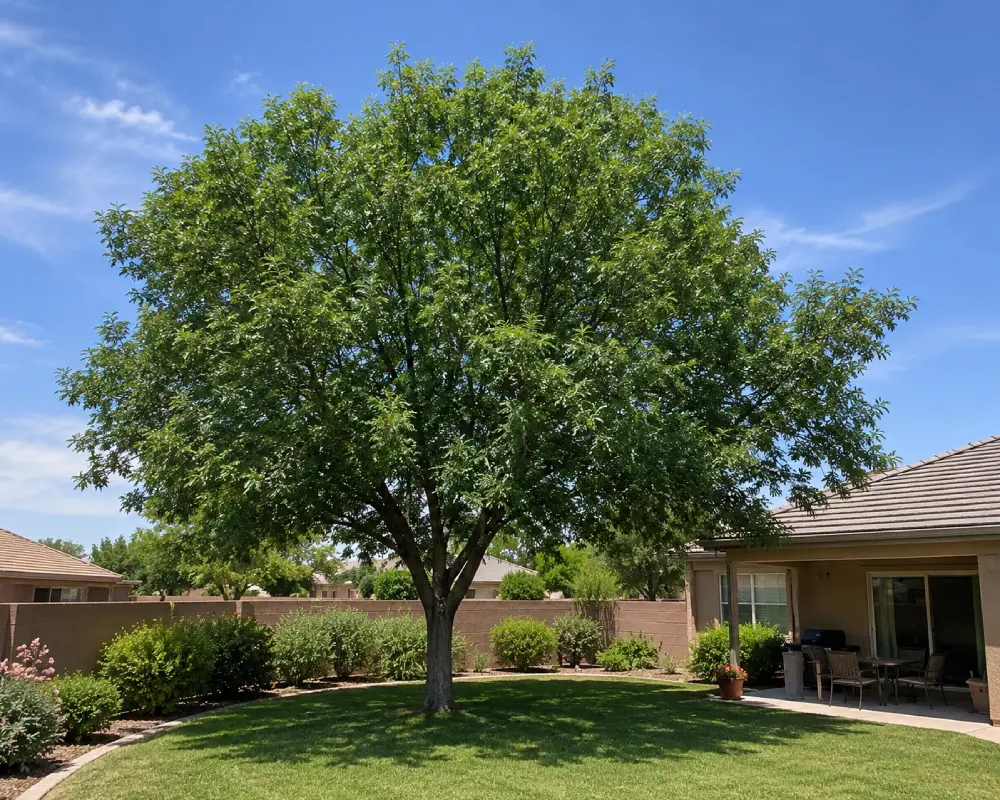
If you have a large backyard and want a tree that provides outstanding shade along with delicious pecans, it’s hard to beat the Western Schley Pecan. It has been one of the most popular pecan trees in southern New Mexico for decades and thrives in our hot, dry climate.
Unlike many shade trees, the Western Schley gives you two benefits. During the summer, its broad canopy provides welcome shade, and in the fall, it produces a heavy crop of high-quality pecans.
Once established, this tree grows fairly quickly and can eventually reach 50 to 70 feet tall with an equally impressive spread. Because of its mature size, it’s best suited for larger properties where it has plenty of room to grow.
Keep in mind that although Western Schley is considered self-fertile, you’ll generally harvest more pecans if another pecan variety is growing nearby for cross-pollination. More information at the NMSU.EDU website.
Why You’ll Like It
- Excellent shade tree
- Produces large, high-quality pecans
- Long-lived
- Well adapted to the Southwest
- Beautiful golden fall color
Mature Size: 50–70 feet tall and wide
Growth Rate: Fast
Arizona Ash
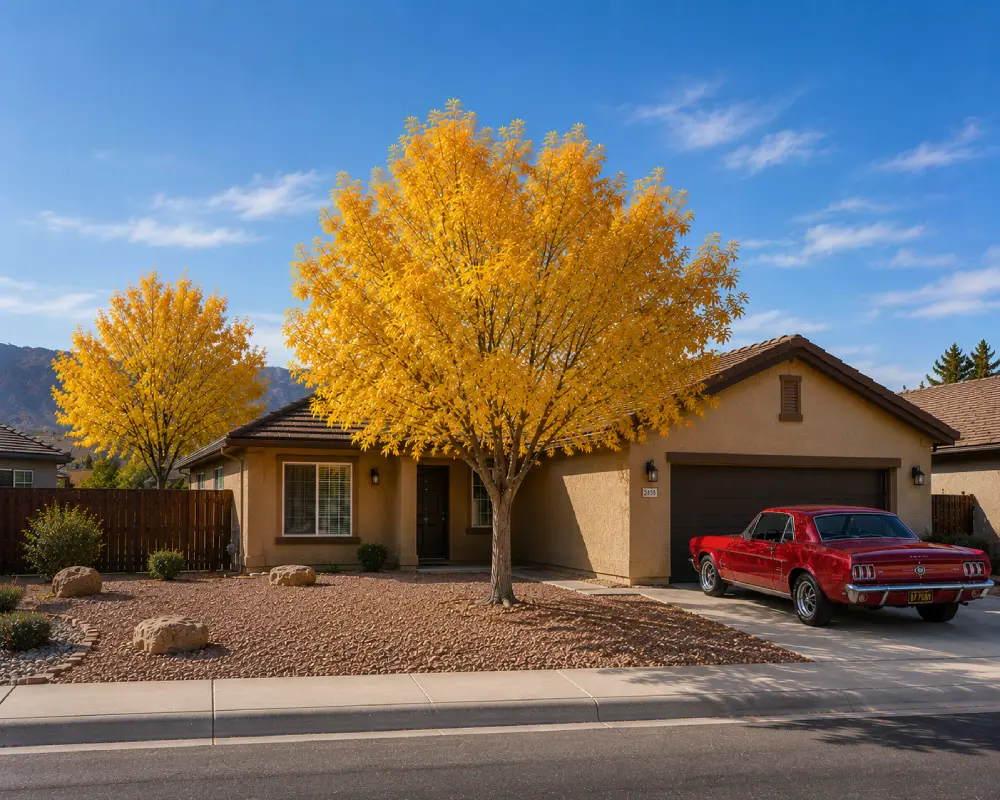
If your goal is to create shade as quickly as possible, Arizona Ash is one of the fastest-growing trees you can plant.
Many homeowners choose this tree because they want relief from the summer sun without waiting twenty years. Under good growing conditions, Arizona Ash can add several feet of growth each year while it’s young.
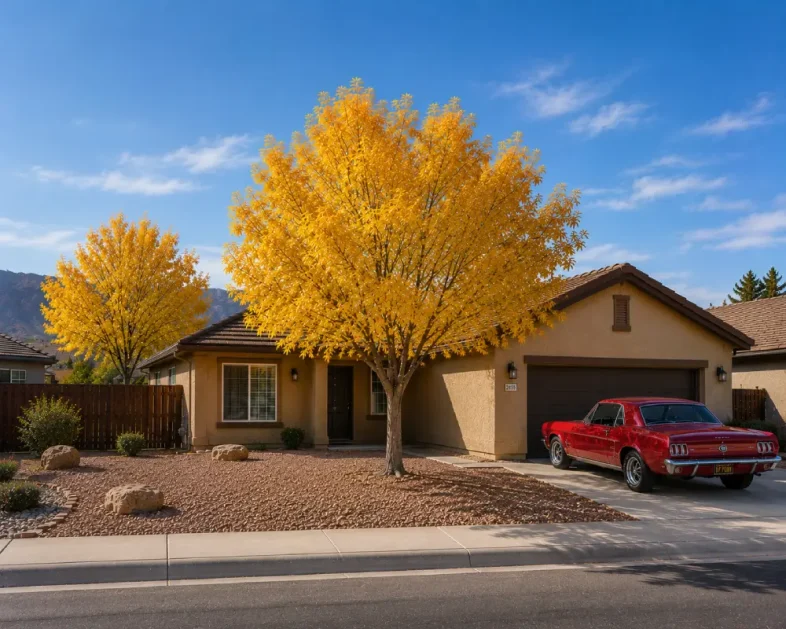
Its large canopy creates dense shade that’s perfect for patios, lawns, and outdoor seating areas. During the fall, the leaves turn shades of yellow before dropping for the winter.
Arizona Ash grows best when it’s planted in full sun and watered deeply. Like many fast-growing trees, occasional pruning helps develop a stronger branch structure and keeps the tree looking its best.
 Why You’ll Like It
- Extremely fast growth
- Dense shade
- Excellent for cooling large areas
- Easy to grow
- Performs well in Southern New Mexico
- Golden Yellow foliage in fall
Mature Size: 40–50 feet tall with a broad canopy
Growth Rate: Very Fast
Chinese Pistache
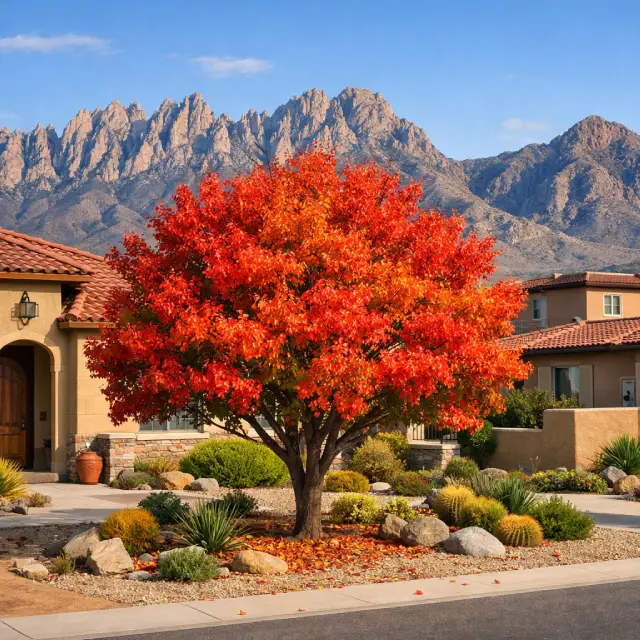
Chinese Pistache has become one of my favorite shade trees to recommend because it offers something many fast-growing trees don’t—excellent fall color.
Throughout the summer, its dark green foliage provides comfortable shade. Then, as temperatures cool in autumn, the leaves transform into brilliant shades of orange, red, and scarlet.
It’s also one of the toughest landscape trees you can plant. Once established, Chinese Pistache tolerates heat, drought, wind, and our alkaline soils remarkably well.
Although it doesn’t grow quite as fast as Arizona Ash, it develops into a beautiful, rounded shade tree that requires relatively little maintenance.
If you’re looking for a tree that combines beauty with durability, this one deserves serious consideration. Another good resource at treenm.org.
Why You’ll Like It
- Outstanding fall color
- Excellent heat tolerance
- Strong, attractive branching
- Handles drought well once established
- Low maintenance
Mature Size: 30–40 feet tall and wide
Growth Rate: Moderate to Fast
Fruitless Mulberry
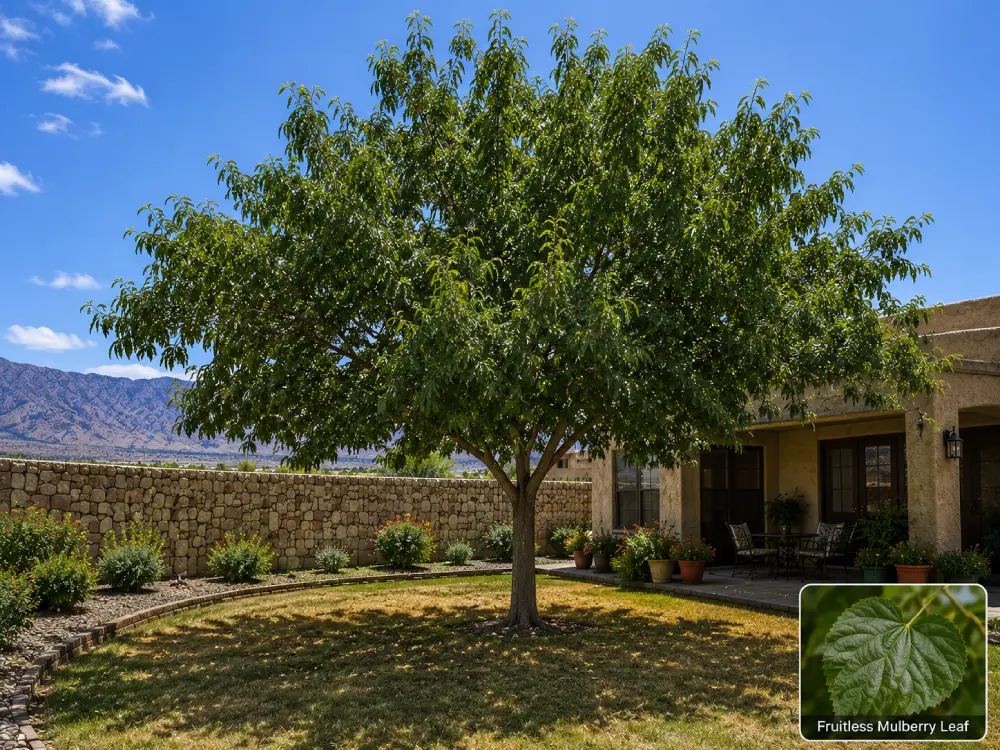
If dense shade is your top priority, Fruitless Mulberry is difficult to beat.
Its broad canopy fills in quickly, making it an excellent choice for cooling patios, children’s play areas, and large sections of your backyard. On a hot summer afternoon, the temperature beneath a mature Fruitless Mulberry can feel noticeably cooler than the surrounding landscape.
Because this tree grows rapidly, it’s important to give it plenty of room. Plant it well away from your home, sidewalks, driveways, and underground utilities so it has space to reach its full potential.
Regular pruning during the first several years helps develop a strong structure and encourages healthy growth for many years to come.
Why You’ll Like It
- One of the best shade trees available
- Dense, cooling canopy
- Fast-growing
- Excellent for large landscapes
- Thrives in the Southwest
Mature Size: 35–50 feet tall with an equally wide spread
Growth Rate: Very Fast
Weeping Willow
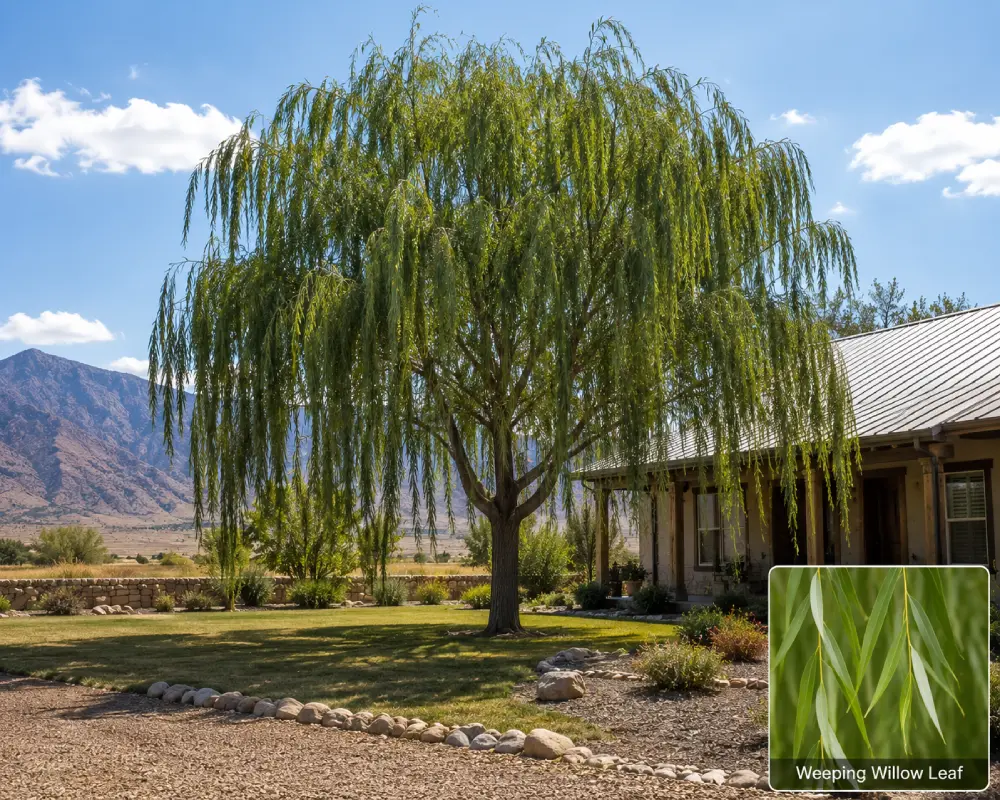
If you have plenty of room and enjoy graceful, cascading branches, the Weeping Willow is one of the fastest-growing shade trees you can plant. Its sweeping canopy creates excellent shade and adds a unique, elegant look that few other trees can match.
Although Weeping Willow isn’t considered drought tolerant, it can grow successfully in the Southwest when given consistent deep watering. For that reason, I recommend planting it where irrigation is readily available and where it has plenty of space to mature.
Because of its vigorous root system, avoid planting it near foundations, sidewalks, septic systems, or underground water lines. Give it plenty of room, and it will reward you with rapid growth and beautiful shade for many years.
If you have a large backyard and don’t mind providing additional water, Weeping Willow can become one of the most impressive landscape trees on your property.
Why You’ll Like It
- Extremely fast-growing
- Beautiful, graceful appearance
- Excellent shade
- Long-lived when properly maintained
- Creates an outstanding focal point
Mature Size: 35–50 feet tall with a spread of 35–50 feet
Growth Rate: Very Fast
Pro Tip
Don’t overlook the mature size of your tree.
That small tree in a 15-gallon container may only be 8 feet tall today, but in 15 years it could spread 40 feet or more. Before planting, look up, look down, and look around. Make sure there are no overhead power lines, underground utilities, or nearby structures that could become a problem as the tree matures.
Purple Robe Locust
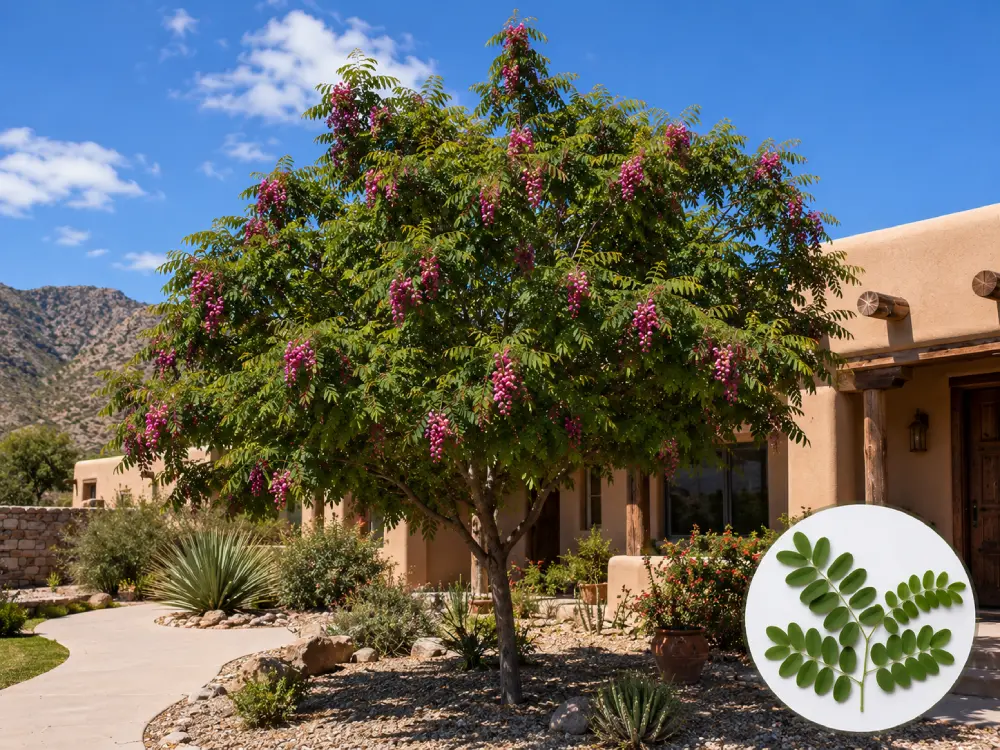
If you’re looking for a tree that combines moderate shade with beautiful spring color, Purple Robe Locust is an excellent choice.
In early spring, before the leaves fully emerge, this tree produces large clusters of fragrant purple flowers that attract bees and other pollinators. Once the flowers fade, the tree develops a rounded canopy that provides welcome shade throughout the summer.
Purple Robe Locust is well adapted to our hot, dry climate and tolerates poor soils better than many other landscape trees. Once established, it requires relatively little water compared to many fast-growing shade trees.
One thing to remember is that this tree has thorns on its branches. For that reason, I don’t recommend planting it where children frequently play or next to sidewalks and walkways where people regularly pass by.
Why You’ll Like It
- Beautiful purple spring flowers
- Moderate shade
- Heat and drought tolerant
- Fast-growing
- Pollinator friendly
Mature Size: 30–40 feet tall and about 25–35 feet wide
Growth Rate: Fast
Desert Willow
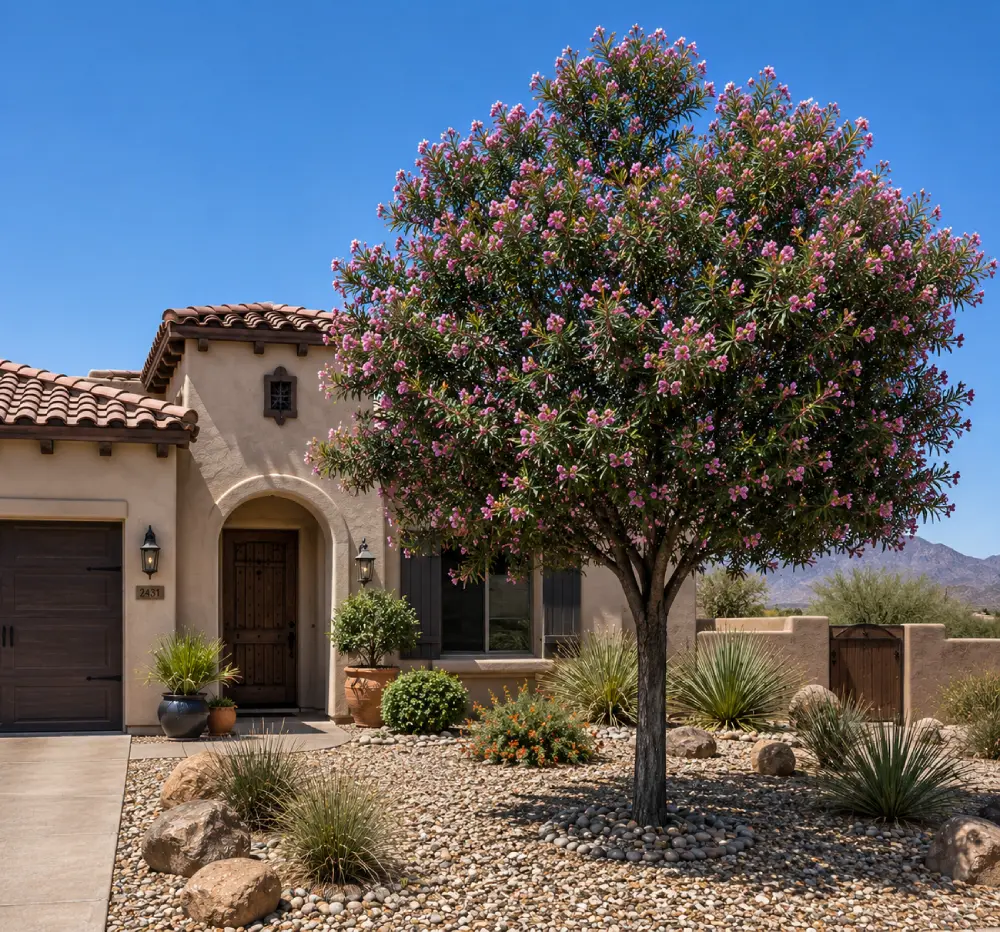
Don’t let the name fool you. Desert Willow isn’t a true willow, but it is one of the best flowering trees for the Southwest.
Its trumpet-shaped flowers bloom from late spring through much of the summer, attracting hummingbirds, butterflies, and other pollinators. Depending on the variety, flowers may be lavender, pink, burgundy, or white.
Although it doesn’t produce the dense shade of a pecan or mulberry, it provides enough filtered shade to make a patio or sitting area much more comfortable.
One of the biggest advantages of Desert Willow is its outstanding drought tolerance once established. It thrives in full sun and handles our intense summer heat with ease.
Why You’ll Like It
- Long blooming season
- Excellent heat tolerance
- Attracts hummingbirds
- Low water use once established
- Great accent tree
Mature Size: 20–30 feet tall and wide
Growth Rate: Moderate
Muskogee Crape Myrtle
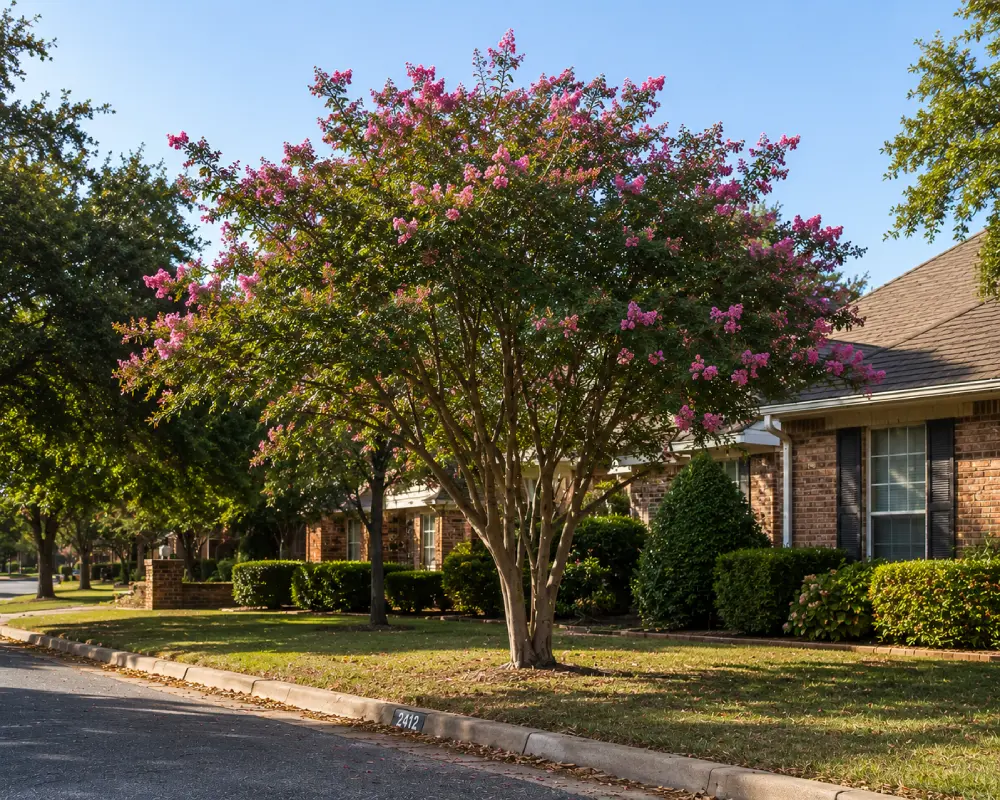
If you have a smaller yard but still want a tree that provides shade and spectacular summer flowers, Muskogee Crape Myrtle deserves a place near the top of your list.
Unlike many flowering trees that bloom for only a few weeks, Muskogee Crape Myrtle produces beautiful lavender flowers for much of the summer when many other trees have already finished blooming.
As it matures, it develops a rounded canopy that can reach approximately 20 feet tall and nearly as wide, creating moderate shade that’s ideal for patios, smaller lawns, and front yards.
Its smooth, peeling bark adds year-round interest, while its colorful fall foliage makes it attractive long after the flowers have faded.
Once established, Muskogee Crape Myrtle handles our Southwest heat exceptionally well and is one of the easiest flowering trees to maintain.
Why You’ll Like It
- Beautiful lavender flowers all summer
- Moderate shade
- Outstanding heat tolerance
- Attractive bark year-round
- Excellent for smaller landscapes
Mature Size: About 20 feet tall and wide
Growth Rate: Moderate to Fast
Which Tree Is Right for You?
Every yard is different, so there isn’t one perfect tree for everyone.
If you have plenty of space and want maximum shade, Western Schley Pecan, Arizona Ash, or Fruitless Mulberry are excellent choices.
If you’re looking for a medium-sized tree with outstanding fall color, Chinese Pistache is hard to beat.
If colorful spring flowers are important to you, Purple Robe Locust is a beautiful addition to the landscape.
For homeowners wanting a flowering tree that handles extreme heat with ease, Desert Willow and Muskogee Crape Myrtle are two of the best choices available.
Before making your final decision, think about the mature size of the tree, how much shade you want, and where it will be planted. A little planning today will reward you with decades of beauty and comfort.
Frequently Asked Questions
What is the fastest-growing shade tree for the Southwest?
Arizona Ash and Fruitless Mulberry are among the fastest-growing shade trees for homeowners who want quick relief from the summer sun.
Which shade tree needs the least water?
Once established, Desert Willow and Chinese Pistache are among the most drought-tolerant trees on this list.
Which tree provides the most shade?
Western Schley Pecan and Fruitless Mulberry develop large, dense canopies that provide outstanding shade.
Which tree is best for a small backyard?
Muskogee Crape Myrtle is an excellent choice because it stays much smaller than traditional shade trees while still providing moderate shade.
Which tree has the best fall color?
Chinese Pistache is famous for its brilliant shades of orange, red, and scarlet during autumn.
Are these trees good for New Mexico?
Yes. All of the trees featured in this article grow well throughout much of southern New Mexico when planted and cared for properly.
How close should I plant a shade tree to my house?
That depends on the mature size of the tree. Large trees should generally be planted well away from your home’s foundation to allow room for future growth.
When is the best time to plant shade trees?
Spring and fall are usually the best times to plant trees in the Southwest because temperatures are cooler and the trees have more time to establish their root systems.
How often should I water a newly planted tree?
Newly planted trees require deep watering more frequently than established trees. As the root system develops, watering can gradually become less frequent but should always be deep enough to encourage roots to grow downward.
Can I plant a shade tree during the summer?
Yes, but it requires extra attention. Trees planted during hot weather need consistent deep watering and benefit from a layer of mulch to help keep the soil cooler and reduce moisture loss.
Final Thoughts
A shade tree is one of the best investments you can make for your landscape. Not only will it make your yard more comfortable during our hot Southwest summers, but it can also increase the beauty and value of your property for many years to come.
The key is choosing a tree that’s well adapted to our climate and planting it in the right location. With proper care during the first few years, your new tree will reward you with decades of cooling shade and lasting beauty.
If you’re unsure which tree is best for your landscape, stop by one of our two Guzman’s Garden Centers locations. We’ll be happy to help you choose a tree that’s right for your yard and explain how to plant and care for it successfully.
Continue Learning
You may also enjoy these helpful guides:
- How to Plant a Tree Properly
- Types of Pecan Trees
- Landscaping with Crape Myrtles
- Desert Willow Tree Care
- Why Are My Plant Leaves Turning Brown?
- How Often Should You Water Trees in the Southwest?
Join Our Free Southwest Gardening Newsletter
Want more practical gardening tips written specifically for the Southwest?
Join our free newsletter and you’ll receive seasonal gardening advice, watering tips, plant care guides, and exclusive growing information to help your landscape thrive throughout the year.
Whether you’re planting your first shade tree or maintaining a mature landscape, we’ll help you garden with confidence in the Southwest.
New to Southwest Gardening?
Stop wasting money on plants that will not survive our heat and drought.
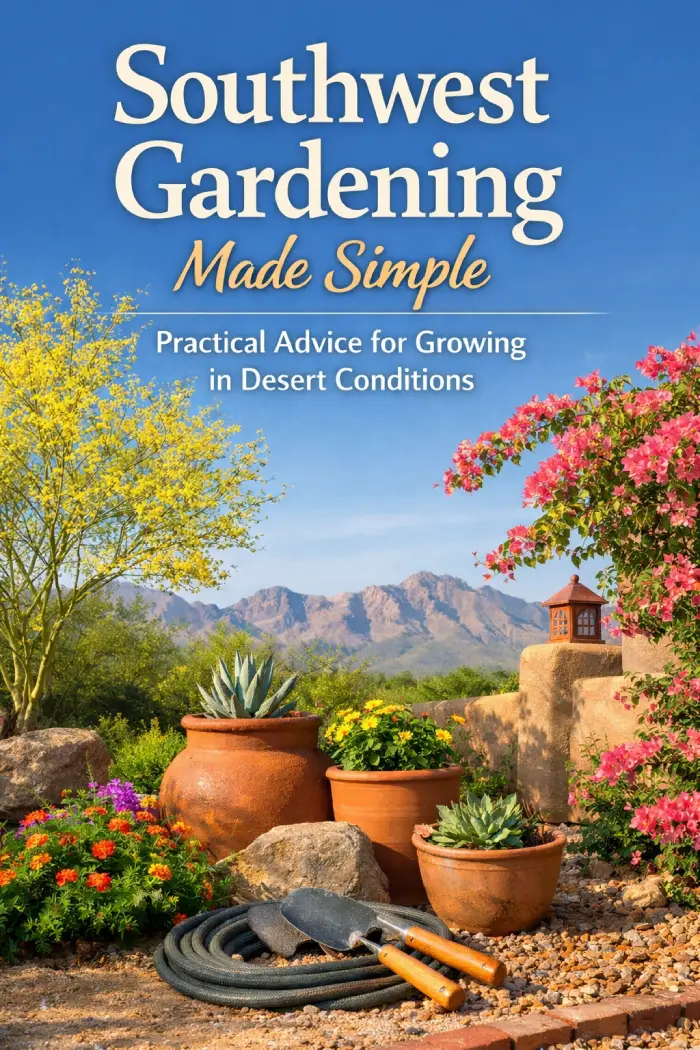
My Southwest Gardening Made Simple eBook shows you which trees, shrubs, flowers, and vegetables actually thrive in New Mexico, Arizona, and West Texas.
The best plants for hot, dry climates
Common mistakes that kill Southwest plants
Easy-to-follow advice for beginners

Paul Guzman is a lifelong Southwest gardener and gardening writer with decades of experience helping homeowners grow beautiful landscapes in the desert Southwest. He writes for Guzman’s Garden Centers in Las Cruces, New Mexico, with contributing expertise from Gary Guzman, owner of Guzman’s Garden Centers. If you have any questions or enjoyed this post, feel free to share your thoughts in the comments below.