Why Every New Mexico Home Should Plant More Shade Trees
If you’ve lived in New Mexico for any length of time, you know how relentless the summer sun can be. Triple-digit temperatures, low humidity, and intense sunlight can make your yard uncomfortable and increase your cooling bills. Fortunately, one of the best long-term investments you can make is planting shade trees.
| Benefit | Why It Matters in New Mexico |
|---|---|
| 🌳 Cooler Yards | Shade can make patios and lawns much more comfortable during summer. |
| 🏠 Lower Cooling Costs | Trees reduce direct sun on walls, windows, and roofs. |
| 🌎 Cooler Soil | Shaded soil retains moisture longer and stays cooler. |
| 💧 Water Conservation | Cooler soil means less evaporation from irrigation. |
| 🐦 Wildlife Habitat | Birds and pollinators benefit from mature trees. |
| 💰 Higher Property Value | Mature shade trees improve curb appeal. |
A well-placed shade tree does far more than make your yard look beautiful. It cools your property, improves the soil, conserves water, supports wildlife, and can even increase your home’s value. In a climate like ours, trees aren’t just landscaping—they’re an investment in your property and your quality of life.
Shade Trees Naturally Cool Your Home
The most obvious benefit of planting a shade tree is the cooling effect.
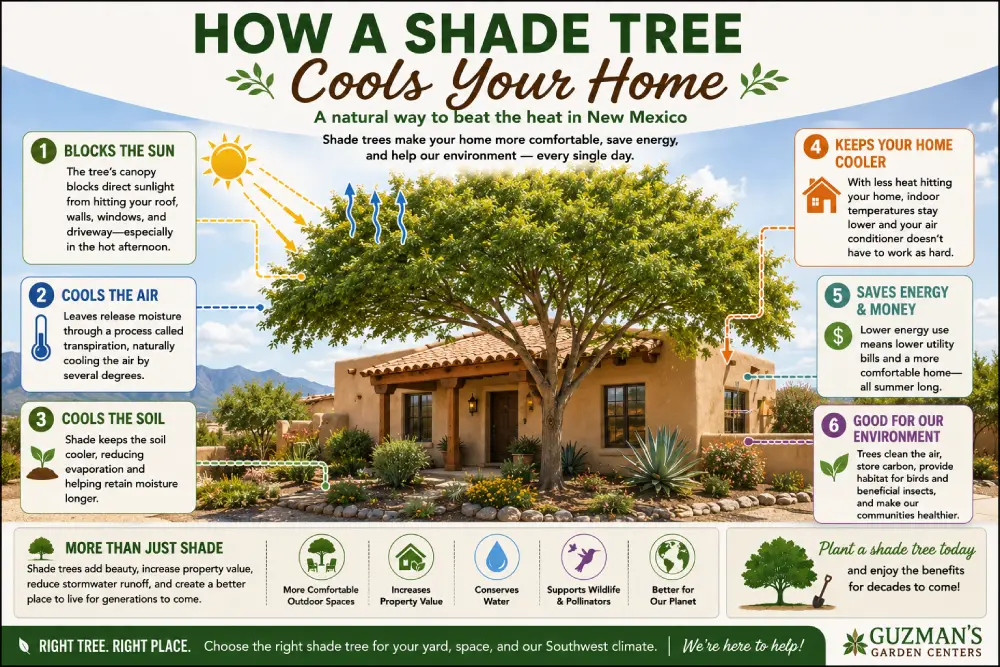
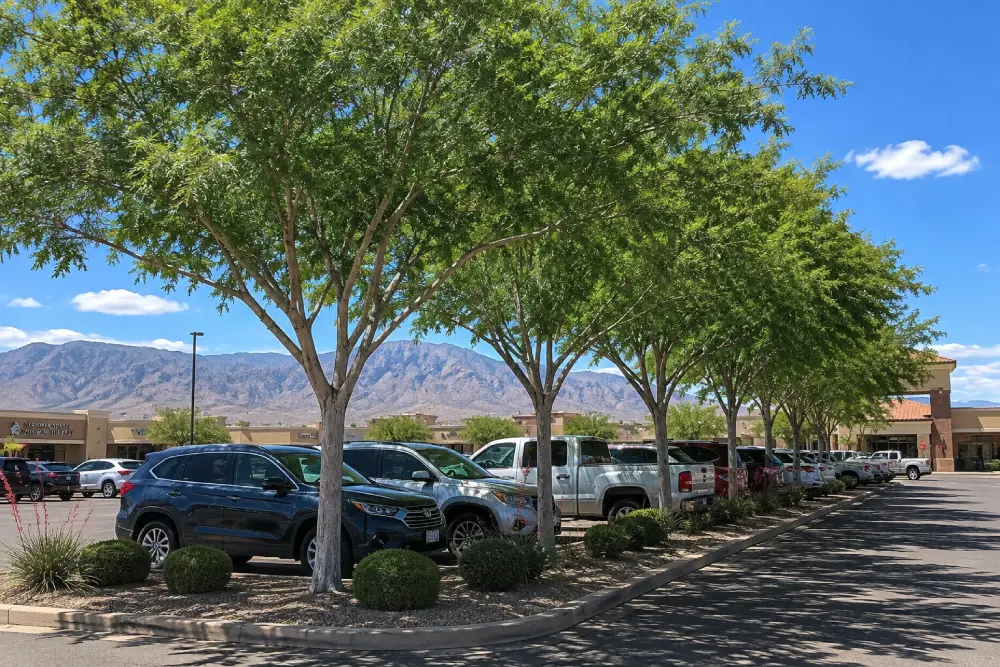
A mature tree can reduce temperatures beneath its canopy by 20 degrees Fahrenheit or more compared to nearby pavement or bare ground. When planted on the west or southwest side of your home, a large shade tree can block the hottest afternoon sun from hitting walls, windows, patios, and roofs.
That translates into:
- Lower air-conditioning costs
- More comfortable outdoor living spaces
- Less heat entering your home
- Reduced strain on your cooling system
During the hottest months of the year, the difference between a shaded patio and one sitting in direct afternoon sun can be dramatic.
Trees Cool the Air Through Transpiration
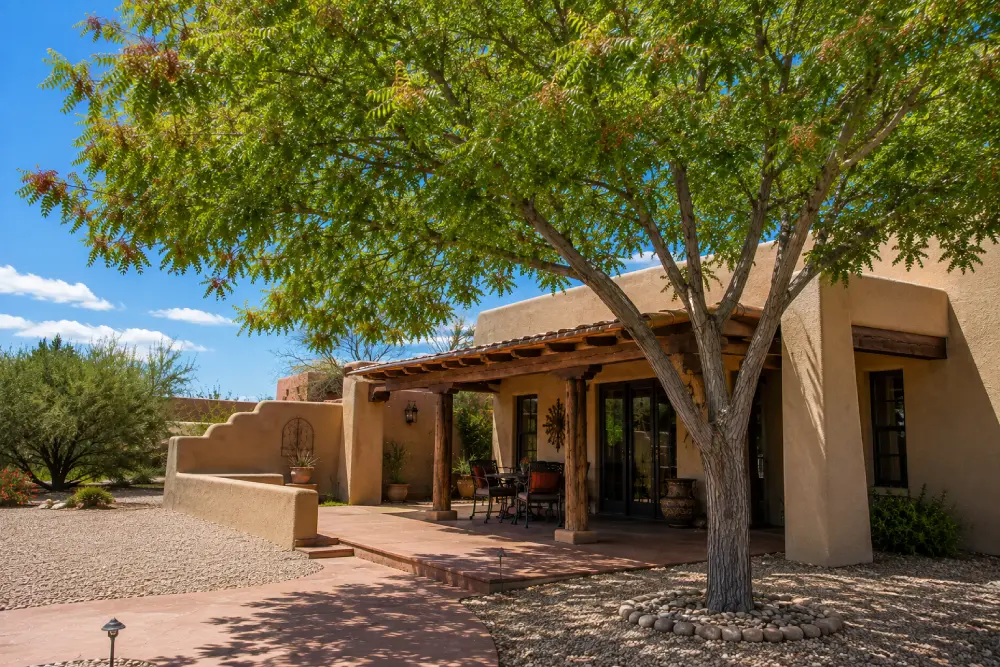
Trees don’t just block sunlight—they actually cool the surrounding air.
As water moves from the roots through the leaves, tiny openings release moisture into the atmosphere. This natural process, called transpiration, works much like evaporative cooling.
When many trees grow together in neighborhoods, parks, and streets, they help reduce the “urban heat island” effect caused by asphalt, concrete, and buildings that absorb and radiate heat.
This is one reason older neighborhoods with mature trees often feel noticeably cooler than newer developments with very little shade.
Tree Roots Help Keep the Soil Cooler
Many homeowners don’t realize that tree roots also protect the soil.
During summer, bare ground absorbs tremendous amounts of heat. Surface temperatures can easily exceed 140°F in direct sunlight.
A healthy tree canopy shades the soil beneath it, keeping root zones significantly cooler.
Cooler soil provides several benefits:
- Reduces moisture evaporation
- Helps beneficial soil organisms survive
- Protects nearby landscape plants
- Keeps turf healthier
- Improves overall soil quality over time
Even rock mulch stays noticeably cooler when shaded by mature trees.
Trees Help Conserve Water
Water conservation is always important in New Mexico.
Although young trees require regular watering while becoming established, mature shade trees actually help reduce water use throughout your landscape.
Their shade slows evaporation from:
- Flower beds
- Vegetable gardens
- Lawns
- Shrubs
- Groundcovers
Plants growing beneath partial shade often need less frequent irrigation than those exposed to full afternoon sun.
Shade Trees Protect Other Plants
Many ornamental plants struggle during New Mexico summers.
The intense afternoon sun can scorch leaves, fade flowers, and stress shrubs.
A properly placed shade tree creates a more favorable microclimate where many landscape plants perform better.
This allows you to grow:
- Hostas in protected areas
- Hydrangeas in cooler locations
- Ferns in shaded courtyards
- Many flowering perennials with less heat stress
Even heat-loving plants often benefit from filtered afternoon shade during the hottest weeks of summer.
Trees Improve Air Quality
Trees act as natural air filters.
Their leaves trap dust, pollen, and airborne particles while absorbing carbon dioxide and releasing oxygen.
In windy desert environments, this can noticeably reduce dust around your property.
Large shade trees also help soften the effects of dry desert winds.
Trees Provide Wildlife Habitat
A healthy shade tree quickly becomes home to many forms of wildlife.
Depending on the species, trees provide:
- Nesting sites for birds
- Food for pollinators
- Shelter for beneficial insects
- Habitat for butterflies
- Resting areas for migrating birds
Even a single mature tree can dramatically increase the amount of wildlife visiting your yard.
Trees Increase Property Value
Landscaping is one of the few home improvements that continues growing in value over time.
Studies have shown that attractive, mature landscaping—especially healthy shade trees—can increase a property’s curb appeal and resale value.
Potential buyers appreciate homes with:
- Mature trees
- Lower summer temperatures
- Attractive landscapes
- Energy-saving shade
- Established outdoor living spaces
A tree planted today can provide benefits for decades.
Trees Help Reduce Noise
While not completely soundproof, large trees help soften neighborhood noise.
Leaves, branches, and trunks absorb and scatter sound from:
- Busy streets
- Traffic
- Neighbors
- Lawn equipment
- Construction
A row of shade trees combined with shrubs creates one of the best natural privacy screens available.
New Mexico Needs More Trees
Many areas of New Mexico have limited tree cover compared to other parts of the country.
Every new tree helps improve the local environment.
Communities with more trees often experience:
- Cooler neighborhoods
- Better air quality
- More wildlife
- Greater property values
- More attractive streets
- Improved quality of life
Planting just one shade tree today benefits not only your family but future generations as well.
Choose the Right Tree for the Right Place
Not every tree is suitable for every yard.
Before planting, consider:
- Mature height and width
- Distance from foundations
- Underground utilities
- Power lines
- Water requirements
- Available growing space
Choosing a tree that matches your landscape will prevent future problems and reduce maintenance. A shade tree isn’t just an investment for today. As it matures, it can provide decades of cooler outdoor living, lower energy costs, improved curb appeal, and a healthier landscape for your family.
If you’re ready to plant, see our guide to the Best Fast-Growing Shade Trees for the Southwest.
Recommended Shade Trees for New Mexico
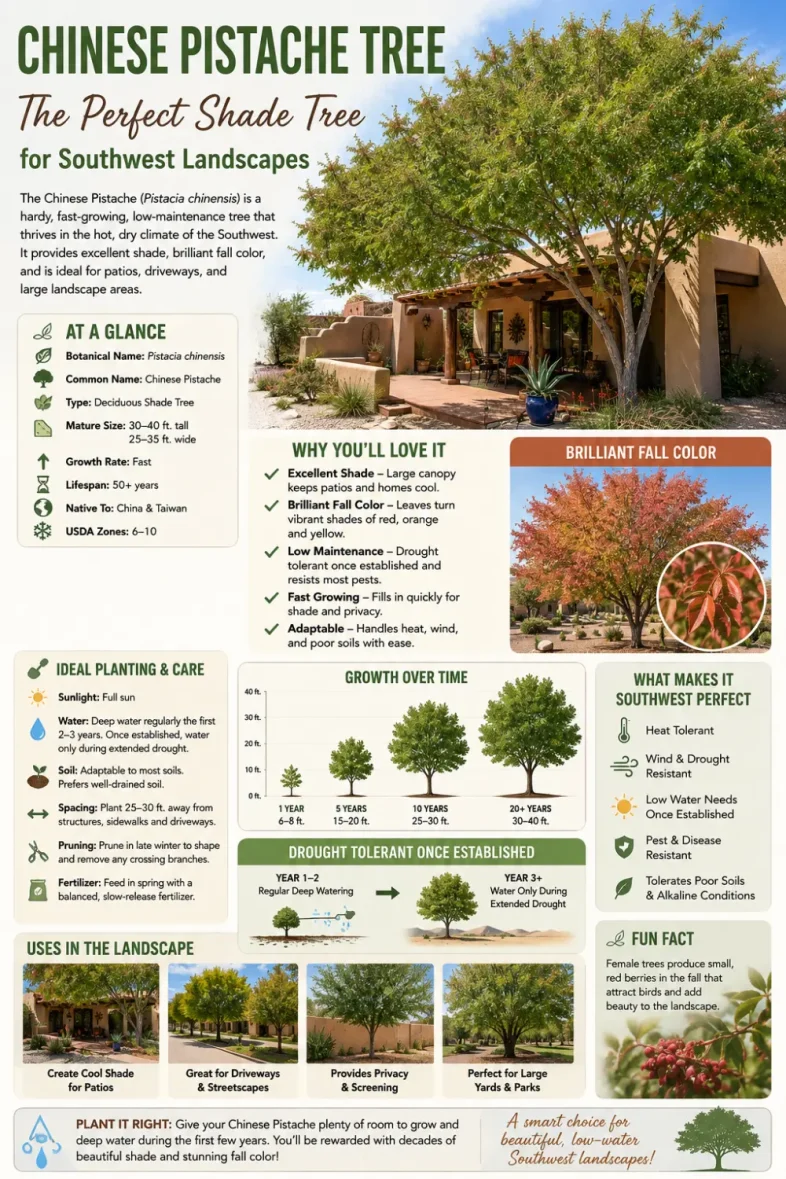
- Chinese Pistache
- Arizona Ash
- Texas Red Oak
- Bonita Ash
- Desert Willow
- Western Schley Pecan (larger properties)
For most homeowners in southern New Mexico, drought-tolerant or desert-adapted shade trees provide the best combination of beauty, water efficiency, and long-term success.
- USDA Forest Service – Benefits of Trees
- University of Arizona Cooperative Extension – Trees and Landscaping Resources
Frequently Asked Questions
Do shade trees really lower cooling costs?
Yes. A properly placed shade tree blocks direct sunlight from hitting your roof, walls, and windows. This helps keep your home cooler during the summer and can reduce the amount of time your air conditioner runs.
How far should I plant a shade tree from my house?
Most large shade trees should be planted 15 to 20 feet from your home, depending on the mature size of the tree. This gives the canopy room to spread while reducing the chance of roots or branches becoming a problem.
Which shade tree grows best in New Mexico?
Several shade trees perform well in southern New Mexico, including Chinese Pistache, Arizona Ash, Texas Red Oak, Bonita Ash, and Western Schley Pecan for larger landscapes. The best choice depends on the available space and your watering schedule.
When is the best time to plant a shade tree?
Fall is generally the best time to plant shade trees in New Mexico because cooler temperatures allow roots to become established before the heat of summer. Early spring is also an excellent time to plant.
Final Thoughts
Few landscape improvements provide as many long-term benefits as planting a shade tree.
A single tree can lower temperatures, reduce energy bills, improve soil health, conserve water, increase property value, and create a more beautiful outdoor space. While it may take a few years to reach its full potential, the rewards continue for decades.
If you’re planning improvements to your yard this year, planting a shade tree is one of the smartest investments you can make.
New to Southwest Gardening?
Stop wasting money on plants that will not survive our heat and drought.
My Southwest Gardening Made Simple eBook shows you which trees, shrubs, flowers, and vegetables actually thrive in New Mexico, Arizona, and West Texas.
The best plants for hot, dry climates
Common mistakes that kill Southwest plants
Easy-to-follow advice for beginners

Paul Guzman is a lifelong Southwest gardener and gardening writer with decades of experience helping homeowners grow beautiful landscapes in the desert Southwest. He writes for Guzman’s Garden Centers in Las Cruces, New Mexico, with contributing expertise from Gary Guzman, owner of Guzman’s Garden Centers. If you have any questions or enjoyed this post, feel free to share your thoughts in the comments below.